
Why Is Ti-15V-3Al-3Cr-3Sn Titanium Foil Important for Aerospace and Precision Manufacturing?
- Ti-15V-3Al-3Cr-3Sn Titanium Foil
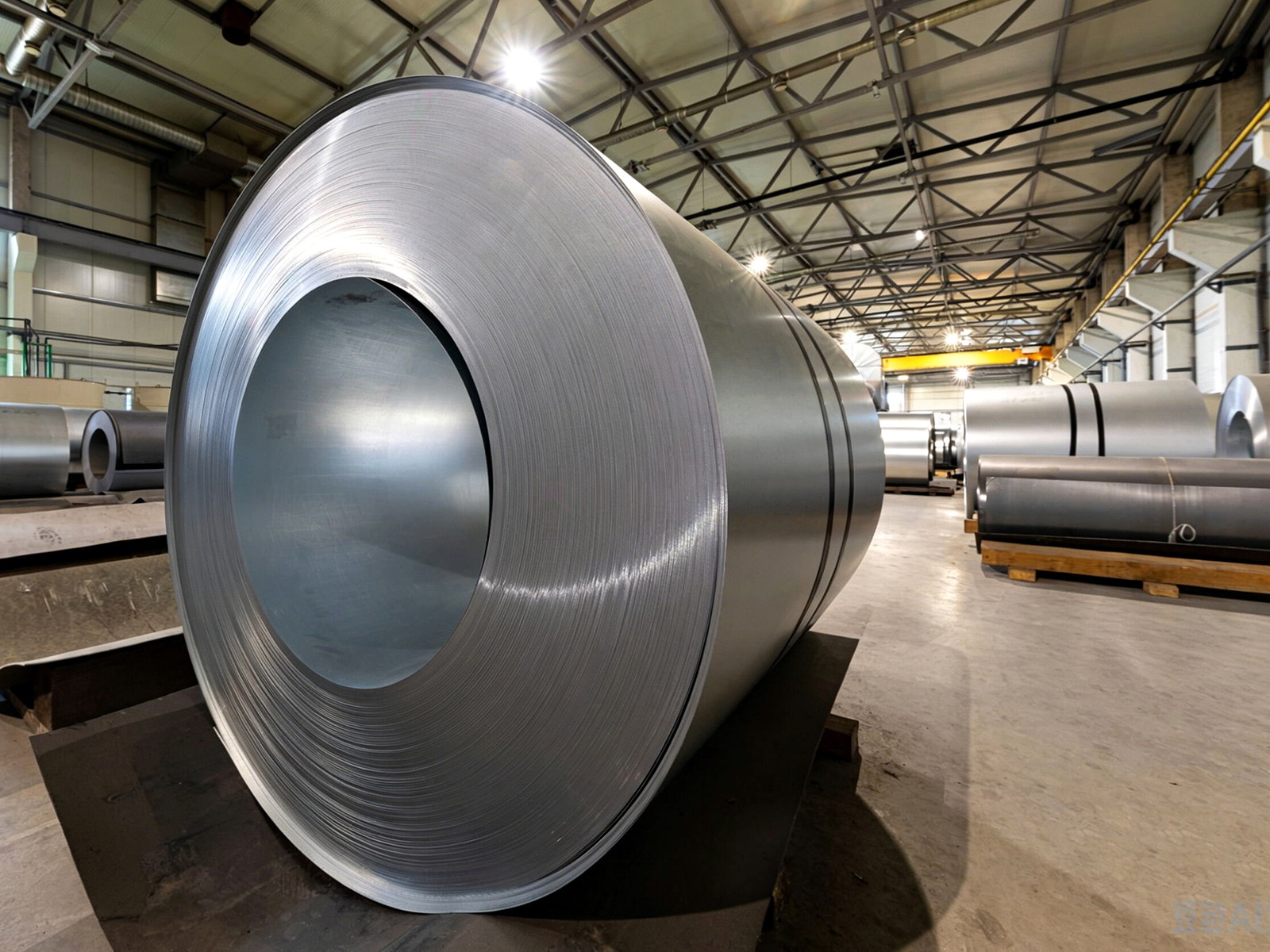
Ti-15V-3Al-3Cr-3Sn Titanium Foil represents the top achievement of near-beta titanium alloy in the field of ultra-thin strips. This material is produced through vacuum melting, precision rolling and aging heat treatment processes, with a thickness range of 0.02-1.0 mm and a width of up to 680 mm. Its core advantage lies in the separate control of formability and final strength: complex forming processes are completed in the annealed state, and high-strength properties are subsequently obtained through aging treatment. Compared with the limitation of poor cold formability of traditional Gr5 titanium foil, Ti-15V-3Al-3Cr-3Sn alloy achieves excellent processing flexibility while maintaining high specific strength. It is especially suitable for high-end application scenarios such as aerospace structural parts, electronic shielding materials and precision instrument manufacturing.
1. The core advantages of Ti-15V-3Al-3Cr-3Sn in high-end manufacturing
(1) Microstructural advantages of nearly β-type alloys
Ti-15V-3Al-3Cr-3Sn belongs to the nearly β-type titanium alloy system, and its crystal structure gives the material unique processability. Compared with the α+β dual-phase Gr5 alloy, the nearly β-type structure exhibits higher plastic deformation ability at room temperature. The 15% vanadium content stabilizes the β-phase structure, and the synergistic effect of aluminum, chromium, and tin elements not only ensures the strengthening effect, but also avoids the precipitation of brittle phases. This composition design allows the material to maintain good ductility when cold rolled to an ultra-thin specification of 0.02 mm, avoiding edge cracks and surface defects during processing.
(2) Engineering value of controllable intensity adjustment
The material’s strength adjustability provides great flexibility in product design. In the annealed state, the alloy exhibits medium strength (approximately 800-900 MPa) and excellent elongation (>20%), making it suitable for complex forming operations such as stamping and bending. After the part is formed, through aging treatment at 480~550°C, the dispersion and precipitation of α phase can increase the tensile strength to 1100~1300 MPa level. This “forming first and then strengthening” process route has completely changed the dilemma of “strength and formability cannot be achieved at the same time” of traditional high-strength titanium alloys, and is especially suitable for the mass production of thin-walled complex structural parts.
(3) Matching degree of physical performance and application
The density of 4.51 g/cm³ makes it about 67% heavier than aluminum alloy, but the specific strength (strength/density ratio) far exceeds that of aluminum and stainless steel. The melting point of approximately 1660°C and non-magnetic characteristics make it irreplaceable in high-temperature environments and precision electronic equipment. The material’s low thermal expansion coefficient (approximately 8.6×10⁻⁶/K) ensures dimensional stability, which is crucial for the long-term service of precision aerospace components. In terms of corrosion resistance, the passivation film of the titanium matrix is stable in marine atmosphere, organic acids and other environments, and has excellent corrosion resistance.
2. Breakthrough in production technology of ultra-thin wide foils
(1) The core role of the 20-roller precision rolling system
The production of wide-width foils with a thickness of 0.02~1.0 mm requires extremely strict equipment accuracy. The 750mm 20-high rolling mill disperses the rolling force (maximum 3500 kN) through a multi-layer roll system, achieving a control accuracy of thickness deviation ≤±3%. Compared with traditional 4-high or 6-high rolling mills, the 20-high configuration significantly reduces strip edge thinning and mid-wave defects. The rolling speed of 400 meters per minute and the closed-loop thickness measurement system can compensate for the thermal expansion and elastic deformation of the roll in real time to ensure the thickness consistency of the entire roll of material. The introduction of the flattening unit further eliminates residual stress and enables the flatness of the finished product to reach Class I standards (≤3 mm/m).
(2) Full-process surface quality control system
The surface quality of ultra-thin Ti-15V-3Al-3Cr-3Sn titanium foil directly affects the reliability of subsequent electroplating, bonding and other processes. The ultrasonic cleaning line uses multi-band oscillation (28 kHz/40 kHz combination) to increase the surface tension (dyne value) to more than 40 mN/m at a linear speed of 30 meters/minute, completely removing rolling grease and particulate pollution. The 7-zone independent temperature control system of the continuous annealing furnace achieves temperature uniformity of ±2°C through argon gas protection, avoiding oxidation color difference and performance fluctuations. Bright surface products are ground at the micron level on the grinding line, and the roughness can be controlled at Ra 0.2~0.4 μm, meeting the needs of optical grade applications.
(3) Accuracy guarantee for ultra-wide roll separation
Precisely cutting a 680 mm mother roll into finished product widths ranging from 15 to 680 mm places extremely high demands on cutting tools and tension control. The high-speed slitting line is equipped with a carbide disc cutter with a blade runout of ≤0.01 mm, ensuring that the cutting edges are burr-free. The control level of width tolerance ±0.1 mm relies on the real-time feedback of the laser width gauge and the fast response of the servo correction system. The segmented tension control technology makes the strip tension fluctuation less than 5% during the winding process, effectively preventing edge wrinkles and core collapse problems, and the yield rate increases to more than 98%.
3. In-depth analysis of application scenarios in major global markets
(1) Structural needs of the North American aerospace sector
The U.S. aviation industry’s demand for Ti-15V-3Al-3Cr-3Sn foils is mainly concentrated on fuselage skins, door frames and hydraulic pipeline components. Prime manufacturers such as Boeing and Lockheed Martin require materials to meet both AMS 4983 (annealed condition) and AMS 4984 (aged condition) specifications. Foil materials with a thickness of 0.3-0.5 mm can be used to manufacture integral wall panels with an area of more than 2 square meters through the superplastic forming/diffusion joining (SPF/DB) process, with a weight reduction effect of 25~30%. Compared with the traditional riveted structure, stress concentration points are eliminated and the fatigue life is increased by more than 2 times.
(2) The trend of precision in high-end manufacturing in Europe
Under the background of German Industry 4.0, automobile lightweighting and medical device upgrades have promoted the growth of titanium foil demand. The ultra-thin specification of 0.05~0.15 mm is used as a fireproof barrier for electric vehicle battery packs. Its flame retardancy and impact resistance are better than those of aluminum-plastic composite films. In the medical field, MRI compatibility and biocompatibility make it the material of choice for implantable sensor housings. Research by the Technical University of Munich shows that pacemaker casings using this alloy can extend the service life of the device from 8 years to more than 12 years.
(3) Large-scale application in East Asia’s electronics industry
Japan’s precision electronics industry consumes about 40% of the world’s ultra-thin titanium foil production. The 0.02~0.08 mm specification is mainly used for electromagnetic interference (EMI) shielding covers for smartphones, and the amount of a single device is about 0.5~1.2 grams. Compared with traditional stainless steel shielding materials, titanium foil can reduce weight by 35%, and its non-magnetic characteristics avoid interference with NFC and wireless charging functions. Korean battery manufacturers use 0.1 mm titanium foil as a current collector for lithium battery flexible packaging. Its corrosion resistance increases the battery cycle life by 800-1,000 times.
4. Comparison of material selection: How to make the optimal decision among various titanium foils
(1) Performance gradient analysis of pure titanium series
The following table shows the key performance differences of different grades of titanium foil:
| Material grade | Tensile strength (MPa) | Elongation (%) | Cold formability | Typical applications |
| Gr1 | 240-390 | ≥24 | Excellent | Deep drawing parts, chemical heat exchangers |
| Gr2 | 340-510 | ≥20 | excellent | Architectural decoration, seawater desalination |
| Gr4 | 550-750 | ≥15 | good | Pressure vessels, marine engineering |
| Gr5 | 895-930 | 10-15 | difficulty | Aviation fasteners, racing parts |
| Ti-15V-3Al-3Cr-3Sn | 800-1300* | 5-25* | excellent* | Aerospace structures, high-end electronics |
*Note: The performance range covers the annealed state and the aged state. The elongation rate in the annealed state is >20%, and the elongation rate in the aged state is 5~10%.
(2) Comprehensive evaluation of processing economics
Although the raw material cost of Ti-15V-3Al-3Cr-3Sn titanium foil is about 60~80% higher than that of Gr2, the overall processing cost may be lower. Its excellent cold formability reduces the annealing process (Gr5 usually requires multiple intermediate anneals), and the mold wear is reduced by more than 40%. Data from an aviation parts company shows that after using this alloy, the one-time forming pass rate of complex door hinges increased from 62% to 89%, and the overall manufacturing cost dropped by 15%. When purchasing in bulk (≥500 kg), the performance and price ratio can be further optimized by customizing rolling parameters.
3. Decision matrix of application scenarios
| Application scenarios | Preference | core considerations |
| Extreme deep drawing forming | Gr1 | Maximum elongation, cost sensitive |
| Conventional corrosion-resistant equipment | Gr2 | Balanced cost performance and strong versatility |
| High pressure and high temperature environment | Gr4 | Strength is priority, processability is acceptable |
| Lightweight load-bearing structure | Ti-15V-3Al-3Cr-3Sn | Balanced strength and formability |
| Ultra-high-strength fixed connection | Gr5 | Highest strength, can be riveted and welded |
5. Baoji Titanium Valley’s technical capabilities and service guarantees
(1) The advantage of scale with an annual production capacity of 3,000 tons
The automated foil production line built with an investment of US$36.2 million has overcome seven key technical problems in ultra-thin and wide-width materials. The production line integrates hot rolling equipment from Italy’s Danieli and cold rolling systems from Germany’s SMS, realizing full process automation from ingots to finished products. With an annual production capacity of 3,000 tons, the unit production cost is reduced by 22%, and the delivery cycle is shortened to 60% of the industry average. The real-time quality monitoring system collects 128 data points per second and uses AI algorithms to predict defect trends, stabilizing the batch pass rate above 99.2%.
(2) Technical depth of customized services
For the special needs of the microelectronics and optical industries, customized rolling services with a limit thickness of 0.005 mm can be provided. By adjusting the number of rolling passes (up to 35 passes) and annealing system, precise control of mechanical properties is achieved: tensile strength ±30 MPa, elongation ±2% control accuracy. In terms of surface treatment, in addition to conventional bright and matte surfaces, we can also provide value-added services such as single-sided polishing (roughness Ra<0.1 μm), anodizing coloring (10 standard colors). The technical team can assist customers with forming process simulation, optimize stamping parameters, and shorten the product development cycle by 30~50%.
(3) Quality system and global certification
The production process strictly follows international standards such as ASTM B265 and AMS 4983/4984, and has passed the AS9100D aviation quality management system certification. Each batch of products provides a complete material certificate (MTR), including chemical composition spectrum analysis, mechanical property testing (tensile, bending, hardness), grain size rating and ultrasonic flaw detection report. A full traceability system from raw materials to finished products has been established. Each roll of foil has a unique identification code that can be traced back to the specific smelting furnace number and rolling shift. Establishing cooperation with third-party testing agencies such as SGS and TÜV can provide material safety data sheets (MSDS) that comply with the EU REACH regulations.
6. Future development trends and technology evolution direction
(1) Emerging opportunities in the hydrogen energy industry
In the carbon neutrality roadmap of Europe and North America, hydrogen fuel cells and water electrolysis hydrogen production devices have become strategic priorities. Ti-15V-3Al-3Cr-3Sn foil material shows unique advantages in the bipolar plate application of proton exchange membrane fuel cells (PEMFC). Foils 0.1 mm thick are laser welded or diffusion joined to create lightweight bipolar plates with better conductivity and corrosion resistance than coated stainless steel. Tests by the Fraunhofer Institute in Germany have shown that titanium bipolar plates can increase the power density of the fuel cell stack by 18% and have a service life of more than 10,000 hours.
(2) Integration of additive manufacturing and traditional processing
Powder bed fusion (PBF) technology is changing the manufacturing model of titanium alloy parts, but post-processing of complex curved surfaces still requires precision foils. The hybrid manufacturing process combines the 3D printed load-bearing skeleton with the cold-formed titanium foil skin, which not only leverages the structural optimization capabilities of additive manufacturing, but also retains the isotropy and surface quality advantages of rolled materials. NASA’s lunar lander project has adopted this approach, reducing the structural weight by 35% and shortening the manufacturing cycle by 60%.
(3) Intelligent manufacturing and digital twin technology
The next generation of foil production lines will fully introduce digital twin technology. By establishing a physical-data hybrid model of the rolling process, the thickness distribution, residual stress and microstructure evolution of the strip can be predicted in real time. Machine learning algorithms analyze historical data and automatically optimize more than 200 process parameters such as rolling speed, tension and cooling rate. Siemens’ MindSphere platform has implemented predictive maintenance of equipment on pilot production lines, reducing unplanned downtime by 70% and reducing energy consumption by 12%.
in conclusion
Ti-15V-3Al-3Cr-3Sn titanium foil achieves decoupled control of formability and final strength through near-β-shaped alloy design and advanced rolling technology, filling the gap in the ultra-thin and wide-width field of traditional titanium materials. From aerospace structures to electronic shielding, from medical devices to hydrogen energy equipment, its application breadth continues to expand. As the global manufacturing industry upgrades to lightweight and precision, this material with both high performance and high processability will usher in a broader market space.
FAQ
Q1: Will the aging treatment of Ti-15V-3Al-3Cr-3Sn foil affect the dimensional accuracy?
The aging temperature (480~550 ℃) is far lower than the recrystallization temperature, and the linear shrinkage is <0.15%. Using precision fixtures and programmed temperature control, dimensional changes can be controlled within ±0.05 mm, meeting the requirements for aviation precision parts. It is recommended to reserve 0.1~0.2% processing allowance.
Q2: What is the minimum order quantity for ultra-thin specifications (0.02~0.05mm)?
The minimum order quantity for regular width (≤300 mm) is 50 kg, and for special width, it requires more than 100 kg. Small batch samples (1~5kg) can be cut from existing stock, but the unit price will increase by 20~30%. After establishing long-term cooperation, the minimum order threshold can be appropriately lowered.
Q3: Compared with Gr5 titanium foil, what is the difference in welding performance of this material?
The nearly β-type structure makes its hot cracking sensitivity lower than Gr5, and the process window of laser welding and electron beam welding is wider. However, welding of aged materials will cause the heat-affected zone to soften. It is recommended to complete the overall aging after welding in the annealed state, or to use solid-phase connection processes such as friction stir welding.
Contact Baoji Titanium Valley for professional support
As a professional Ti-15V-3Al-3Cr-3Sn titanium foil manufacturer and supplier, Baoji Tigu Titanium Nickel Zirconium Material Processing Co., Ltd. has an annual production capacity of 3,000 tons of ultra-thin foils and a complete customized service system. Our technical team can assist you with full process support from material selection, process optimization and quality certification. Contact sales@titaniumvalleys.com immediately to obtain technical information and quotation plans.
References
Zhao Yongqing, et al. Titanium Alloy Handbook[M]. Beijing: Chemical Industry Press, 2007.
Liu Jianzhang. Structure and properties of titanium alloy[M]. Beijing: Science Press, 2010.
China Aviation Industry Standard. HB 5478-2002 Technical Conditions for Titanium Alloy Sheet [S]. 2002.
Wang Shihong, et al. Titanium alloy processing technology[M]. Beijing: Metallurgical Industry Press, 2018.