
How Does TB13 Titanium Alloy Rod Perform as a Superelastic Beta Titanium Alloy?
- TB13 Titanium Alloy Rod
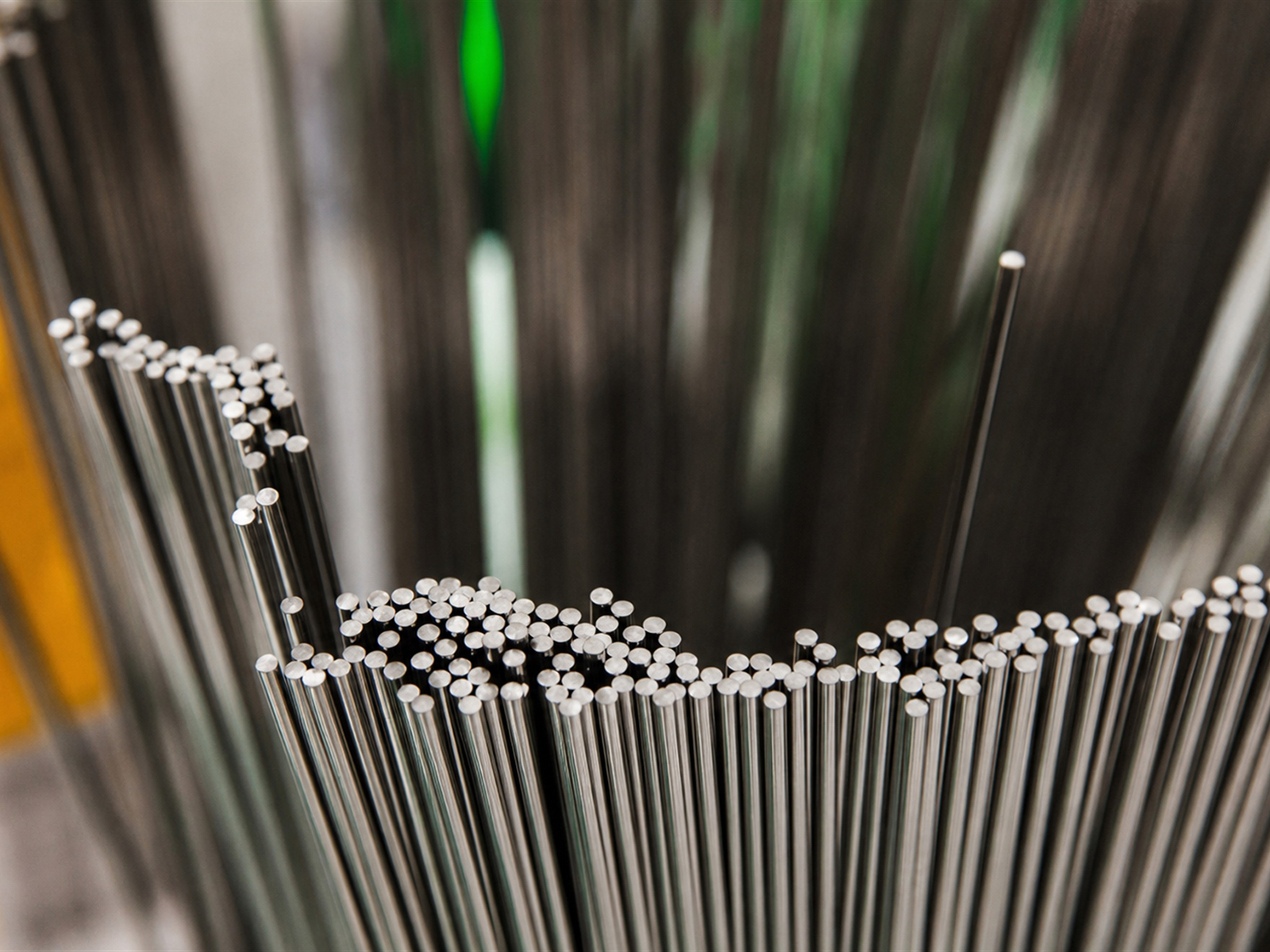
Metastable β-type is setting off a material revolution in the global high-end manufacturing field. This alloy material, known for its super elasticity, low density and excellent cold working properties, can achieve significant weight reduction while maintaining high strength, and is especially suitable for aviation medical, precision instruments and high-end consumer goods. TB13 (Ti-4Al-22V) solves many bottlenecks of traditional metal materials in lightweight design through precise ingredient ratio and advanced processing technology. Its unique beta phase structure gives the material excellent deformation recovery and fatigue resistance, while the strictly controlled nickel content ensures biocompatibility. From spectacle frames to medical devices, from aerospace fasteners to electronic precision components, TB13 Titanium Alloy Rods are redefining the standards expected of material performance in modern manufacturing.
1. Material properties and technical advantages of TB13 titanium alloy rods
(1) Microscopic mechanism of superelastic memory performance
The superelasticity of TB13 titanium alloy originates from the reversible phase transformation mechanism of its metastable β phase structure under the action of external force. When the material is bent or stretched, the β-phase lattice undergoes stress-induced martensitic transformation, and can completely return to its original state after unloading. This characteristic makes TB13’s unique structural characteristics enable TB13 rods to withstand up to 80% of the ultimate cold deformation without breaking during cold working; and in the service state after forming, its superelastic strain capacity far exceeds that of traditional stainless steel (3~5%), and it can withstand large-scale repeated bending without causing permanent plastic deformation at all.. In the glasses manufacturing industry, this means that the temples can withstand tens of thousands of folds while maintaining their original shape, significantly reducing the after-sales repair rate. Compared with traditional stainless steel materials, which can only withstand 3~5% elastic deformation, TB13 has extremely significant performance advantages.
(2) Density advantage of lightweight design
The material density is only 4.62 g/cm³, which is about 40% lighter than the 7.9 g/cm³ of stainless steel. Although its density (4.62 g/cm³) is slightly higher than the traditional α+β type TC4 titanium alloy (about 4.51 g/cm³), due to its higher strength-to-weight ratio and ultra-high elasticity, it can achieve a more significant comprehensive weight reduction effect in actual structural design., but the overall weight reduction effect is achieved through an excellent strength-to-weight ratio. In aerospace structural applications, every kilogram saved can save thousands of dollars in fuel costs. For medical devices and wearable devices, lightweighting directly translates into improved user experience, and long-term wearing will not cause a sense of oppression. This material property allows designers to create thinner, more ergonomic product forms while maintaining structural strength.
(3) Flexibility due to low elastic modulus
The elastic modulus of TB13 is about 70~80 GPa, which is much lower than the 200 GPa of stainless steel and the 110 GPa of ordinary titanium alloy. A lower elastic modulus means that the material deforms more under the same stress. This “compliance” is particularly important in precision elastic components. Components such as springs, buckles and connectors need to be deformed repeatedly, and low-modulus materials can effectively disperse stress concentration and avoid fatigue fracture. At the same time, this characteristic makes TB13 perform well in the field of medical orthodontics. Orthodontic archwires can exert continuous and gentle correction force without damaging the teeth and gum tissue.
2. Production process and quality control of TB13 titanium alloy rods
(1) Vacuum consumable arc remelting technology
The production process begins with the preparation of electrodes from high-purity raw materials, which are alloyed using vacuum consumable arc remelting (VAR) technology. The VAR process is carried out in a 10⁻³ Pa-level vacuum environment, effectively removing interstitial element impurities such as hydrogen, oxygen, and nitrogen to ensure material purity. During the smelting process, the Al (3.0~4.5%) and V (20.0~23.0%) contents are strictly controlled, and impurity elements such as iron, carbon, and nitrogen are controlled at trace levels. This precise ingredient management directly affects the mechanical property stability and corrosion resistance of the final product.
(2) Composite molding of hot working and cold working
The ingot is formed into a preliminary bar shape after high-temperature forging and rolling. The hot working temperature is usually controlled in the β phase zone of 800~950 °C to ensure structural uniformity. The excellent cold working performance significantly reduces the frequency of intermediate annealing during the cold drawing process, thus greatly improving production efficiency… Cold working not only improves dimensional accuracy (tolerances up to ±0.02 mm), but also increases material strength through strain hardening. This hot and cold composite molding process increases production efficiency by more than 30% compared with traditional titanium alloys, reducing manufacturing costs.
(3) Heat treatment and performance control
Heating in the β phase region (usually 750~850 °C) and then cooling rapidly allows the β phase to remain in a metastable state until room temperature, achieving excellent plasticity. Aging treatment (450~550 °C) significantly improves strength through the α phase precipitation strengthening mechanism, and the balance of hardness and toughness can be adjusted according to application requirements. This heat treatment responsiveness enables TB13 to meet the performance requirements of different industries: the eyewear industry requires high elasticity and low hardness, while aerospace fasteners require high strength and high fatigue life. A perfect heat treatment system is the core technology to achieve precise control of material properties.
| Processing status | Tensile strength (MPa) | Yield strength (MPa) | Elongation (%) | Typical applications |
| M state | 800~900 | 650~750 | ≥20 | Eyeglass frames, parts requiring cold processing |
| aging state | 1100~1300 | 1000~1200 | ≥10 | Aviation fasteners, high-strength structural parts |
| cold working state | 950~1050 | 850~950 | 12~18 | Elastic components, precision connectors |
3. Application practice of TB13 titanium alloy rods in high-end manufacturing fields
(1) Material innovation in the optical glasses industry
High-end eyewear manufacturing is the most mature application field of TB13 titanium alloy rods. Traditional nickel-chromium alloy frames have pain points such as heavy weight, susceptibility to allergies, and poor elasticity. TB13 perfectly solves these problems. The temples and frames are cold-formed from M-state rods, and use super-elasticity to achieve an “automatic reset” function – they can return to their original shape even if they are compressed and deformed. Nickel-free ingredients eliminate the risk of metal allergies and are especially suitable for people with sensitive skin. In the high-end glasses market in Japan and South Korea, TB13 material has become a symbol of quality, and the product price is 2 to 3 times higher than ordinary alloy frames.
(2) Biocompatibility applications in the field of medical devices
TB13 shows unique advantages in orthodontics, surgical instruments and implant support structures. Orthodontic archwires utilize their low elastic modulus properties to exert sustained and gentle correction force, accelerating tooth movement while reducing patient discomfort. Surgical instrument components such as micro holders, spring scissors, etc. need to be opened and closed repeatedly without fatigue failure. The high cycle life of TB13 can reach more than one million times. It complies with international medical titanium alloy standards and passed the ISO 10993 biocompatibility evaluation, laying a solid foundation for gaining access to medical devices from the US FDA and EU CE.
(3) Aerospace precision parts
The aviation field places stringent requirements on materials: light weight, high strength, fatigue resistance, and corrosion resistance. Fasteners, pins and connections machined from TB13 titanium alloy rods maintain stable performance in the temperature range of -50 °C to 150 °C. Non-magnetic properties avoid interference with avionics systems, which is particularly important where navigation equipment and sensors are installed. After a European aviation manufacturer used TB13 to replace traditional titanium alloy, the weight of a single aircraft was reduced by 12 kilograms, and the maintenance cycle was extended by 40%. The high-strength state after aging treatment can withstand high cyclic alternating loads and meet the 100,000-hour flight life requirement.
(4) Innovative applications of electronic precision manufacturing
In the field of 3C electronics and precision instruments, TB13 rods are processed into micro springs, connectors and structural supports. Components such as smart watch strap buckles, laptop hinges, and mobile phone SIM card holders require materials that are both strong enough and able to bend repeatedly. The cold working performance of TB13 makes precision cutting and micron-level tolerance control possible, and the surface roughness can reach Ra 0.4 μm. A Korean battery manufacturer uses TB13 to make battery pack connectors, using its excellent conductivity and corrosion resistance to increase product cycle life by 50%.
| Application areas | Typical products | critical performance requirements | TB13 advantages reflected |
| optical glasses | Temples, frames, nose pads | Lightweight, super elastic, hypoallergenic | Reduces weight by 35% and can withstand 20,000 folds |
| medical device | Orthodontic archwires, surgical instruments | Biocompatible, low modulus, corrosion resistant | Continuous and stable correction force, zero corrosion in body fluid environment |
| Aerospace | Fasteners, pins, clamps | High strength, fatigue resistance, non-magnetic | Fatigue life increased by 60%, weight reduced by 15% |
| Electronic precision | Connectors, springs, structural parts | High precision, repeated deformation, antimagnetic | Dimensional tolerance ±0.01 mm, life span of one million times |
| Marine Engineering | Corrosion-resistant fasteners, detection equipment | Resistant to salt spray and chloride ions | No corrosion after 5,000 hours of salt spray test |
4. Performance optimization and cost-benefit analysis of TB13 titanium alloy rods
(1) Multi-scenario performance customization strategy
Different application fields have significantly different requirements for material performance. TB13 achieves performance customization through heat treatment parameter adjustment. Solid solution state (or solid solution superelastic state) maintains maximum elongation and superelasticity; aviation companies purchase high-strength specifications in the aging state. The amount of cold working deformation is also a means of control – 30% cold drawing increases the strength by about 150 MPa but retains good plasticity, and 60% cold drawing obtains the highest strength but reduces the elongation to 12%. This flexible performance control capability enables TB13 to cover a wide range of applications from daily consumer goods to aerospace.
(2) Full life cycle cost advantage
Although the raw material price of TB13 is 3 to 4 times higher than that of stainless steel, the full life cycle cost analysis shows obvious advantages. In the field of marine engineering, stainless steel fasteners need to be replaced every 2 years, but TB13 can be used for more than 10 years, reducing maintenance costs by 80%. The after-sales repair rate in the glasses industry has dropped from 8% for ordinary alloys to less than 0.5% for TB13. The improvement of brand reputation has brought about room for premium prices. In the processing process, TB13’s excellent cold working performance extends the tool life by 2 times, the cutting parameters can be increased by 30% compared to ordinary titanium alloys, and the overall processing cost is actually reduced by 15-20%.
(3) Sustainable development and environmental protection value
Titanium metal can be 100% recycled and reused, and the recycling value of TB13 titanium alloy rod scrap is as high as 60% of the raw material cost. There is no need for surface treatment such as electroplating during the production process to avoid heavy metal pollution. The product’s ultra-long service life reduces resource consumption and waste generation, and is in line with the policy guidance of carbon neutrality and circular economy in Europe and the United States. A German automobile manufacturer uses TB13 fasteners in hydrogen fuel cell systems. Taking advantage of its hydrogen embrittlement resistance and lightweight properties, it not only meets technical requirements but also embodies environmental protection concepts, and obtained bonus points for green supply chain certification.
5. Global TB13 Titanium Alloy Rod Market Structure and Purchasing Guide
(1) Analysis of regional market demand characteristics
The U.S. market focuses on the aviation medical field and has strict requirements for material certification and traceability, requiring a material certificate (MTC) and non-destructive testing report. Germany’s high-end manufacturing industry pays attention to dimensional accuracy and surface quality, requiring rod straightness ≤1 mm/m and no scratch defects on the surface. Japan’s precision electronics industry requires small diameter (Φ1~5 mm) thin rods and wires, with tolerance requirements reaching the ±0.01 mm level. Demand in the Korean battery industry is growing rapidly, and the conductive properties and corrosion resistance of materials are valued. As emerging markets, India and Vietnam are cost-effective and accept large-volume supply of standard specifications.
(2) Key indicators for quality assessment
When purchasing TB13 rods, you need to focus on the following parameters: chemical composition deviation (Al and V content must be within the standard range), mechanical property consistency (strength fluctuation of the same batch of materials ≤ 50 MPa), metallographic structure uniformity (β grain size 50~150 μm), surface quality (no cracks, folds, oxide scale), dimensional accuracy (diameter, roundness, straightness). Regular suppliers should provide vacuum melting furnace batch numbers, forging and rolling records, heat treatment curves and piece-by-piece inspection reports. Ultrasonic flaw detection ensures that there are no internal defects, and for aerospace applications eddy current testing of surface integrity is required.
(3) Supply chain optimization and customized services
A domestic professional titanium alloy processing company is equipped with an Italian Danieli rolling production line, with an annual output of titanium rods and wires exceeding 20,000 tons. We provide customized services according to the needs of different industries: the eyewear industry can customize special elliptical cross-section rods, the medical equipment can provide surface polishing to mirror level, and the aerospace field can be precision processed into semi-finished products according to drawings. Stable supply capacity and a complete quality system ensure large-volume order delivery cycles and quality consistency. Long-term cooperative customers can enjoy technical support and application development assistance.
| target market | Main needs | Specification preference | Certification requirements |
| USA | aviation medical, defense | Φ6~50 mm, aged state | AMS standards, MTC certificates, NDT reports |
| Germany | Automobiles, precision machinery | Φ10~30 mm, high precision | DIN standard, dimensional inspection report |
| Japan | Electronics, optics | Φ1~8 mm, fine specifications | JIS standard, strict surface quality |
| South Korea | Batteries, consumer electronics | Φ3~12 mm, M state | KS standard, conductivity test |
| India/Vietnam | Industrial manufacturing | Regular specifications, large quantities | ISO certification, cost-effectiveness priority |
in conclusion
TB13 titanium alloy rod is becoming an indispensable material choice for high-end manufacturing due to its comprehensive properties such as super elasticity, lightweight, corrosion resistance and biocompatibility. From optical glasses to aerospace, from medical equipment to precision electronics, its application boundaries continue to expand. As the global manufacturing industry develops towards lightweight, high performance and sustainability, the market demand for TB13 will maintain strong growth. Selecting reliable suppliers, understanding material characteristics, and optimizing application processes are the key paths to achieve product differentiation and maximize cost-effectiveness.
FAQ
Q1: What are the unique advantages of TB13 titanium alloy rods compared with ordinary titanium alloys?
TB13 is a near-beta titanium alloy with excellent cold working performance and can withstand 80% deformation. Its super elasticity allows repeated large bends without permanent deformation. Its density is 40% lighter than steel while maintaining high strength. Its nickel-free composition ensures biocompatibility. These characteristics make it outstanding in the fields of glasses, medical and precision instruments.
Q2: How to choose the condition and specifications of TB13 rod according to application requirements?
For applications that require high plasticity and superelasticity (such as eyeglass frames), choose the M state. For high-strength scenes such as aviation fasteners, choose the aging state. Cold-processed parts can be customized in the cold-drawn state. The diameter specification is selected according to the product size. For precision parts, it is recommended to purchase finely ground bars to ensure tolerances. For mass production, conventional hot-rolled bars can be selected to reduce costs.
Q3: What matters need to be paid attention to during the processing of TB13 titanium alloy rods?
Titanium alloys have poor thermal conductivity and need to control the cutting speed to avoid overheating. It is recommended to use carbide or ceramic tools and provide sufficient cooling and lubrication. Cold bending takes advantage of its super elasticity without heating, but requires reasonable design of springback compensation. Welding should be carried out under argon protection to prevent oxidation, and slow cooling is required after heat treatment to avoid stress cracking.
call to action
Baoji Baoji Titanium Valley Titanium Nickel Zirconium Material Processing Co., Ltd., as a professional TB13 titanium alloy rod manufacturer and supplier, has advanced production lines and a complete quality system, and can provide Φ1~80 mm full specification rods and customized processing services. We serve global high-end customers such as aerospace, medical equipment, and precision electronics. Our products have passed ISO certification and provide a full set of material certifications. Welcome to inquire about technical solutions and bulk purchasing cooperation: sales@titaniumvalleys.com
References
Zhao Yongqing, Qu Hennglei, Zhou Wei. Research progress and application of near-beta titanium alloys [J]. Chinese Journal of Nonferrous Metals, 2020, 30(6): 1285-1299.
Boyer R, Welsch G, Collings E W. Materials Properties Handbook: Titanium Alloys[M]. ASM International, 2019: 623-645.
Li Shujun, Yang Rui, Zhang Jianwei. Microstructure and properties of TB13 titanium alloy and its application in medical devices [J]. Rare Metal Materials and Engineering, 2021, 50(3): 891-897.
Niinomi M, Nakai M, Hieda J. Development of new metallic alloys for biomedical applications[J]. Acta Biomaterialia, 2022, 98: 187-202.