
Analysis of the Corrosion Resistance of Titanium Alloys in Multicomponent Media Environments
- Gr1 Titanium Rod
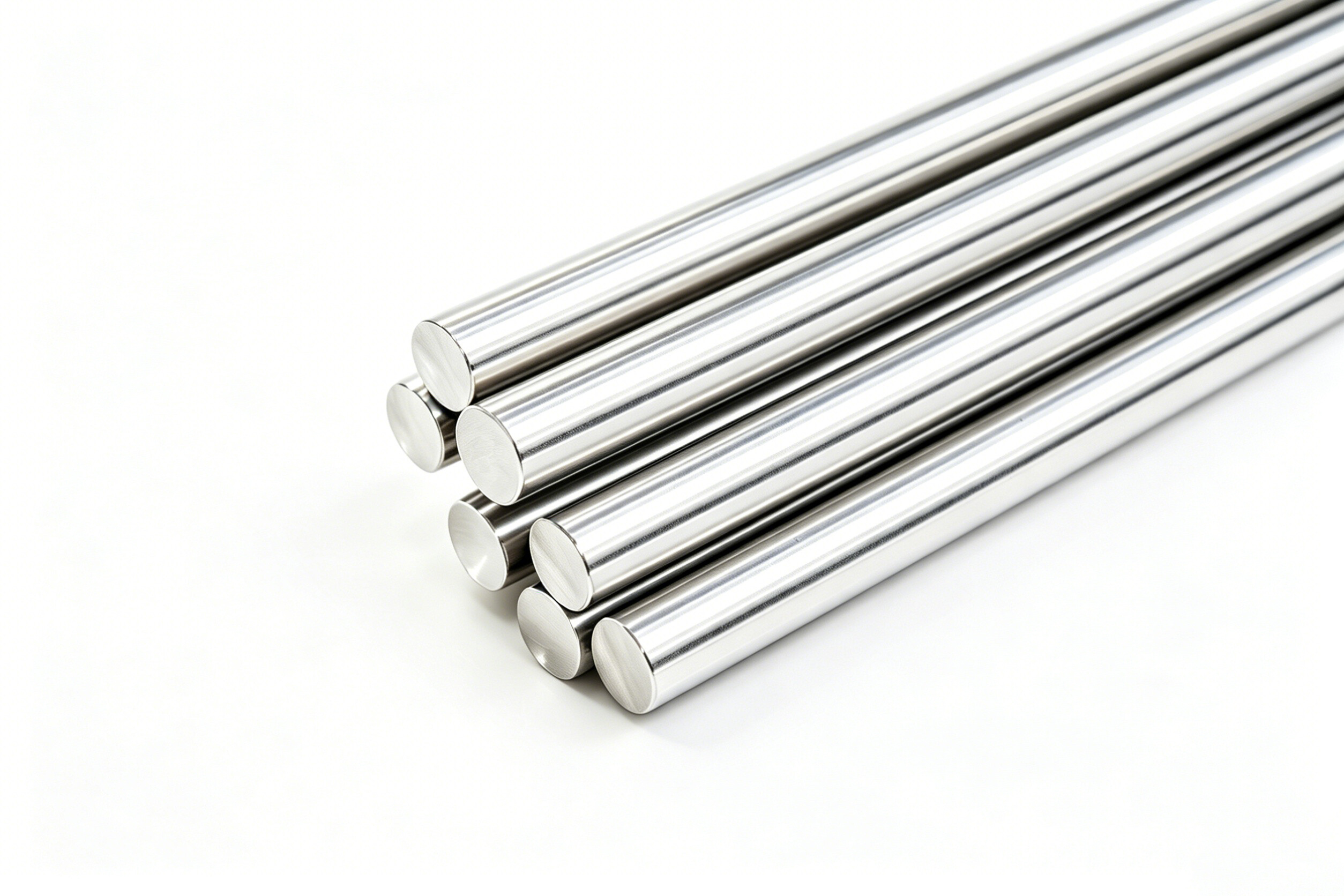
Due to their unique physicochemical properties, titanium and titanium alloys exhibit excellent corrosion resistance in fields such as chemical engineering, environmental protection, and marine engineering; however, their corrosion resistance is significantly influenced by the composition of the medium, temperature, and alloying elements. This paper systematically reviews the corrosion behavior and underlying mechanisms of titanium alloys across various media environments, thereby providing a theoretical basis for engineering applications.
I. Corrosion Resistance Performance in Chlorine-Containing Media
1. Stability in Wet Chlorine Systems
Titanium exhibits exceptional corrosion resistance in wet chlorine gas and in non-high-temperature, high-concentration chloride solutions (with the exceptions of ZnCl₂, AlCl₃, and CaCl₂). The dense oxide film (TiO₂) formed on its surface effectively blocks the penetration of chloride ions; consequently, titanium has been widely adopted in bleaching plants, electrolytic chlorine facilities, and wastewater treatment plants. However, in high-temperature (>100°C) and high-concentration chloride solutions, titanium is susceptible to crevice corrosion—particularly when in contact with organic materials such as polytetrafluoroethylene (PTFE). In such instances, the localized oxygen-deficient environment accelerates the breakdown of the oxide film, leading to a significant increase in the corrosion rate.
2. Hazardous Reactions in Dry Chlorine Systems
Dry chlorine gas undergoes a violent exothermic reaction with titanium (Ti + 2Cl₂ → TiCl₄ + ΔH); the heat generated by this reaction can trigger spontaneous combustion or even explosion. The reaction product, titanium tetrachloride (TiCl₄), continues to volatilize under low-humidity conditions, thereby exacerbating the combustion process. Research indicates that, in a chlorine gas environment at 200°C, commercially pure titanium requires a moisture content of at least 1.5% to maintain its passive state; at ambient temperatures, the required moisture content is ≥0.3%–0.4%. By optimizing their alloy compositions, titanium-palladium and titanium-nickel-molybdenum alloys can reduce this critical moisture threshold to below 0.1%, thereby significantly enhancing safety.
3. Suitability for Solutions Containing Chlorinated Compounds
Titanium demonstrates good corrosion resistance in solutions containing chlorinated compounds—such as chlorates, chlorites, hypochlorites, and perchlorates—though high-temperature and high-concentration conditions should be avoided. For instance, in the electrolytic production of sodium hypochlorite, titanium-based anodes have emerged as an ideal substitute for graphite, leveraging their superior corrosion resistance and electrical conductivity.
II. Differentiated Performance in Halogen-Containing Media
1. Stability in Bromine and Iodine Systems
The mechanism of corrosion resistance for titanium in bromine and iodine environments is analogous to that in chlorine environments: it relies on maintaining a trace amount of moisture in the medium (typically ≥0.5%) to facilitate the regeneration of the surface oxide film. In seawater desalination facilities, titanium tube heat exchangers—despite being continuously exposed to environments containing bromide ions—have shown no discernible signs of corrosion over extended periods of operation.
2. The Fatal Weakness of Fluorine-Containing Systems
Titanium’s corrosion resistance drops sharply in the presence of fluorine, hydrofluoric acid, and acidic fluoride solutions; even at extremely low concentrations (e.g., 0.1% HF), the protective oxide film can be destroyed. Its corrosion rate can exceed that observed in chlorine-containing systems by more than tenfold, and there is a lack of effective corrosion inhibitors for such environments. Exceptions exist, however, involving fluorides that form stable complexes with metal ions (such as Na₃AlF₆) or fluorocarbon compounds (such as PTFE); in these cases, the activity of the fluoride ions is suppressed, rendering them essentially non-corrosive to titanium.
3. The Synergistic Effects of Alloying Modification
By adding elements such as palladium, nickel, and molybdenum, the corrosion resistance threshold of titanium alloys can be significantly enhanced:
Titanium-Palladium Alloys: Palladium promotes the repair of oxygen vacancies within the oxide film, thereby lowering the critical moisture content threshold to 0.05%.
Titanium-Nickel-Molybdenum Alloys: Nickel and molybdenum form a solid solution that enhances the stability of the oxide film in reducing media, making these alloys suitable for mixed-acid environments containing both Cl⁻ and SO₄²⁻ ions.
Titanium-Zirconium Alloys: The addition of zirconium refines the grain structure, thereby improving resistance to crevice corrosion; these alloys demonstrate outstanding performance in marine engineering applications.
4. Recommendations for Engineering Applications
a. Control of Media Composition: In processes involving chlorine, moisture content and temperature must be strictly monitored to avoid entering the high-temperature, high-concentration corrosion zone.
b. Principles for Material Selection:
For wet chlorine environments, commercially pure titanium (GR1/GR2) is the preferred choice;
For dry chlorine operations, nitrogen blanketing or the use of titanium-palladium alloys is required;
For fluorine-containing systems, the use of titanium materials should be avoided in favor of alternatives such as Hastelloy or Monel alloys.
c. Optimization of Structural Design: Direct contact between titanium components and organic materials should be avoided; coatings or electrochemical protection methods should be employed to mitigate the risk of crevice corrosion.
The corrosion resistance of titanium alloys is distinctly dependent on the specific medium involved; their characteristic nature—where “success hinges on the oxide film, yet failure stems from it”—demands precise engineering control. Through strategic alloying modifications and process optimization, the boundaries for the application of titanium alloys in harsh corrosive environments are continuously expanding, providing critical material support for the long-term, reliable operation of chemical processing equipment. Future research needs to further elucidate the dynamic repair mechanisms of oxide films and develop fourth-generation titanium alloys suitable for supercritical chlorine systems.