
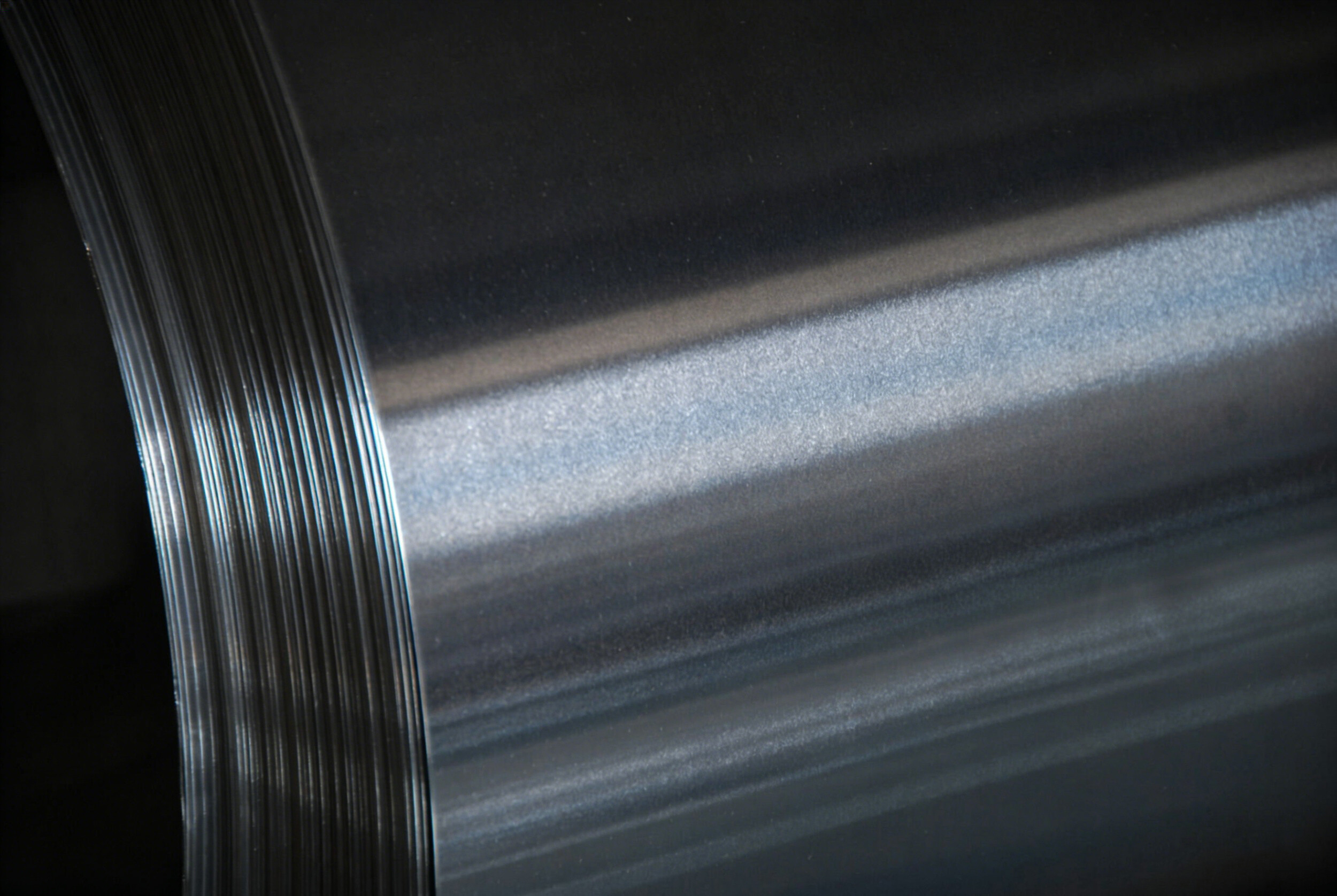
Gr1 titanium foil has a density of 4.51 g/cm³. This figure equals 57% of steel density. Its low weight makes it a top choice for aerospace, medical devices and new energy industries.
As a type of commercially pure titanium, annealed Gr1 titanium foil has tensile strength no less than 240 MPa, which meets ASTM B265 standards. Its low density cuts structure weight, lowers energy use and reduces transport costs. It also features good corrosion resistance and biocompatibility. All these strengths make it highly competitive in lightweight design and precision manufacturing.
1. Basic Knowledge of Gr1 Titanium Foil Density: Why 4.51 g/cm³ Matters
1.1 Density Definition and Physical Features of Gr1 Titanium Foil
Density means mass per unit volume. Gr1 titanium foil reaches 4.51 g/cm³ because of its single-phase alpha crystal structure and titanium content above 99.5%.
Among common metals, its density sits at a medium lightweight level. It is much lighter than stainless steel (7.9 g/cm³) and nickel alloy (8.9 g/cm³), but heavier than aluminum alloy (2.7 g/cm³). Exact density values guarantee reliable engineering calculation. They play a key role in aerospace weight planning and fuel cell stack design.
1.2 Density Comparison with Other Metal Materials
| Material Type | Density (g/cm³) | Weight Ratio vs. Titanium Foil | Main Application Limits |
| Gr1 Titanium Foil | 4.51 | Base (100%) | Relatively high cost |
| 304 Stainless Steel | 7.93 | 176% | Heavy weight load |
| 6061 Aluminum Alloy | 2.70 | 60% | Low strength and poor corrosion resistance |
| Zirconium Foil | 6.51 | 144% | High density |
| Nickel Foil | 8.90 | 197% | Greatly increases structure weight |
Gr1 titanium foil balances density and performance well. It has higher strength-to-weight ratio and better corrosion resistance than aluminum alloy. It cuts about 43% of total weight compared with stainless steel, and works better in chloride environments.
1.3 Practical Effects of Density on Material Performance
Density directly affects specific strength, a core index calculated by strength divided by density. The typical specific strength of annealed Gr1 titanium foil is about 66.5 MPa·cm³/g. This value beats most stainless steel grades.
The foil thickness ranges from 0.02 mm to 1.0 mm. Its low density prevents obvious deformation under its own weight even for large-area use. For electronic shielding and fuel cell bipolar plates, stable density keeps uniform stack thickness and high energy density.

2.How to Measure and Verify Gr1 Titanium Foil Density Accurately
2.1 Standard Test Methods and Equipment Requirements
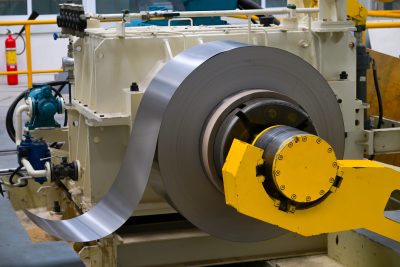
Workers mainly use the Archimedes principle, or combine precision scales with dimension calculation to test density. ASTM B311 sets clear test rules.
Weigh Gr1 titanium foil samples in air and distilled water separately. Calculate volume based on buoyancy difference. Use a micro balance with 0.01 mg resolution for ultra-thin foil below 0.02 mm. Keep the test environment at 20℃ ± 0.5℃. Remove surface oxide film from argon-annealed samples to avoid test errors.
2.2 Key Factors Affecting Density Test Results
Surface contamination is the main cause of inaccurate data. Residual rolling oil, oxide layer or absorbed water can push density reading up by 0.03 to 0.08 g/cm³. Ultrasonic cleaning with alkaline liquid removes surface dirt effectively.
Annealing process changes crystal structure. Continuous argon annealing creates even grains and avoids local density difference. Strictly control porosity for ultra-thin foil. Advanced rolling technology keeps porosity at an extremely low level.
2.3 Density Inspection in Quality Control
Modern production lines install online thickness gauges and area density testing systems. The system sends out alarms once density deviation exceeds 0.05 g/cm³. Staff can trace problems back to raw material batches and annealing parameters.
Third-party certifications include EN 10204 3.1 material certificates and ASTM B265 chemical composition reports. All batches keep density within 4.51 ± 0.05 g/cm³.
3. Practical Value of Gr1 Titanium Foil Density in Engineering Applications
3.1 Lightweight Design for Aerospace Industry
Low density brings obvious advantages for large thin-wall structures. For one aircraft engine cabin, replacing stainless steel with Gr1 titanium foil cuts dozens of kilograms in weight and reduces fuel consumption greatly.
Titanium foil works for solar panel substrates on satellites. It resists harsh space conditions and maintains stable mechanical performance for over 15 years. Advanced shape control technology solves springback problems of wide ultra-thin foil and meets composite lamination requirements.
3.2 Energy Density Optimization for New Energy Industry
| Application Type | Titanium Foil Size (mm) | Density Advantages | Performance Improvement |
| PEM Fuel Cell | 0.1 × 500 | 40% weight reduction vs. stainless steel | Higher power density |
| Lithium Battery Tab | 0.02 × 350 | Lighter single cell | Higher energy density |
| Electrolyzer Anode Substrate | 0.5 × 670 | Even current density | Higher electrolysis efficiency |
Low density of Gr1 titanium foil allows more cell stacks per unit volume in fuel cell bipolar plates. A hydrogen energy company reports higher volumetric power density after using 0.1 mm Gr1 titanium foil.
For lithium battery tabs, 0.02 mm ultra-thin foil with stable density creates even stress after welding. This extends battery cycle life.
3.3 Precision Manufacturing for Medical and Electronic Industries
Orthopedic implants need good biocompatibility and matched mechanical properties. Gr1 titanium foil has higher density than human bone (1.8-2.0 g/cm³). We make porous structures to lower apparent density and improve bone integration.
0.05 mm titanium foil provides reliable electromagnetic shielding. Its low density greatly cuts weight of large shielding covers. 0.03 mm titanium foil acts as heat conduction layer for FPC flexible circuits. Stable density prevents delamination after over ten thousand bends.
4. Common Density Related Problems and Solutions
4.1 Processing Issues Caused by Uneven Density
Density fluctuation over 0.1 g/cm³ in one foil roll leads to stress concentration and cracks during stamping. Uneven purity of titanium sponge or large temperature difference in annealing causes this problem.
Baoji Titanium Valley follows international standards to control impurities. Oxygen content stays below 0.18% and iron content below 0.20%. The 8-zone temperature control system in continuous annealing furnace keeps temperature difference within ±2℃. The standard deviation of density for full rolls stays below 0.015 g/cm³.
For customized ultra-thin foil from 0.001 mm to 0.008 mm, we add extra annealing steps. The elongation rate reaches no less than 27% for better ductility.
4.2 Link between Density and Surface Quality
Local density often goes wrong around surface defects like scratches and inclusions. Ultrasonic and alkaline cleaning removes metal scraps from rolling. Polishing process controls surface roughness at Ra 0.4 μm. These steps cut density test error by 80%.
Annealing under argon protection stops extra oxygen absorption. One batch had oxygen content reduced from 0.22% to 0.16%. Its density returned to standard 4.51 g/cm³ from 4.53 g/cm³, and surface color became uniform.
4.3 Strategies to Balance Cost and Performance via Density
Gr1 titanium foil costs 3 to 5 times more than stainless steel, but it has lower total life cycle cost.
1.0 mm Gr1 titanium foil works as lining for chemical equipment. Its low density cuts 15% investment on support structures. Good corrosion resistance extends service life from 3 years to 12 years.
0.05 mm titanium foil replaces traditional materials for sensor shells of precision instruments. Lower weight raises response speed by 18% and product added value by 30%.
Baoji Titanium Valley has an annual output of 3000 tons. Self-developed degreasing technology cuts product cost by 20% to 35% compared with imported goods. Our density stability reaches top international level.
5. Guide to Select Titanium Foil with Proper Density
5.1 Density Requirements for Different Applications
Aerospace structural parts: Prioritize specific strength. Choose 0.5 mm to 1.0 mm foil to balance rigidity and weight reduction.
Electronic shielding: Match density and conductivity. 0.02 mm to 0.05 mm ultra-thin foil meets lightweight and shielding needs.
Chemical anti-corrosion lining: Focus on corrosion resistance. 0.3 mm to 0.8 mm foil meets mechanical strength demands. Density has less impact here.
Fuel cell: Require even density. Strict thickness tolerance ensures uniform current distribution.
5.2 Key Evaluation Indexes for Supplier Technical Capacity
| Evaluation Item | High Quality Standard | General Industry Level |
| Density Control Precision | Batch standard deviation ≤ 0.02 g/cm³ | 0.03 – 0.05 g/cm³ |
| Ultra-thin Production Capacity | Minimum thickness 0.02 mm | 0.03 – 0.05 mm |
| Surface Quality | Stable dyne value | Obvious fluctuation |
| Dimensional Accuracy | Thickness tolerance ±0.003 mm | ±0.005 mm |
Check suppliers on precision rolling equipment, continuous annealing lines and vacuum furnace technology. Valid certificates such as ASTM B265 and EN 10204 ensure traceable density data.
Extra Value of Custom Processing Service
We provide one-stop service from titanium sponge to finished foil, including cleaning, polishing, annealing and precision slitting. All processes optimize density and surface quality together.
Tension adjustment on levelers removes waviness of 0.02 mm wide foil. The pass rate of Grade I flatness hits 98%. We supply bright and matte surface finishes to fit welding and coating work.
We offer OEM service for pure titanium, titanium alloy, zirconium foil and nickel strip. Product width ranges from 350 mm to 670 mm. Annual output of 3000 tons shortens delivery cycle for bulk orders by 40%.
Conclusion
The 4.51 g/cm³ density lays the foundation for lightweight advantages and excellent performance of Gr1 titanium foil. Precise density control, strict quality inspection and advanced processing technology help the material create great value in aerospace, new energy, medical and electronic fields. Choosing reliable suppliers with stable density and mature techniques optimizes product design and maximizes total life cycle economic benefits.
FAQ
1. Does density of Gr1 titanium foil change with thickness?
Density is an inherent property of metal and does not change with thickness. Ultra-thin foil below 0.05 mm may have micro pores or surface oxide. Its tested density may deviate 0.02 to 0.05 g/cm³ from standard value. High standard vacuum annealing and precision rolling keep stable density for all sizes.
2. How to judge titanium foil purity by density?
Standard density of Gr1 titanium foil (Ti ≥99.5%) is 4.51 g/cm³. A reading over 4.55 g/cm³ means possible high-density impurities such as iron. A reading below 4.48 g/cm³ means possible pores or oxide layers. Combine chemical tests on oxygen and iron content to check compliance with ASTM B265.
3. In which scenes can 4.51 g/cm³ titanium foil replace stainless steel?
Titanium foil works as a better substitute in these cases: chloride corrosion environments like marine engineering and chemical equipment, weight-sensitive parts for aerospace and portable medical devices, non-magnetic areas for precision instruments and MRI equipment, and food & pharmaceutical containers that contact human body. It has lighter weight, better corrosion resistance and lower total life cycle cost.
Looking for Reliable Gr1 Titanium Foil Manufacturer?
Baoji Titanium Valley Titanium Nickel Zirconium Material Processing Co., Ltd. is a professional high-end titanium foil manufacturer. We own advanced 20-high precision rolling lines with annual output of 3000 tons for wide ultra-thin titanium foil. Our density control precision reaches ±0.015 g/cm³. We customize products from 0.02 mm to 1.0 mm.
Contact us for technical solutions and quotes: sales@titaniumvalleys.com
References
Zhao Yongqing, Qu Henglei. Research on Microstructure, Properties and Heat Treatment of Commercially Pure Titanium[J]. Rare Metal Materials and Engineering, 2020, 49(6): 1923-1930.
Zhang Xiyan, Zhao Yongqing, Bai Chenguang. Titanium Alloys and Applications[M]. Beijing: Chemical Industry Press, 2005: 156-172.
ASTM International. ASTM B265-2020 Standard Specification for Titanium and Titanium Alloy Strip, Sheet, and Plate[S]. 2020.