
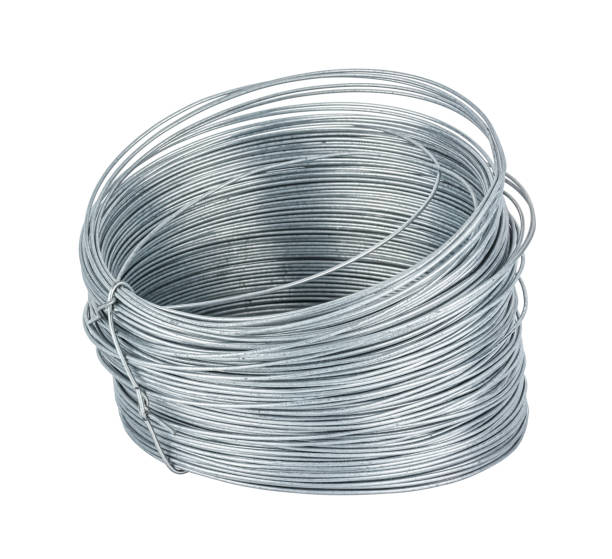
In high-end manufacturing and precision processing fields, material choices directly decide the final performance of products. Nickel 200 Wire is a typical product of commercially pure nickel materials. It owns good corrosion resistance, excellent electrical and thermal conductivity and fine processing ductility, and it is the preferred material for key industries including aerospace, chemical equipment and electronic manufacturing. This high-purity nickel wire has a nickel content above 99.0%, and it delivers irreplaceable application value in emerging fields like hydrogen energy technology, battery manufacturing and precision instruments.
Core Material Properties of Nickel 200 Wire
Nickel 200 wire is made of high-purity nickel with ≥99.6% content. It has stable structure and low impurity content. It shows extremely excellent corrosion resistance in strong alkali and reducing environments, which is obviously better than most nickel alloy materials. At the same time, it has good electrical and thermal conductivity, high ductility, and is easy to carry out ultra-fine wire drawing and complex forming processing. It also has good welding performance and processing compatibility. In terms of electrical conductivity, its conductivity is about 23% IACS (International Annealed Copper Standard), which is about one-fifth of the conductivity of pure copper. This level is above average among pure metals, much higher than common structural materials such as stainless steel. Although its electrical conductivity is not as good as copper, nickel 200 wire also has excellent alkali resistance and chloride ion corrosion resistance. So it has unique advantages in application scenarios that need both electrical conductivity and corrosion resistance, such as battery connectors, electrolytic cell tabs, fuel cell bipolar plate substrates and so on. In terms of mechanical properties, nickel 200 wire has medium strength and excellent toughness. It can maintain stable performance at room temperature and low temperature, and has a certain ferromagnetism. In contrast, nickel alloys obtain higher strength, more prominent high-temperature resistance and corrosion resistance advantages in strong acid and oxidizing environments by adding elements such as Cr and Mo. But they are usually inferior to pure nickel in terms of electrical conductivity, processability and cost control. Therefore, nickel 200 wire is more suitable for application scenarios that require high alkali resistance, electrical conductivity and processing performance, while nickel alloy materials are more suitable for engineering needs under high temperature, high strength and complex corrosion environments.
Analysis of Nickel 200 Wire Specification System and Quality Standards
Comparison of International Standard Systems
Major global markets adopt different standard systems to regulate pure nickel materials. The American standard ASTM B160 specifies the chemical composition, mechanical properties and dimensional tolerances of nickel wire in detail. The German standard DIN 17740 has wide recognition in the European market (material number 2.4066 is approximately equivalent). The Japanese Industrial Standard JIS H4553 focuses on purity control for electronic grade applications. Understanding these standard differences is crucial for cross-border procurement, especially in industries that require multi-country certification such as aerospace, where materials must meet the standard requirements specified by customers.
Wire Diameter Specifications and Tolerance Control
| Wire Diameter Range | Typical Application Fields | Typical Tolerance Value | Surface Quality Requirements |
| 0.025~0.5 mm | Precision Electronics, Sensors | ±0.005 mm | Bright Annealing, No Oxide Scale |
| 0.5~3.0 mm | Chemical Equipment, Springs | ±0.02 mm | Pickling or Mechanical Polishing |
| 3.0~10.0 mm | Welding Filler Materials | ±0.05 mm | Slight Oxidation Allowed, Polishable |
Wire diameter selection directly affects product performance and processing efficiency. Ultra-fine wire diameter products (less than 0.1 mm) have extremely high requirements for production equipment precision, requiring precision drawing and online detection technology. Medium wire diameter products (1~3 mm) dominate the market and are widely used in resistance heating elements, chemical filters and other scenarios. Thick-gauge wires are mainly used in welding fields, and special attention should be paid to surface cleanliness to ensure welding quality.
Industry Application Scenarios and Selection Strategies
Chemical and Petrochemical Fields
In chemical production systems, nickel 200 wire is mainly used to manufacture lye evaporator components, chlor-alkali electrolyzer components, chemical pump shaft seals and so on. When selecting, you should focus on the working medium composition, operating temperature and pressure parameters. For equipment handling sodium hydroxide solution, it is recommended to choose annealed nickel wire. Its good ductility is convenient for on-site cold forming. In working conditions containing trace oxidizing impurities, you should evaluate the passivation behavior of the material. If necessary, select higher purity specifications or adopt surface passivation treatment. In the welding structure design, you need to select the welding wire specification matching the base metal to avoid stress concentration caused by the difference in thermal expansion coefficient.
Electronics and Electrical Manufacturing Applications
| Application Type | Recommended Specifications | Key Performance Requirements | Typical Product Examples |
| Resistance Heating Elements | 0.5~2.0 mm | Stable Temperature Coefficient of Resistance | Industrial Furnace Heating Elements |
| Lead Frames | 0.1~0.5 mm | High Electrical Conductivity, Weldability | Semiconductor Packaging |
| Battery Connecting Sheets | 0.05~0.2 mm | Fatigue Resistance, Low Contact Resistance | Lithium Battery Tab Welding |
The electronics industry has strict requirements on material purity and surface quality. Battery manufacturers generally prefer bright annealed surfaces to ensure the stable operation of automatic welding equipment. For the consumer electronics OEM industry, stable delivery capacity and flexible small-batch customization services are required.

New Energy and Hydrogen Energy Technology Applications
Driven by the carbon neutrality goal, investment in hydrogen energy projects continues to grow. Nickel 200 wire plays a key role in fields such as alkaline electrolyzers, fuel cell interconnects, and hydrogen storage containers. Hydrogen energy applications require materials to have good hydrogen embrittlement resistance and long-term structural stability. It is recommended to choose low-stress products that have undergone special heat treatment. High-end manufacturing enterprises have strict requirements on material traceability. Each batch of products needs to provide detailed smelting records and performance test reports. For the bipolar plate coating application of proton exchange membrane fuel cells (PEMFC), ultra-fine wire diameter products are needed as spraying raw materials, and wire diameter uniformity directly affects coating quality.

Supplier Evaluation and Procurement Decision Points
Production Capacity and Technical Equipment Level
When evaluating suppliers, the advanced nature of production equipment is a core consideration. Advanced rolling and drawing equipment not only ensures the stability of product quality, but also achieves rapid specification switching and customized production. Key process equipment such as continuous annealing furnaces, online thickness measurement systems, and automatic winding devices determine the final performance consistency of products. It is recommended that purchasers require suppliers to provide detailed proof of process capabilities.
Quality Management System and Certification Qualifications
A full-process quality system is a basic requirement for high-end manufacturing enterprises. From incoming raw material inspection, smelting process monitoring, rolling parameter recording to finished product performance testing, each link should establish standard operating procedures (SOP) and critical control points (CCP). ISO 9001 quality management system certification is the basic threshold. Aerospace-grade products need to pass AS9100 certification, and medical device applications must comply with FDA or MDR requirements. Third-party testing reports provide independent quality verification. It is recommended to require suppliers to provide material performance test certificates from authoritative institutions (such as SGS, TÜV).
Supply Chain Stability and Technical Service Capabilities
| Evaluation Dimension | Characteristics of Excellent Suppliers | Risk Warning Signals |
| Delivery Cycle | 2~4 weeks for standard products, 6~8 weeks for customized products | Frequent delays and lack of production capacity planning |
| Inventory Management | Maintain safety stock for commonly used specifications | Reliance on spot purchases with large price fluctuations |
| Technical Support | Provide material selection suggestions and application guidance | Only conduct commercial transactions without technical communication |
Geopolitical risks and raw material price fluctuations make supply chain resilience a key consideration. High-quality suppliers should have diversified raw material procurement channels and establish a strategic inventory buffer mechanism. Technical service capabilities reflect the professional depth of suppliers, which should include value-added services such as material selection consulting, process problem diagnosis, and failure analysis support. It is recommended to establish a long-term strategic cooperative relationship with suppliers and lock in production capacity and prices through framework agreements to ensure supply continuity.
Future Development Trends and Technical Innovation Directions
Development of Ultra-High Purity and Special Properties
With the increasing requirements for material purity in fields such as semiconductors and precision sensors, the market demand for ultra-high purity nickel wire with a nickel content of more than 99.9% has grown significantly. The combined application of vacuum melting technology, zone refining process and electrolytic refining method makes it possible to control impurity elements to the ppm level. Functional surface treatment technologies, such as nano-coating, ion implantation and laser surface modification, can endow materials with special surface properties and expand the application boundary. For aerospace applications, grain-optimized products with higher temperature stability are being developed, and the ideal microstructure is obtained by controlling the recrystallization process.
Green Manufacturing and Circular Economy
Increasingly strict environmental regulations are driving the transformation of nickel material production towards greenization. Traditional pickling processes produce a lot of waste acid and wastewater, and new mechanical descaling and plasma cleaning technologies provide environmentally friendly alternatives. The recycling technology of waste nickel materials is constantly maturing, and high-purity nickel scrap can be re-purified by electrolysis to realize material recycling. The establishment of a carbon footprint accounting system makes low-carbon production processes a market competitive advantage. Using smelting and processing equipment driven by renewable energy can significantly reduce carbon emissions throughout the product life cycle. The EU Carbon Border Adjustment Mechanism (CBAM) may affect the import cost of metal materials in the future, and green manufacturing capacity will become an important condition for international market access.
Digitalization and Intelligent Manufacturing Upgrade
Industry 4.0 technology is reshaping the nickel wire production model. The online quality monitoring system collects product data in real time through laser diameter gauges and eddy current flaw detectors, and AI algorithms can assist in identifying defects and adjusting process parameters. Digital twin technology simulates the rolling process, optimizes pass design and deformation parameters, and improves the uniformity of material performance. The customer portal system provides self-service such as real-time order tracking, quality certificate download and technical document query to improve procurement efficiency. Big data analysis helps identify the law of quality fluctuations, predict equipment maintenance needs, and continuously improve production stability.
FAQ
- What are the main differences between Nickel 200 wire and Nickel 201?
Nickel 201 is a low-carbon version of Nickel 200, with a carbon content controlled below 0.02%. The low-carbon design prevents Nickel 201 from embrittlement caused by intergranular carbide precipitation in high-temperature environments above 316℃. It is more suitable for applications that require high-temperature annealing or post-welding heat treatment. The two have similar performance at room temperature.
- How to verify the real purity of Nickel 200 wire?
It is recommended to use Optical Emission Spectroscopy (OES) or X-ray Fluorescence (XRF) for chemical composition verification, focusing on detecting nickel content and impurity elements such as iron, copper and manganese. Regular suppliers should provide third-party testing reports. For critical batches, you can entrust an independent laboratory to conduct witness sampling tests to ensure the material meets the requirements of standards such as ASTM B160.
- What precautions should be taken for nickel wire storage?
It should be stored in a dry and ventilated environment, avoiding contact with acid and alkali substances. It is recommended to use moisture-proof packaging, with relative humidity controlled below 60%. Bright annealed products are sensitive to surface oxidation, so they should be used as soon as possible after opening or stored in vacuum packaging. For long-term storage, regular inspections are required. If surface oxidation is found, cleaning should be carried out in time to avoid affecting subsequent processing performance.
Looking for a reliable Nickel 200 wire manufacturer?
Baoji Titanium Valley Titanium Nickel Zirconium Material Processing Co., Ltd., as a professional supplier of high-purity nickel wire, has world-class production equipment and a full-process quality control system, and can provide customized solutions. Welcome to contact our technical team for professional material selection advice: sales@titaniumvalleys.com
References
- National Technical Committee for Nonferrous Metals Standardization. GB/T 5235-2021 Wrought Nickel and Nickel Alloys – Designations and Chemical Compositions[S]. Beijing: China Standards Press, 2021.
- Liu Shengxin (Editor-in-Chief). Practical Metal Materials Handbook[M]. 2nd Edition. Beijing: China Machine Press, 2017.
- Hydrogen Energy Professional Committee of China Renewable Energy Society (Organized and Compiled). Hydrogen Energy Handbook[M]. Beijing: Chemical Industry Press, 2024.
- Editorial Board of “Nonferrous Metal Materials Handbook”. Nonferrous Metal Materials Handbook[M]. Beijing: Chemical Industry Press, 2020.