
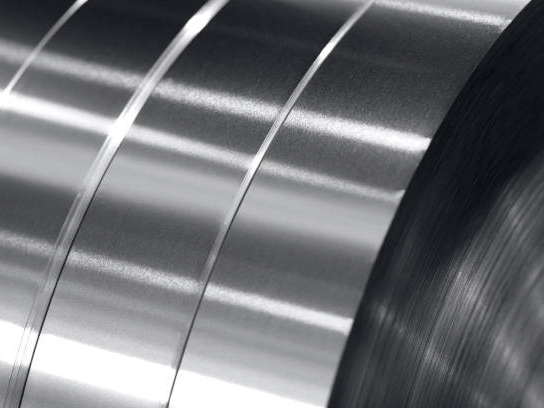
Mechanical properties act as core indicators to judge the practical value of Nickel 201 foil. Nickel 201 foil is low-carbon high-purity nickel alloy with carbon content below 0.02%. Annealed foil carries tensile strength from 350 MPa to 420 MPa and elongation above 25%, and many batches hit over 30%. Cold-worked foil raises tensile strength to 500–600 MPa. Its balanced strength and ductility come from fine grain structures and low-carbon formula. The material supports complex forming work and holds enough mechanical support at the same time. Compared with Nickel 200 foil, Nickel 201 foil resists graphitization better and keeps stable internal structures under temperatures up to 600°C. It removes brittleness risks from carbon precipitation. This feature brings huge value to battery tabs, electrolytic electrodes and high-temperature conductive components.
1. Basic Mechanical Property Parameters of Nickel 201 Foil
1.1 Strength Comparison Between Annealed and Cold-Worked States
Nickel 201 foil delivers totally different mechanical traits under different heat treatment states. Annealed state (State M) uses continuous annealing under protective atmosphere with temperature accuracy of ±2°C. The process forms uniform recrystallized structures and locks tensile strength between 350 MPa and 420 MPa. This strength level meets load demands for most conductive structural parts. Cold-worked state (State Y) gains work hardening via multiple passes of precise cold rolling. Its tensile strength jumps to 500–600 MPa, while elongation drops to above 8%. It fits applications that require high structural rigidity.
1.2 Engineering Value of Ductility Index
Elongation above 25% lets Ni201 foil handle complex forming processes such as stamping, bending and deep drawing. Low-carbon composition cuts carbide precipitation along grain boundaries and makes grain boundary sliding smoother. Even ultra-thin foil between 0.03 mm and 0.8 mm thick resists cracks effectively. On automated stamping lines, outstanding ductility lifts finished product rates and lowers waste loss.
1.3 How Physical Features Shape Material Performance
Density of 8.9 g/cm³ sets the strength-to-weight ratio of Nickel 201 foil. Electronic shielding products pursue lightweight design. Manufacturers pick ultra-thin foil thinner than 0.05 mm. These foils maintain full shielding performance and cut total part weight sharply. Strict production control limits property differences between batches. This advantage matters greatly for mass industrial manufacturing.
2. Micro Mechanisms and Influencing Factors of Tensile Strength
2.1 Grain Structure Decides Tensile Strength
Fine grain strengthening creates the basic strength of Nickel 201 foil. Multiple precise rolling passes build dense dislocation tangles inside the material and refine grains down to micrometer sizes. The Hall-Petch rule states finer grains block dislocation movement more thoroughly, which brings higher macro tensile strength. Annealing controls recrystallization temperature and holding time. It restores ductility and keeps partial fine grain strengthening effects, so the material reaches the best balance of strength and ductility.
2.2 Strengthening and Stabilizing Effects of Low Carbon Content
Carbon limit ≤0.02% marks the key difference between Nickel 201 and Nickel 200 (carbon ≤0.15%). Carbon atoms stay as interstitial solid solution inside nickel matrix. Excess carbon forms carbide precipitates at grain boundaries. These brittle phases expand under high temperature or long service time and reduce material toughness. Low-carbon raw material eliminates this hidden danger fundamentally. The foil keeps stable mechanical performance from 315°C to 600°C and avoids graphitization brittleness.
2.3 Cold Work Hardening Mechanism and Recovery Process
Cold rolling pushes dislocation density up exponentially inside the foil. Dislocations interact with each other and form stable tangled structures. This micro change generates higher tensile strength in cold-worked foil. Deformation rates over 60% push tensile strength past 600 MPa. Annealing triggers recovery and recrystallization stages. The recovery stage rearranges dislocations and releases internal stress. The recrystallization stage generates new distortion-free grains and brings ductility back to the material. Factories adjust annealing temperature between 600°C and 700°C to create customized strength-ductility combinations.
3. In-Depth Evaluation of Ductility and Forming Capacity
3.1 Standard Test Methods for Elongation
Elongation tests of Nickel 201 foil follow ASTM B162 standards. Testers use standard tensile samples with 50 mm gauge length. Annealed foil shows uniform elongation over 25% before fracture under uniaxial tension, and optimized batches reach above 35%. This index directly links to material forming limits. Higher elongation supports deeper stamping depths and raises success rates for complex shaped parts.
3.2 Bending Performance and Minimum Bending Radius
Real-world applications often require 90° or 180° bending on Nickel 201 foil. Annealed foil reaches minimum bending radius equal to one times material thickness (1T), much better than cold-worked foil (2T to 3T). Low-carbon grain boundaries carry high fluidity to deliver this great bending ability. On stretched outer areas during bending, grain boundary sliding and dislocation movement coordinate deformation and stop crack generation. A 0.1 mm thick foil can complete extreme bending with a 0.1 mm radius.
3.3 Ultimate Performance of Deep Drawing Forming
Deep drawing ratio (drawing depth / blank diameter) works as a key index to judge forming capacity. Annealed Nickel 201 foil achieves drawing ratios from 1.8 to 2.2. It fits deep cavity parts such as battery shells and sensor housings. The foil carries a work hardening index (n value) of 0.25–0.30 during forming. This moderate strength growth speed prevents early fracture and locks stable part shapes via work hardening.
Mechanical Property Comparison of Nickel 201 Foil Under Different Supply States
| Supply State | Tensile Strength (MPa) | Yield Strength (MPa) | Elongation (%) | Hardness (HV) | Suitable Applications |
|---|---|---|---|---|---|
| Annealed (M) | 350–420 | 100–150 | ≥25 | 90–120 | Complex stamping, deep drawing |
| Half-Hard (H) | 450–520 | 250–320 | 12–18 | 140–170 | Elastic connecting parts |
| Cold-Worked (Y) | 500–600 | 380–450 | ≥8 | 180–220 | High-rigidity support structures |
4. High-Temperature Performance and Long-Term Service Stability
4.1 Tensile Strength Retention Rate at High Temperature
Nickel 201 foil’s core advantage lies in its strength retention rate under temperatures up to 600°C. Standard test data shows after 1000 hours of continuous exposure at 315°C, the foil still holds over 85% of its room-temperature tensile strength, with elongation loss below 20%. Low-carbon composition stops carbide precipitation and growth, keeps clean grain boundaries, and maintains normal dislocation sliding mechanisms. In contrast, Nickel 200 only retains around 75% tensile strength under identical test conditions.
4.2 Anti-Graphitization Brittleness Mechanism
Common carbon-containing nickel materials face graphitization risks from 315°C to 600°C. Carbon separates out from solid solutions and forms graphite layers at grain boundaries, which sharply increases material brittleness. Nickel 201 foil limits carbon content below 0.02% and removes the thermodynamic driving force for graphite precipitation. Microscopic analysis confirms no visible carbide phases appear along grain boundaries after 500 hours of aging at 600°C, and the material keeps strong intergranular bonding force.
4.3 Creep Resistance and Dimensional Stability
Creep deformation under long-term high-temperature loads judges the reliability of structural materials. Nickel 201 foil delivers steady-state creep rates below 10⁻⁸ s⁻¹ under 400°C and 100 MPa stress. This slow dimensional change supports thousands of stable working hours for electrolytic cell electrodes and vacuum heating components. High sliding resistance of low-carbon grain boundaries creates its strong creep resistance.
Temperature-Performance Correlation Data of Nickel 201 Foil (Typical Values)
| Test Temperature (°C) | Tensile Strength Retention Rate (%) | Elongation Retention Rate (%) | Electrical Conductivity Change (%) | Recommended Applications |
|---|---|---|---|---|
| Room Temperature (25) | 100 | 100 | 0 | Normal-temperature electronic parts |
| 200 | 95 | 95 | -2 | Medium-temperature conductive structures |
| 400 | 88 | 82 | -5 | High-temperature electrodes |
| 600 | 75 | 70 | -8 | Short-term extreme-temperature uses |
5. Performance Matching and Material Selection Strategies for Practical Applications
5.1 Strength Requirements for New Energy Battery Tabs
Lithium battery tabs need enough tensile strength to bear ultrasonic welding stress (transient stress reaches 200–300 MPa) and good ductility to adapt to cell expansion. 0.1–0.15 mm thick annealed Nickel 201 foil fully meets these standards. Its 380 MPa tensile strength guarantees solid welding joints, and 28% elongation tolerates repeated cyclic deformation. Compared with pure copper tabs, Nickel 201 foil shows better high-temperature oxidation resistance and fits safety standards of high-nickel ternary battery systems.
5.2 Comprehensive Performance Standards for Electrolytic Cell Electrodes
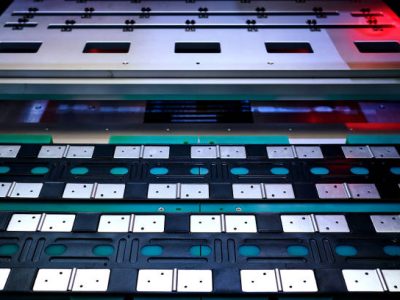
Anode plates made of Nickel 201 inside chlor-alkali electrolytic cells must satisfy three rules: first, strong resistance to concentrated alkaline liquid (30% NaOH solution); second, stable conductivity under current density of 2000 A/m²; third, stable strength under working temperatures from 80°C to 90°C. Factories pick 0.5–0.8 mm thick cold-worked foil for this use. Its high tensile strength locks precise dimensions, and alkaline cleaning plus passivation treatment builds dense protective oxide layers on surfaces. Real operation records prove Nickel 201 electrodes extend service life by over 40% compared with standard nickel electrodes.
5.3 Balance Between Elasticity and Conductivity for EMI Shielding Parts
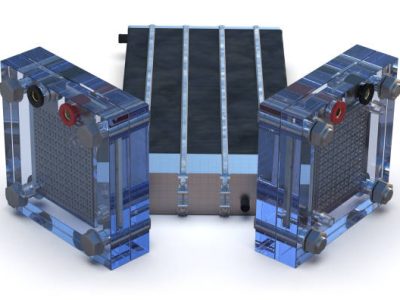
Electromagnetic shielding covers demand high electrical conductivity to hit shielding efficiency above 60 dB and moderate elasticity to secure snap-fit connections. 0.03–0.05 mm thick half-hard Nickel 201 foil controls cold rolling reduction at 30–40%. It reaches 450 MPa tensile strength and 15% elongation. The foil maintains consistent conductive paths with conductivity above 13% IACS and delivers 0.3–0.5 N snap rebound force. Matte surface treatment further stabilizes contact resistance.

Performance Demand Matching for Typical Application Scenarios
| Application Field | Recommended Thickness (mm) | Recommended Supply State | Key Performance Requirements | Core Performance Advantages |
|---|---|---|---|---|
| Power Battery Tabs | 0.10–0.15 | Annealed | Tensile ≥380 MPa, Elongation ≥25% | Strong welding joints + cyclic deformation durability |
| Electrolytic Electrode Plates | 0.50–0.80 | Cold-Worked | Tensile ≥500 MPa, Excellent Corrosion Resistance | Stable performance under high temperature and strong alkali |
| EMI Shielding Covers | 0.03–0.05 | Half-Hard | Shielding Efficiency ≥60 dB, Good Elasticity | Balanced conductivity and snap connection reliability |
| Precision Connecting Parts | 0.08–0.12 | Annealed | Elongation ≥30%, High Surface Cleanliness | Strong capacity for complex stamping forming |
Conclusion
Nickel 201 foil provides adjustable tensile strength ranging from 350 MPa to 600 MPa, outstanding ductility above 25% and stable mechanical performance under temperatures up to 600°C. These strengths create great application value across new energy, electronics and chemical industries. Its low-carbon formula brings reliable anti-graphitization ability. The foil retains steady mechanical properties after long high-temperature service and solves the brittleness flaw of ordinary nickel materials. Buyers select proper supply states and thickness sizes, combine precise processing techniques, and fully release the material’s potential to reach the best balance of performance and production cost.
FAQ
Q1: What core mechanical differences exist between Nickel 201 foil and Nickel 200 foil?
The two materials cover similar tensile strength ranges. Nickel 201 foil limits carbon content below 0.02%, while Nickel 200 allows carbon up to 0.15%. Nickel 201 avoids brittleness from carbide precipitation between 315°C and 600°C. Its long-term strength retention rate runs 10–15% higher, so it works better for high-temperature electrochemical equipment.
Q2: How to choose annealed or cold-worked foil based on application scenarios?
Pick annealed foil (elongation ≥25%) for parts that need complex stamping forming, such as deep-drawn shells and precision connectors. Select cold-worked or half-hard foil (tensile strength ≥500 MPa) for structural parts that require high rigidity or elastic rebound, like shielding shells and spring strips.
Q3: How manufacturers secure strength reliability of ultra-thin Nickel 201 foil (below 0.03 mm)?
Precise rolling controls thickness tolerance at ±0.002 mm and removes weak areas with local thickness reduction. Continuous annealing holds temperature accuracy at ±2°C to create uniform internal structures. Full automated production lines prevent artificial surface damage. Actual tests confirm 0.03 mm thick Nickel 201 foil keeps stable tensile strength from 360 MPa to 400 MPa.
Searching for a Trusted Nickel 201 Foil Manufacturer?
Baoji Titanium Valley Titanium, Nickel & Zirconium Material Processing Co., Ltd. focuses on precision processing of high-end nickel foil. We operate a 750 mm 20-high rolling mill and full continuous annealing line. Our Nickel 201 foil covers thickness from 0.03 mm to 0.8 mm and width from 350 mm to 670 mm, with annual output of 3,000 tons. We deliver one-stop service including raw material inspection and customized processing. All products comply with ASTM B162 standards and come with complete material test reports. Contact us for technical support and price quotations: sales@titaniumvalleys.com
References
- China Nonferrous Metals Industry Association. Nickel-Based Alloy Material Handbook (3rd Edition)[M]. Beijing: Metallurgical Industry Press, 2021.
- Wang Xiaofeng, Li Minghua. Research on Microstructure Stability of Low-Carbon Nickel Under High Temperature[J]. Rare Metal Materials and Engineering, 2019, 48(6): 1823-1829.
- National Technical Committee for Nonferrous Metals Standardization. GB/T 2056-2020 Nickel and Nickel Alloy Strip and Foil[S]. Beijing: China Standards Press, 2020.
- Zhao Yongqing, Qu Henglei. Forming Performance and Heat Treatment Processes of Commercially Pure Nickel[J]. Transactions of Materials and Heat Treatment, 2018, 39(4): 72-78.
- Zhang Jianmin, Li Huaqiang. Applications and Material Selection of Pure Nickel and Nickel-Based Alloys in Chemical Equipment[J]. Chemical Equipment and Piping, 2021(3): 45-52.