
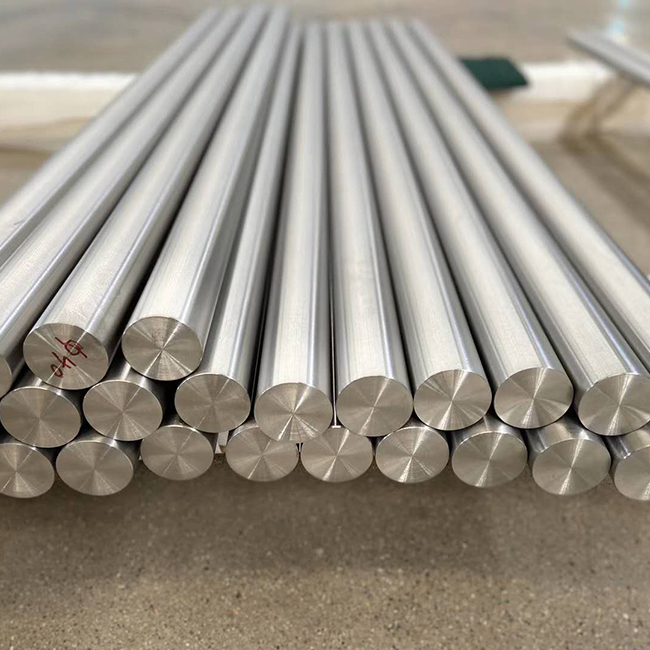
The production technology of Ni200 bars covers a complete process chain from vacuum melting to precision forming. Ni200 acts as high-purity commercial nickel material with nickel content ≥99.0% and typical purity up to 99.6%. Factories produce Ni200 bars via multiple process routes: hot rolling, hot forging, cold drawing and bright turning. Core manufacturing technologies include vacuum induction melting to secure material purity, precision forging to control uniform internal microstructure, and multi-pass cold working to reach high dimensional accuracy. Three delivery states — annealed state (M), hot-worked state (R) and cold-worked state (Y) — match diverse application demands. Advanced production processes let Ni200 bars deliver strong alkali corrosion resistance, stable electrical and thermal conductivity and good machinability for chemical, electronic and marine engineering fields.
1. Core Manufacturing Process Flow of Ni200 Bars
1.1 Vacuum Melting Technology Guarantees Raw Material Purity
Vacuum Induction Melting (VIM) serves as the mainstream melting method for Ni200 bar production. This process runs inside a high-vacuum chamber and effectively removes gaseous impurities and non-metallic inclusions. During melting, high-purity electrolytic nickel melts inside the vacuum furnace and completes full degassing to form dense, uniform ingots. This process locks nickel content above 99.0% with typical values hitting 99.6%. It keeps impurity elements such as iron, carbon and sulfur within limits of standard ISO 9723. Clean chemical composition builds the foundation for Ni200 bars’ outstanding alkali resistance and conductive performance.
1.2 Forming Technology Routes of Forging and Rolling
Hot forging takes place at 1000–1100°C. Multi-directional forging breaks down as-cast microstructures and eliminates internal defects. Manufacturers set forging ratios above 3:1 to refine internal grains evenly. Continuous multi-stand hot rolling runs at 900–1050°C. Reasonable distribution of deformation volume balances dimensional precision and surface quality of finished bars. Cold drawing makes small-diameter bars with high accuracy. Multiple drawing passes reduce diameter step by step, paired with intermediate annealing steps. The final finished bars hold dimensional tolerances within ±0.05 mm.
1.3 Heat Treatment and Surface Finishing Processes
Annealing acts as a key production step for Ni200 bars. Manufacturers hold bars at 650–800°C under protective atmosphere for 1–2 hours, then cool inside the furnace or in open air. This step eliminates work hardening, restores material ductility and achieves low magnetism. Bright annealing runs under hydrogen or vacuum atmosphere to generate smooth surfaces. Surface finishing covers pickling, polishing and bright turning. These procedures strip oxide scales and surface flaws, and control surface roughness Ra ≤ 0.8 μm. Strict dimensional inspection and ultrasonic flaw detection secure consistent quality of every single bar.
Property Comparison of Ni200 Bars Under Different Delivery States
| Delivery State | Heat Treatment Process | Tensile Strength (MPa) | Yield Strength (MPa) | Elongation (%) | Hardness (HB) | Key Application Features |
|---|---|---|---|---|---|---|
| Annealed (M) | 650–800°C annealing | 380–480 | 100–200 | ≥40 | ≤150 | High ductility, easy forming, low magnetism |
| Hot-Worked (R) | Direct delivery after hot rolling / hot forging | 450–550 | 150–250 | ≥30 | 150–180 | Medium high strength, surface with oxide scales |
| Cold-Worked (Y) | No annealing after cold drawing | 550–750 | 350–600 | ≥12 | 180–220 | Ultra-high strength, precise dimensions, requires post annealing |
| Bright Annealed | Hydrogen-protected annealing + fine grinding | 380–480 | 100–200 | ≥40 | ≤150 | Mirror smooth surface, zero oxide scales, fits precision parts |
2. Machining Technology Differences for Ni200 Bars of Various Sizes
2.1 Forging Forming Technology for Large-Diameter Bars
Free forging or die forging produces Ni200 bars over 100 mm in diameter. Free forging uses basic steps including drawing, upsetting and punching to gradually shape ingots into target sizes. Production teams maintain tight control over forging temperature windows. Excessively high temperatures create oversized grains, while low temperatures easily trigger surface cracks. Materials need repeated heating during forging, with each pass holding deformation at 30–40%. Large hydraulic presses or quick forging machines deliver powerful pressure to fully process thick cross-sections. The final bars carry uniform internal microstructures and isotropic mechanical performance.
2.2 Rolling and Drawing Processes for Medium & Small-Diameter Bars
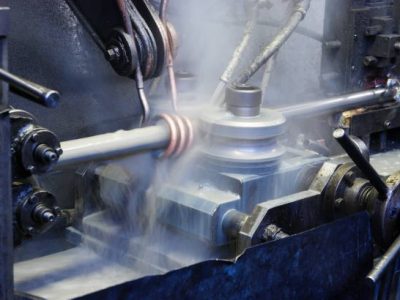
Hot rolling or hot extrusion makes bars 20–100 mm wide. Advanced rolling lines install precise control systems to regulate temperature, rolling speed and tension. Well-designed rolling passes and balanced deformation distribution avoid surface laps and internal cracks. Cold drawing mainly manufactures bars thinner than 20 mm. Hard alloy dies reduce bar diameter step by step. Cold drawing creates work hardening inside materials, so intermediate annealing becomes necessary after 50–70% deformation to restore ductility for further processing.
2.3 Special Forming Technology for Shaped Bars
Shaped bars such as square bars and hexagonal bars rely on custom rolling passes or drawing dies. Square bar rolling uses oval-square pass systems, and multi-pass reverse rolling ensures even side dimensions. Hexagonal bars take shape via hexagonal rolling passes or hexagonal drawing dies. Shaped bars bring higher machining difficulty than round bars. Stress concentration and surface defects easily appear at edges. Precision pass design and strict process parameter control decide the finished quality of shaped bars. Shaped bars with high surface requirements receive extra fine grinding or wire cutting to reach ultra-precise dimensions.
Size and Property Reference of Main Ni200 Bar Specifications
| Bar Specification | Main Machining Process | Surface Condition | Dimensional Tolerance | Typical Applications |
|---|---|---|---|---|
| Φ10–20 mm | Cold drawing + annealing | Bright / Pickled | ±0.05 mm | Electronic components, precision springs |
| Φ20–50 mm | Hot rolling + cold drawing | Turned / Polished | ±0.1 mm | Chemical pump shafts, valve stems |
| Φ50–100 mm | Hot rolling + annealing | Pickled / Turned | ±0.3 mm | Heat exchangers, electrode plates |
| Φ100–300 mm | Hot forging + hot rolling | Turned / Rough machined | ±0.5 mm | Large chemical equipment, reactor parts |
| Square Bar 20–80 mm | Shaped hot rolling | Pickled | ±0.3 mm | Fasteners, mechanical structural parts |
| Hexagonal Bar 15–60 mm | Shaped cold drawing | Bright polished | ±0.1 mm | Bolts, automatic lathe workpieces |
3. Key Quality Control Points During Ni200 Bar Machining
3.1 Precise Control of Chemical Composition
Chemical composition sets the core performance of Ni200 bars. Standard ASTM B160 states these limits: nickel plus cobalt ≥99.0%, iron ≤0.40%, carbon ≤0.15%, sulfur ≤0.01%, phosphorus ≤0.015%. Factories adopt electrolytic nickel or high-purity nickel sheets as raw materials to stop impurity accumulation from recycled scrap. Spectral analysis monitors composition in real time during melting, and workers add pure nickel to fine-tune ratios when needed. Every production batch of finished bars receives full elemental analysis. This step guarantees chemical composition meets standard rules and delivers stable, consistent material performance to downstream buyers.
Chemical Composition Control Standards for Ni200 Bars
| Element | ASTM B160 Standard Limit (%) | High-Purity Grade Control Limit (%) | Influence on Material Performance |
|---|---|---|---|
| Ni+Co | ≥99.0 | ≥99.6 | Determines base mechanical properties and corrosion resistance |
| Fe | ≤0.40 | ≤0.20 | Excess iron cuts corrosion resistance and electrical conductivity |
| C | ≤0.15 | ≤0.08 | Changes high-temperature performance and grain boundary stability |
| Mn | ≤0.35 | ≤0.15 | Small amounts bring benefits, high content lowers material purity |
| Si | ≤0.35 | ≤0.15 | Raises tensile strength but reduces ductility |
| Cu | ≤0.25 | ≤0.10 | Trace copper slightly improves corrosion resistance |
| S | ≤0.01 | ≤0.005 | Triggers hot brittleness, requires strict restriction |
| P | ≤0.015 | ≤0.008 | Triggers cold brittleness, requires strict restriction |
3.2 Uniformity Control of Microstructure
Uniform microstructures directly affect Ni200 bars’ corrosion resistance and machinability. Sizable columnar grains from as-cast ingots need full forging to break down, which generates uniform recrystallized structures. Metallographic inspection demands grain size grades 5–7, with no obvious banded structures or element segregation. Production teams adjust annealing temperature and holding time precisely based on prior deformation volume. This setup achieves complete recrystallization without abnormal grain growth. Ultrasonic flaw detection follows ASTM A609/A609M Class A standards, and bars cannot carry flaw signals equivalent to defects larger than Φ1 mm. Even microstructure keeps consistent mechanical performance across all sections of each bar.
3.3 Management of Surface Quality and Dimensional Accuracy
Surface quality shapes the subsequent machining performance and service life of Ni200 bars. Hot-worked bars carry oxide scales on surfaces, and pickling or shot blasting removes these layers. Cold-drawn bars hold smooth surfaces but may retain faint drawing marks. Bright annealing and precision turning create mirror-grade surfaces that fit electronic parts and precision machinery. Online measuring systems track dimensional tolerances. Hot-rolled bars normally keep ±0.5 mm tolerance, while cold-drawn bars reach ±0.05 mm. Standards set tight limits on ovality, straightness and other geometric tolerances. Surface flaw detection screens cracks, laps and scratches to ensure complete surface integrity of delivered products.
4. Application of Advanced Equipment in Ni200 Bar Manufacturing
4.1 Technical Features of Vacuum Melting Furnaces
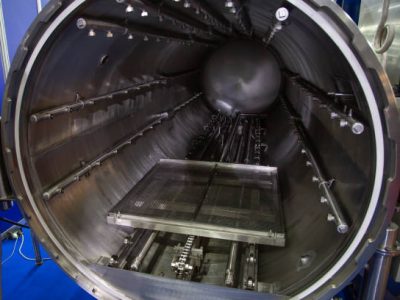
Modern vacuum induction melting furnaces install advanced control systems to regulate all melting steps accurately. Internal vacuum levels hit 10⁻² ~ 10⁻³ Pa and fully remove hydrogen, oxygen, nitrogen and other gaseous impurities. Induction coils automatically adjust melting power to maintain steady molten pool temperature and even element distribution. Computer systems monitor the whole melting cycle and record traceable production data. This equipment secures stable, consistent quality across all melting batches.
4.2 Configuration of Precision Rolling Production Lines
World-class rolling lines represent top-tier bar processing technology. Each complete line includes walking-beam heating furnaces, rough rolling stands, finish rolling stands, cooling beds and automatic collection equipment. Multi-temperature zones inside heating furnaces balance billet temperature. Rough rolling units rapidly reduce bar diameter, and finish rolling units carry hydraulic AGC systems to adjust rolling force in real time and lock dimensional precision. Online diameter gauges feed measurement data back for automatic parameter adjustment. Walking-beam cooling beds control cooling speeds to avoid bar deformation. Full automation of the whole line delivers steady finished product quality.
4.3 Integration of Cold Working and Heat Treatment Equipment
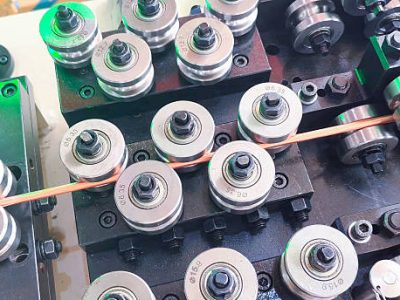
Cold drawing production lines combine multiple drawing machines, annealing furnaces and straightening machines. Drawing machines use hydraulic or chain transmission with adjustable drawing speeds. Hard alloy drawing dies receive precise polishing to achieve ultra-smooth inner surfaces, lower drawing resistance and reduce surface scratches on bars. Intermediate annealing furnaces adopt mesh-belt or bell-type structures, with protective atmosphere of hydrogen or decomposed ammonia to prevent oxidation. Bars go through shot blasting and pickling after annealing to strip surface oxides. Multi-roll precision straightening machines limit bar straightness within 1 mm per meter. Online laser diameter gauges detect dimensions and automatically reject unqualified workpieces. Integrated, automated equipment lifts overall production efficiency and finished bar quality.
5. Development Trends of Ni200 Bar Manufacturing Technology
5.1 Progress in Ultra-High-Purity Smelting Technology
Future industrial sectors such as electronics and semiconductors raise stricter limits on impurity content inside Ni200 bars. Combined Vacuum Induction Melting (VIM) and Electroslag Remelting (ESR) further cut impurity ratios. Zone refining technology completes multiple directional solidification steps to gather impurities at one end of raw ingots and produce ultra-high-purity nickel. Hydrogen annealing and vacuum degassing lower gas element content down to ppm levels. Advanced analytical tools like Glow Discharge Mass Spectrometry (GDMS) detect trace impurities at ppb levels and provide reliable quality control for ultra-pure nickel production.
5.2 Intelligent Manufacturing and Digital Twin Technology
Ni200 bar production shifts toward intelligent production under Industry 4.0 standards. Rolling lines install large numbers of sensors to collect real-time data on temperature, pressure, rolling speed and bar dimensions. Digital twin technology builds virtual production models to simulate and optimize process parameters and predict finished product quality. Artificial intelligence algorithms analyze historical production data, identify regular flaw patterns and enable predictive equipment maintenance. Automated logistics systems complete intelligent scheduling of raw materials, semi-finished goods and finished bars. MES production management systems connect ERP and quality management platforms to achieve full digital tracking of all production steps, lift manufacturing efficiency and unify finished bar quality.
5.3 Customized Development of Bars With Special Functional Properties
Expanding application fields bring new demands for customized Ni200 bar performance. Ultra-fine grain bars adopt tight control over deformation and annealing parameters to reach grain size grade 8 or above, which boosts tensile strength and corrosion resistance. Texture-controlled bars use directional recrystallization to arrange grains along specific directions and optimize material anisotropy. Composite bars apply clad co-rolling or explosive cladding technology to bond Ni200 with other metals and realize complementary functional advantages. Surface modification technologies including laser cladding and ion implantation raise surface hardness and wear resistance of bars. Customized development meets unique requirements of high-end industries such as aerospace and new energy.
Conclusion
The complete manufacturing system of Ni200 bars covers vacuum melting, precision forging & rolling, heat treatment and surface finishing. VIM melting secures raw material purity, forging and rolling unify internal microstructures, annealing optimizes material performance states, and strict quality control guarantees stable, reliable quality for every production batch. Advanced automated rolling lines and intelligent manufacturing technology continuously improve machining accuracy and production efficiency. Following development trends of ultra-high purity, customized production and full intelligence, Ni200 bar manufacturing technology will keep upgrading and breaking technical limits, and fully satisfy strict application requirements from chemical, electronic and energy industries.
FAQ
Q1: What differences exist between annealed Ni200 bars and cold-worked Ni200 bars?
Annealed bars receive heat treatment at 650–800°C. They carry low hardness (≤150 HB), high elongation (≥40%) and excellent ductility for subsequent forming work, plus low magnetism. Cold-worked bars skip post-drawing annealing and retain work-hardened status after cold drawing. They hold high tensile strength (550–750 MPa) but low elongation (≥12%). Users may apply them directly or conduct extra annealing to soften the material.
Q2: How to select the correct process route for Ni200 bar production?
Pick hot forging for bars over 100 mm in diameter to guarantee uniform internal microstructure. Hot rolling fits medium-sized bars 20–100 mm wide with high production efficiency and low manufacturing costs. Cold drawing suits bars thinner than 20 mm or products requiring ultra-precise dimensions, and achieves tolerance within ±0.05 mm. Shaped bars need dedicated rolling passes or custom drawing dies.
Q3: What points need attention when using Ni200 bars in chemical industry projects?
Ni200 delivers outstanding stability in strong alkaline environments (NaOH, KOH) and reducing media. It cannot withstand high-temperature oxidizing acids such as hot nitric acid or high-temperature sulfur-containing gas above 315°C, and will face corrosion or sulfur brittleness failure. Buyers evaluate working temperature, medium composition and concentration before material selection, and complete corrosion testing to verify material suitability when necessary.
Searching for a Trusted Ni200 Bar Manufacturer?
Baoji Titanium Valley Titanium Nickel Zirconium Material Processing Co., Ltd. acts as a professional manufacturer and supplier of Ni200 bars. We run advanced Italian Danieli rolling production lines and operate a complete quality management system with annual output over 20,000 tons. Our product portfolio covers round bars, square bars, hexagonal bars and other shapes, and we provide full customized machining services. Contact our technical team for detailed technical datasheets, quotations and sample requests: sales@titaniumvalleys.com
References
- China Nonferrous Metals Industry Association. Nickel and Nickel Alloy Material Handbook (3rd Edition)[M]. Beijing: Metallurgical Industry Press, 2021.
- ASTM International. ASTM B160-2021 Standard Specification for Nickel Rod and Bar[S]. 2021.
- Zhang Yonggang, Liu Jianrong. Machining Technology and Applications of Nickel-Based Corrosion-Resistant Alloys[M]. Beijing: Chemical Industry Press, 2019.