
What Are the Differences Between Nickel 200 and Nickel 201 Wire, and How Do You Choose the Right Grade?
- Nickel 200 Wire
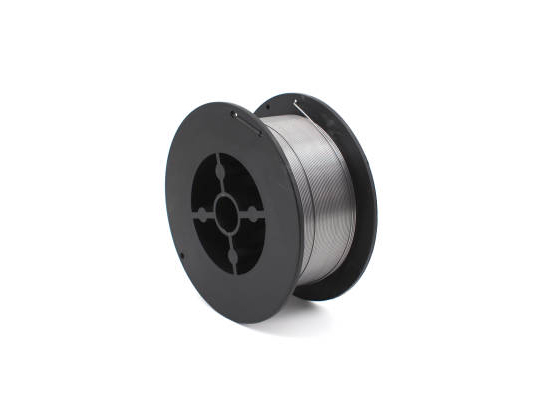
In the field of commercially pure nickel materials, Nickel 200 wire and Nickel 201 wire are two of the most common grades. Their names look similar, and their chemical compositions are close. However, they serve different purposes in real applications.
Nickel 200 (UNS N02200) contains up to 0.15% carbon. It works well in temperatures from room temperature to 315°C. Nickel 201 (UNS N02201) keeps carbon below 0.02%. Engineers developed this grade for high-temperature service. It can work steadily above 315°C and helps prevent graphite formation that may weaken the material.
The right grade affects equipment life, operating safety, and maintenance costs. These two pure nickel wire materials both play important roles in chemical processing, electrical systems, food equipment, and aerospace. Understanding their key differences helps buyers make the right choice.
1. Small Differences in Chemical Composition Create Big Performance Changes
1.1 Carbon Content Marks the Main Difference
The biggest difference between Nickel 200 wire and Nickel 201 wire is carbon content.
According to the ASTM B160 standard, Nickel 200 wire contains up to 0.15% carbon, with a typical range of 0.07% to 0.15%. Nickel 201 wire limits carbon to 0.02% or less.
This small difference matters a lot at high temperatures. When service temperature rises above 315°C, carbon in Nickel 200 may separate at grain boundaries and form graphite. This process can make the material brittle between grains. It also reduces ductility and tensile strength.
Nickel 201 solves this issue with an ultra-low carbon design. It keeps strong mechanical performance and structural stability at 400°C to 427°C, and even higher temperatures in some cases.
1.2 Other Elements Stay Almost the Same
Except for carbon, both grades share almost the same chemical composition.
Both contain at least 99.0% nickel plus cobalt. Iron stays below 0.40%. Manganese and silicon stay below 0.35%. Copper stays below 0.25%. Sulfur remains below 0.01%.
This high-purity formula gives both materials strong resistance to alkali corrosion, good electrical and thermal conductivity, and excellent forming ability. In room-temperature and medium-temperature applications, their performance stays very similar.
Chemical Composition Comparison of Nickel 200 and Nickel 201 (%)
| Element | Nickel 200 (UNS N02200) | Nickel 201 (UNS N02201) |
|---|---|---|
| Ni + Co | ≥99.0 | ≥99.0 |
| C | ≤0.15 | ≤0.02 |
| Fe | ≤0.40 | ≤0.40 |
| Mn | ≤0.35 | ≤0.35 |
| Si | ≤0.35 | ≤0.35 |
| Cu | ≤0.25 | ≤0.25 |
| S | ≤0.01 | ≤0.01 |
2. Comparing Physical and Mechanical Properties
2.1 Similar Performance at Normal Temperatures
Nickel 200 wire and Nickel 201 wire show almost the same physical performance from room temperature to about 300°C.
Both materials have a density of 8.89 g/cm³. Their melting range stays between 1435°C and 1455°C. Electrical resistivity stays around 9.6 μΩ·m. Thermal conductivity remains close to 70 W/(m·K).
In the annealed condition, both grades offer a tensile strength of at least 345 MPa, a yield strength of at least 130 MPa, and elongation above 35%.
These properties make both materials suitable for electronics, medical devices, and precision equipment. In many room-temperature applications, buyers can use either grade. However, cost and delivery time still matter when making a final decision.
2.2 Clear Differences at High Temperatures
Performance changes when operating temperature rises above 315°C.
Nickel 200 wire may lose ductility because carbon forms graphite at grain boundaries. The material becomes more brittle. For this reason, Nickel 200 does not suit long-term high-temperature service.
Nickel 201 wire performs much better in these conditions. Its ultra-low carbon design helps it keep good ductility and tensile strength at 400°C to 427°C. The grain structure stays stable, and graphite formation remains very low.
In long-term thermal cycling, Nickel 201 wire may last three to five times longer than Nickel 200 wire.
Because of this advantage, many industries choose Nickel 201 wire for furnace components, heating elements, heat exchangers, and aerospace fasteners that work at high temperatures. Nickel 200 wire remains the better choice for chemical processing and electrical systems that run at room temperature or medium temperatures.
2.3 Processing and Surface Treatment Performance
Both grades offer excellent hot and cold forming properties.
Manufacturers can draw, stamp, bend, and weld both materials. Nickel 201 wire has a slightly lower work-hardening rate because of its lower carbon content. This feature makes it a better option for deep drawing and cold heading.
During welding, Nickel 201 also performs better. Its low carbon level reduces graphite formation in the heat-affected zone. This helps improve weld quality and long-term reliability.
Overall Performance Comparison of Nickel 200 and Nickel 201
| Property | Nickel 200 (UNS N02200) | Nickel 201 (UNS N02201) |
|---|---|---|
| Recommended Service Temperature | ≤315°C for short-term service | Long-term service ≤600°C; short exposure around 650–700°C |
| Graphitization Risk Above 315°C | Present | Very low |
| Mechanical Properties at Room Temperature (Annealed) | ≥345 MPa tensile strength; ≥130 MPa yield strength | ≥345 MPa tensile strength; ≥130 MPa yield strength |
| Alkali Corrosion Resistance | Excellent | Excellent |
| Electrical and Thermal Conductivity | Stable | Stable |
| Formability | Good | Excellent; lower work-hardening rate |
| Risk of Intergranular Embrittlement in Welding Heat-Affected Zone | Higher | Very low |
3. Application Matching Strategy for Different Industries
3.1 Where Nickel 200 Wire Works Best
Nickel 200 wire performs very well from room temperature up to 315°C. It plays a key role in the chemical industry, especially in caustic alkali production.
It is widely used in electrolytic cell cathode parts, such as nickel mesh, and in structural parts of caustic evaporators. It offers strong resistance to alkali corrosion and stable service performance.
In the electronics industry, Nickel 200 wire is common in transformer windings, resistance wires, battery tabs, and conductive leads. Its stable resistivity and good conductivity support long-term reliable operation.
In food and medical fields, manufacturers use it for guide wires, surgical implants, and precision springs. The material is clean, non-toxic, and meets FDA food-contact standards.
3.2 High-Temperature Applications for Nickel 201 Wire
When operating temperature exceeds 315°C, Nickel 201 wire becomes the preferred choice.
In aerospace, high-temperature fasteners and turbine sealing parts must keep strength above 400°C. Nickel 201 wire resists graphitization and prevents intergranular failure.
In heat treatment furnaces, heating elements, fixtures, and hangers work under long thermal cycles. Nickel 201 wire extends service life and reduces replacement frequency and downtime.
In petrochemical equipment, high-temperature heat exchanger tubes and reactor internals also rely on Nickel 201 wire for stable performance in harsh conditions.
3.3 Important Notes for Special Service Conditions
Nickel 200 and Nickel 201 wires do not suit strong oxidizing acids, such as hot nitric acid.
They also do not perform well in high-temperature sulfur environments above 315°C. Sulfur may cause embrittlement. Strong oxidizing chloride environments may also cause pitting corrosion.
For strong oxidizing conditions, engineers should choose nickel-based alloys such as Inconel 600/625 or Hastelloy grades.
Understanding the service limit of each material helps avoid safety risks and cost losses caused by wrong material selection.
Application Guide for Nickel 200 and Nickel 201 Wire
| Application Area | Recommended Grade | Typical Parts | Selection Reason |
|---|---|---|---|
| Chemical alkali environment (room to medium temperature) | Nickel 200 | Electrolytic cell cathodes, alkali pump shafts | Excellent alkali corrosion resistance, cost-effective |
| Chemical alkali environment (high temperature) | Nickel 201 | High-temperature caustic evaporators, heat exchanger tubes | Anti-graphitization and good intergranular resistance |
| Electronics and electrical systems | Nickel 200 | Transformer windings, battery tabs, conductive leads | Stable conductivity and reasonable cost |
| Medical devices | Nickel 200 | Guide wires, implants, probes | High purity and compliance with FDA standards |
| High-temperature furnace parts (>315°C) | Nickel 201 | Heating elements, fixtures, hangers | Stable structure and anti-graphitization |
| Aerospace high-temperature components | Nickel 201 | Fasteners, seals | Stable strength and high reliability |
4. Cost Performance and Material Selection Advice
4.1 Price Difference Analysis
Nickel 201 wire costs more than Nickel 200 wire. The price difference usually stays around 10% to 20%.
Nickel 201 needs stricter low-carbon melting control and tighter quality checks. These factors increase production cost.
For bulk buyers, this difference affects the budget. However, engineers should not look at price alone. They should also consider the full service life of the product.
Wrong selection in high-temperature service can lead to early failure, frequent replacement, and production downtime. These losses often exceed the initial material cost gap.
4.2 Life Cycle Cost Consideration
Nickel 200 wire offers stable performance within its design temperature range. It helps reduce maintenance cost and keeps long-term operation stable.
However, if users apply it above 315°C, failure may occur quickly. This leads to emergency repair or full system replacement.
Nickel 201 wire costs more at the start. But it lasts much longer in high-temperature service. It gives better overall economy in continuous operation systems.
4.3 Key Factors for Material Selection
Engineers should follow three main steps when selecting materials:
First, confirm the working temperature. Use Nickel 200 for ≤315°C. Use Nickel 201 for >315°C.
Second, check the chemical environment. Both grades work well in strong alkali and reducing conditions. Avoid strong oxidizing acids and high-sulfur environments.
Third, evaluate supplier quality. Check certification, testing equipment, and batch consistency before purchase.
Conclusion
The main difference between Nickel 200 wire and Nickel 201 wire is carbon content. This difference controls their temperature limit and long-term stability.
Nickel 200 wire works best in room temperature to 315°C. It fits chemical processing, electronics, and medical applications. It offers a good balance of cost and performance.
Nickel 201 wire supports high-temperature service up to about 427°C. It is the best choice for aerospace, furnace parts, and other demanding heat conditions.
Proper material selection depends on temperature, environment, mechanical needs, and full life cycle cost. Correct choice reduces risk and improves equipment reliability.
FAQ
1. Can Nickel 200 wire be used at 350°C?
No, it is not recommended. Above 315°C, carbon in Nickel 200 may form graphite at grain boundaries. This weakens the structure and causes brittleness.
For 350°C service, Nickel 201 wire is the safer choice because of its ultra-low carbon content.
2. Can Nickel 200 and Nickel 201 replace each other?
They can replace each other only below 315°C. In that range, performance stays similar.
Above 315°C, Nickel 200 should not replace Nickel 201. It may fail due to graphitization.
Nickel 201 can replace Nickel 200 in low-temperature use, but it increases cost without adding benefit.
3. How to check real material grade and quality?
Buyers should request a Material Test Certificate (MTC). It should show chemical composition, mechanical data, and batch traceability.
Third-party testing can confirm carbon content, chemical composition, and tensile strength.
For export use, suppliers should provide EN 10204 3.1 certificates.
Contact Us
Baoji Titanium Valley Titanium Nickel Zirconium Material Processing Co., Ltd. is a leading manufacturer of nickel wire in China.
We offer Nickel 200 and Nickel 201 wire in custom sizes. We also provide technical support and full after-sales service.
Contact us for samples, quotations, and technical solutions: sales@titaniumvalleys.com
References
- ASTM International. ASTM B160-2020 Standard Specification for Nickel Rod and Bar.
- China Mechanical Engineering Society. Welding Manual, 3rd Edition, Volume 2: Material Welding.
- China Nonferrous Metals Industry Association. Nickel and Nickel Alloy Processing Standards Collection.
- American Welding Society. AWS A5.14 Specification for Nickel and Nickel Alloy Welding Electrodes and Rods.