
How to Purchase Ni200 Rod What Are the Key Technical Requirements and How to Choose the Right Supplier?
- Ni200 Rod
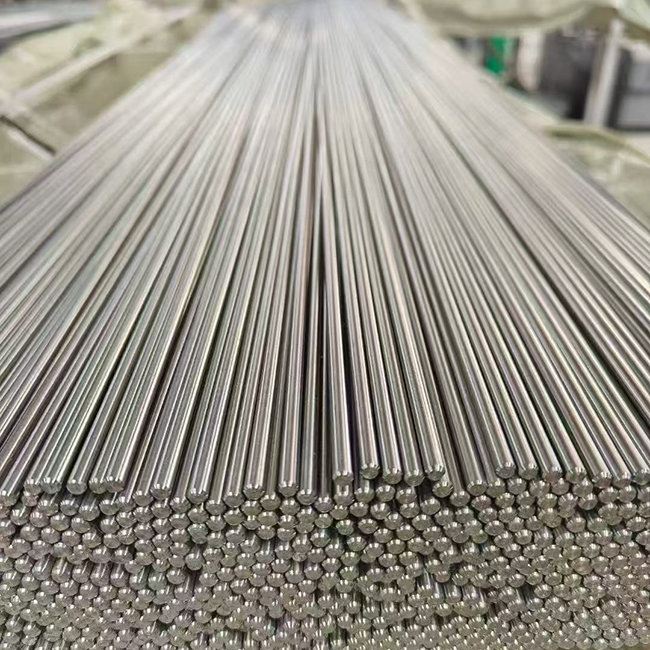
High-quality Ni200 rod must meet ASTM B160 standards. Nickel content must reach ≥99.0%. The material must also show stable resistance to alkali corrosion.
Industrial buyers must focus on key points. They should verify supplier qualifications and certifications. They should compare chemical test reports in detail. They should also study how processing methods like hot rolling, forging, and cold drawing affect performance. Third-party test reports such as MTC and NDT are also required.
Buyers should also check delivery ability, custom service level, and after-sales support. These steps reduce risk and ensure the rod works in chemical, electronic, and aerospace applications.
1. Core Technical Requirements and Application Needs of Ni200 Rod
1.1 Purity and Chemical Composition Control
Ni200 rod gets its value from high purity. According to UNS N02200 (WNR 2.4060) and ASTM B160, total nickel plus cobalt must be ≥99.0%. Carbon must stay ≤0.15%.
This clean composition gives strong resistance in alkali media like sodium hydroxide and potassium hydroxide.
Strict control of iron (≤0.40%) and sulfur (≤0.01%) improves electrochemical stability. Low impurity levels also prevent contamination in food and medical use.
Chemical Composition of Ni200 Rod (ASTM B160)
| Element | Content Range | Function |
|---|---|---|
| Ni+Co | ≥99.0% | Controls alkali corrosion resistance and stability |
| C | ≤0.15% | High carbon reduces ductility and weldability; for >315°C use Ni201 (C ≤0.02%) |
| Fe | ≤0.40% | Affects magnetism and oxidation behavior |
| S | ≤0.01% | High sulfur may cause hot brittleness |
| Cu | ≤0.25% | Trace impurity that must stay controlled |
1.2 Effect of Processing on Performance
Processing method directly controls final performance.
Hot worked condition keeps higher strength and suits structural parts. Annealed condition gives the best ductility and low stress. Cold drawn condition increases hardness through deformation.
Chemical plant shafts with high precision needs often use cold drawn rods. Complex shaped electrode plates need annealed rods for better forming.
1.3 Application-Specific Performance Needs
Different industries need different performance focus.
In chlor-alkali production, Ni200 works in cathode systems and alkali resistance structures. In electronics, it supports stable resistance in heating elements and connectors. In food and medical fields, it must meet FDA and RoHS standards.
Correct application matching prevents material failure and reduces cost.
2. Five Key Factors to Identify Reliable Suppliers
2.1 Certifications and Quality System
A reliable supplier must hold ISO 9001 certification. Aerospace use requires AS9100. Medical use requires ISO 13485.
Strong suppliers also own spectrometers, tensile testers, and ultrasonic testing systems. Each batch must include a full MTC report.
2.2 R&D and Process Capability
Strong suppliers invest in process control. Buyers should check:
- Can they control grain size in large forgings?
- Can they adjust heat treatment curves for better toughness?
- Can they produce non-standard shapes like hex rods or special profiles?
Strong R&D teams help solve special material problems, not only supply standard products.
2.3 Equipment and Production Capacity
Modern equipment ensures stable quality.
Key points include:
- Continuous annealing furnace with protective atmosphere
- Online diameter control with ±0.05 mm accuracy
- Multiple surface options like bright annealing and pickling
Example: Baoji Titanium Valley uses precision forging and rolling lines. Nickel capacity reaches 3000 tons per year. Size range covers Φ6.5–220 mm rods.
Supplier Evaluation Criteria
| Category | Key Metric | Standard |
|---|---|---|
| Quality System | ISO 9001 / AS9100 | At least one major certification |
| Testing Ability | Chemical + mechanical + NDT | In-house lab or certified cooperation |
| Delivery Capacity | Annual output / stock | ≥3000 tons capacity |
| Custom Service | Non-standard processing | Full technical support |
2.4 Industry Cases and Reputation
Real cases show real strength. Buyers should choose suppliers with strong records in chemical, aerospace, and electronics fields.
Trade shows and industry groups also help verify reputation.
2.5 Price Transparency and Total Cost
Low price often hides risk. Some suppliers reduce nickel purity or skip testing.
Real price structure includes nickel LME price + processing cost + quality premium.
Buyers must request full quotation details, including grade, condition, tolerance, surface finish, and test level.
High purity material costs more but reduces long-term maintenance cost.
3. Key Verification Steps in Online Purchasing
3.1 Material Test Reports
Each batch must include MTC. It must show full chemical and mechanical data.
Chemical analysis must use OES or XRF. Mechanical data must include tensile strength, yield strength, and elongation.
Buyers should also check heat number consistency between report and product.
3.2 Sample Testing
Before bulk orders, buyers must test samples from different batches.
Recommended tests include:
- 40% NaOH corrosion test at 80°C
- Electrical resistivity vs temperature curve
- Weld joint strength and microstructure test
3.3 Factory Audit
Technical teams should inspect suppliers when possible.
Key checks include:
- Raw material source (pure nickel ingot)
- Melting protection system
- Forging temperature records
- Annealing curve control
- Surface roughness control
- Inspection rate and sampling system
Verification Standards
| Item | Method | Standard |
|---|---|---|
| Composition | ICP or full spectrum | Ni+Co ≥99.0% |
| Mechanical | Tensile test | ≥345 MPa (annealed) |
| Surface | Visual + Ra test | No cracks, Ra ≤0.4 μm |
| Dimension | Measurement | Tolerance h9–h11 |
| NDT | Ultrasonic test | No internal defects |
3.4 Contract Quality Terms
Contracts must define technical standards clearly. They must include ASTM B160 or B163 compliance, heat treatment condition, and acceptance rules.
Suppliers must respond within 24 hours for quality issues. They must provide solutions within 72 hours.
3.5 Packaging and Storage Control
Proper packaging prevents damage.
Use moisture-proof paper and plastic wrap. Use wooden crates for long rods. Export packaging must follow ISPM 15 rules.
Store materials in dry conditions below 60% humidity. Keep away from acids and alkalis.
4. Selection Advice for Different Industries
4.1 Chlor-Alkali Industry
Use Ni200 annealed rods for cathodes and alkali equipment. They work well in 30–50% NaOH at 80–110°C.
Corrosion rate should stay below 0.05 mm/year.
4.2 Electronics and Semiconductor Industry
Use high purity Ni200 (≥99.5%) for heating elements and connectors.
Low impurity reduces contamination risk. Stable resistance is also important.
Surface roughness must reach Ra ≤0.4 μm for vacuum use.
4.3 Low Temperature Engineering
Ni200 shows no brittle transition at low temperature.
It keeps strong toughness at -196°C and meets impact energy ≥100J.
4.4 Food and Medical Industry
Material must meet FDA and ISO 10993 standards.
Surface must reach mirror finish (Ra ≤0.2 μm) for clean use.
Full traceability is required for every rod.
5. Long-Term Cooperation and Risk Control
5.1 Supplier Grading System
Use dual sourcing strategy. Keep one main supplier and one backup.
Grade suppliers by:
- Delivery rate ≥95%
- Quality pass rate ≥98%
- Technical response speed
- Price stability
5.2 Inventory Strategy
Keep 2–3 months safety stock. Increase stock when nickel price drops. Use just-in-time when price rises.
5.3 Quality Issue Response
Define clear response steps:
- 4 hours: issue report
- 24 hours: on-site check
- 48 hours: root cause report
- 72 hours: solution plan
5.4 Technical Cooperation
Work with suppliers during product design. Improve alloy and heat treatment together.
5.5 Sustainability
Choose ISO 14001 certified suppliers. Focus on ESG performance and safe production.
Conclusion
Ni200 rod purchasing needs a full system approach. Buyers must understand material data, supplier ability, and quality control steps.
A strong selection system reduces risk. It also improves product life and performance in chemical, electronic, and aerospace industries.
FAQ
1. What is the difference between Ni200 and Ni201 rod?
Ni200 has carbon ≤0.15%. Ni201 has carbon ≤0.02%.
Ni200 works below 315°C. Ni201 works in 315–650°C range.
2. What is the difference between annealed and cold drawn Ni200?
Annealed rod has lower strength but higher ductility. It suits forming.
Cold drawn rod has higher strength but lower elongation. It suits machining.
3. How to judge fair price?
Price depends on nickel LME cost plus processing and quality cost.
Very low price often means lower purity or poor testing control.
Reliable Ni200 Rod Manufacturer
Baoji Titanium Valley Titanium Nickel Zirconium Material Processing Co., Ltd. produces high-quality Ni200 rod with advanced rolling lines and full testing systems. Annual capacity reaches 3000 tons.
We provide ASTM B160 certified materials and full technical support.
Contact: sales@titaniumvalleys.com
References
- ASTM B160-2020 Standard Specification for Nickel Rod and Bar
- Processing and Welding Technology of Pure Nickel and Nickel Alloys, Metallurgical Industry Press, 2018
- Welding Manual, Volume 2, China Mechanical Engineering Society, 2008
- Welding and Quality Control of Imported Ni200 Pipe Materials, Chemical Management Journal, 2014
- Nickel and Nickel Alloy Processing Standards, China Standards Press, 2020