
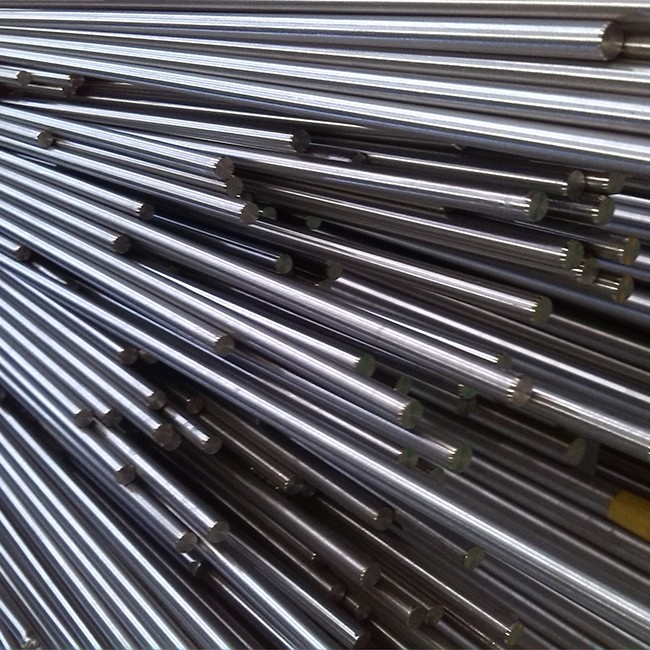
Grade 2 titanium rod is the most widely used grade of commercially pure titanium. It balances stable chemical features and solid mechanical performance. Factories use it heavily in chemical anti-corrosion equipment, offshore engineering, and medical devices. Its titanium purity hits no less than 99.2%. Manufacturers adjust its strength by controlling oxygen levels precisely. It meets ASTM B348 rules with minimum tensile strength of 345 MPa. It also delivers good ductility and easy processing.
A tight protective oxide film forms right on its surface. This film blocks seawater, diluted acids, diluted alkalis, chlorides and many other chemical agents. Its service life runs 3 to 5 times longer than stainless steel. Its density only reaches 4.51 g/cm³, about 57% of steel density. It cuts total equipment weight clearly.
I. Chemical Composition and Purity Standards of Grade 2 Titanium Rods
1. Main Chemical Composition
All chemical components of Grade 2 titanium rods follow ASTM B348 standards. The titanium base accounts for no less than 99.2%, so it falls into commercially pure titanium. Tiny interstitial elements decide most material properties.
- Oxygen content stays between 0.12% and 0.25% as typical data, with a maximum limit of 0.25%. Oxygen atoms boost material strength.
- Iron content has a 0.30% upper limit to keep good ductility.
- Nitrogen tops at 0.05%, carbon tops at 0.08%, hydrogen tops at 0.015%. These limits lock steady material performance.This component mix lets Grade 2 titanium keep soft texture while holding 20% higher strength than Grade 1 titanium. It fits working conditions with medium mechanical loads.
2. Impacts of Interstitial Elements on Material Performance
Oxygen serves as the key strengthening element for Grade 2 titanium rods. Oxygen levels rising from 0.12% to 0.25% push tensile strength up from roughly 345 MPa to 410 MPa. At the same time, elongation drops from 24% to 20%.
Excess iron creates TiFe metal phases and weakens anti-corrosion ability. Hydrogen content over 0.015% triggers hydrogen embrittlement and ruins low-temperature toughness. High nitrogen or carbon content makes the metal brittle.
Vacuum melting and repeated refining cut down these unwanted elements effectively and keep stable material performance.
3. Purity Grades and Matching Material Numbers
Grade 2 titanium rod carries the UNS code R50400. It matches JIS Class 2 titanium from Japan and 3.7035 titanium from Germany.
Grade 1 titanium holds purity above 99.5%. Grade 2 reduces titanium purity moderately for higher strength. Grade 3 titanium contains more oxygen and delivers lower ductility than Grade 2.
This purity positioning makes Grade 2 a cost-effective universal titanium grade. Its production cost is only 10% to 15% higher than Grade 1, yet its mechanical properties improve greatly. It fits over 80% of all industrial use cases.
| Chemical Element | Grade 2 Content Standard | Performance Influence | Control Measures |
|---|---|---|---|
| Titanium (Ti) | ≥99.2% | Base metal that decides overall material performance | Use vacuum melting to secure purity |
| Oxygen (O) | ≤0.25% (typical range: 0.12–0.25%) | Oxygen atoms harden metal and lift tensile strength | Adjust oxygen levels to balance strength and ductility |
| Iron (Fe) | ≤0.30% | Ruins corrosion resistance and processing ability if over limit | Strict limits to stop unwanted metal phase separation |
| Nitrogen (N) | ≤0.05% | High nitrogen makes metal brittle | Maintain vacuum environment to avoid air pollution |
| Carbon (C) | ≤0.08% | Too much carbon lowers ductility | Screen raw materials to control carbon input |
| Hydrogen (H) | ≤0.015% | Causes hydrogen embrittlement risks | Complete vacuum annealing to remove hydrogen |
2. Core Chemical Performance Features of Grade 2 Titanium Rods
2.1 Powerful Anti-Corrosion Mechanism
A 2–7 nm thick TiO₂ passive film forms instantly on Grade 2 titanium rod surfaces. This film repairs itself automatically. Scratches recover quickly in oxygen-rich environments.
Its corrosion rate stays below 0.01 mm per year in natural seawater. 316 stainless steel hits 0.1–0.5 mm per year under the same conditions.
It works well in diluted acid and alkali liquids with pH values from 2 to 12. It shows low corrosion speed in room-temperature 10% sulfuric acid and 30% sodium hydroxide liquid.
Users need to note its weak points:
- 20% hydrochloric acid raises its corrosion rate to 0.2–0.5 mm per year, so long-term use is not suitable.
- Concentrated sulfuric acid (over 40%), strong hydrochloric acid and hydrofluoric acid cause severe corrosion. Design teams must fully analyze liquid chemical features before material selection.
2.2.Temperature Impacts on Chemical Stability
Grade 2 titanium rods keep solid toughness at -253 °C without cold brittleness. It fits cryogenic equipment for liquid hydrogen and liquid nitrogen storage.
Its chemical performance stays stable from room temperature to 300 °C. It retains about 70% of its original tensile strength at 300 °C, with slight changes based on heating duration.
Surface oxidation speeds up once temperatures rise past 400 °C, yet short working hours (several hours) remain acceptable.
Factories run Grade 2 titanium parts in chemical reactors and heat exchangers below 300 °C for decades.
Carbon steel oxidizes fast under high heat, and stainless steel cracks easily at low temperatures. Grade 2 titanium works well across a wide temperature range and boosts total equipment reliability.
2.3 Electrochemical Properties and Corresponding Uses
Grade 2 titanium rod has an electrode potential of -1.63 V against saturated calomel electrodes. Its dense surface passive film shifts its potential to a more positive value in most liquids. Engineers often use it as cathode material. It protects connected metals from galvanic corrosion.
Factories apply titanium anodes in chlor-alkali electrolysis and electroplating processes. The oxide film on titanium anode surfaces delivers stable conductivity and long service life. It lasts 5 to 10 times longer than lead anodes.
Its low magnetic susceptibility (roughly 1.00004) makes it ideal for MRI machines and precision instruments sensitive to magnetic fields.
Titanium pipes in seawater reverse osmosis devices block chloride ion erosion far better than copper-nickel alloys. They cut down equipment maintenance frequency largely.
| Corrosive Liquid | Grade 2 Corrosion Rate | 316 Stainless Steel Corrosion Rate | Service Life Comparison |
|---|---|---|---|
| Natural Seawater | <0.01 mm/year | 0.1–0.5 mm/year | Grade 2 lasts 3–5 times longer |
| 10% Sulfuric Acid (Room Temperature) | <0.5 mm/year | 0.5–2 mm/year | Grade 2 outperforms stainless steel |
| 30% Sodium Hydroxide Solution | <0.01 mm/year | 0.05–0.2 mm/year | Grade 2 offers better alkali resistance |
| Saturated Sodium Chloride Solution | Almost zero corrosion | 0.2–1 mm/year | Grade 2 resists chloride corrosion strongly |
3. Industrial Application Scenarios Supported by Chemical Advantages
3.1 Core Uses in Chemical Anti-Corrosion Industry
Chemical factories produce reactor stirring shafts, heat exchanger tube bundles, pump and valve parts, tower internal components from Grade 2 titanium rods.
Chlor-alkali plants run titanium anodes and titanium hangers over 10 years in high-concentration chloride environments.
Titanium equipment releases no metal ions in pharmaceutical production and meets GMP clean production standards.
Stirrers made of Grade 2 titanium rods resist mixed sulfuric acid liquids in hydrometallurgy acid extraction lines. They cut maintenance costs by 60% compared to stainless steel alternatives.
Titanium hangers and electrode rods inside electroplating tanks stand against electrochemical corrosion. Their service life runs 8 to 10 times longer than copper parts.
3.2 Offshore Engineering and Ship Manufacturing
Seawater carries 19,000 ppm chloride ions. This chemical triggers stress corrosion cracks in stainless steel easily.
Engineers build seawater desalination pipes, condenser parts and seawater pump shafts with Grade 2 titanium rods. These parts need no replacement within their 25-year design lifespan.
Titanium fasteners and flanges for offshore platforms block combined corrosion from seawater and hydrogen sulfide effectively.
Ship propulsion systems use titanium alloy propeller shafts. These shafts resist seawater wash and cavitation corrosion. They weigh 40% less than traditional copper alloy shafts and work 3 times longer.
Coastal nuclear power stations install titanium pipes in cooling water systems for steady long-term operation.

3.3 Environmental Protection and New Energy Equipment
Desulfurization and denitrification equipment uses Grade 2 titanium spray pipes and mist eliminators. These parts endure acid flue gas condensate liquid with pH values below 2. They last over 5 times longer than 316L stainless steel parts.
Electrolytic hydrogen production devices use titanium rods as anode base materials. These parts run stably for more than 100,000 hours inside strong alkaline electrolyte liquid.
Fuel cell bipolar plates and flow field plates adopt titanium materials. The metal balances good conductivity, strong corrosion resistance and light weight. It helps new energy vehicles cut overall weight.
Lithium battery production lines use titanium electrode fixtures and connecting pieces. These parts stop heavy metal pollution and raise finished battery consistency.

4. Medical Devices and Precision Machining
Medical-grade Grade 2 titanium rods follow ASTM F67 standards. Factories make orthopedic implants such as bone plates, bone screws and intramedullary nails from this material.
Titanium has an elastic modulus of roughly 110 GPa. Human bone ranges from 10 GPa to 40 GPa, and stainless steel hits about 200 GPa. Titanium reduces stress shielding effects and speeds bone integration.
Dental implants use small-diameter cold-drawn Grade 2 titanium rods (4–8 mm outer diameter). Sandblasting and acid etching treatment on surfaces strengthen bonding with human bone.
Surgical tools made of titanium weigh little, stand high-temperature sterilization and carry no magnetism. These features support precise surgical operations.
Precision electronics use titanium connecting parts and shielding covers for stable electromagnetic compatibility. Titanium alloy middle frames inside 3C electronics balance structural strength and light weight.
| Application Industry | Typical Components | Material Selection Reasons | Performance Advantages |
|---|---|---|---|
| Chemical Anti-Corrosion Equipment | Reactor stirring shafts, heat exchangers | Blocks erosion from various acids and alkalis | 3–5 times longer service life than steel |
| Offshore Engineering | Seawater desalination pipes, platform fasteners | Resists chloride corrosion from seawater | 25 years of maintenance-free operation |
| Environmental Protection Equipment | Desulfurization spray pipes, hydrogen production anodes | Withstands acid flue gas and strong alkali liquids | Over 100,000 hours of stable operation |
| Medical Devices | Orthopedic implants, dental implants | Excellent biological compatibility | Supports bone integration and avoids human rejection |
| New Energy Devices | Fuel cell bipolar plates, lithium battery fixtures | Good conductivity, corrosion resistance and light weight | Raises battery energy density and extends service life |
5. Processing Performance and Technical Advantages of Grade 2 Titanium Rods
5.1 Great Compatibility with Hot and Cold Processing
Grade 2 titanium rods accept all standard cold processing methods, including cold drawing, cold rolling and cold bending. Manufacturers produce precise small-diameter rods (4–30 mm outer diameter) with H7–H9 dimensional tolerances.
Hot forging and hot rolling operate between 800 °C and 950 °C. Forging ratios can reach above 3:1. This process fits large-diameter rods from 100 mm to 300 mm.
Grade 5 titanium (Ti-6Al-4V) requires complex heat treatment steps. Grade 2 titanium only needs simple annealing to lock stable internal structure and mechanical performance.
Recrystallization annealing restores full ductility after cold hardening. Workers finish multiple forming passes without material cracks.
This flexible processing workflow cuts manufacturing costs and shortens delivery cycles.
5.2 Welding Performance and Weld Joint Quality
Workers use common welding techniques for Grade 2 titanium rods, including TIG welding, MIG welding and plasma welding. Weld joints hold over 90% of the base metal tensile strength.
Argon shielding gas covers all welding zones. This layer stops chemical reactions between hot titanium and air nitrogen or oxygen.
Finished welds need no post-weld heat treatment before installation. This step simplifies the whole manufacturing process.
X-ray inspection records over 95% one-time pass rate for weld joints between titanium tubes and flanges in chemical equipment workshops.
Stainless steel demands post-weld heat treatment, and nickel-based alloys bring tough welding challenges. Grade 2 titanium’s easy welding property cuts assembly costs sharply, especially for on-site installation of large complex structural parts.
5.3 Mechanical Cutting and Surface Treatment
Grade 2 titanium rods have cutting performance between stainless steel and aluminum alloy. Factories recommend carbide cutting tools. Ideal cutting speed ranges from 30 m/min to 60 m/min, with feed rates from 0.1 mm/r to 0.3 mm/r.
Titanium transfers heat poorly, with thermal conductivity at roughly 17 W/m·K. Cutting operations create high heat quickly. Operators supply enough cooling lubricant during cutting work.
Turning processes deliver surface roughness down to Ra 0.8–1.6 μm. Grinding further reduces roughness to Ra 0.2 μm.
Common surface treatments include sandblasting, mechanical polishing and acid pickling passivation. Medical-grade titanium parts add ultrasonic cleaning steps to remove surface oil stains.
Anodizing creates colored protective oxide films on titanium surfaces for decoration and product marking.
6. Material Selection Strategy and Full-Life Cycle Cost Optimization
6.1 Comparative Material Selection Between Grade 2 Titanium Rods and Alternatives
Engineers compare stainless steel, nickel-based alloys and carbon steel with Grade 2 titanium rods. They calculate full-life cycle costs to make final material choices.
Medium-corrosion environments such as seawater and diluted acid/alkali liquids raise initial purchase costs of Grade 2 titanium by 30%–50% against stainless steel. Yet titanium parts need almost zero maintenance over a 10-year running cycle. Stainless steel parts require 2–3 full replacements within the same period. The total operating cost of titanium equipment drops 20%–40%.
High-corrosion environments such as chlor-alkali factories and hydrometallurgy lines see clear advantages for Grade 2 titanium. It costs 40% less than nickel-based alloys (Hastelloy, Inconel grades) and accepts easier processing work.
Carbon steel carries low purchase prices but requires frequent anti-rust paint jobs. These repeated maintenance works create high labor costs and production shutdown losses.
6.2 Stock Management and Supply Chain Optimization
Grade 2 titanium holds the largest market share among all commercially pure titanium grades. Suppliers maintain rich stock for regular sizes (8–200 mm outer diameter) with 7–15 day delivery times. Custom sizes take 30–45 days to produce.
Enterprises that adopt Grade 2 titanium as a unified material platform cut stock SKU counts by over 60% and reduce capital tied up in raw material storage.
Standardized equipment designs boost spare part compatibility. Maintenance teams source matching spare parts without waiting for special custom materials.
Companies that mix multiple titanium grades face heavy workloads in material testing, warehouse marking and batch traceability. A single Grade 2 material platform cuts these management steps and lifts supply chain efficiency by 30%.
6.3 Quality Certifications and Compliance Guarantees
Formal Grade 2 titanium manufacturers adopt vacuum arc remelting (VAR) technology. This process creates even chemical composition across all rod batches.
Finished product shipments include full material test certificates (MTC). These documents cover chemical composition data, mechanical test records and non-destructive inspection reports.
Medical-grade Grade 2 titanium meets ASTM F67 and ISO 5832-2 standards. Production lines carry ISO 13485 quality management system certification.
Titanium parts for chemical equipment supply corrosion test data and third-party inspection reports upon buyer request.
Buyers ask suppliers to record full furnace batch traceability. This step confirms reliable raw material sources.
Titanium materials that pass ASME and PED (EU Pressure Equipment Directive) standards fit export equipment directly and remove repeated certification work.
| Comparison Item | Grade 2 Titanium Rod | 316 Stainless Steel | Nickel-Based Alloy | Carbon Steel |
|---|---|---|---|---|
| Initial Purchase Cost | Medium (1.3–1.5 times baseline) | Baseline | High (2–3 times baseline) | Low (0.3–0.5 times baseline) |
| Anti-Corrosion Ability | Excellent (seawater rate <0.01 mm/year) | Good (seawater rate 0.1–0.5 mm/year) | Excellent | Poor (needs regular protective coating) |
| Density | 4.51 g/cm³ | 7.9 g/cm³ | 8.2–8.9 g/cm³ | 7.85 g/cm³ |
| Processing Performance | Good (all standard techniques work) | Good | Poor (needs special manufacturing steps) | Excellent |
| Long-Term Maintenance Cost | Extremely low (nearly maintenance-free) | Medium (needs regular inspection) | Low | High (frequent anti-rust treatment) |
| Design Service Life | 20–30 years | 8–12 years | 20–25 years | 5–8 years (with anti-rust protection) |
| Total Cost Over 10 Years | Baseline | 1.2–1.5 times baseline (includes replacement fees) | 1.5–2 times baseline | 1.3–1.8 times baseline (includes maintenance fees) |
Conclusion
Grade 2 titanium rods balance tensile strength, corrosion resistance and processing flexibility through precise chemical composition control and advanced production processes. It becomes the most widely used titanium grade across all industrial fields.
It blocks erosion from seawater, diluted acids and diluted alkalis well, while delivering light weight and long service life. These advantages cut full-life cycle operating costs for chemical, offshore, environmental and medical equipment.
Material selection teams analyze liquid chemical features, working temperatures and mechanical load demands for each project. Full evaluation unlocks Grade 2 titanium’s technical and economic value, supports equipment upgrades and drives overall industrial optimization.
FAQ
1. What differences exist between Grade 2, Grade 1 and Grade 5 titanium rods? How to pick the correct grade?
Grade 2 titanium holds around 20% higher tensile strength than Grade 1 titanium due to higher oxygen content. It works easier during processing and costs roughly 40% less than Grade 5 titanium.
- Pick Grade 2 titanium for medium-load anti-corrosion projects to gain the best cost-performance ratio.
- Pick Grade 1 titanium for light-load projects that demand ultra-high metal purity.
- Pick Grade 5 titanium for high-strength aerospace structural components.Around 80% of chemical factory equipment uses Grade 2 titanium rods.
2. Which chemical liquids damage Grade 2 titanium rods? What methods stop material failure?
Concentrated sulfuric acid (over 40%), strong hydrochloric acid, hydrofluoric acid and high-temperature chlorine gas cause severe corrosion to titanium.
Workers adopt these countermeasures:
- Use tantalum parts or coated titanium materials inside strong reducing acid environments.
- Select Grade 7 titanium (titanium-palladium alloy) for working zones with high-temperature chlorine gas.
- Choose nickel-based alloys for production lines that carry hydrofluoric acid.Engineers run liquid compatibility tests before finishing equipment design.
3. What steps verify the authenticity and quality of Grade 2 titanium rods?
Ask material suppliers to provide full material test certificates (MTC). These certificates include spectral analysis reports for chemical composition. Check records to confirm compliance with ASTM B348 standards and match furnace batch stamps on finished rods.
Third-party testing organizations such as SGS recheck chemical composition and mechanical performance for key industrial projects. Medical-grade titanium materials also require complete biocompatibility certification documents.
Search for Reliable Grade 2 Titanium Rod Manufacturers?
Baoji Titanium Valley Titanium, Nickel and Zirconium Material Processing Co., Ltd. runs an Italian Danieli rolling production line with a yearly output of 20,000 tons. The company supplies full-size Grade 2 titanium rods from 4 mm to 300 mm outer diameter. All products follow ASTM B348 standards. The firm owns complete quality traceability systems and full third-party inspection certifications.
We deliver high-precision titanium material solutions for global aerospace, medical and electronics manufacturers. Contact our team for technical support and price quotations: sales@titaniumvalleys.com
References
- Zhao Yongqing, Qu Henglei. Titanium Alloy Materials Science and Engineering [M]. Beijing: Chemical Industry Press, 2020.
- National Standardization Technical Committee for Non-Ferrous Metals. GB/T 2965-2020 Titanium and Titanium Alloy Rods [S]. Beijing: China Standards Press, 2020.
- American Society for Testing and Materials. ASTM B348-20 Standard Specification for Titanium and Titanium Alloy Bars and Billets [S]. 2020.
- Li Guojian, Zhang Tingjie. Research Progress on Corrosion Behaviors and Protection Technologies of Commercially Pure Titanium [J]. Corrosion and Protection, 2019, 40(8): 561-568.
- Zhang Xiyan, Zhao Yongqing, Bai Chenguang. Titanium Alloys and Their Applications [M]. Beijing: Chemical Industry Press, 2005.