
What Is the Elastic Modulus of Gr5 Titanium Foil and Why Does It Matter in Engineering Applications?
- Gr5 Titanium Foil
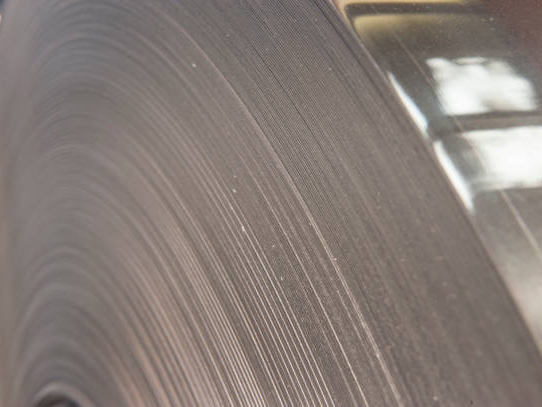
Gr5 titanium foil (Ti-6Al-4V, also called TC4 in China) has an elastic modulus of about 110 GPa. Real test values usually range from 105 to 115 GPa.This value is lower than steel, which is about 200 GPa. It is slightly higher than pure titanium, which is about 105 GPa.This medium elastic modulus gives Gr5 titanium foil a good balance between stiffness and flexibility. It also works with high tensile strength above 895 MPa. This creates high specific strength, which means strong performance with low weight.Gr5 titanium foil has a density of only 4.43 g/cm³. It supports lightweight design in aerospace, medical, and chemical industries. Engineers often choose it when they need both strength and weight reduction.
1. Definition and Engineering Meaning of Elastic Modulus1.1 What Elastic Modulus Means
Elastic modulus (Young’s modulus) shows the ratio between stress and strain in elastic deformation.It uses the unit GPa. A higher value means the material resists deformation better under load.For precision parts, elastic modulus controls size stability and response behavior.Gr5 titanium alloy has:
- Elastic modulus: about 110 GPa
- Poisson’s ratio: 0.34
- Thermal expansion: 8.6 × 10⁻⁶ /K
1.2 Influence on Structural Design
In lightweight aerospace design, a very high modulus increases weight. A very low modulus reduces stiffness.Gr5 titanium foil at ~110 GPa offers a good balance. It keeps enough stiffness while reducing weight.Because of its high specific strength, engineers can reduce weight by about 40% while keeping strength close to high-strength steel.
1.3 Elastic Modulus Requirements in Different Applications
Aerospace structures: Honeycomb structures need stable shape. Gr5 titanium foil at ~110 GPa gives enough stiffness to keep structure stable.Medical implants: Human bone has a modulus of about 10–30 GPa. Gr5 titanium is much higher. This difference creates stress shielding. The implant carries most of the load. Bone loses load stimulation and may weaken over time. This is a key clinical concern. New research focuses on low-modulus beta titanium alloys, such as Ti-29Nb-13Ta-4.6Zr, with modulus around 60–80 GPa. These alloys better match bone behavior.New energy battery systems: Heat dissipation parts need strength and conductivity at the same time. Gr5 titanium foil provides structural support, but designers must also consider electrical and thermal needs.
2. Measured Data and Standards of Gr5 Titanium Foil Elastic Modulus
2.1 ASTM Standard ValuesASTM B265 and AMS 4911 define Gr5 titanium alloy (Ti-6Al-4V). Annealed tensile strength must be ≥895 MPa. Elastic modulus usually stays between 105 and 115 GPa. The typical stable value is around 110 GPa.
2.2 Comparison of Test Methods
| Test Method | Elastic Modulus (GPa) | Application | Accuracy |
|---|---|---|---|
| Tensile test (ASTM E111) | 105–115 | Standard testing | ±2% |
| Ultrasonic test (ASTM E494) | 105–115 | Non-destructive test | ±1.5% |
| Nanoindentation (ISO 14577) | 105–115 | Micro-area test | ±3% |
| Dynamic mechanical analysis | 105–115 | High temperature test | ±1% |
2.3 Temperature Effect on Elastic Modulus
Elastic modulus decreases when temperature rises.From room temperature to 300°C, it drops about 3–5% per 100°C increase.At 200°C, it stays around 105–108 GPa and still keeps good stiffness.Proper annealing helps maintain stable structure at high temperature.
3. Comparison With Other Materials3.1 Comparison With Pure Titanium Foil
| Material | Elastic Modulus (GPa) | Tensile Strength (MPa) | Density (g/cm³) | Specific Strength |
|---|---|---|---|---|
| Gr1 Titanium | ~105 | 240–345 | 4.51 | 53–76 |
| Gr2 Titanium | ~105 | 345–480 | 4.51 | 76–106 |
| Gr5 Titanium | ~110 | ≥895 | 4.43 | ≥202 |
Gr5 titanium contains 6% Al and 4% V. It forms an alpha + beta structure. Its modulus increases slightly compared to pure titanium. The increase is about 5–10%. But its strength increases much more. This gives a much higher specific strength.
3.2 Comparison With Steel and Aluminum
High-strength steel has a modulus of about 200 GPa. But its density is 7.9 g/cm³. This increases weight by about 78% at the same volume.Aluminum alloy 7075-T6 has a modulus of about 71 GPa. It may deform too much under high stress.Gr5 titanium offers a better balance of stiffness, strength, and corrosion resistance.
3.3 Material Selection Considerations
Chemical equipment: Corrosion resistance matters most. Gr5 titanium meets this need well.Aerospace structures: Designers balance stiffness and weight. Gr5 titanium at ~110 GPa meets certification needs and reduces weight.High-temperature parts: Above 300°C, modulus and oxidation resistance decrease. Protective coatings may be required above 400°C.
4. Influence on Processing and Application
4.1 Springback in Cold Forming
Gr5 titanium foil shows strong springback of 8–12%. This is higher than pure titanium (3–5%).Manufacturers use multi-pass rolling with small reductions to control deformation. Typical precision tolerance can reach ±0.002 to ±0.005 mm in high-grade processing.
4.2 Welding Stress Matching
TIG and laser welding may create stress mismatch if weld and base material differ in modulus.Vacuum or inert gas welding helps reduce this issue. Post-weld vacuum annealing at 700–800°C improves uniform structure and fatigue life.
4.3 High-Temperature Creep and Oxidation
At 300°C, modulus drops to about 105 GPa.The alpha + beta structure improves creep resistance.Above 300°C, oxidation increases. In sulfur or chlorine environments, corrosion risk rises.Above 400°C, performance drops further. Nickel-based alloys may be a better choice in such cases.
5. Design Optimization Using Elastic Modulus
5.1 Thickness and Stiffness Design
Beam deflection depends on elastic modulus and thickness.Even small changes in thickness greatly affect stiffness because of cubic relationship.Precision rolling helps maintain flatness and design accuracy.
5.2 Surface Condition Effects
Different surface states create different residual stress levels.This may affect test results slightly.Annealed delivery condition gives the most stable performance.
5.3 Application-Specific Design
Aerospace: 0.05–0.15 mm foil supports honeycomb structures with good stiffness and low weight.Battery systems: 0.03–0.08 mm foil supports current and heat transfer balance.Medical implants: Modulus mismatch with bone can cause stress shielding. Long-term implants may require low-modulus beta titanium alloys instead. Surface roughness should stay ≤ Ra 0.4 μm.
FAQ
- Does cold working change elastic modulus?
No major change. Elastic modulus stays almost constant. It depends on crystal structure. Cold work mainly changes strength and hardness. - How to verify supplier data?
Ask for ASTM E111 test reports. Use third-party labs like SGS for confirmation. - What happens at -196°C?
Both modulus and strength increase at low temperature. Exact values depend on heat treatment and structure. - What about long-term durability?
Titanium alloy resists corrosion well in most environments. But high temperature or harsh chemical conditions may require coatings or different alloys.
Looking for a Reliable Gr5 Titanium Foil Manufacturer?
Baoji Titanium Valley Titanium Nickel Zirconium Material Processing Co., Ltd. is a professional producer of Gr5 titanium foil.We offer 0.03–0.8 mm × 350–670 mm full-size customization.Our products meet ASTM B265 and AMS 4911 standards. We also provide full test reports and third-party certification.Contact: sales@titaniumvalleys.com
References
- ASTM B265-20 Standard Specification for Titanium and Titanium Alloy Strip, Sheet, and Plate
- ASTM E111-04 Standard Test Method for Young’s Modulus
- AMS 4911 Titanium Alloy Sheet, Strip, and Plate, 6Al-4V, Annealed