
What Is the Real Cost of Using Gr1 Titanium Wire and Why Is a Higher Initial Price More Cost-Effective?
- Gr1 Titanium Wire
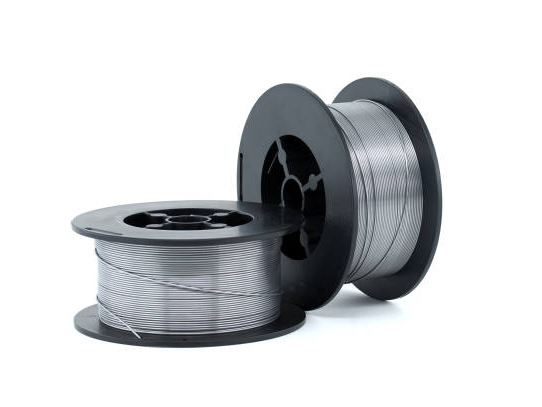
In precision manufacturing, marine engineering, and medical devices, material choice shapes product life and total cost. Gr1 titanium wire belongs to the highest purity grade of commercially pure titanium. Its purchase price is higher than common metals. But its long-term value becomes clearer when you consider service life, maintenance, processing loss, and performance.
Gr1 titanium wire contains ≥99.5% titanium. It has strict impurity control and no alloy elements. It shows high ductility and low work hardening. It works in a temperature range from -253°C to 300°C. It can stay stable in vacuum or inert gas at low temperature. Long exposure near 300°C can increase oxidation and reduce strength, so real working conditions must be defined.
It also shows strong corrosion resistance. For companies that focus on long-term efficiency, Gr1 titanium wire reduces replacement cycles, lowers maintenance cost, and improves yield. It brings lower life-cycle cost and higher return per unit investment in harsh environments.
1. Real Comparison Between Initial Investment and Long-Term Cost
1.1 Purchase Cost Structure
Gr1 titanium wire usually costs 3 to 5 times more than 316L stainless steel wire. The gap comes from vacuum melting and multi-step cold drawing. Stainless steel has a much lower base cost.
This price gap often misleads early buyers. A simple unit price comparison does not reflect real value.
1.2 Life-Cycle Cost Analysis
Real cost includes service life, maintenance, and downtime.
In chemical corrosion use, a Gr1 titanium wire heat exchanger mesh in dilute hydrochloric acid (≤10%, room temperature) lasts 8 to 12 years. A 316L mesh lasts only 1.5 to 2 years.
Annual cost comparison shows that the Gr1 titanium solution costs only 40% to 55% of stainless steel.
If we include shutdown loss, the advantage becomes even larger.
1.3 Hidden Cost Savings
Processing loss is often ignored.
Gr1 titanium wire has high ductility (≥20% elongation in annealed state). It has low work hardening and low cracking risk. It performs better in bending, weaving, and welding.
In mass production, yield can be 15% higher than 316L stainless steel wire. This difference directly reduces material waste and total cost.
| Cost Type | Gr1 Titanium Wire | 316L Stainless Steel Wire | Explanation |
|---|---|---|---|
| Unit Purchase Cost (USD/kg) | 3–5× baseline | 1× baseline | Based on 316L |
| Service Life (years) | 8–12 | 1.5–2 | 5–8× longer |
| Annual Material Cost | 0.25–0.42× | 0.5–0.67× | Titanium lower per year |
| Annual Maintenance Cost | Low (0.2×) | High (1×) | Less shutdown |
| Yield Rate (%) | 94–98 | 75–82 | Higher yield |
| Total Annual Cost | 0.45–0.55× | 1× | 45–55% savings |
Note: Data applies to dilute acid at room temperature. Strong acid or high temperature conditions require separate evaluation.
2. Hidden Value from Performance Advantages
2.1 Corrosion Resistance Value
Gr1 titanium wire performs well in seawater, salt fog, and many acid-base environments. It loses performance in hydrofluoric acid and strong reducing acids, so working conditions must be checked carefully.
In marine engineering, this property is very important. Offshore wind platforms using titanium fasteners can extend maintenance cycles to 5–7 years. Steel parts often require replacement every 1.5–2 years.
Lower maintenance frequency also reduces downtime and safety risks.
2.2 Biocompatibility Value
In medical devices, Gr1 titanium wire meets global biocompatibility standards. It contains no nickel and does not cause allergy or rejection. It supports long-term implantation.
This reduces reoperation risk and increases product value. Even if raw material cost is higher, final profit margin improves due to higher market pricing.
2.3 Low Magnetic Property Value
Gr1 titanium wire has weak paramagnetic behavior (about +3.2 × 10⁻⁶). It produces very low magnetic interference.
In semiconductor tools and MRI environments, this helps improve yield and system stability. The economic benefit often exceeds the material cost difference.
| Application | Key Advantage | Economic Benefit vs 316L | Payback Time |
|---|---|---|---|
| Chemical Equipment | Strong corrosion resistance | 5–8× longer life, 70% lower maintenance | 2–3 years |
| Marine Engineering | Saltwater resistance | 60–75% lower maintenance cost | 3–4 years |
| Medical Devices | Biocompatibility | 30–60% price premium | Immediate |
| Precision Electronics | Low magnetic effect | 8–15% higher yield | 1–2 years |
3. Processing Efficiency and Yield Improvement
3.1 Forming Performance
Gr1 titanium wire keeps good plasticity during cold processing. It works well in bending, weaving, and forming with fewer cracks than stainless steel.
This reduces scrap in precision springs and fine components.
3.2 Welding Efficiency
Titanium wire performs well in TIG and laser welding. Weld strength reaches 90–95% of base metal, and porosity remains low.
Repair rate can drop to 1–2%. Welding efficiency improves by about 35%.
3.3 Surface Treatment Flexibility
Gr1 titanium wire supports pickling, polishing, and anodizing. Surface quality can reach a very smooth level.
This improves product appearance and reduces allergy risk. Product price can increase 30–45%, while surface treatment cost stays at 3–5% of total cost.
4. Supply Chain and Batch Advantage
4.1 Volume Discount Effect
Cost decreases with higher purchase volume.
500–1000 kg per year leads to an 8–15% price reduction.
2000–5000 kg per year leads to an 18–25% reduction.
Long-term contracts provide stronger cost control.
4.2 Custom Service Value
Custom supply includes diameter control, cutting, surface treatment, and traceability.
It reduces secondary processing cost and improves consistency. Even if unit price is slightly higher, total cost often becomes lower.
| Strategy | Annual Volume | Price Reduction | Extra Value | Total Cost Impact | Use Case |
|---|---|---|---|---|---|
| Small Batch | <100 kg | Baseline | Fast delivery | Baseline | Samples, repair |
| Mid Batch | 100–500 kg | 8–15% | Custom specs | 12–18% lower | Regular production |
| Large Contract | 500–2000 kg | 18–25% | Stable supply | 25–35% lower | Long-term use |
| Strategic Partner | >2000 kg | 22–30% | R&D support | 30–42% lower | Large buyers |
5. Real Industry Return Cases
5.1 Chemical Industry Case
A chlor-alkali plant replaced nickel alloy mesh with Gr1 titanium wire mesh. Initial cost increased by 40%.
Service life increased from 2.5 years to 9 years. Total ownership cost dropped by 50–60%.
5.2 Medical Device Case
A surgical tool manufacturer used fine titanium wire for precision clamps. Product price increased by about 60%.
Although processing cost rose, profit margin improved due to higher market value and safety performance.
5.3 Offshore Wind Case
An offshore wind project used titanium wire in key fasteners.
Maintenance cycles dropped from about 10 times to 2–3 times over 20 years. Maintenance cost fell by 60–70%. Higher uptime increased total energy output and economic return.
Conclusion
Gr1 titanium wire should not be evaluated only by purchase price. A full life-cycle view shows its real value.
In chemical, marine, medical, and precision fields, it can reduce total cost by 30–60% under harsh and long-term conditions.
In low corrosion or short-term use, its advantage is limited. Selection must match real working conditions.
FAQ
1. How much cost difference exists in chemical environments?
Gr1 titanium wire costs 3–5 times more at purchase. But service life is 5–8 times longer. Total annual cost is 45–60% lower in dilute acid or seawater conditions.
2. Is small batch purchase economical?
Yes, in high-value or critical applications. High yield and low failure rate can offset cost. For general use, it is less competitive.
3. How to evaluate payback time?
Key factors include service life, maintenance cost, yield rate, and product price increase. Chemical use pays back in 2–4 years. Medical use can be immediate. Electronics applications usually recover in 1–2 years.
Professional Solution
Baoji Titanium Valley Titanium Nickel Zirconium Material Processing Co., Ltd. produces Gr1 titanium wire using advanced Danielli production lines. Annual capacity reaches 5000 tons. We supply full sizes from φ0.06–10 mm.
We follow ASTM B863 and GB/T 3623 standards. We provide EN 10204 3.1 certificates and full technical support.
Contact: sales@titaniumvalleys.com
References
- Zhao Yongqing, Qu Henglei. Economic analysis of titanium in chemical equipment.
- Li Shujun, Zhang Jianjun. Biocompatibility of medical titanium materials.
- Chen Yuyong, Song Ming. Life-cycle cost evaluation of marine corrosion-resistant metals.
- Wang Zhigang, Liu Xiaofeng. Processing and quality control of titanium wire.