
What are the strength, ductility, and lightweight advantages of the mechanical properties of Gr2 titanium foil?
- Gr2 titanium foil
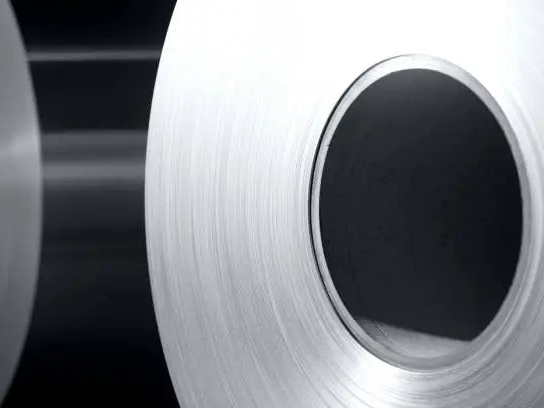
Gr2 titanium foil has typical mechanical properties: tensile strength ≥345 MPa, yield strength 275-410 MPa, elongation ≥20%. It is commercial pure titanium. Density 4.51 g/cm³, about 60% of steel. Melting point 1668°C. Compared with Gr1 titanium foil, Gr2 keeps good ductility and has higher strength. It is the most widely used titanium foil in aerospace, chemical corrosion protection and electronic shielding. Its balanced mechanical properties, great corrosion resistance and good workability make it ideal for medium-strength applications.
1. Core Mechanical Properties of Gr2 Titanium Foil
1.1 Tensile and Yield Strength
Gr2 titanium foil tensile strength ≥345 MPa. It is medium for commercial pure titanium. Tensile strength decides maximum load under tension. Critical for chemical liners and heat exchanger thin walls. Yield strength 275–410 MPa: fully annealed 275–310 MPa, half-hard 350–410 MPa. It starts plastic deformation in this range. Good for stamping and bending. Less brittle fracture risk. Gr2 strength ~45% higher than Gr1 (≥240 MPa). Handles more complex loads. Extends service life in desalination equipment.
1.2 Elongation and Formability
Elongation ≥20% keeps good ductility. It decides deep drawing and bending limits. High elongation disperses stress evenly. Avoids cracks. 0.02–0.1 mm ultra-thin Gr2 foil makes electronic shields. Multiple precision stamping needed. Poor elongation causes microcracks. Reduces shielding effect. Precision rolling and annealing keep elongation above 22%. Meets strict electronic requirements.
1.3 Density and Lightweight Value
Density 4.51 g/cm³, ~57% of stainless steel. Aerospace use: improves fuel efficiency and payload. Example: 0.05 mm Gr2 foil replaces aluminum for aircraft insulation shields. Lighter and more corrosion-resistant. Strength-to-density ratio higher than 304 stainless. Thinner foil meets strength needs. Cuts material weight and cost.
2. Key Process Factors Affecting Mechanical Properties
2.1 Multi-Pass Cold Rolling
Mechanical properties depend on cold rolling. Precision mills (20-high) use multi-pass rolling. Total deformation over 95%. Refines grains. Improves strength and ductility. Cold rolling increases hardness but reduces elongation. Balances strength and ductility. Online thickness control keeps tolerance ±1%. Avoids uneven structure.
2.2 Continuous Annealing
Annealing restores ductility and removes stress. Continuous lines use non-oxidizing atmosphere. Precise temperature control. Recrystallizes cold-worked structure. Forms uniform equiaxed grains. For 0.05 mm foil: 650–750°C, 1–3 min. Tensile strength 350–380 MPa, elongation 25–30%. High temperature coarsens grains and reduces strength. Low temperature leaves incomplete recrystallization. Continuous annealing ensures batch consistency.
2.3 Surface Treatment
Surface quality affects fatigue and welding. Ultrasonic cleaning removes oil and scale. Improves cleanliness. Reduces stress points. Extends fatigue life. Polishing reduces roughness. Enhances coating bonding. Medical coatings: improves adhesion. Ensures long-term reliability.
3. Mechanical Properties by Thickness
3.1 Ultra-Thin (0.02–0.1 mm)
More cold deformation. Finer grains. Tensile strength 380–420 MPa (15–20% above standard). Elongation 18–22%. Balanced by annealing. Used for battery separators and electromagnetic shields. 0.03 mm foil for 5G RF shields. Good shielding and stamping.
3.2 Standard (0.1–0.5 mm)
Most widely used. Tensile strength 345–370 MPa, elongation 22–28%. Balances strength, ductility and workability. Chemical liners: 0.3 mm foil handles pressure. Good welding and bending. Desalination tube sheets use 0.2–0.4 mm foil. Automatic welding. Weld strength over 90% of base metal. No corrosion holes long-term.
3.3 Thick (0.5–1.0 mm)
Near thin plate. Tensile strength ≥350 MPa, yield strength 300–350%. Used for structural parts. Replaces some titanium sheets and low-load alloys. Vacuum equipment: 0.8 mm foil meets pressure. Good welding. Elongation ≥25%. Complex 3D forming possible. Automotive mufflers: 0.6 mm foil hydroformed. Avoids welding stress. High-temperature oxidation resistance.
Mechanical Properties by Thickness
| Thickness (mm) | Tensile Strength (MPa) | Yield Strength (MPa) | Elongation (%) | Main Applications |
| 0.02–0.1 | 380–420 | 290–350 | 18–22 | Electronic shielding, battery materials |
| 0.1–0.5 | 345–370 | 275–310 | 22–28 | Chemical protection, desalination |
| 0.5–1.0 | 350–380 | 300–350 | 25–30 | Structural parts, heat exchangers |
4. Gr2 vs Other Titanium Materials
4.1 Gr2 vs Gr1
Gr1 tensile strength ≥240 MPa, elongation ≥24%. Highest purity. Gr2 increases Fe/O content. Sacrifices little elongation. Improves strength ~45%. Gr1 best for deep drawing. Gr2 better for structural loads. Electrolyzer anodes: Gr2 resists acid and supports load. Gr1 creeps easily.
4.2 Gr2 vs Gr5
Gr5 (Ti-6Al-4V) tensile strength ≥895 MPa. ~2.6× Gr2. Elongation 10–15%. High-strength alloy. For engine blades and fasteners. Cost 3–4× Gr2. Gr2 better value for non-extreme strength. Medical trays: Gr2 stamped. Lower cost. Autoclave safe. Joints: must use Gr5.
4.3 Gr2 vs Stainless Steel
Gr2 replaces 304/316 in moderate corrosion. Tensile strength lower than 316. Pitting resistance ~10× better in chloride. Marine liners: Gr2 lasts longer. Lower total cost. Non-magnetic. MRI shields: Gr2 works. Stainless interferes.
Gr2 vs Common Metals
| Material | Tensile Strength (MPa) | Density (g/cm³) | Specific Strength (kN·m/kg) | Elongation (%) | Relative Cost |
| Gr2 Titanium Foil | ≥345 | 4.51 | 76.5 | ≥20 | 1.00 |
| Gr1 Titanium Foil | ≥240 | 4.51 | 53.2 | ≥24 | 0.95 |
| 304 Stainless Steel | ≥515 | 7.93 | 64.9 | ≥40 | 0.25 |
| 316 Stainless Steel | ≥515 | 8.00 | 64.4 | ≥40 | 0.35 |
| Gr5 Titanium Alloy | ≥895 | 4.43 | 202.0 | 10–15 | 3.50 |
5. Performance Verification and Quality Control
5.1 Tensile Test
Follow ASTM E8. Wire-cut or punch specimens. No edge damage. Ultra-thin (0.02–0.1 mm): use micro tester (0–500 N). Glue grips. Avoid slip. Batch test. 0.05 mm foil: fluctuation <5%. Good stability.
5.2 Hardness Test
Vickers hardness checks anneal state. Fully annealed: 120–160 HV. Cold-rolled: 200–240 HV. Hardness links to tensile strength. Quick quality check. Ultra-thin: micro hardness. Avoid penetration. Multi-point test. Uniform hardness = even annealing.
5.3 Batch Consistency
Full traceability from raw material to finish. Unique coil codes. Link rolling/annealing/test data. SPC for key processes. Monitor annealing temp. Auto adjust. Tensile deviation small.
Gr2 Titanium Foil Quality Control
| Test ItemS | Standard | Specification | Frequency |
| Tensile Strength | ASTM E8 | ≥345 MPa | Per batch |
| Elongation | ASTM E8 | ≥20% | Per batch |
| Vickers Hardness | ASTM E384 | 120–160 HV | Per coil |
| Thickness Tolerance | ASTM B265 | Precision grade | 100% online |
| Surface Roughness | ISO 4287 | Ra ≤0.4 μm | Random check |
| Chemical Composition | ASTM B265 | Gr2 requirements | Per heat |
Conclusion
Gr2 titanium foil has balanced mechanical properties: tensile ≥345 MPa, elongation ≥20%. Density 4.51 g/cm³. Better than Gr1, cheaper than Gr5. Ideal for chemical, marine and electronic uses. Precision rolling and annealing enable stable 0.02–1.0 mm production.
FAQ
1. Why wide yield strength range (275–410 MPa)?
Depends on annealing and cold work. Fully annealed: 275–310 MPa. Half-hard: 350–410 MPa. Choose state by forming needs.
2. Why lower elongation for ultra-thin foil?
More cold deformation. Finer grains. Higher work hardening. Annealing improves to 18–20%.
3. How to check deep draw suitability?
Check elongation ≥20%. Cup test ≥8 mm. Prefer fully annealed ≥25% elongation.
Find a Reliable Gr2 Titanium Foil Supplier?
Baoji Titanium Valley Titanium Nickel Zirconium Material Processing Co., Ltd. Annual capacity 3,000 tons. 0.02–1.0 mm thickness, 15–680 mm width. ASTM B265 certified. Custom sizes available. Contact sales@titaniumvalleys.com.
References
1. Cold Rolling and Properties of Titanium Foil[J]. Chinese Journal of Nonferrous Metals, 2021.
2. Microstructure Control of Commercial Pure Titanium[J]. Rare Metal Materials and Engineering, 2020.
3. Grade 2 Titanium in Marine Engineering[J]. Corrosion Science and Protection, 2022.
4. Ultra-Thin Titanium Foil Rolling[J]. Journal of Plasticity Engineering, 2023.