
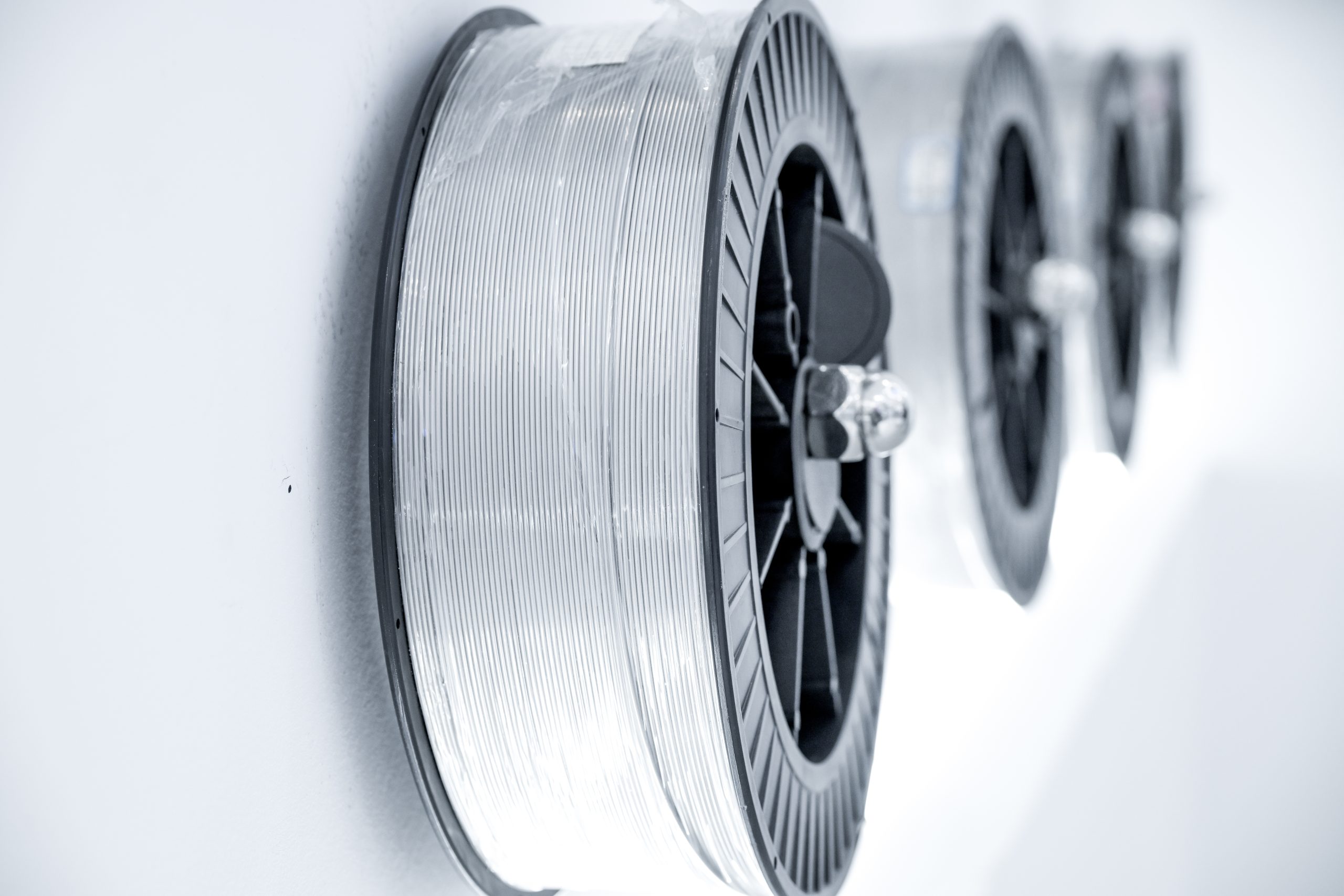
Gr2 titanium wire is the gold standard for commercial pure titanium welding wire. It supports multiple welding processes. The best methods include TIG argon welding, MIG inert gas welding, plasma welding and laser welding. TIG works for precision work. MIG fits mass production. Plasma suits thick plates. Laser fits ultra-precision jobs. All welding needs inert gas protection. Titanium reacts strongly with oxygen, nitrogen and hydrogen at high heat. This causes brittle welds. Good process choice makes weld strength ≥85% of base metal. Premium precision methods reach ≥90%. Welds keep Great corrosion resistance. Gr2 titanium wire welding matters for chemical, marine and aerospace projects.
1. TIG Welding for Gr2 Titanium Wire
1.1 Core TIG Requirements
TIG (tungsten inert gas) is the most used method for Gr2 wire. It uses a non-melting tungsten electrode and high-purity argon. It controls the weld pool precisely. Fits wire diameters 0.5–8 mm. Common range: 0.8–3.0 mm. Use cerium or lanthanum tungsten electrodes. Diameter: 1.6–4.0 mm. Tip angle: 30°–60°. Current by wire size: 1.0 mm → 40–60 A; 2.0 mm → 80–120 A; 3.0 mm → 120–180 A.
1.2 Argon Protection Standards
Argon purity is critical. Requirement: ≥99.99%, oxygen <20 ppm. Triple gas protection: front flow 8–15 L/min; back flow 5–10 L/min; trailing shield 10–20 L/min. Cover hot zones and cooling areas fully. Humidity <60%, temperature 15–30℃. Clean weld areas: acetone/ethanol for oil; stainless steel brush for oxide. Clean 50 mm beyond weld edges.
1.3 Welding Parameters and Tips
Welding speed matters. Thin plates (≤2 mm): 150–250 mm/min. Thick plates (>3 mm): 80–150 mm/min. Arc length: 2–4 mm. Wire feed angle: 15–20°. Multi-layer welds: inter-pass temperature ≤150℃. Joint types: butt, lap, corner. Butt weld: V/U Groove, 60°–70°, root face 0.5–1.0 mm.
2. MIG and Plasma Welding for Industrial Use
2.1 MIG Welding Efficiency
MIG (metal inert gas) uses Gr2 wire as the electrode. Speed is 3–5 times faster than TIG. Great for mass production. Wire size: 1.2/1.6/2.0 mm. Feed speed: 2–8 m/min. Current: 80–350 A. Voltage: 18–32 V. DC reverse polarity. Deposition rate: 1.5–3.0 kg/h. Argon flow: 15–25 L/min.
2.2 Plasma Welding Penetration
Plasma welding compresses arcs. Energy density is 5–10 times higher than TIG. It does single-sided full penetration. Fits 3.0–6.0 mm plates. Current: 150–300 A. Plasma gas: 0.5–2.0 L/min. Shield gas: 10–20 L/min. Speed: 300–600 mm/min. Eliminates porosity. Good for pipe automatic welding.
2.3 Application Comparison
Welding Method Comparison
| Method | Thickness | Speed | Efficiency | Cost | Best Use |
| TIG | 0.5–8 mm | 80–250 mm/min | Medium | Low | Precision parts, repair |
| MIG | 2–15 mm | 200–600 mm/min | High | Medium | Large tanks, pipes |
| Plasma | 3–12 mm | 300–800 mm/min | High | High | Pressure vessels, automation |
3. Laser and Electron Beam Welding for Premium Use
3.1 Laser Welding Precision
Laser welding uses high-energy beams. Power density: 10⁶–10⁷ W/cm². Heat-affected zone: 0.2–0.5 mm. Fits medical and electronic parts. Power: 800–3000 W. Speed: 1–10 m/min. Pulse laser welds 0.1 mm wire. Joint strength ≥90%. Shield gas: argon/helium, 5–15 L/min.
3.2 Electron Beam Welding Vacuum Advantage
Electron beam welding works in vacuum (<10⁻² Pa). Weld purity near base metal. Acceleration voltage: 50–150 kV. Beam current: 10–500 mA. Energy density: 10 times laser. Deep-to-width ratio: 20:1. Welds 6 mm plates in one pass. Best for aerospace parts. High equipment cost.
3.3 Advanced Process Comparison
Advanced Welding Parameters
| Parameter | Laser | Electron Beam | Traditional TIG |
| Energy Density | 10⁶–10⁷ W/cm² | 10⁷–10⁸ W/cm² | 10⁴–10⁵ W/cm² |
| Heat-Affected Zone | 0.2–0.5 mm | 0.1–0.3 mm | 2–5 mm |
| Speed | 1–10 m/min | 0.5–5 m/min | 0.08–0.25 m/min |
| Joint Strength | 90–95% | 95–98% | 85–92% |
| Cost | High | Very High | Low |
| Use | Medical/Electronic | Aerospace | General Industry |
4. Weld Defect Prevention and Quality Control
4.1 Common Defects
Main defects: porosity, cracks, inclusions, discoloration. Porosity: bad gas purity or low flow. Cracks: thermal stress or hydrogen embrittlement. Discoloration: silver = good; light yellow = okay; blue/Gray = bad (needs repair).
4.2 Pre-Weld Preparation
Check wire: bright, clean, tolerance ±0.02 mm. Store at humidity <60%. Clean base metal: brush oxide; alkali clean; acid pickle (HF:HNO₃=1:3). Weld within 4 hours.
4.3 Post-Weld Inspection
Visual check: shape and color. Penetrant test: surface cracks. RadioGraphy: internal porosity. Ultrasonic: incomplete fusion. Mechanical test: tensile ≥345 MPa; bend 180° no crack. Salt spray: corrosion resistance.
5. Welding Choices by Industry
5.1 Chemical and Marine
Heat exchangers: automatic TIG. Reactors: back argon ≥99.995%. Marine parts: post-weld stress relief (540–650℃, 1–2 h).
5.2 Medical and Electronics
Medical: micro-plasma/laser. Electronics: pulse laser. Fixtures: Graphite/ceramic.

5.3 Industry Process Guide
Industry Welding Guide
| Industry | Best Method | Key Standard | Special Need |
| Chemical | Auto TIG/MIG | Corrosion resistance | Back argon |
| Marine | MIG/Plasma | Fatigue | Stress relief |
| Aerospace | Laser/Electron Beam | ≥95% strength | Vacuum, 100% X-ray |
| Medical | Micro-Plasma/Laser | Biocompatibility | Clean room |
| Electronics | Pulse Laser | Low distortion | No contamination |
| Sports | Hand TIG | Appearance | Polish, anodize |
Conclusion
Choose Gr2 titanium wire welding by application, cost and quality. TIG is simple and flexible. MIG/Plasma fit mass production. Laser/Electron Beam serve premium jobs. Strict gas protection, precise parameters and full inspection ensure quality.
FAQ
1. Why High-Purity Argon?
Titanium reacts with O/N/H above 300℃. Brittle welds form. High-purity argon (≥99.99%) protects welds.
2. How to Judge Weld Quality?
Color: silver = good; light yellow = okay; blue/Gray = bad. Check strength, bend and corrosion.
3. Which Method for Different Thickness?
≤2 mm: TIG/Laser. 3–8 mm: MIG/Plasma. >10 mm: multi-pass. Aerospace: Laser/Electron Beam.
Find a Reliable Gr2 Titanium Wire Supplier?
Baoji Titanium Valley Titanium Nickel Zirconium Material Processing Co., Ltd. Annual capacity: 10,000 tons. ASTM B863 standard. Custom sizes. 3.1 certification. Contact sales@titaniumvalleys.com.
References
1. Welding Society of China. Titanium Welding Handbook[M]. Beijing: China Machine Press, 2019.
2. Zhang W, Li Y. TIG Process for Commercial Pure Titanium[J]. Transactions of the China Welding Institution, 2021.
3. Liu J, Wang J. Titanium Wire Production[M]. Beijing: Metallurgical Industry Press, 2020.
4. ASTM International. ASTM B863-14(2020)[S]. West Conshohocken, 2020.