
Which Should You Choose Between Gr2 and Gr5 Titanium Foils for Your Application?
- Gr2 titanium foil
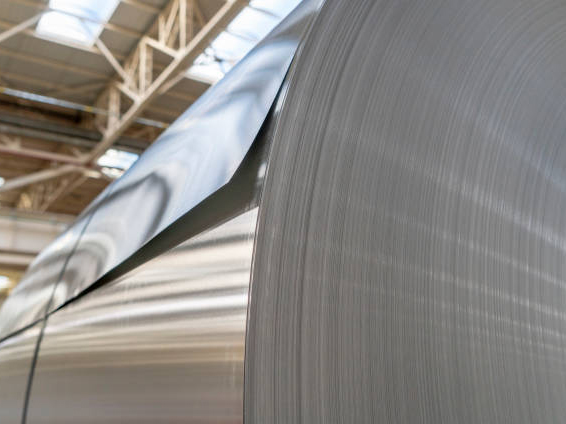
Titanium foil material choices directly change finished product performance and production costs in high-end manufacturing. Gr2 titanium foil and Gr5 titanium foil stand as the two most widely used titanium materials for industrial work. Core gaps lie in alloy makeup and performance positioning. Gr2 is commercially pure titanium with minimum 99.2% titanium content. It delivers strong corrosion resistance and excellent formability, with tensile strength above 345 MPa. Engineers use it for medium-load projects such as chemical anti-corrosion parts and seawater desalination devices. Gr5 means Ti-6Al-4V alloy titanium foil. Its tensile strength sits above 895 MPa, nearly 1.8 to 2.7 times Gr2’s value. It has lower ductility with minimum 10% elongation. Factories apply Gr5 foil for high-stress fields including aerospace parts and medical implants. Gr2 cuts material costs and meets standard anti-corrosion demands. Gr5 handles extreme mechanical loads and high-temperature working conditions. Full knowledge of their chemical makeup, mechanical traits, processing limits and suitable use cases helps factories hit the best balance between material cost and service performance.
1 Chemical Makeup and Material Class: Core Differences Between Pure Titanium and Titanium Alloy
1.1 Gr2 Titanium Foil: Representative Commercially Pure Titanium
Gr2 titanium foil falls under commercially pure titanium. Its titanium content stays no lower than 99.2%. Manufacturers enforce strict limits on impurity elements: Fe ≤ 0.30 %, O ≤ 0.25 %, N ≤ 0.03 %, C ≤ 0.08 %, H ≤ 0.015 %. High titanium purity supports stable self-healing passive films in seawater, salt spray, and mild to moderate acid or alkali liquids. This trait makes Gr2 foil a mainstream choice for chemical factories, offshore engineering projects and new energy equipment.
1.2 Gr5 Titanium Foil: High-Strength Titanium Alloy
Gr5 titanium foil uses Ti-6Al-4V alloy formula. The material adds 6% aluminum and 4% vanadium. Aluminum lowers overall density and boosts oxidation resistance. Vanadium strengthens the metal lattice and lifts high-temperature mechanical strength. This alloy design keeps titanium’s natural corrosion resistance while greatly raising tensile and yield strength. It fits extreme working scenarios such as thin aircraft fuselage skins, pipeline liners, lightweight structural foils and orthopedic medical implant parts.
1.3 Comparison of Global Titanium Classification Standards
Different countries and regions adopt separate standards for titanium materials, yet all share identical core test indicators.
| Standard System | Gr2 Pure Titanium | Gr5 Titanium Alloy | Key Distinction |
|---|---|---|---|
| US ASTM Standard | Grade 2 / R50400 | Grade 5 / R56400 | Alloy element content limits |
| Russian GOST Standard | BT1-0 | BT6 | Tensile strength and machining performance |
| Japanese JIS Standard | Class 2 | TAB6400 | Differences in material ductility |
| European EN Standard | EN Grade 2 | Ti-6Al-4V | Target industrial application ranges |
Note: The above grade matching table acts only as a reference. All official performance values follow ASTM B265 rules.
Gr2 titanium foil fully complies with ASTM B265 specifications. Advanced precision rolling lines support stable mass production of ultra-thin wide foils. Available thickness ranges from 0.02 mm to 1.0 mm, and width covers 15 mm to 680 mm. Production teams maintain tight thickness tolerances. Ultrasonic cleaning delivers ultra-clean foil surfaces for follow-up welding and coating work.
2 Mechanical Property Comparison: Trade-Off Between Tensile Strength and Ductility
2.1 Clear Gaps in Tensile Strength
Gr2 titanium foil carries tensile strength from 345 MPa to 485 MPa, with yield strength between 275 MPa and 410 MPa. It matches medium-load structural components and functional thin foils. Gr5 titanium foil reaches tensile strength of 895 MPa to 930 MPa and yield strength from 828 MPa to 862 MPa. The material withstands heavy stress and repeated fatigue loads, so manufacturers select Gr5 for aerospace fasteners and load-bearing structural parts.
2.2 Ductility and Formability Contrast
Mechanical Performance and Formability Comparison of Gr2 and Gr5 Titanium Foils (Alloy Annealed State as Test Benchmark)
| Performance Index | Gr2 Titanium Foil | Gr5 Titanium Foil | Practical Production Impact |
|---|---|---|---|
| Minimum Elongation | ≥ 20 % | ≥ 10 % | Gr2 supports stamping, bending and deep drawing easily |
| Cold Working Capacity | Excellent | Poor | Gr5 requires hot forming or intermediate annealing steps |
| Welding Performance | Weld joint strength hits 90% of base metal; no complex heat treatment after welding | Weld zones easily turn brittle and hold heavy residual stress; teams need strict process control plus post-weld stress relief annealing | Gr2 fits complex welded component designs |
Gr2 titanium foil’s high ductility creates clear advantages for parts that need complex forming. Common uses include chemical equipment inner liners, heat exchanger plates and electrolytic cell electrodes. Gr5 titanium foil develops surface cracks during deep drawing or sharp bending steps. Workers use custom dies for simple punching tasks, and choose laser cutting or wire EDM for precise complex outlines.
2.3 Density and Lightweight Advantages
Gr2 and Gr5 titanium foils share nearly identical density at 4.51 g/cm³. This value equals about 60% of steel density, so both deliver strong lightweight benefits. Aerospace engineers pick Gr5 foil for further wall thickness reduction thanks to its higher tensile strength. This design choice creates better strength-to-weight ratios for aircraft structures. Chemical plant buyers prioritize Gr2 foil for lower raw material cost and simpler forming processes.
3 Corrosion Resistance: Natural Strength of Pure Titanium and Limitations of Titanium Alloy
3.1 Corrosion Protection Mechanism of Gr2 Titanium Foil
Gr2 titanium foil automatically forms dense TiO₂ passive films with thickness from 1 nm to 10 nm once it touches air, seawater, chloride liquids, sulfuric acid or nitric acid. This thin film repairs itself after minor damage and delivers long-term stable anti-corrosion performance. In real industrial projects, Gr2 foil works over 20 years inside seawater desalination devices. Its annual corrosion rate stays below 0.01 mm under normal-temperature mild acid, mild alkali and standard seawater environments.
3.2 Corrosion Traits of Gr5 Titanium Foil
Aluminum and vanadium alloy elements slightly reduce passive film stability on Gr5 titanium foil. Production teams exercise caution when using Gr5 foil in liquid with high chloride content or strong reducing chemicals. Gr5 foil still maintains reliable corrosion resistance in most working media. Gr2 foil takes the lead in overall cost efficiency and universal anti-corrosion performance.
3.3 Matching Guide for Different Corrosive Working Media
Recommended Material Choices for Corrosive Liquid Environments
| Corrosive Medium | Gr2 Titanium Foil | Gr5 Titanium Foil | Best Material Pick |
|---|---|---|---|
| Seawater and Salt Spray | Excellent | Good | Gr2 for lower overall cost |
| Nitric Acid, Sulfuric Acid | Excellent | Good | Gr2 fully meets usage demands |
| Strong Oxidizing Acids | Excellent | Needs extra surface treatment | Both perform well; Gr2 offers better cost performance |
| High-Temperature Steam | Good (max 350 °C) | Excellent (max 300 °C) | Gr2 for cost savings; confirm temperature limits for Gr5 |
4 Material Processing Technology: Production Challenges From Rolling to Final Forming
4.1 Easy Processing Traits of Gr2 Titanium Foil
Gr2 titanium foil has outstanding ductility. Factories run multiple cold rolling passes to produce ultra-thin foil sizes. The material creates small springback after bending, and production lines easily control flatness. Gr2 foil matches continuous roll coating, lamination and precision stamping production lines. Precision rolling machines paired with full cleaning lines keep tight limits on surface color difference, thickness tolerance and overall plate flatness.
4.2 High-Temperature Processing Requirement for Gr5 Titanium Foil
Gr5 titanium foil holds high tensile strength and low ductility. Cold forming quickly creates surface cracks. Most factories adopt hot rolling or hot stamping at 700 °C to 900 °C. Workers add multiple intermediate annealing cycles during forming to restore material ductility. Laser welding and electron beam welding serve as the main connection methods for Gr5 foil, and these processes demand high-end equipment and strict operation standards.
4.3 Comparison of Key Processing Parameters
Comparison of Core Manufacturing Process Parameters
| Processing Step | Gr2 Titanium Foil | Gr5 Titanium Foil | Main Technical Difficulties |
|---|---|---|---|
| Cold Rolling Pass Count | 8 ~ 12 rolling cycles | Requires hot rolling pre-treatment | Gr5 creates heavy rolling force and raises equipment load |
| Annealing Temperature | 650 ~ 750 °C | 700 ~ 850 °C with full argon shielding | Gr5 oxidizes easily without inert gas protection |
| Slitting Width Tolerance | ±0.1 mm width error limit | Requires laser cutting or wire EDM | Gr5 high hardness wears standard cutting tools fast; use special alloy cutters or laser slitting |
5 Suitable Application Scenarios and Material Selection Rules: Balance Between Cost Performance and Mechanical Capacity
5.1 Main Industrial Uses of Gr2 Titanium Foil
- Chemical Equipment: Inner liners for reactors and pipelines that carry heavily corrosive liquids. Its acid and alkali resistance extends full equipment service life.
- Offshore Marine Projects: Heat exchange plates inside seawater desalination machines and anti-corrosion surface layers on offshore platforms. The material blocks chloride ion erosion.
- New Energy Industry: Base foils for water electrolysis hydrogen production electrodes and fuel cell bipolar plates. It combines stable electrical conductivity and reliable corrosion resistance.
- Electronic Electromagnetic Shielding: Shield layers inside mobile phones and laptop computers. Non-magnetic and lightweight traits fit all 3C electronic production standards.
5.2 High-End Application Fields of Gr5 Titanium Foil
- Aerospace Manufacturing: Thin fuselage skins, pipeline inner liners and lightweight structural foils. The material handles heavy repeated stress and fatigue loads.
- Medical Implant Devices: Orthopedic bone plates, auxiliary surgical foils and external medical instruments. Choose medical-grade ELI grades such as Gr23 for permanent body implants.
- Motorsports Parts: Exhaust system components and suspension structural pieces. The material delivers lightweight performance under extreme driving conditions.
- Deep-Sea Exploration Equipment: Pressure cabin structural foils. It balances ultra-high tensile strength and acceptable corrosion resistance.
5.4 Material Selection Decision Matrix
Material Selection Decision Matrix
| Working Demand Scenario | Core Evaluation Standards | Recommended Foil Material | Selection Reason |
|---|---|---|---|
| Medium Tensile Load + Strong Anti-Corrosion Performance | Cost control, simple forming work | Gr2 Titanium Foil | High overall cost performance, fits over 90% standard industrial projects |
| Ultra-High Strength + High Temperature Resistance | Extreme mechanical loads, lightweight design targets | Gr5 Titanium Foil | Unique high-strength performance with no equal replacement material |
| Precision Stamping and Complex Forming | Complex outline shapes, zero surface cracks after forming | Gr2 Titanium Foil | Much better ductility for deep drawing and bending |
| Welded Structural Components | Stable weld joint strength, simple welding workflow | Gr2 Titanium Foil | More steady welding results without complex post-processing steps |
6 Raw Material Cost and Supply Chain: Economic Evaluation Factors
6.1 Raw Material Price Gaps
Gr2 titanium foil uses simple chemical makeup and mature mass production lines. Its market price sits at 60% to 70% of Gr5 titanium foil’s price. Large-batch purchase projects such as chemical reactor liners and electrolytic electrodes cut initial investment and long-term maintenance costs by choosing Gr2 foil.
6.2 Contrast of Total Manufacturing Costs
Gr2 titanium foil supports easy cold forming. Stamping dies hold long service life, and production lines create low defective product rates. It matches fully automatic production workflows. Gr5 titanium foil needs hot forming machines, intermediate annealing furnaces and full inert gas protection systems. Its overall manufacturing cost runs two to three times higher than Gr2 foil. The production process also asks for highly skilled technical operators. Repair and scrap costs for finished Gr5 parts stay far above Gr2 foil products.
6.3 Stable Domestic Supply Chain
China holds a complete mature titanium material industrial chain. Factories supply enough raw materials and deep processing capacity for both Gr2 and Gr5 titanium foils, with steady fixed delivery cycles. Domestic titanium foil products beat imported alternatives in supply safety, fast technical response speed and professional after-sales technical support.
Conclusion
Core differences between Gr2 titanium foil and Gr5 titanium foil come from their original material design goals. Gr2 balances corrosion resistance and easy forming to fit most standard industrial projects. Gr5 focuses on extreme tensile strength and high-temperature performance, and serves high-end manufacturing fields. Engineers judge multiple factors before final material selection: actual mechanical load levels, corrosive working media, required forming methods and fixed project budget limits. This full evaluation avoids two common risks: over-specification with unnecessary high-cost alloy foil or insufficient mechanical performance from low-grade pure titanium foil.
FAQ
1 Can Gr2 titanium foil replace Gr5 foil for aircraft manufacturing parts?
Manufacturers do not recommend direct replacement. Gr5 titanium foil delivers tensile strength above 895 MPa, nearly 2.5 times Gr2’s maximum tensile value. Aircraft load-bearing structures follow strict standards for fatigue strength and high-temperature performance. Gr2 foil fails all official aviation airworthiness certification rules. Engineers may select Gr2 foil only for non-load-bearing aircraft parts such as interior decorative layers and electromagnetic shielding films to cut total material costs.
2 How to judge if titanium foil surface quality fits follow-up coating processes?
Three core test indicators decide surface coating compatibility. First, surface dyne value: standard painting processes need a minimum 38 dyne/cm dyne level; medical or electronic high-end coating work requires at least 40 dyne/cm. Second, surface roughness Ra value: bright cold rolled foil surfaces need Ra ≤ 0.4 μm. Third, surface oil residue levels. Full ultrasonic cleaning delivers ultra-clean foil surfaces. Light surface grinding further improves coating bonding strength.
3 What service life can Gr2 titanium foil reach inside seawater desalination machines?
Under standard normal operation conditions (working temperature below 80 °C, chloride concentration under 35,000 ppm, a range covering all common seawater and salt spray environments), Gr2 titanium foil carries a designed service life over 20 years. Two key steps extend its working cycle: prevent crevice corrosion and galvanic corrosion from contact with different metal materials. Complete regular inspections to check passive film integrity. Run pickling and passivation treatment to restore full anti-corrosion performance if needed. Add extra passivation processing for working media with ultra-high chloride concentration.
Get Custom High-Performance Titanium Foil Solutions Now
Baoji Titanium Valley Titanium Nickel Zirconium Material Processing Co., Ltd. acts as a professional titanium foil manufacturer and global supplier. The factory owns world-class 20-high precision rolling production lines and delivers stable annual output of 3,000 tons of titanium foil. Our team supplies customized ultra-thin wide foil products from 0.02 mm to 1.0 mm thick plus full-cycle technical support. Contact our sales team for product specification sheets, third-party material test reports or tailored industrial application solutions: sales@titaniumvalleys.com
References
- Zhao Yongqing, Qu Henglei. Titanium Alloy Material Handbook[M]. Beijing: Chemical Industry Press, 2019.
- China Nonferrous Metals Industry Association. Compilation of Standards for Titanium and Titanium Alloy Wrought Products[M]. Beijing: China Standards Press, 2020.
- Li Minghua, Wang Guodong. Rolling Theory and Technology of Precision Metal Foils[M]. Beijing: Metallurgical Industry Press, 2018.
- Wang Xinnan, Li Jianming. Application Progress of Ti-6Al-4V Titanium Alloy in Aerospace Industry[J]. Aeronautical Manufacturing Technology, 2020, 63(15): 76-83.
- ASTM International. ASTM B265-20: Standard Specification for Titanium and Titanium Alloy Strip, Sheet, and Plate[S]. West Conshohocken: ASTM International, 2020.