
What Full Details Can We Learn About the Fatigue Strength of GR2 Titanium Wire, From Test Data to Industrial Usage?
- Gr2 Titanium Wire
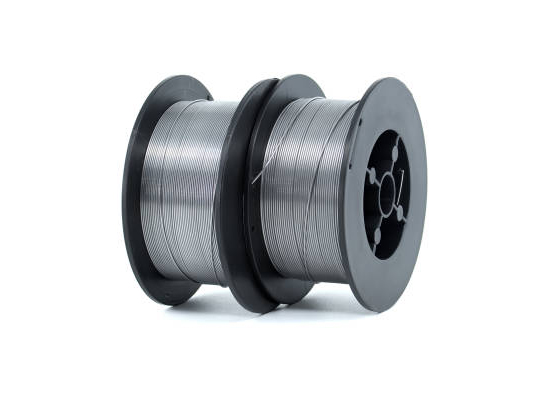
GR2 titanium wire delivers fatigue strength between 200 and 280 MPa under 10⁷ loading cycles. This value equals 50% to 60% of its tensile strength. GR2 titanium ranks as the most widely used commercially pure titanium grade. It holds stable anti-fatigue performance under alternating loads. Its fatigue behavior beats stainless steel and aluminum alloy by a clear margin in corrosive surroundings. Many factors change its fatigue strength, including surface finish, stress concentration, chemical media, loading frequency and heat treatment. Engineers need clear knowledge of GR2 titanium wire fatigue traits for fasteners in chemical equipment, marine connecting parts, medical implants and aerospace elastic components. This knowledge directly decides product service life and operational safety.
1. Basic Fatigue Strength Features of GR2 Titanium Wire
1.1 Standard Fatigue Test Data
ASTM B863 sets official test rules for GR2 titanium wire. Different processing states create different fatigue results. Annealed GR2 wire (M state) shows a fatigue limit from 200 to 240 MPa. Half-hard GR2 wire (Y2 state) reaches 220 to 260 MPa. Hard GR2 wire (Y state) hits 250 to 280 MPa. Labs collect all these readings at room temperature in air with symmetric cyclic loads (stress ratio R = -1). The fatigue ratio (fatigue strength divided by tensile strength) stays between 0.50 and 0.58 under 10⁷ symmetric cycles (R = -1). This ratio sits at upper-middle levels among all non-ferrous metals.
1.2 Links Between Loading Cycles and Fatigue Life
The S-N curve (stress-life curve) of GR2 titanium wire follows standard metal fatigue rules. In the high-cycle fatigue zone (10⁴ to 10⁷ cycles), every 10% drop in stress extends fatigue life by 2 to 3 times. The curve flattens out after 10⁷ cycles and reaches the material fatigue limit. Plastic deformation controls performance in the low-cycle fatigue range (10³ to 10⁴ cycles). The allowable stress amplitude can reach 300 to 340 MPa here. This stress range nears the yield strength of GR2 titanium. Designers only apply this range to short-term, low-frequency impact working conditions and avoid long-term use. Engineers must adjust design standards for GR2 titanium wire to match different service environments because of this property difference.
1.3 Performance Advantages Over Other Metal Wires
GR2 titanium wire keeps 25% to 35% higher fatigue strength retention than 316L stainless steel wire in corrosive media. Stainless steel loses 30% to 40% of its air fatigue strength in seawater, down to just 60% to 70% of the original value. GR2 titanium wire only loses 10% to 15% of its fatigue strength under the same seawater conditions. GR2 titanium wire provides stronger fatigue resistance than aluminum alloy wire at equal weight. It also has very low risks of stress corrosion cracking. GR2 titanium wire carries lower absolute strength than high-strength titanium alloys such as Ti-6Al-4V. Still, it stores more plastic capacity inside its structure. It adapts better to complex stress states and resists overload damage more effectively.
2. Core Factors That Change GR2 Titanium Wire Fatigue Strength
2.1 Surface Finish Acts as the Top Decisive Factor
Surface quality creates the biggest impact on fatigue performance. Bright drawn GR2 titanium wire delivers 15% to 20% higher fatigue strength than pickled wire. Bright drawn wire has surface roughness Ra ≤ 0.4 μm, much smoother than pickled wire with Ra ≤ 1.6 μm. Smooth surfaces cut down sources of stress concentration. Surface defects such as scratches, indentations and slag inclusions become starting points for fatigue cracks. For standard wire diameters from 1.0 mm to 10.0 mm, the depth ratio of surface defects to the whole cross-section matters most. Defects deeper than 0.05 mm reduce fatigue strength by 30% to 50%. Manufacturers use multi-pass cold drawing tools paired with precision dies to control wire ovality. This process keeps uniform smooth surfaces and lifts the base fatigue performance of finished wire.
2.2 Material Purity and Internal Microstructure
GR2 titanium wire needs a minimum purity of 99.2%. Small purity shifts change its fatigue performance subtly. The ASTM B863 standard caps oxygen content at 0.18%. Proper oxygen levels raise material strength, but excess oxygen reduces ductility and fatigue toughness. Iron content must stay below 0.30%. Extra iron forms brittle metal phases that speed up fatigue crack expansion. Factories enforce strict limits on hydrogen content (≤ 0.015%). Hydrogen atoms gather along grain boundaries and crack tips. This gathering accelerates crack growth and shortens fatigue life greatly. Vacuum melting production locks stable chemical makeup across different production batches. Consistent chemical composition guarantees steady fatigue performance for all wire rolls.
2.3 Dimensional Accuracy and Uniform Stress Distribution
Wire diameter tolerance directly shapes internal stress patterns. Poor tolerance control triggers local stress concentration and cuts fatigue life sharply. Precision cold drawing limits diameter tolerance to tight ranges. This tight control spreads working stress evenly during assembly and operation. Straightness carries equal importance for welding wire and fastener production. Bent wire creates extra bending stress and speeds up fatigue breakdown. Precision straightening processes deliver high wire straightness and extend the fatigue service life of finished parts.
3. Fatigue Performance of GR2 Titanium Wire Under Different Service Scenarios
3.1 Long-Term Service Inside Chemical Anti-Corrosion Equipment
Chemical plants produce springs, filter screens and fasteners from GR2 titanium wire. These parts face repeated pressure swings in acid, alkali and salt liquids. GR2 titanium wire retains 85% to 90% of its air fatigue strength inside acidic liquids with pH values from 2 to 4. Stainless steel drops below 60% of its original fatigue strength under identical acid conditions. Alkaline liquids with pH 10 to 12 create almost no negative effects on titanium fatigue performance. Real industry tests prove GR2 titanium springs work continuously at 80°C inside 30% sodium hydroxide solution. These springs complete more than 10⁸ loading cycles and show outstanding fatigue durability.
3.2 Performance Test Under Harsh Offshore Engineering Conditions
Marine working environments combine constant corrosion, mechanical vibration and sudden impact loads. These conditions set strict standards for metal fatigue resistance. GR2 titanium wire keeps 90% to 95% of its air fatigue limit inside 3.5% sodium chloride seawater. Carbon steel only holds 50% to 60% and aluminum alloy stays at 60% to 70% of their air fatigue strength under seawater exposure. Deep-sea high-pressure environments generate complex fatigue loads from frequent pressure changes. Engineers use GR2 titanium welding wire to repair seawater pipelines. These repaired pipelines run long hours under alternating water flow impacts. Ultrasonic inspection finds zero crack expansion after years of service, which confirms reliable fatigue durability.
3.3 Biological Environment Compatibility for Medical Implants
Medical implants need stable performance for decades inside the complex human body. They bear repeated cyclic loads from muscle contractions and joint movements. GR2 titanium wire shows nearly identical fatigue behavior in simulated body fluid (37°C, 0.9% sodium chloride, pH 7.4) compared to air. Its fatigue strength loss stays below 5%. The non-magnetic property and full biological compatibility of GR2 titanium avoid magnetic resonance imaging interference and human tissue rejection reactions. Manufacturers produce ultra-fine GR2 titanium wire for surgical sutures and medical guide wires. This fine wire keeps good flexibility after 10⁶ bending cycles and meets all minimally invasive surgery standards.
Fatigue Strength Comparison of GR2 Titanium Wire in Different Media (Room-temperature air as the reference value of 1)
| Medium Environment | Fatigue Strength (MPa) | Strength Retention Rate vs Air | Loading Cycles |
|---|---|---|---|
| Air (Room Temperature) | 240 | 1.00 | 10⁷ |
| 3.5% Sodium Chloride Seawater | 220 | 0.92 | 10⁷ |
| 30% Sulfuric Acid Solution | 210 | 0.88 | 10⁷ |
| 30% Sodium Hydroxide Solution | 230 | 0.96 | 10⁷ |
| Simulated Human Body Fluid | 235 | 0.98 | 10⁷ |
4. Technical Methods to Improve GR2 Titanium Wire Fatigue Performance
4.1 Optimize Advanced Metal Processing Procedures
Production lines adopt continuous rolling machines matched with short-stress rolling stands. The equipment runs horizontal and vertical precision rolling in turns. This process refines internal metal grain structures effectively. Standard processing creates grain sizes from 50 μm to 80 μm. Advanced rolling narrows grain sizes down to 30 μm to 50 μm. Fine grains block the start and spread of fatigue cracks and lift fatigue strength by 10% to 15%. Factories run cold drawing for 8 to 12 passes with intermediate stress relief annealing. This step prevents material brittleness from work hardening and reserves enough plastic capacity inside the wire. Precision drawing limits wire ovality to small ranges. The process removes stress concentration caused by uneven cross-sections and extends fatigue life by 20% to 30%.
4.2 Surface Reinforcement Treatment Technologies
Shot peening creates compressive stress layers on wire surfaces. The compressive stress layer reaches 0.1 mm to 0.3 mm deep with stress values between -200 MPa and -400 MPa. Surface compressive stress offsets alternating tensile loads and raises fatigue strength by 15% to 25%. Laser surface remelting removes tiny surface defects and refines surface grain structures. This technology delivers a 10% to 20% improvement in fatigue performance. Solid lubricant coating forms a protective layer on titanium wire surfaces. The coating prevents surface damage during later processing and adds extra wear resistance. Anodizing creates attractive surface colors and raises surface hardness. It brings a small fatigue strength boost of 5% to 10%.
4.3 Full-Cycle Quality Control and Inspection Standards
Manufacturers build complete production traceability systems. The systems start with spectral analysis of raw titanium billets and end with non-destructive testing of finished wire. Eddy current testing checks surface flaws such as scratches and metal folds. Ultrasonic testing detects internal air pockets and slag inclusions. Every production step holds dedicated inspection stations. Mechanical tests cover tensile strength, yield strength, elongation and hardness. Fatigue tests use rotating bending equipment or axial loading machines and run up to 10⁷ full cycles. Online laser measuring tools check wire diameter, ovality and straightness with ±0.01 mm precision. Production teams discard all out-of-spec wire products. All delivered wire batches carry official material test certificates. The certificates include chemical composition reports, mechanical test records and full non-destructive inspection documents. Customers receive stable, top-quality GR2 titanium wire products.
Fatigue Performance of GR2 Titanium Wire With Different Surface Finishes (Pickled wire as the reference benchmark)
| Surface Treatment Type | Surface Roughness Ra (μm) | Fatigue Strength (MPa) | Performance Improvement Rate |
|---|---|---|---|
| Pickled Surface | 1.2 ~ 1.6 | 200 | Reference Benchmark |
| Bright Drawn Surface | 0.3 ~ 0.4 | 240 | 20% Improvement |
| Shot Peened Surface | 0.5 ~ 0.8 | 250 | 25% Improvement |
| Laser Remelted Surface | 0.2 ~ 0.3 | 245 | 23% Improvement |
5. Applications of Fatigue Strength Data in Industrial Design
5.1 Core Rules to Set Safety Factors
Engineers select safety factors based on the critical level of each working scenario and load uncertainty. Designers assign safety factors from 2.5 to 3.0 to elastic components inside chemical equipment. The maximum working stress stays between 80 MPa and 100 MPa for wire with 240 MPa fatigue strength. Marine fasteners face harsh seawater environments, so their safety factors rise to 3.5 to 4.0. Designers cap working stress between 60 MPa and 80 MPa for these parts. Medical implants demand the highest reliability. Their safety factors reach 5 to 6 to eliminate fatigue failure risks. Dynamic load assessments calculate equivalent fatigue strength through Goodman or Gerber correction formulas. Goodman and Gerber are two average stress correction models. Engineers apply these models to check fatigue strength under non-symmetric cyclic loads and match complex industrial working conditions.
Recommended Fatigue Design Parameters for GR2 Titanium Wire
| Service Application | Suggested Safety Factor | Maximum Allowable Working Stress (MPa) | Expected Fatigue Cycle Life |
|---|---|---|---|
| Chemical Industrial Springs | 2.5 ~ 3.0 | 80 ~ 100 | ≥ 10⁷ |
| Marine Engineering Fasteners | 3.5 ~ 4.0 | 60 ~ 80 | ≥ 5 × 10⁷ |
| Medical Implant Components | 5.0 ~ 6.0 | 40 ~ 50 | ≥ 10⁸ |
| Electronic Spring Sheets | 2.0 ~ 2.5 | 100 ~ 120 | ≥ 10⁶ |
Note: Engineers choose final safety factors after comprehensive checks of working conditions, load fluctuations and regular maintenance plans. All basic fatigue test data in this document come from room-temperature tests. Fatigue performance drops continuously when working temperatures rise above 200°C. Design teams must add temperature correction coefficients for high-temperature service. Standard industrial loading frequencies from 1 Hz to 50 Hz create nearly zero influence on GR2 titanium wire fatigue strength. Designers only run special fatigue checks for ultra-high-frequency working equipment.
5.2 Fatigue Life Prediction Models
The Basquin equation based on S-N curves (σ = σf’·(2 N)^b) predicts fatigue life under different stress levels. For GR2 titanium wire, the fatigue strength coefficient σf’ ranges from 600 MPa to 700 MPa, and the fatigue strength index b falls between -0.10 and -0.12. Engineers use the Miner linear cumulative damage theory for variable-amplitude load conditions. This theory adds up damage fractions from every separate stress level. The metal material develops fatigue failure once total cumulative damage D reaches or exceeds 1. Designers adjust calculation results from these models to match real service environments. The correction coefficient ranges from 0.85 to 0.95 for corrosive media and from 0.80 to 0.90 for temperatures above 200°C.
5.3 Failure Analysis and Optimized Improvement Plans
Real industry failure cases of GR2 titanium filter screens show fatigue cracks usually start from surface scratches or processing defects. Practical improvement steps include replacing pickled wire with bright drawn wire, adding shot peening surface treatment and lowering design working stress. All these steps extend component service life significantly. Cases of loose titanium fasteners prove excess wire ovality creates heavy stress concentration. Manufacturers supply high-precision titanium wire, and assembly workers follow strict torque control standards to fix this problem completely. All real failure records show full cooperation between material selection, production processes and structural design delivers the best fatigue performance upgrades.
Conclusion
GR2 titanium wire provides outstanding fatigue strength between 200 MPa and 280 MPa among all commercially pure titanium grades. It maintains stable high fatigue performance especially inside corrosive media. Surface finish, raw material purity and processing precision act as the three key factors that change its fatigue behavior. Factories adopt advanced rolling tools and precision cold drawing processes paired with strict full-cycle quality control systems. These production steps deliver steady improvements to wire fatigue performance. Responsible industrial design picks matching safety factors and working stress values according to real service conditions and guarantees long-term stable operation of finished parts.
FAQ
1. What steps extend the fatigue life of GR2 titanium wire in seawater environments?
Buy bright drawn GR2 titanium wire and add shot peening surface treatment to form a compressive stress layer. Lower working stress to 30% to 40% of the wire fatigue strength during design work. This stress range matches safety factors of 2.5 to 3.5, and designers should set safety factors above 3.5 for long-term marine use. Schedule regular surface cleaning to clear marine biological attachments and cut local corrosion risks. High-precision titanium wire combined with all these measures creates clear extensions to fatigue service life.
2. Why do fatigue tests for GR2 titanium wire run up to 10⁷ loading cycles?
The 10⁷ cycle mark stands as the industry standard threshold to define metal fatigue limits. The S-N curve flattens out after this cycle count, and further stress adjustments no longer change fatigue life in obvious ways. Chemical and marine equipment run for several years or even decades in practical use, which matches the 10⁷ cycle test standard. Test data reaching 10⁷ cycles supply reliable reference values for structural design and avoid wrong design choices based on limited low-cycle test results.
3. Do different heat treatment states create large gaps in GR2 titanium wire fatigue performance?
The performance gaps are obvious yet controllable. Annealed GR2 wire carries fatigue strength from 200 MPa to 240 MPa and holds high elongation above 18%. This grade fits applications that require bending or forming work. Hard-state GR2 wire delivers fatigue strength between 250 MPa and 280 MPa but its elongation drops to 5% to 8%. Hard wire lacks plastic capacity and cannot go through secondary bending or stamping forming. Manufacturers only supply hard wire for direct assembly of finished parts. Half-hard GR2 wire sits between the two grades and balances strong fatigue strength and easy processing ability. Designers select the correct heat treatment state based on specific application needs.
Pick Professional GR2 Titanium Wire Maker Titanium Valley for Custom High-Fatigue Performance Solutions
Baoji Titanium Valley Titanium Nickel Zirconium Material Processing Co., Ltd. focuses on high-quality GR2 titanium wire production and offers full-size custom wire from φ0.1 mm to φ10.0 mm. All our wire batches come with complete fatigue performance test data and 3.1 material test certificates, fully meeting the ASTM B863 standard. Contact us at sales@titaniumvalleys.com for technical consulting or sample testing requests.
References
- Zhao Yongqing, Qu Henglei, Zhou Lian. Phase Transformation and Heat Treatment of Titanium Alloys [M]. Changsha: Central South University Press, 2012.
- Li Xingwu, Ma Yingjie, Xin Shewei. Microstructure Control and Property Optimization of Titanium Alloys [J]. Rare Metal Materials and Engineering, 2018, 47(3): 721-728.
- Chen Yuyong, Song Ming, Zhang Xiaodan. Application and Corrosion Protection of Titanium Alloys in Marine Engineering [J]. Chinese Journal of Corrosion and Protection, 2020, 40(5): 401-408.
- China Nonferrous Metals Industry Association. Compilation of Standards for Titanium and Titanium Alloy Wrought Products [M]. Beijing: China Standards Press, 2020.
- ASTM International. ASTM B863-14(2020): Standard Specification for Titanium and Titanium Alloy Wire [S]. West Conshohocken: ASTM International, 2020.