
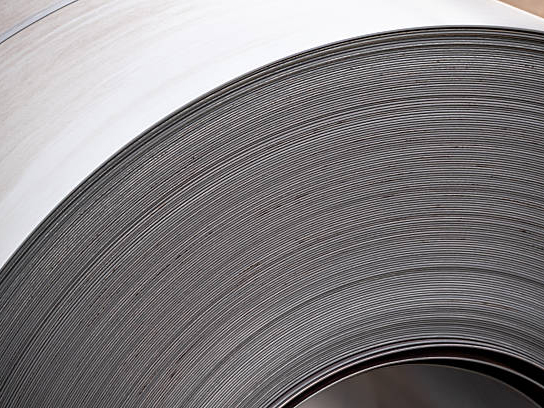
Material selection directly affects product performance and total service life cost in precision manufacturing and corrosion protection fields. Gr1 titanium foil and stainless steel foil are two common thin metal materials, yet they have big differences in performance. Gr1 titanium foil features a purity of 99.5% or higher, outstanding corrosion resistance especially in oxidizing acid, seawater and chloride-rich environments, and a low density of 4.51 g/cm³, which is about 57% of steel. It is a top choice for lightweight design and long-term protection in high-end fields. Still, it comes with higher material costs and special processing rules, such as welding under inert gas protection. Stainless steel foil has decent corrosion resistance and cost advantages, but it works poorly under extreme chemical conditions, high-temperature oxidation and weight-limited working scenarios. Many industries including aerospace, fuel cells, medical implants and electronic shielding pick Gr1 titanium foil after evaluating actual working conditions. This material solves technical problems like special corrosion, magnetic field interference and material contamination. It also cuts replacement frequency and optimizes total life cycle costs. This article compares the core differences between the two materials from three aspects: performance, application and cost.
1. Material Property Comparison: Key Features of Gr1 Titanium Foil
1.1 Chemical Composition and Purity
Gr1 titanium foil is commercially pure titanium. Its titanium content reaches 99.5% or above. It keeps strict control on impurities: oxygen content no more than 0.18%, iron no more than 0.20% and carbon no more than 0.08%. High purity guarantees stable and predictable performance in complex working environments. Common stainless steel foils are 304 and 316 grades. They mainly consist of iron, 16% to 18% chromium and 8% to 10% nickel. Chromium forms a passive film to deliver basic anti-corrosion ability. However, stainless steel easily suffers pitting corrosion and intergranular corrosion in chloride and strong oxidizing acid environments.
Titanium shows different corrosion resistance in reducing acids like hydrochloric acid and dilute sulfuric acid based on temperature and concentration. At room temperature and low concentration, Gr1 titanium works well in hydrochloric acid below 5% or dilute sulfuric acid below 10%. Its corrosion rate rises sharply when temperature and acid concentration go up, such as near boiling point and with high acid concentration. People need to check actual working conditions before choosing titanium materials.
| Performance Index | Gr1 Titanium Foil (TA1) | 304 Stainless Steel Foil (06Cr19Ni10) | 316 Stainless Steel Foil (06Cr17Ni12Mo2) |
|---|---|---|---|
| Main Composition | Ti ≥ 99.5% | Iron base + 16%~18% Cr + 8%~10% Ni | Iron base + 16%~18% Cr + 10%~14% Ni + 2%~3% Mo |
| Density (g/cm³) | 4.51 | 8.0 | 8.0 |
| Melting Point (℃) | 1668 | 1400 ~ 1450 | 1375 ~ 1400 |
| Chloride Resistance | Excellent | Average (Prone to pitting) | Good |
Low impurity levels make pure titanium suitable for food contact, medical use and laboratory settings that require strict material safety standards.
1.2 Corrosion Resistance
Gr1 titanium foil performs well in oxidizing acids, alkaline solutions, salt solutions and seawater. It forms a dense self-healing TiO₂ passive film in oxidizing media. Manufacturers use titanium foil as lining for chemical equipment and parts for marine and coastal facilities. It extends service life and reduces part replacement work.
Stainless steel foil works fine in neutral and weakly corrosive environments. It fails quickly in strong oxidizing acids, high temperature and high humidity areas, or places rich in chloride ions such as seawater desalination and salt spray environments.
Titanium foil has good oxidation resistance. It fits long-term outdoor and coastal exposure use. Stainless steel gets rusty and surface damaged under sulfide and acid rain. Titanium materials lower maintenance work for key equipment that needs stable long-term operation.
1.3 Physical and Mechanical Properties
Gr1 titanium foil weighs only 57% of stainless steel. This advantage matters a lot for weight-sensitive fields like aerospace, portable medical devices and new energy vehicles. Gr1 titanium foil has tensile strength of 370 MPa or higher, yield strength of 250 MPa or higher, elongation of 25% or higher and hardness between 100 HB and 180 HB. It has good ductility among pure titanium grades and supports bending, welding and other deep processing. Welding needs inert gas protection though.
Cold-worked 304 stainless steel foil can reach a tensile strength of about 520 MPa. But its heavy weight, large material rebound and tool sticking problems limit its use in ultra-thin and wide foil production. Factories use 20-high rolling mills to mass produce Gr1 titanium foil. The product thickness ranges from 0.02 mm to 1.0 mm, and width from 350 mm to 670 mm. The standard thickness tolerance is within ±0.002 mm, and can reach ±0.001 mm after process optimization. It has stable shape and dimensional accuracy.
| Performance | Gr1 Titanium Foil | Stainless Steel Foil |
|---|---|---|
| Weight Advantage | 43% lighter | / |
| Processing Ductility | Good for bending; welding needs inert gas protection | Medium; large rebound |
| Magnetism | Non-magnetic | Weakly magnetic or non-magnetic |
| Biocompatibility | Excellent (Medical grade) | Average |
1.4 Limitations of the Material
Gr1 titanium foil also has drawbacks in practical use. Its price is 3 to 5 times higher than stainless steel foil. It hardens obviously during cold working, so intermediate annealing is often necessary. Its thermal conductivity is low at 15 ~ 17 W/(m·K). It is not ideal for parts requiring high heat dissipation, such as electronic heat sinks and high heat flux heat exchangers.
Even so, titanium foil still works well in seawater heat exchangers. Workers thin the foil wall and adjust structural design to make up for low thermal conductivity, and the overall performance stays great. Titanium foil welding requires pure argon or helium to avoid oxidation and hydrogen absorption, so the process is more complex than stainless steel welding. Besides, it has limited corrosion resistance in reducing acids. Buyers need to weigh all these factors during material selection.
2. In-depth Analysis of Application Scenarios
2.1 Aerospace: Lightweight Structural Parts
Aerospace industry sets strict standards for material strength-to-weight ratio, high temperature stability and reliability. Factories use Gr1 titanium foil for non-load-bearing thin-walled parts, skin panels and heat insulation layers to cut overall structure weight. It applies to engine fairings and fuselage connectors. Its anti-fatigue and high temperature resistance support long-term service.
Stainless steel foil costs less, but it easily develops cracks and peeling oxide layers under high altitude low temperature, high-speed air flow and fuel corrosion. It cannot meet the requirements of harsh working conditions.

2.2 Electronic Products and Shielding: High-performance EMI Shielding
Electromagnetic interference (EMI) shielding is a core requirement for precision electronic devices. Gr1 titanium foil is non-magnetic, with good electrical conductivity and ultra-thin wide size. Its resistivity ranges from 42 μΩ·cm to 54 μΩ·cm. It serves as shielding layers for flexible printed circuits (FPC), 5G communication modules and high-frequency equipment. The maximum width of titanium foil reaches 670 mm. It reduces splicing seams in large-area shielding structures, and avoids signal leakage and weak mechanical points.
Stainless steel foil can also block electromagnetic waves. Yet its weak magnetism may interfere with precision instruments. It is hard to control shape and keep stable quality for ultra-thin foil below 0.02 mm. Manufacturers clean titanium foil with ultrasonic and alkaline solution. Its surface dyne value stays steady at 44 dyn/cm, which fits direct welding and coating work.

2.3 New Energy Industry: Fuel Cells and Battery Tabs
The proton exchange membrane of fuel cells needs electrode substrates with high conductivity, strong corrosion resistance and light weight. Gr1 titanium foil has stable chemical properties and uniform microstructure. Workers control the argon annealing temperature within ±2 ℃. It has precise dimensions, so manufacturers use it for bipolar plates and gas diffusion layers of proton exchange membrane fuel cells (PEMFC). It also works for battery tabs. It solves the oxidation problem of aluminum foil and corrosion problem of copper foil.
Stainless steel can make some electrolytic electrodes. But its passive film easily breaks under acidic electrolyte and high current density after long cycles. This leads to uneven current distribution and short service life of equipment. Titanium foil maintains stable performance and ensures reliable operation of new energy systems.

2.4 Medical Treatment and Chemical Industry: Biocompatibility and Cleanliness
Medical implants, surgical tools and laboratory equipment demand high biocompatibility and material cleanliness. Gr1 titanium foil is non-toxic, non-magnetic and releases no harmful substances. It meets the ISO 10993 standard for medical device biological evaluation. Factories line chemical reactors, pipes and valves with titanium foil. It prevents medium contamination and keeps products pure, which is critical for pharmaceutical and food processing industries.
Stainless steel may release nickel ions in body fluid or chemical solutions. The ions cause allergic reactions and contaminate sensitive products. Weld joints are weak corrosion points for stainless steel chemical equipment. Large-size titanium foil cuts welding points, and lowers the risk of leakage and corrosion.
2.5 Other Application Scenarios
Gr1 titanium foil has lower thermal conductivity than stainless steel, but it still works well in seawater heat exchangers. Its excellent seawater corrosion resistance allows thinner wall design. The overall heat exchange efficiency and service life are far better than stainless steel. It also applies to vacuum coating equipment and high-temperature sensors. Ultra-thin wide titanium foil makes metal laminate composites. It fixes the interface discontinuity of traditional multi-layer structures, and improves the overall performance of aerospace skin and armor plates.
3. Production Technology and Quality Assurance
3.1 Advanced Equipment: 20-high Rolling Mill Technology
Traditional rolling equipment struggles to produce ultra-thin wide foil. It faces problems like large material rebound, poor shape control and uneven performance. Titanium Valley uses a 750 mm 20-high precision rolling mill. It adopts multi-pass rolling and real-time tension adjustment to mass produce titanium foil. The product thickness is 0.02 mm to 1.0 mm, and width 350 mm to 670 mm. The standard thickness tolerance is within ±0.002 mm, and can reach ±0.001 mm after process upgrade.
The production line combines continuous cleaning and annealing lines, vacuum furnaces and leveling machines. It guarantees clean surface, uniform microstructure and consistent mechanical properties for every roll of foil.
3.2 Surface Treatment: Cleaning and Annealing Process
Workers use ultrasonic and alkaline cleaning to remove oil and oxide from Gr1 titanium foil. The surface dyne value stays at 44 dyn/cm with no visible defects. The finished foil is ready for welding, coating and composite processing directly. Continuous argon annealing keeps temperature error within ±2 ℃. It improves the ductility and strength of titanium foil, with even surface color and no oxidation spots.
The factory uses self-developed degreasing agents and sanding processes to get uniform surface texture. The production line has an automation rate of 90%. The full-process inspection system tracks all raw materials and finished products, and ensures traceable and stable batch quality.
3.3 Quality Control: Technical Breakthroughs and International Certifications
Titanium Valley solves seven key technical problems for ultra-thin wide titanium foil production. These problems include surface color difference, thickness tolerance, uniform annealing structure, high-precision slitting, advanced cleaning, optimized leveling tension and uniform sanded surface. All products follow international standards such as ASTM B265, JIS H4600 and EN 10204. The company can provide third-party test reports and material certificates.
| Control Link | Technical Index | Testing Method |
|---|---|---|
| Thickness Tolerance | Typical: ±0.002 mm; Optimized: ±0.001 mm | Laser Thickness Gauge |
| Surface Dyne Value | Stable at 44 dyn/cm | Dyne Pen Test |
| Annealing Temperature Control | ±2℃ | Multi-point Thermocouple Monitoring |
| Flatness | ≤5 I unit | Optical Flatness Tester |
| Chemical Composition | Compliant with ASTM B265 | ICP Spectral Analysis |
The titanium foil production line has an annual output of 3000 tons. It delivers large orders steadily and supports long-term cooperation with aerospace, electronic and new energy enterprises.
4. Cost-Benefit Analysis from a Full Life Cycle Perspective
4.1 Initial Procurement Cost
By weight, Gr1 titanium foil costs 3 to 5 times more than stainless steel foil. Titanium foil has a density of only 57% of stainless steel. People use less titanium foil for the same coverage area. The actual cost gap narrows to 2 to 3 times. For weight-sensitive products like aircraft, weight reduction saves fuel and increases load capacity. These benefits offset part of the material cost.
Ultra-thin wide titanium foil such as 0.02 mm × 670 mm requires complex production work. Advanced precision processing and stable quality also add to the cost. Large-scale production cuts down equipment investment and research costs per unit product.
4.2 Maintenance and Replacement Cost
Stainless steel foil has a limited service life in corrosive environments. It needs frequent replacement, which leads to extra labor cost and production downtime. Titanium foil resists corrosion and aging well. It serves much longer under suitable working conditions. The actual service life depends on medium, temperature and stress. It cuts replacement frequency, labor work and production loss.
Titanium foil lining reduces corrosion points and leakage risks for chemical equipment, and improves safety compliance. For marine projects, coastal facilities and flue gas desulfurization equipment, titanium foil delivers long-term protection. It optimizes total life cycle costs. Users need to evaluate the overall economic benefits based on actual working conditions.
4.3 Processing and Integration Cost
Gr1 titanium foil has good ductility. It is easy to bend, stamp and weld with inert gas protection. It lowers product rejection rate and processing time. Stainless steel foil has large rebound and causes tool sticking. It wears molds quickly and makes high precision hard to achieve, especially for ultra-thin foil.
Titanium Valley provides customized OEM and ODM services. The services include cleaning, sanding, degreasing, annealing, slitting and cutting to length. The factory produces pure titanium, titanium alloy, zirconium and nickel products with non-standard sizes. High-precision slitting technology raises the yield rate of ultra-thin wide foil, and cuts secondary processing costs for customers.
5. Key Factors for Procurement Decisions
5.1 Technical Capability Assessment
Buyers need to check whether suppliers can provide ultra-thin wide titanium foil with qualified tolerance. The 20-high rolling mill and continuous annealing & cleaning line of Titanium Valley ensure consistent batch quality and good shape control for foil from 0.02 mm to 1.0 mm. Buyers should check three key points: stable thickness tolerance, clean surface with no oil, scratches or oxidation, and good performance for direct welding and coating. These points reflect the overall technical strength of suppliers.
5.2 Quality Certification and Traceability
Certifications including ASTM B265, ISO 9001 and EN 10204 are basic requirements for entering the global market. Every batch of products must have chemical composition reports, mechanical property reports and surface quality records. These documents help buyers pass internal and external audits. The full-process traceability system and third-party testing ability of Titanium Valley meet the risk control requirements of high-end manufacturing supply chains.
5.3 Production Capacity and Delivery Stability
The 3000-ton annual production capacity and 90% automated equipment guarantee on-time delivery for large orders. For new energy battery manufacturers, aerospace part producers and electronic shielding material suppliers, stable production and delivery directly affect their production plans and market competitiveness. Buyers also need to check whether suppliers can make ultra-thin and non-standard products, and respond quickly to order changes. This reflects flexible manufacturing capacity.
Conclusion
Gr1 titanium foil has high purity, excellent corrosion resistance in oxidizing media, low density and good processing performance. It works well in aerospace, electronic shielding, new energy, medical treatment and chemical industries. It has higher initial purchase cost than stainless steel foil. Yet it needs less maintenance and lasts longer under specific working conditions, so it optimizes total life cycle costs.
People must also notice its disadvantages: high cost, strict processing rules and weak corrosion resistance in reducing acids. Material selection should combine actual working conditions, performance requirements and budget. The mass production technology and complete quality system of Titanium Valley provide reliable domestic solutions for ultra-thin wide titanium foil.
FAQ
1. What is the minimum thickness of Gr1 titanium foil? Can you supply foil thinner than 0.02 mm steadily?
Titanium Valley standard products range from 0.03 mm to 1.0 mm. We can customize ultra-thin foil from 0.005 mm to 0.02 mm. With 20-high rolling mill technology, we produce these products in mass steadily. The thickness tolerance stays within ±0.002 mm, and the products fit microelectronics and optical precision fields.
2. What are the welding differences between titanium foil and stainless steel foil? Which one is better for large-area splicing?
Gr1 titanium foil uses TIG welding and laser welding. Welding must take place under pure argon or helium protection to avoid oxidation and hydrogen absorption. Its welding process is more demanding than stainless steel. Stainless steel foil easily has thermal stress deformation and intergranular corrosion after welding. The maximum width of our titanium foil reaches 670 mm. It reduces splicing seams, welding work and potential failure points.
3. How to check the quality stability and batch consistency of titanium foil suppliers?
Ask suppliers to provide certificates such as ASTM B265 and ISO standards, test reports on chemical composition and mechanical properties for each batch, surface quality photos and thickness tolerance distribution charts. Titanium Valley uses full-process automatic inspection and traceability system. All foil rolls meet technical specifications and support customer audits and third-party verification.
Call to Action
Baoji Titanium Valley Titanium Nickel Zirconium Material Processing Co., Ltd. is a professional manufacturer and supplier of titanium foil, nickel foil and zirconium foil in China. We own 20-high rolling mill production lines with an annual output of 3000 tons of ultra-thin wide foil. We provide customized processing services for aerospace, electronic, new energy and chemical industries. Please contact us at sales@titaniumvalleys.com for technical solutions and quotations.
References
- Cao Chunxiao, Sha Aixing. Titanium Alloys and Their Applications[M]. Beijing: Metallurgical Industry Press, 2012.
- Zhang Xiyan, Zhao Yongqing, Bai Chenguang. Titanium Alloys and Applications[M]. Beijing: Chemical Industry Press, 2012.
- Zhou Lian, et al. Titanium Handbook[M]. Beijing: Chemical Industry Press, 2012.
- Xu Guodong, et al. Development and Application of Titanium and Titanium Alloys[J]. Progress in Chinese Materials, 2010, 29(5): 9-16.