
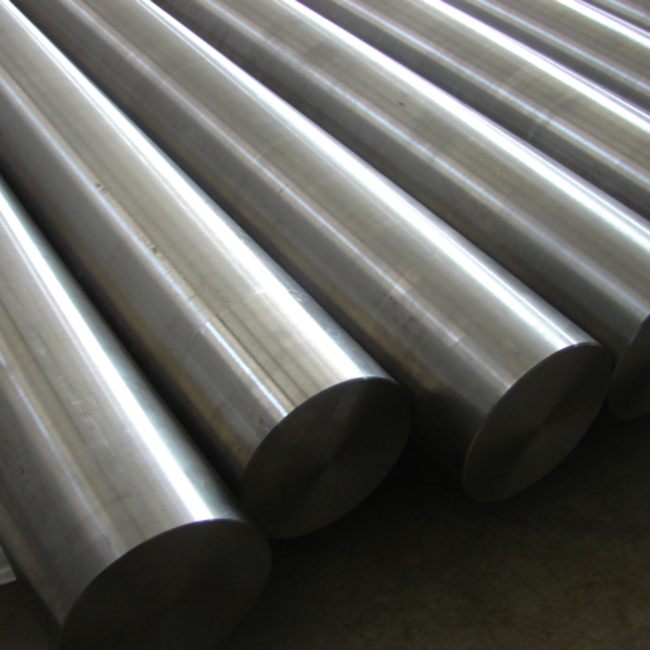
Gr1 titanium rod is the highest purity Grade among commercially pure titanium. It features strong corrosion resistance, excellent biocompatibility and Great formability. It plays a key role in global high-end manufacturing. Manufacturers use it for chemical anti-corrosion equipment, aerospace precision parts, medical implants and marine engineering components. Its unique material properties solve the application problems of traditional metals under extreme working conditions.
1. Core Applications of Gr1 Titanium Rods in Chemical Anti-corrosion Fields
1.1 Key parts for heat exchangers and condenser
Heat exchange equipment in chemical plants works long hours in acidic, alkaline or chloride-containing corrosive media. Plates, tie rods and fasteners made of Gr1 titanium rod resist various corrosive substances. It performs well in oxidizing acids such as nitric acid and chromic acid. It also works stably in medium-concentration sulfuric acid (above 70% or below 5%) and different organic acids. Note that pure titanium shows poor corrosion resistance in sulfuric acid of 5% to 70% concentration and dilute hydrochloric acid. Users need to use it with caution in such environments. A dense natural titanium dioxide film forms on its surface and delivers lasting passivation protection. In regular seawater and dilute acid, its service life is 15 to 20 times longer than carbon steel. A European chemical plant uses Gr1 titanium rod for heat exchanger tube plates in seawater cooling systems. The equipment runs for 12 consecutive years without pitting or stress corrosion cracking.
1.2 Corrosion resistant parts for reaction kettles and storage tanks
Agitator shafts, support rings and lining fasteners in pharmaceutical, pesticide and dye production face sharp temperature changes and chemical erosion. Gr1 titanium rod has a thermal expansion coefficient of 8.6 × 10⁻⁶ /°C, close to that of stainless steel. It keeps stable dimensions when temperature ranges from -50 °C to 250 °C. Its elongation rate reaches no less than 24% and delivers high ductility. Workers carry out cold bending and hot forging to make special-shaped customized parts easily. A fine chemical factory in Japan uses impellers made of Gr1 titanium rod. The parts work in organic media with fluoride ion content below 100 ppm and stay in good condition after 8 years of service.
1.3 Components for electroplating and anodizing equipment
Hangers, anode rods and electrode brackets in electroplating tanks need good conductivity and corrosion resistance in strong acid and strong alkali electrolytes. Gr1 pure titanium has a resistivity of 54 μΩ·cm. A conductive coating on its surface ensures steady current transmission. It is non-magnetic with magnetic permeability below 1.005. It avoids uneven coating caused by magnetic interference during electroplating, so it fits surface treatment for precision electronic components. A semiconductor equipment maker in South Korea uses anode frames made of Gr1 titanium rod. The thickness deviation of finished coating is controlled within ±2 μm.
| Application Parts | Working Environment | Key Performance Advantages | Typical Service Life Improvement |
| Heat exchanger tube plate | Seawater / Organic acid | Resist pitting and stress corrosion | 10 to 15 times longer service life than stainless steel |
| Reaction kettle agitator shaft | Organic media with fluoride ion (F⁻ < 100 ppm) | High ductility, resist sharp temperature change | No obvious wear after 8 years of use |
| Electroplating hanger | Electrolyte with pH 1 ~ 13 | Non-magnetic, surface passivation effect | Cut maintenance frequency by 50% |
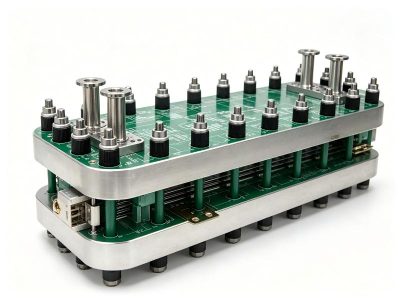
2. Precision Applications of Gr1 Titanium Rods in Medical Devices and Biomedicine
2.1 Raw material for orthopedic implants
Intramedullary nails, bone screws and spinal fusion devices for bone repair require high-standard biocompatibility. Gr1 titanium rod has titanium content above 99.5%. Manufacturers keep impurities like iron, oxygen, carbon, nitrogen and hydrogen under strict control. The material releases no toxic ions and prevents tissue rejection after implantation. Its density is 4.51 g/cm³, equal to 57% of stainless steel (7.9 g/cm³). It is 2 to 2.5 times denser than human bone (1.8 ~ 2.0 g/cm³), so it may cause stress shielding. Designers need to take this factor into account. Clinical data from an American medical device manufacturer shows hip stems made of Gr1 titanium rod achieve a survival rate over 98% after 10 years.
2.2 Dental implants and dental instruments
Dental implants need long-term stability in saliva and strict dimensional tolerance for precision machining. Cold drawn and polished Gr1 titanium rod has surface roughness Ra ≤ 1.6 μm and reaches H7/H8 dimensional accuracy. Workers conduct CNC turning directly on the material. It creates strong osseointeGration with alveolar bone within 6 to 12 weeks. A German dental brand uses Gr1 titanium rods with diameter from 4 mm to 8 mm to produce implants. The 5-year success rate stands above 96% and meets top industry standards.
2.3 Functional parts for surgical instruments
Microsurgical scissors, vascular clamps and nerve retractors need light weight and reliable mechanical strength. Gr1 titanium rod has tensile strength from 240 MPa to 345 MPa and yield strength from 170 MPa to 275 MPa. It fully meets the mechanical demands of surgical operations. Its non-magnetic property works well in MRI operating rooms and produces no image artifacts. A Japanese medical enterprise makes micro forceps with Gr1 titanium rod. The product weighs 40% less than stainless steel versions. Surgeons feel 35% less fatigue after 3 hours of continuous operation.
| Medical Applications | Size Range | Surface Requirement | Key Certification |
| Orthopedic implants | Round rod φ8 ~ φ30 mm | Ra ≤ 3.2, pickled finish | ASTM F67 / ISO 5832-2 |
| Dental implants | Polished rod φ4 ~ φ8 mm | Ra ≤ 1.6, H7 precision | FDA 510(k) / CE MDR |
| Surgical instruments | Turned rod φ6 ~ φ15 mm | Non-magnetic, sterilizable | ISO 13485 quality management system |
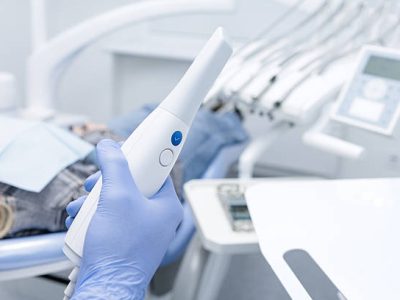
3. Durable Applications of Gr1 Titanium Rods in Marine Engineering and Shipbuilding
3.1 Core parts for seawater desalination equipment
High-pressure pump shafts, valve cores and pipe flanges in reverse osmosis seawater desalination systems resist corrosion from 3.5% salt seawater and residual chlorine. Gr1 titanium rod has a corrosion rate below 0.01 mm per year in simulated seawater. 316L stainless steel has a corrosion rate of 0.1 to 0.5 mm per year under the same conditions. Its strong resistance to chloride pitting keeps equipment running steadily in hot and high-salt tropical sea areas. A large seawater desalination plant in the Middle East uses pump shafts made of Gr1 titanium rod. The equipment only receives two routine maintenance checks in 15 years of operation.
3.2 Structural parts and fastening systems for ships
Connecting pins, bolts and support frames for deep-sea submersibles withstand high seawater pressure and salt mist corrosion. Forged Gr1 titanium rod retains 60% to 70% of its tensile strength as fatigue strength. It delivers long service life under alternating loads. It also has excellent welding performance. TIG welding and electron beam welding joints achieve a joint efficiency of 0.85 to 0.95 and guarantee reliable sealing. A marine platform in Norway uses Gr1 titanium rods of φ50 ~ φ100 mm to make mooring piles. The parts work in harsh sea conditions of the North Sea for 20 years without crack expansion.
3.3 Non-magnetic parts for marine monitoring equipment
Sonar arrays, magnetometers and underwater navigation systems need structural materials with magnetic permeability close to vacuum. Gr1 titanium rod has magnetic permeability below 1.005 and eliminates measurement errors of geomagnetic field. Its seawater corrosion resistance keeps sensors calibrated accurately for a long time. A marine research institute in the United States uses Gr1 titanium rod for deep-sea detector shells. The devices work at 10,000 meters below sea level in the Mariana Trench and remain intact after six months.
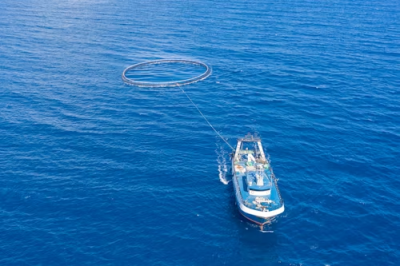
4. Precision Applications of Gr1 Titanium Rods in Semiconductor and Vacuum Technology
4.1 Chamber parts for semiconductor production equipment
Lining plates, gas distribution rings and radio frequency electrodes in plasma etchers and chemical vapor deposition machines resist erosion from high-purity corrosive gas. Workers clean Gr1 titanium rod with ultrasonic treatment and conduct vacuum annealing at 600 °C to 800 °C. The surface metal impurity content drops below 50 ppm and meets cleanliness standards for semiconductor production. It outperforms aluminum alloy in fluorine-containing and chlorine-containing plasma environments and extends service life by 3 to 5 times. A wafer factory in China’s Taiwan region uses fixing rings made of Gr1 titanium rod for etching chambers. The equipment runs for 18 consecutive months without particle contamination.
4.2 Components for vacuum coating equipment
Target holders, shielding plates and drive shafts in optical coating machines keep stable dimensions under high vacuum (10⁻⁵ Pa) and high temperature (500 °C). Gr1 titanium rod has low vapor pressure and prevents material volatilization from polluting coating layers. Its thermal expansion coefficient is 8.6 × 10⁻⁶ /°C, while quartz substrate stands at 0.5 × 10⁻⁶ /°C. Users need to add thermal expansion compensation structures in actual use. An optical instrument manufacturer in Germany uses rotating target tables made of Gr1 titanium rod. The transmittance uniformity of anti-reflection coatings reaches 99.2%.
4.3 Transmission parts for precision instruments
Drive shafts, guide rods and connectors of electronic balances, spectrometers and mass spectrometers require non-magnetic property and high dimensional accuracy. Ground cold drawn Gr1 titanium rod has roundness below 0.01 mm and straightness below 0.05 mm per meter. The fitting clearance reaches H6/g5 Grade. It has better damping performance than stainless steel and reduces vibration interference to measurement accuracy. An analytical instrument maker in Japan uses guide rails made of Gr1 titanium rod for atomic absorption spectrometers. The wavelength repeatability accuracy stays within ±0.02 nm.
| Application Equipment | Working Conditions | Material Advantages | Performance Improvement |
| Plasma etcher | Fluorine-containing gas, 300 °C | Low impurities, resist plasma erosion | Extend chamber service life by 5 times |
| Vacuum coating machine | 10⁻⁵ Pa, 500 °C | Low vapor pressure, good thermal stability | Coating uniformity above 99% |
| Precision balance | Constant temperature and humidity room | Non-magnetic, good damping effect | Reduce vibration interference |
5. Special Applications of Gr1 Titanium Rods in Aerospace and Defense Industry
5.1 Pipeline components for aircraft hydraulic systems
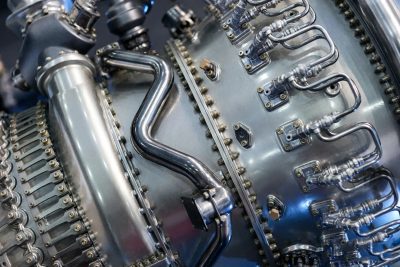
Pipe joints, ferrules and fixing clamps of aviation hydraulic systems work under temperature cycles from -54 °C to 135 °C and working pressure of 21 MPa. Components made of Gr1 titanium rod weigh 57% less than steel parts and cut total aircraft weight. It has excellent cold bending ability, with the minimum bending radius equal to three times the outer diameter. It suits complex pipe layout in narrow spaces. Boeing 787 uses hydraulic pipe joints made of Gr1 titanium rod. The failure rate stays below 0.02% in a 10-year operation cycle.
5.2 Attitude control parts for satellites
Rotating shafts of momentum wheels, gyroscope frames and solar panel hinges for satellites need long fatigue life and stable performance in vacuum. Gr1 titanium rod retains over 85% of its fatigue strength after 10⁷ alternating load cycles. Its surface oxide film does not deGrade under cosmic ray radiation. The non-magnetic property avoids interference to on-board magnetometers. Its thermal conductivity is 17 W/m·K and supports passive thermal control design well. An Earth observation satellite operated by the European Space Agency uses attitude control shafts made of Gr1 titanium rod. It keeps arcsecond-level pointing accuracy after 15 years in orbit.
5.3 Precision transmission systems for unmanned aerial vehicles
Gimbal frames, servo links and camera stabilizers for military drones need light weight and strong impact resistance. Cold drawn and polished Gr1 titanium rod has surface hardness from HV 150 to HV 180. Nitriding treatment raises its hardness above HV 600 and Greatly improves wear resistance. Its damping ratio ranges from 0.004 to 0.006, higher than aluminum alloy, so it dissipates vibration quickly. A military manufacturer in the United States uses universal joints made of Gr1 titanium rod for tactical drones. The parts bear 20G impact load without plastic deformation.

Conclusion
Gr1 titanium rod combines multiple superior properties. High purity brings reliable biocompatibility. Dense oxide film delivers strong corrosion resistance. High ductility supports complex forming processes. Non-magnetic property meets the requirements of precision measurement. It has become an essential material for chemical, medical, marine, electronic, aerospace and other strategic industries. Global carbon neutrality goals drive the development of hydrogen energy industry. Gr1 titanium rod shows Great application potential in electrolytic cells and hydrogen storage tanks. It will provide solid material support for technological upGrading of high-end manufacturing.
FAQ
1. What are the differences in corrosion resistance between Gr1 and Gr2 titanium rods?
Gr1 titanium rod has oxygen content ≤ 0.18%, lower than Gr2 (≤ 0.25%). It has higher purity in certain corrosive environments. Gr2 has 15 to 20 MPa higher strength and fits scenarios that need both corrosion resistance and load bearing. Users select Grades according to actual working conditions and performance demands.
2. What special surface treatment rules apply to medical-Grade Gr1 titanium rods?
Manufacturers pickle and passivate titanium rods for implants to remove stress layers from machining. Surface roughness from Ra 1.6 μm to 3.2 μm helps osseointeGration. Ultrasonic cleaning keeps metal ion release below 0.1 ppm. Products go through ethylene oxide sterilization. All processing steps take place in ISO Class 7 clean rooms.
3. How to solve tool sticking during machining of Gr1 titanium rods?
Use YG8 cemented carbide cutting tools and emulsion for cooling. Set cutting speed from 30 m/min to 50 m/min and feed rate from 0.1 mm/r to 0.15 mm/r. Avoid continuous cutting to prevent work hardening. Set tool rake angle to 15° to 20° to reduce chip adhesion. Apply high-pressure cooling systems when necessary.
Looking for Reliable Gr1 Titanium Rod Manufacturers?
Baoji Titanium Valley Titanium Nickel Zirconium Material Processing Co., Ltd. runs advanced rolling production lines imported from Danieli Italy. The annual output of high-precision titanium rods reaches 20,000 tons. All products comply with ASTM B348 standards. The company provides customized processing services for Gr1 titanium rods. Contact us for technical solutions and quotations via sales@titaniumvalleys.com.
References
- Wang H, Liu Z. Application ProGress of Titanium and Titanium Alloys in Chemical Equipment[J]. Titanium Industry ProGress, 2018, 35(2): 1-7.
- Li J, Zhang Q. Biological Properties and Clinical Evaluation of Medical Grade Commercially Pure Titanium[J]. Journal of Biomedical Engineering, 2016, 33(4): 769-774.
- Chen W, Zhao J. Research on Corrosion Resistance of Titanium Alloys in Marine Engineering[J]. Rare Metal Materials and Engineering, 2019, 48(6): 1845-1851.
- Ma M, Zhou L. Application and Requirements of Titanium Materials in Semiconductor Equipment[J]. Equipment for Electronic Products Manufacturing, 2020, 49(1): 12-16.
- Huang Y, Sun H. Aerospace Titanium Alloy Handbook (2nd Edition)[M]. Beijing: Chemical Industry Press, 2015: 231-256.