
What are the differences between Gr1 and Gr2 titanium wire in terms of purity, strength, and application scenarios?

Selecting the right grade of titanium wire directly affects product performance and cost control in precision manufacturing and high-end industrial fields. Gr1 and Gr2 are the two most widely used commercially pure titanium grades. They have clear differences in chemical composition, mechanical properties and application ranges. Gr1 titanium wire features low interstitial element content (oxygen ≤ 0.16%) and excellent ductility. It works best for parts requiring complex forming and superior corrosion resistance, such as medical implants and precision electronic components. Gr2 titanium wire delivers higher strength while maintaining good corrosion resistance. It is the preferred choice for load-bearing structures in chemical equipment and marine engineering. Understanding the core differences between the two materials helps engineers strike a balance among cost, performance and machinability, and avoid risks from over-design or insufficient material performance.

1. Chemical Composition Differences: How Purity Affects Material Performance

1.1 Precise Control of Impurity Elements


Per ASTM B863 standard, Gr1 titanium wire contains oxygen ≤ 0.16%, iron ≤ 0.20% and carbon ≤ 0.08%. This ultra-low impurity level gives the material outstanding plastic deformation capacity. Gr2 titanium wire has oxygen ≤ 0.20% and iron ≤ 0.30%. It still falls into the category of commercially pure titanium. Slightly higher interstitial elements create interstitial solid solution strengthening in the crystal lattice. Actual production shows Gr1 breaks less often during micro-scale wire drawing. This advantage is critical for producing ultra-fine wire of φ0.06 mm.

1.2 Impact of Titanium Purity on Machinability

Gr1 titanium wire has a low work hardening rate during multi-pass cold drawing. Manufacturers can lower the annealing temperature between passes and shorten heat treatment cycles. It is the top choice for parts that need frequent bending, weaving and micro-forming. Gr2 titanium wire has higher strength and suits structural parts with supporting requirements. Watch for micro-cracks when bending it to an extremely small radius, as the risk relates to wire diameter and cold working degree.

1.3 Effects of Interstitial Elements on Corrosion Resistance

Oxygen, iron and other interstitial elements change the density of the passive film on titanium surface. In chloride environments (10000 ppm Cl⁻, room temperature), Gr1 has a slightly higher pitting potential than Gr2. This difference influences service life for deep-sea marine equipment and electrolytic cells in chlor-alkali industries. In medical device manufacturing, Gr1 meets higher ISO 10993 biocompatibility standards thanks to its lower interstitial element content.

ElementGr1 Content (%)Gr2 Content (%)Performance Impact
O≤0.18≤0.25Higher oxygen content raises tensile strength noticeably. Each 0.1% rise in oxygen usually increases strength by 40~70 MPa, varying with base composition and processing state.
Fe≤0.20≤0.30Dissolved iron causes minor effects. Free iron inclusions reduce corrosion resistance, especially in reducing acids.
C≤0.08≤0.08Excess carbon forms brittle carbides and leads to welding cracks.
N≤0.03≤0.03Nitrogen atoms deliver obvious strengthening effect. Excess nitrogen makes the material brittle.

2. Mechanical Performance Comparison: Engineering Balance Between Strength and Ductility

2.1 Quantified Difference in Tensile Properties (Annealed, Room Temperature)

Under ASTM B863 rules, annealed Gr1 titanium wire has tensile strength from 240 to 415 MPa, yield strength from 170 to 275 MPa, and elongation above 20%. Annealed Gr2 titanium wire has tensile strength from 345 to 550 MPa, yield strength from 275 to 450 MPa, and elongation above 15%. High elongation lets Gr1 withstand heavy cold deformation without cracking. Gr1 shows lower elastic hysteresis when making precision springs. Choose Gr2 for parts requiring high elastic limit. The two grades share similar elastic modulus at around 110 GPa.

2.2 Hardness Distribution and Surface Quality

With the same bright drawing process in annealed state, Gr1 titanium wire has surface hardness of 140~180 HV, while Gr2 ranges from 180 to 220 HV. Exact values change with wire diameter and cold working ratio. Lower hardness cuts die wear. Gr1 also easily reaches surface roughness Ra ≤ 0.2 μm per GB/T 1031 standard. This feature benefits parts for anodizing or direct exterior use.

2.3 Fatigue Performance and Service Life

In room temperature rotating bending fatigue tests up to 10⁷ cycles, Gr1 has a fatigue limit equal to 45~50% of its tensile strength. The figure for Gr2 is 40~45%. Gr1 works well for medical sutures and flexible connectors on wearable devices. Gr2 with higher yield strength provides larger safety margins for static load parts such as marine mooring ropes and reinforcing ribs of chemical reactors.

Performance IndexGr1 Titanium WireGr2 Titanium WireTypical Application Scenarios
Tensile Strength (MPa)≥340≥450Gr1 for minimally invasive surgical instruments; Gr2 for marine engineering fasteners
Elongation (%)≥20≥15Gr1 for complex woven mesh; Gr2 for structural support rods
Hardness (HV)140~180180~220Gr1 for surface finishing; Gr2 for wear-resistant parts
Fatigue Limit / Tensile Strength Ratio0.45~0.500.40~0.45Gr1 for dynamic sealing parts; Gr2 for static load-bearing parts
Note: The fatigue limit data comes from rotating bending fatigue tests under 10⁷ cycles, stress ratio R=-1 and room temperature air environment.

3. In-depth Analysis of Corrosion Resistance: Micro Mechanisms and Macro Performance

3.1 Formation and Self-repair of Passive Film

Gr1 titanium wire forms a 1~4 nm thick TiO₂ passive film instantly in oxygen-containing environments. The film stays stable across a wide pH range from 1 to 14. Gr2 contains more iron. Its passive film may develop local dissolution in hot reducing acids like boiling hydrochloric acid. In a test environment of 80 ℃, 10% sulfuric acid and aerated solution, both materials show extremely low corrosion rates after 1000 hours of immersion. Uniform corrosion brings negligible wall thickness loss in engineering use. Designers mainly focus on local corrosion risks.

3.2 Susceptibility to Stress Corrosion Cracking

Titanium may suffer stress corrosion cracking under combined chloride exposure and tensile stress. Gr1 has higher purity and less impurity segregation at grain boundaries, so it has a higher threshold stress against stress corrosion. In high-temperature steam with 200 ppm chloride, Gr1 filter screens run longer without cracks. Actual service life still depends on on-site operating data.

3.3 Corrosion Resistance in Special Media

Both grades perform well in organic acids, alkaline solutions and oxidizing media. Wet chlorine poses a big challenge to titanium. Its endurance temperature changes with chlorine concentration, water content and pressure, so no fixed threshold applies. Hydrofluoric acid is one of the few media that corrodes pure titanium. Gr1 can only contact low-concentration hydrofluoric acid for a short time with oxidants or complexing agents added. In molten salt electrolysis, Gr1 wire serves longer as anode hangers than Gr2. The exact service life gap relates to molten salt composition and current density.

4. Machinability Adaptation: Full Process Considerations from Raw Material to Finished Products

4.1 Cold Deformation Capacity

Gr1 titanium wire achieves 35~45% area reduction per cold drawing pass. The figure for Gr2 is 25~35%. The total drawing passes to produce fine wire vary with die design, lubrication and annealing process. Gr1 generally needs fewer passes in actual production. Gr1 delivers higher yield rate when making ultra-fine wire such as φ0.06 mm, with specific values subject to production conditions.

4.2 Welding Performance and Joint Quality

Both grades have good weldability. For GTAW welding, weld joints of Gr1 retain higher elongation than those of Gr2. Manufacturers can produce large-weight joint-free spools with optimized welding parameters. For laser welding of high-precision components, Gr1 creates narrower heat-affected zones and smaller post-weld deformation.

4.3 Response to Surface Treatment

Gr1 titanium wire easily reaches mirror finish with Ra ≤ 0.4 μm after bright drawing. Strictly control the ratio and temperature of HF-HNO₃ mixed acid during pickling. Gr1 has uniform chemical composition, so it gains consistent surface color and minimal color difference after pickling.

Process StagePerformance of Gr1 Titanium WirePerformance of Gr2 Titanium WireCost & Efficiency Impact (Typical Field Data)
Area Reduction per Drawing Pass40~50%30~35%Gr1 cuts drawing passes by around 30% (varies by process)
Yield Rate of Ultra-fine Wire≥85%60~70%Gr1 reduces waste loss by about 50% (based on data of specified wire sizes)
Elongation Retention of Weld Joint≥90%80~85%Gr1 suits joint-free wire spools over 100 kg
Surface Roughness after DrawingRa ≤ 0.4 μmRa ≤ 0.6 μmGr1 removes extra polishing steps
Note: The surface roughness values refer to typical results after bright drawing. Actual data changes with dies, lubricants and annealing processes.

5. Application Selection Guide: Optimal Choice Between Technology and Economy

5.1 Requirements for Medical Devices
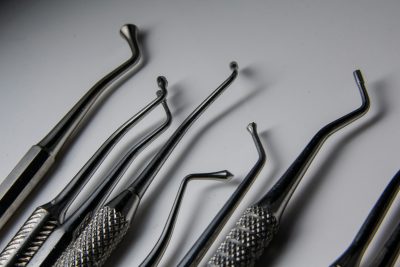
Medical implants demand strict biocompatibility. Gr1 titanium wire complies with all standards of ISO 10993. It makes wires for pacemakers and woven parts for orthopedic fixation. Material purity directly relates to long-term patient safety. Gr1 usually costs more than Gr2, but the price gap is acceptable for medical devices with high added value and zero failure tolerance. Gr1 is the reliable choice for thin wires of φ0.2~0.8 mm used in laparoscopic forceps and catheter guidewires that need complex bending. Gr2 can work for non-implant medical parts. Note that titanium-nickel alloy is the mainstream material for orthodontic arch wires, and pure titanium sees limited use here.

5.2 Material Selection for Chemical Anti-corrosion Equipment

Gr2 fully meets long-term service requirements for heat exchangers and reactor internal parts working in regular organic acid and alkaline media. Its higher strength also allows thinner wall design. Choose Gr1 for equipment in harsh corrosive environments such as chlor-alkali electrolysis and hydrometallurgy, for its strong resistance to stress corrosion. Analyze total life cycle cost based on actual medium, temperature and stress conditions instead of applying fixed service life standards.

5.3 Emerging Demands in Electronics and New Energy Industries

Precision electronics require materials with non-magnetic property, low expansion coefficient and high purity. Gr1 titanium wire reduces impurity contamination when used for radio frequency shielding nets on 5G base stations and parts inside plasma chambers of semiconductor equipment. It also supports better energy transfer in ultrasonic welding. Titanium plates and foils are common for bipolar plates in proton exchange membrane fuel cells for hydrogen energy, while titanium woven structures are less applied. Gr1 still has application potential for auxiliary parts thanks to its stability in acidic environments.

5.4 Marine Engineering and Aerospace Applications

Deep sea at 6000 meters features high pressure, high chloride content and dissolved oxygen. Gr1 titanium wire is widely used for sealing rings of deep submersible viewing windows and flexible connectors of sonar arrays. Aerospace industries mainly adopt titanium alloys. Pure titanium wire acts as transition layers for dissimilar metal welding such as titanium-aluminum joints, and engineers select grades according to design needs. Gr1 maintains good toughness under large temperature differences, so it fits flexible hinges on solar panels of satellites.

Conclusion

The choice between Gr1 and Gr2 titanium wire is essentially a trade-off among purity, ductility, corrosion resistance, strength and cost. Gr1 has low interstitial elements and excellent ductility. It is irreplaceable for medical implants, precision electronics and parts in extreme corrosive environments. It may have a higher unit price but delivers superior total life cycle value. Gr2 offers better cost performance for general load-bearing structural parts in chemical and marine engineering fields.

Quick Selection Rules

Pick Gr1 for parts requiring complex cold forming, high corrosion resistance or biocompatibility. Choose Gr2 to balance strength and cost for parts with simple forming processes. Engineers shall select materials scientifically according to actual corrosion level, stress state, processing requirements and budget, to achieve both technical and commercial success.

Frequently Asked Questions

Q1: How much more expensive is Gr1 titanium wire than Gr2? When is the extra cost worthwhile?

Gr1 titanium wire generally sells at a higher price. The price gap fluctuates with the cost of sponge titanium. The premium comes from stricter purity control and higher production difficulty. The extra cost is reasonable for medical devices with complex micro-forming, precision electronics free from magnetic interference, and long-service parts in extreme corrosive environments. Gr1 cuts production passes, raises finished product rate and extends service life. Its total life cycle cost may be lower in specific projects, so conduct targeted cost calculation before selection.

Q2: How to tell Gr1 and Gr2 titanium wire apart through simple tests?

Hardness test is a common laboratory method. Make sure to test samples under the same annealing or cold drawn state. Annealed Gr1 has hardness of 140~180 HV, while annealed Gr2 ranges from 180 to 220 HV. For on-site bending tests, wrap the wire around a mandrel three times its own diameter under annealed state. Gr1 bends 180 degrees without cracks. Gr2 may develop micro-cracks under similar operations, and the result varies with wire diameter. Spectral analysis to test oxygen content and other key elements is the authoritative identification method.

Q3: Can we use Gr1 and Gr2 together or weld them to each other?

Welding between Gr1 and Gr2 is safe. The two grades have similar chemical composition, so no brittle phases form at weld joints. Weld performance sits between the two base materials. For combined use in one structure, arrange Gr1 in areas with severe corrosion or large deformation, and use Gr2 for main load-bearing areas. The potential difference between the two materials is only 10~20 mV in fully immersed strong electrolyte environments, leading to negligible galvanic corrosion risk. No corrosion risk exists in atmospheric or dry conditions.

We supply customized high-quality Gr1 and Gr2 titanium wire.

Baoji Titanium Valley Titanium Nickel Zirconium Material Processing Co., Ltd. is a professional titanium wire manufacturer and supplier. We adopt production lines from Danieli Italy with an annual output of 5000 tons. We provide full-size customized products from φ0.06 mm to 10 mm. Contact our technical team for professional material selection advice and sample tests: sales@titaniumvalleys.com

Note: All performance data in this article are typical reference values under standard working conditions. Actual performance changes with specific processes and service environments. Conduct special verification before applying the materials to key equipment.

References

  1. Liu Wei, Zhang Xiaoming. Microstructure and Mechanical Properties of Commercially Pure Titanium[J]. Rare Metal Materials and Engineering, 2019, 48(5): 1523-1528.
  2. Chen Hui, Zhao Yongqing. Corrosion Behavior of Titanium and Titanium Alloys in Chemical Media[J]. Corrosion Science and Protection Technology, 2018, 30(3): 215-222.
  3. Li Dong, Wang Hua. Research on Cold Drawing Process and Properties of Pure Titanium Wire[J]. Titanium Industry Progress, 2020, 37(4): 12-17.
  4. ASTM B863-14(2020) Standard Specification for Titanium and Titanium Alloy Wire.
  5. GB/T 3623-2022 Titanium and Titanium Alloy Wires.