

What is the 2026 Global Best Buyer’s Guide for Gr5 Titanium Foil?

Gr5 titanium foil (Ti-6Al-4V) is a representative high-strength titanium alloy. It holds a vital position in the global market in 2026. Industry research institutes forecast the global titanium foil market will reach 1.23 billion US dollars in 2026. Gr5 titanium foil accounts for about 35% of the market share, with an annual compound growth rate of 8.2%. This material features tensile strength ≥ 895 MPa and yield strength ≥ 825 MPa. Its density is only 60% of steel. It delivers great value in aerospace, medical devices, new energy batteries and high-end manufacturing. This guide covers technical parameters, application scenarios, supplier selection and quality acceptance. It helps global buyers build a scientific procurement system for Gr5 titanium foil. It mainly solves the core problem: how to select high-performance titanium alloy foil that fully meets engineering requirements by comparing key indicators and matching working conditions.

1. Core Technical Parameters and Selection Standards of Gr5 Titanium Foil

1.1 Material Composition and Phase Structure

Ti-6Al-4V alloy adopts aluminum as alpha stabilizer and vanadium as beta stabilizer to form a stable alpha+beta dual-phase structure. Its nominal composition ranges: aluminum 5.50%~6.75%, vanadium 3.50%~4.50%. Aluminum improves oxidation resistance and cuts density to 4.43 g/cm³. Vanadium strengthens beta phase and optimizes hot workability. With this composition, Gr5 titanium foil maintains high strength. Its melting point ranges from 1600 ℃ to 1660 ℃. It can work continuously for over 1000 hours at 300 ℃.
Per ASTM B265 standards, oxygen content of Ti-6Al-4V foil shall not exceed 0.20% and nitrogen content shall not exceed 0.05%. Extra Low Interstitial grade (ELI) requires oxygen ≤ 0.13% and nitrogen ≤ 0.03% in line with ASTM F136. We suggest choosing ELI grade for high-end applications.

1.2 Mechanical Properties and Working Condition Matching

In annealed condition (O temper per ASTM), Gr5 titanium foil has typical tensile strength from 930 MPa to 1100 MPa, with the minimum standard value ≥ 895 MPa. This figure is much higher than 345 MPa of Gr2 pure titanium foil. Yield strength ≥ 825 MPa ensures structural safety under high stress. Elongation ≥ 10% is lower than pure titanium, yet enough for moderate forming. Its Brinell hardness ranges from 270 HB to 330 HB.
Buyers shall confirm actual working conditions before purchase. Test fatigue performance and S-N curve for aerospace structural parts. Check thermal conductivity (about 7.5 W/(m·K) at 20 ℃ room temperature) for battery heat dissipation components. Verify passivation film stability for parts used in corrosive environments.

Table 1 Performance Comparison between Gr5 Titanium Foil, Common Titanium Foil and Stainless Steel (Room Temperature, Typical Values)

Performance IndexGr5 Titanium FoilGr2 Pure Titanium Foil304 Stainless Steel
Tensile Strength≥ 895 MPa≥ 345 MPa≥ 515 MPa
Density4.43 g/cm³4.51 g/cm³7.93 g/cm³
Specific Strength2027665
Long-term Service Temperature300 ℃150 ℃800 ℃


Note: 1. Specific Strength = Tensile Strength (MPa) / Density (g/cm³). Higher value means stronger load capacity per unit mass. 2. Gr2 pure titanium works stably below 150 ℃ for long-term use. 304 stainless steel can withstand 800 ℃ for short-term use. Select materials with full consideration of corrosion resistance.

1.3 Dimension Specification and Tolerance Control

Product thickness covers 0.03 mm to 0.8 mm, covering ultra-thin precision foil and load-bearing strip. In the metallurgical industry, material thinner than 0.1 mm is defined as foil, and material from 0.1 mm to 3.0 mm is defined as strip. The width ranges from 350 mm to 670 mm, suitable for large-size products like honeycomb core materials and battery tabs.
Key procurement indicators: Standard thickness tolerance reaches ±0.005 mm with 20-high rolling mill. It can be tightened to ±0.002 mm for premium orders with customized rolling and thickness measuring systems. Flatness is controlled within 1 mm/m per GB/T 22363 or ASTM A480. Edge burr shall not exceed 0.02 mm. Coil products fit continuous stamping and laser welding production lines. Cut-to-size sheets apply to CNC precision machining.

2. In-depth Analysis of Main Global Application Fields

2.1 High-performance Structural Parts for Aerospace

Gr5 titanium foil acts as load-bearing core material for honeycomb sandwich structures on aircraft skins. Its high specific strength cuts aircraft weight by 15% to 20%. Titanium foil of 0.1 mm to 0.3 mm thickness makes heat insulation shields for low-temperature areas around aero-engines (working temperature below 200 ℃). Cold rolled (H temper) foil serves for satellite antenna deployment mechanisms. Manufacturers control residual stress to realize accurate deformation compensation.
For aerospace use, follow AMS 4902 standard for foil thicker than 0.1 mm, with grain size graded 6 to 8 per ASTM E112. Use penetrant inspection or optical microscopy for non-destructive testing of ultra-thin foil below 0.1 mm.

2.2 Precision Implants for Medical Devices
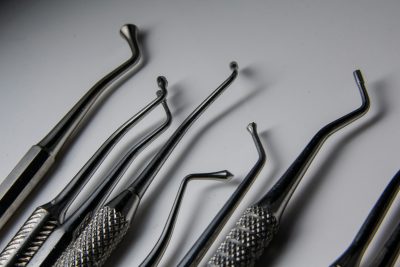
Standard Gr5 (Ti-6Al-4V) fits non-permanent implants such as bone plates. Choose Ti-6Al-4V ELI that complies with ASTM F136 for permanent implants. Titanium foil of 0.15 mm to 0.4 mm with bright pickled and passivated surface makes skull repair meshes. Products go through laser cutting and electrolytic polishing before implantation. Its non-magnetic property ensures compatibility with MRI scans. Orthopedic fixation plates gain complex curved shapes via multiple cold forming processes. Medical device manufacturers require suppliers to provide biological evaluation reports per ISO 10993 and registration documents compliant with PMDA regulations.

2.3 Key Components for New Energy Batteries
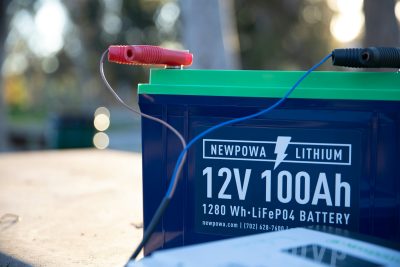
Gr5 titanium foil works as heat dissipation substrates and protective partition plates in power battery packs. Ultra-thin foil of 0.05 mm to 0.15 mm forms liquid cooling channels after laser welding. Its high tensile strength guarantees reliable high-pressure sealing, and good corrosion resistance prevents damage from cooling liquid. Partition plates between battery cells rely on its non-magnetic feature and thermal conductivity to balance temperature distribution.
Key parameters required by battery manufacturers: Surface roughness Ra ≤ 0.4 μm, resistivity between 165 μΩ·cm and 175 μΩ·cm, hydrogen content ≤ 0.010% to avoid hydrogen embrittlement.

Table 2 Typical Application Fields and Technical Requirements of Gr5 Titanium Foil

Application FieldThickness RangeSurface ConditionCore Technical Requirements
Aerospace Honeycomb Core0.03 ~ 0.1 mmBright SurfaceFlatness ≤ 0.5 mm/m
Medical Implant0.15 ~ 0.4 mmPickled SurfaceBiological compatibility certification (ASTM F136 / F2066)
Battery Heat Sink0.05 ~ 0.15 mmMatte SurfaceSurface roughness Ra ≤ 0.4 μm

3. Evaluation System and Audit Points for Qualified Suppliers

3.1 Production Equipment and Process Technology

750 mm 20-high precision rolling mill (2 work rolls and 18 backup rolls) is the core equipment for stable production of ultra-thin and wide foil. Continuous vacuum annealing furnaces are equipped with oxygen analyzers (O₂ < 5 ppm) and hydrogen protection systems to ensure uniform transformation of alpha+beta phase. Ultrasonic cleaning lines reduce residual rolling oil to below 3 mg/m² for aerospace and medical grade products, so as to avoid welding porosity.
Baoji Titanium Valley Titanium Nickel Zirconium Material Processing Co., Ltd. (Titanium Valley) runs advanced production lines. The lines solve technical difficulties including rolling crack of high-strength materials and shape control of wide sheets. Its annual production capacity reaches 3000 tons.

3.2 Quality Management System and Certifications

Suppliers shall hold AS9100 certification (equivalent to DIN EN 9100) for full-process quality control from titanium ingot inspection to product delivery. Qualified suppliers need complete testing equipment: optical emission spectrometers for composition analysis with accuracy ±0.005%, universal testing machines, X-ray diffractometers and coordinate measuring machines. Each batch of products must come with material test reports covering chemical composition, mechanical properties and heat treatment records.
Arrange ultrasonic testing for foil thicker than 0.3 mm. Use penetrant inspection or optical microscopy for ultra-thin foil below 0.1 mm.

3.3 Customization Service and Response Capability

Buyers in India, Vietnam and other regions mainly order customized ultra-thin precision foil and special-shaped stamped parts. The minimum thickness of mass-produced titanium foil in the industry is about 0.015 mm. Reliable suppliers can stably produce foil from 0.02 mm to 0.08 mm. Available surface treatments include degreasing, passivation and functional coating.
Delivery lead time varies by transportation mode: 2 to 4 weeks for standard products via domestic air freight, 6 to 8 weeks for customized development. Suppliers support VMI inventory management for bulk orders.

4. Quality Acceptance and Risk Control in Procurement

4.1 Key Items for Incoming Inspection

Use optical emission spectrometers to sample and test chemical composition. Keep the deviation of aluminum and vanadium content within 0.1%. Take test samples at least 1.5 m away from coil ends for mechanical property tests. Conduct tensile tests per ASTM E8 and take average data of no less than three samples.
Metallographic inspection checks grain size (Grade 6 to 8 per ASTM E112) and alpha lamella thickness. The ideal thickness ranges from 3 μm to 7 μm. Lamella thicker than 8 μm will reduce fracture toughness. Use laser thickness gauges for full-width scanning and record thickness fluctuation curves.

4.2 Application Performance Verification

Run cupping tests per ISO 20482 to evaluate forming performance. The typical cupping value of annealed samples ranges from 5 mm to 8 mm. Test welding performance with TIG welding and laser welding. The joint efficiency shall be no less than 0.90 for aerospace grade products. Welded joints shall bear 180° bending without cracks.

Carry out neutral salt spray tests (NSS). Products show no pitting corrosion after 500 hours of testing. Use electrochemical impedance spectroscopy to analyze corrosion resistance. Conduct high-temperature long-term performance tests per ASTM E139. The long-term strength retention rate shall stay above 90% after 100 hours at 300 ℃.

Inspection ItemTest StandardKey IndicatorsDisposal for Non-conforming Products
Chemical CompositionSpectral AnalysisAl 5.5~6.75%, V 3.5~4.5%Reject the whole batch (per GB/T 150, ASME Section II)
Tensile StrengthASTM E8≥ 895 MPaProducts between 800 MPa and 895 MPa can be downgraded with written customer approval. Reject products below 800 MPa (per ASTM E8, GB/T 228.1)
Thickness ToleranceLaser Thickness Measurement±0.005 mm (Standard)Rework products with adjustable tolerance via straightening. Reject unrepairable products (per ASTM B265, GB/T 3622)
Surface QualityVisual Inspection + MagnifierNo scratch, fold or inclusionReject the whole batch (per GB/T 150, ASME B16.34)

Table 3 Inspection Standards, Indicators and Disposal Rules

4.3 Supply Chain Stability and Price Fluctuation Management

Global sponge titanium raw materials mainly come from Australia, South Africa, China and Canada. Geopolitical factors may cause annual raw material price fluctuation of ±20%. We suggest buyers sign quarterly price lock clauses, maintain safety stock for 30 to 60 days and develop 2 to 3 qualified alternative suppliers.
The FOB price of standard 0.1 mm bright Gr5 titanium foil at major Chinese ports is 1.8 to 2.2 times that of Gr2 titanium foil. Long-term cooperative customers can get 3% to 5% annual rebates and professional technical support.

5. Future Trends and Procurement Strategies

5.1 Technology Development Trends

Demand for ultra-thin foil below 0.03 mm drives technical upgrading of multi-high rolling mills (20-high, 18-high) and precision control systems. Functional surface treatment such as nano coating and micro-texture improves bioactivity and tribological performance, which becomes new demands from medical and semiconductor industries. Meanwhile, the market demand for Gr5 titanium alloy additive manufacturing (3D printing) powder keeps growing. Buyers shall distinguish supply chains of foil and powder products.

5.2 Regional Market Opportunities

The reshoring of aerospace industrial chains pushes local titanium material demand up by 8% to 10% annually. Industry 4.0 in Germany accelerates the upgrading of titanium foil for intelligent manufacturing equipment. Precision electronics manufacturers seek reliable suppliers of ultra-thin titanium foil. National defense industry localization in India creates huge import substitution space. The electronic manufacturing industry in Vietnam boosts the demand for battery-use titanium foil year by year.

5.3 Sustainable Procurement

Choose suppliers adopting short-process production (direct rolling from sponge titanium). This production mode cuts carbon emission by about 30% per ISO 14067 carbon footprint standards. Launch titanium scrap recycling programs. The recycling rate of Gr5 titanium foil offcuts can reach over 90%. Recycled materials go through remelting and rolling for reuse to reduce raw material cost and resource waste. Prioritize suppliers with RBA certification to ensure social responsibility across the supply chain.

Conclusion

Follow the four-step principle for Gr5 titanium foil procurement: confirm application requirements, compare technical parameters, screen qualified suppliers and complete full acceptance procedures. Take cross-border logistics, customs declaration and remote supplier audit into account for overseas procurement.
First, define application scenarios and limiting conditions including working temperature and performance requirements. Next, select proper products with reference to performance tables and selection rules. Then evaluate suppliers’ certifications and production capacity. Finally, set up strict incoming inspection rules and prepare solutions for price fluctuation. Scientific procurement strategies effectively reduce trial cost and market risks, and build core competitiveness for enterprises.

FAQ

Q1: How to choose between Gr5 titanium foil and Gr2 pure titanium foil?

Select Gr5 for high-load applications such as aerospace structural parts and high-pressure vessels. Its strength is more than 2.5 times that of Gr2. Choose Gr2 for deep drawing processing and extreme corrosive environments. Pick Gr5 when design requires high strength-to-weight ratio or long-term working temperature above 200 ℃.

Q2: How to verify the actual annealed condition of Gr5 titanium foil?

Use metallographic microscopes for inspection. Fully annealed (O temper) material shows equiaxed alpha grains and intergranular lamellar beta phase, with grain size graded 6 to 8 per ASTM E112. The Brinell hardness shall range from 270 HB to 330 HB. Excessively high hardness means incomplete annealing. Metallographic inspection is the main test method. X-ray diffraction is for research use and not mandatory for routine inspection.

Q3: What are the welding difficulties of ultra-thin Gr5 titanium foil (below 0.1 mm)?

Ultra-thin foil conducts heat fast, so it is hard to control heat input during welding. Burn-through or incomplete fusion often occurs. We recommend pulsed laser welding (peak power 200~500 W, pulse width 1~5 ms) or micro-plasma welding. Clean oil and dirt via ultrasonic cleaning before welding, and apply argon shielding on the back side. Conduct X-ray or fluorescent inspection after welding to guarantee weld quality.

Contact Us

Baoji Titanium Valley Titanium Nickel Zirconium Material Processing Co., Ltd. is a professional manufacturer and supplier of Gr5 titanium foil. We own fully automatic production lines with annual capacity of 3000 tons and complete quality management systems. Our products serve global customers in aerospace, medical devices and high-end manufacturing. Contact us for customized technical solutions and sample tests: sales@titaniumvalleys.com

References

1.Wang Jinyou, Guo Hongzhen. Titanium Alloy Handbook [M]. Beijing: Chemical Industry Press, 2014.

2.Zhang Xiyan, Zhao Yongqing, Bai Chenguang. Titanium Alloys and Their Applications [M]. Beijing: China Machine Press, 2007.

3.Li Siqing, Qu Henglei, Qu Henglei. Research on Rolling Process, Microstructure and Properties of Ti-6Al-4V Alloy Foil [J]. Rare Metal Materials and Engineering, 2020, 49(5): 1628-1634.

4.Liu Jianrong, Liu Yuyin. Analysis on Standard System of Titanium Alloys for Aviation [J]. Journal of Aeronautical Materials, 2018, 38(4): 1-8.