
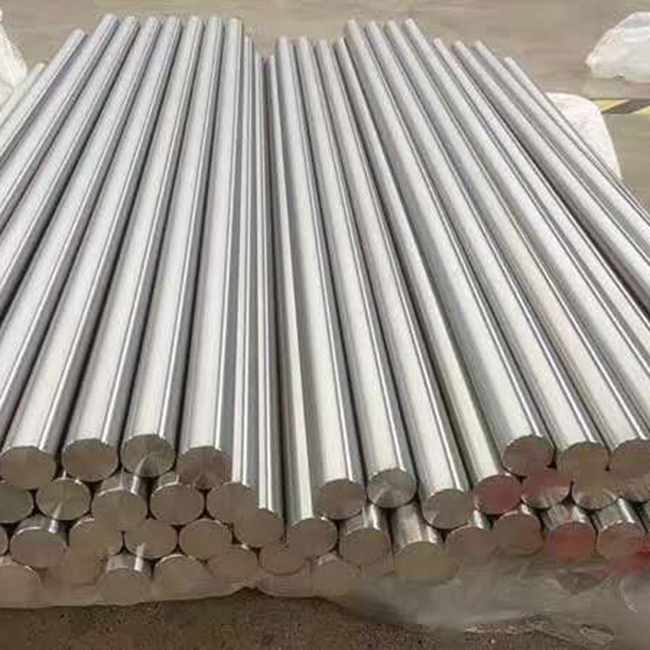
Gr4 titanium rod relies on its unique surface oxide film and high-purity metal matrix for excellent corrosion resistance. This grade of commercially pure titanium quickly forms dense titanium dioxide film when it contacts oxygen. The oxide layer measures 10 to 100 nanometers thick and blocks corrosive media effectively. Compared with ordinary stainless steel, Gr4 titanium rod delivers superior performance in seawater, acid solutions and chloride environments. Its protective film repairs itself rapidly after damage. Annealed Gr4 titanium rod has tensile strength from 550 MPa to 680 MPa and a density of 4.51 g/cm³. It is a preferred material for chemical equipment, marine engineering and precision instruments. Custom production meets requirements such as diameter tolerance ±0.05 μm and surface roughness Ra ≤ 0.4 μm. It strikes a good balance between performance and cost.
1 Material Principles for Corrosion Resistance of Gr4 Titanium Rod
1.1 Self-healing Performance of Oxide Film
The oxide film on Gr4 titanium rod can regenerate continuously. Mechanical scratches or chemical erosion damage the protective layer. The exposed metal reacts with oxygen within microseconds to seconds and forms new intact TiO₂ film. This self-healing property maintains long-term protection in complex working conditions. It is different from conventional alloys that depend on chromium and nickel for passive protection.
1.2 Influence of Purity and Impurities
Gr4 titanium rod follows ASTM B348 for chemical composition. Titanium accounts for the balance. Oxygen: 0.25% ~ 0.40%, Iron: ≤ 0.50%, Carbon: ≤ 0.08%, Nitrogen: ≤ 0.05%, Hydrogen: ≤ 0.015%. Moderate oxygen content improves strength via interstitial strengthening. Excess impurities break the compact oxide film and increase pitting tendency. Multiple Vacuum Arc Remelting controls hydrogen content within standard limits. It eliminates hydrogen embrittlement and enhances stress corrosion resistance.
1.3 Crystal Structure Stability
Gr4 titanium rod is single-phase alpha commercially pure titanium with a hexagonal close-packed (HCP) structure. The lattice stays stable from room temperature to 300 ℃ ~ 350 ℃. Dual-phase titanium alloys tend to form galvanic corrosion at phase boundaries. The single-phase structure avoids this problem. Hot rolling and forging create equiaxed grains. The material gains better isotropy and intergranular corrosion resistance.
2 Performance in Different Corrosive Environments
2.1 Seawater and Chloride Environments
| Material Type | Corrosion Rate | Chloride Sensitivity | Stress Corrosion Cracking Tendency |
|---|---|---|---|
| Gr4 Titanium Rod | Extremely low (< 0.01 mm/year) | Not sensitive | No occurrence |
| 316L Stainless Steel | Low (prone to pitting) | Sensitive | Requires stress control |
| Carbon Steel | High (0.5 ~ 2.0 mm/year) | Highly prone to rust | Common occurrence |
| C27 Nickel Alloy | Extremely low | Moderate | Requires stress control |
Note: Actual corrosion rate changes with temperature, flow velocity and dissolved oxygen. All tests comply with ASTM G48, using 3.5% sodium chloride solution at 35 ℃.
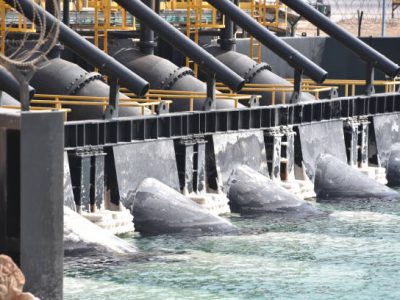
Gr4 titanium rod works steadily in sodium chloride solutions. It serves for a long time in seawater desalination equipment. Using this material for pressure hulls, drive shafts and pipelines in marine engineering greatly extends maintenance intervals.
2.2 Acid and Oxidizing Media
Titanium has limited resistance to reducing acids such as hydrochloric acid and dilute sulfuric acid. Gr4 titanium rod performs well in oxidizing acids. It has low corrosion rate in medium-concentration nitric acid and suits nitric acid storage and delivery pipes. Oxidizing agents stabilize oxide film in mixed acid systems. Hydrometallurgy industries apply this feature to process leachate containing oxidizing substances.
2.3 Alkaline Solutions and High-temperature Conditions
Gr4 titanium rod has good corrosion resistance in sodium hydroxide and potassium hydroxide solutions. Titanium parts reduce maintenance costs for bleaching equipment and evaporators in alkali production. It runs stably for long periods in chemical reactors below 300 ℃.
3 How Custom Machining Affects Corrosion Resistance
3.1 Optimization of Surface Treatment
| Surface Condition | Surface Roughness Ra (μm) | Oxide Film Thickness (nm) | Application Scenarios |
|---|---|---|---|
| Hot Rolled | 3.2 ~ 6.3 | Thin | General industrial use |
| Pickled | 0.8 ~ 1.6 | Medium | Chemical equipment |
| Precision Ground | 0.2 ~ 0.4 | Thick | Precision instruments |
| Electropolished | 0.05 ~ 0.15 | Thick | Medical devices, high-purity applications |
Note: Oxide thickness and corrosion performance are affected by many factors. Verify data through actual tests.
Electropolishing creates mirror surfaces for medical-grade products and meets strict cleanliness standards. Pickled finish balances cost and performance for regular industrial equipment. Ultrasonic cleaning removes metal debris and oil to keep the oxide film intact.
3.2 Dimensional Accuracy and Stress Control
Cold drawing improves diameter tolerance to ±0.05 mm but leaves residual stress. Custom production uses staged annealing at 650 ℃ to 750 ℃ to eliminate work hardening. It controls grain size per ASTM grain size standards. Online stress monitoring effectively manages residual stress of finished rods.
3.3 Protection Measures for Weld Joints
Gas tungsten arc welding is the mainstream joining method for titanium. Pickling removes discolored oxide layers in heat affected zones. Custom welding solutions include full argon shielding, post-weld heat treatment at 540 ℃ ~ 650 ℃ and ultrasonic inspection. Weld strength reaches 90% to 100% of base metal for pressure vessel components.
4 Material Selection for Industrial Applications
4.1 Solutions for Chemical Corrosion Prevention
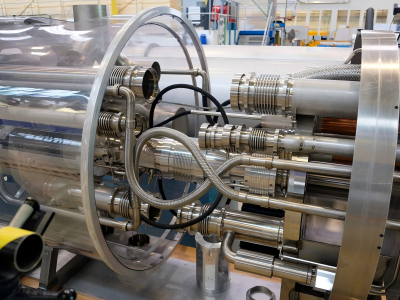
Gr4 titanium rod replaces traditional materials for anode busbars in chlor-alkali electrolyzers. It improves electrical conductivity and extends service life. It works reliably for internal parts of PTA hydrogenation reactors under hot acetic acid. Use forged titanium rod with diameter 80 mm ~ 120 mm for mixing shafts in pesticide production. The material meets strength requirements for high-speed rotation.
4.2 Marine Engineering and Coastal Facilities
| Application Field | Diameter Range (mm) | Working Temperature (℃) | Key Performance Requirements |
|---|---|---|---|
| Seawater Pump Shaft | Φ50 ~ Φ150 | 20 ~ 85 | Cavitation resistance, wear resistance |
| Subsea Pipe Support | Φ30 ~ Φ80 | 5 ~ 40 | Stress corrosion resistance |
| Marine Propulsion System | Φ100 ~ Φ200 | -10 ~ 60 | High fatigue strength |
| Offshore Platform Column | Φ200 ~ Φ500 | -20 ~ 45 | Good weldability |
Note: Calculate design life based on working conditions and maintenance plans.
Titanium rods for deep-sea equipment pass pressure tests. Annealed Gr4 titanium rod has yield strength above 485 MPa. Fasteners of M16 ~ M48 for coastal wind farms support long maintenance-free operation.
4.3 Custom Demands for Emerging Industries
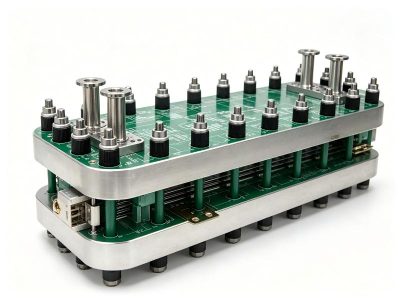
Bipolar plate substrates for hydrogen electrolysis cells require tight dimensional tolerance. Multiple cold rolling and online thickness monitoring support mass production. Support rods for semiconductor CVD chambers need relative permeability below 1.002% and iron content ≤ 0.15%. Special smelting processes meet these standards. Small-diameter rods (Φ3 ~ Φ10) for medical implants come with material certificates and biocompatibility test reports.
5 Full Lifecycle Cost Analysis
5.1 Comparison of Initial and Maintenance Costs
Gr4 titanium rod has higher unit price than 316L stainless steel. It delivers better overall cost benefits when counting service life and maintenance fees. The actual result varies with working conditions. Field cases prove titanium cuts expenses on equipment replacement and upkeep. Conduct comprehensive economic evaluation for marine projects based on initial investment, maintenance and service life.
5.2 Inventory Management Optimization
Versatile Gr4 titanium rod fits multiple application scenarios. It reduces spare part categories and raises inventory turnover. Custom services guarantee reasonable delivery cycles. Process finished products from stock to handle urgent orders.
5.3 Sustainability Benefits
Titanium has high recycling rate. Recycled scrap retains stable performance. Titanium products align with sustainable development goals. Using green energy further lowers carbon footprint during production.
Conclusion
Gr4 titanium rod achieves excellent long-term corrosion resistance with self-healing oxide film and high-purity matrix. Custom production adjusts surface state, dimensional accuracy and heat treatment to suit different working conditions. It serves chemical, marine, hydrogen energy and medical industries well. It simplifies material selection and optimizes full lifecycle costs.
FAQ
1. Can Gr4 titanium rod directly replace existing stainless steel equipment?
2. What are the minimum order requirements for custom small-batch titanium rods?
Find Reliable Gr4 Titanium Rod Suppliers
Baoji Titanium Valley Titanium Nickel Zirconium Material Processing Co., Ltd. runs Italian Danieli production lines with annual output of 20,000 tons of titanium rods and wires. We supply high-quality Gr4 titanium rod complying with ASTM B348 and provide custom processing. Contact us for technical solutions and quotations: sales@titaniumvalleys.com
References
- Yang Zhiyuan, Li Zuobang. Research on Corrosion Behavior of Commercially Pure Titanium in Chemical Media[J]. Titanium Industry Progress, 2019, 36(4): 15-20.
- China Titanium, Zirconium and Hafnium Association. Application Handbook of Titanium and Titanium Alloys [M]. Beijing: Metallurgical Industry Press, 2018.
- Wang Lei, Chen Jun. Application and Corrosion Protection of Titanium Materials in Marine Engineering[J]. Corrosion and Protection, 2020, 41(5): 1-6.