
Why Choose Ni200 Rod for Your Application?
- Ni200 Rod
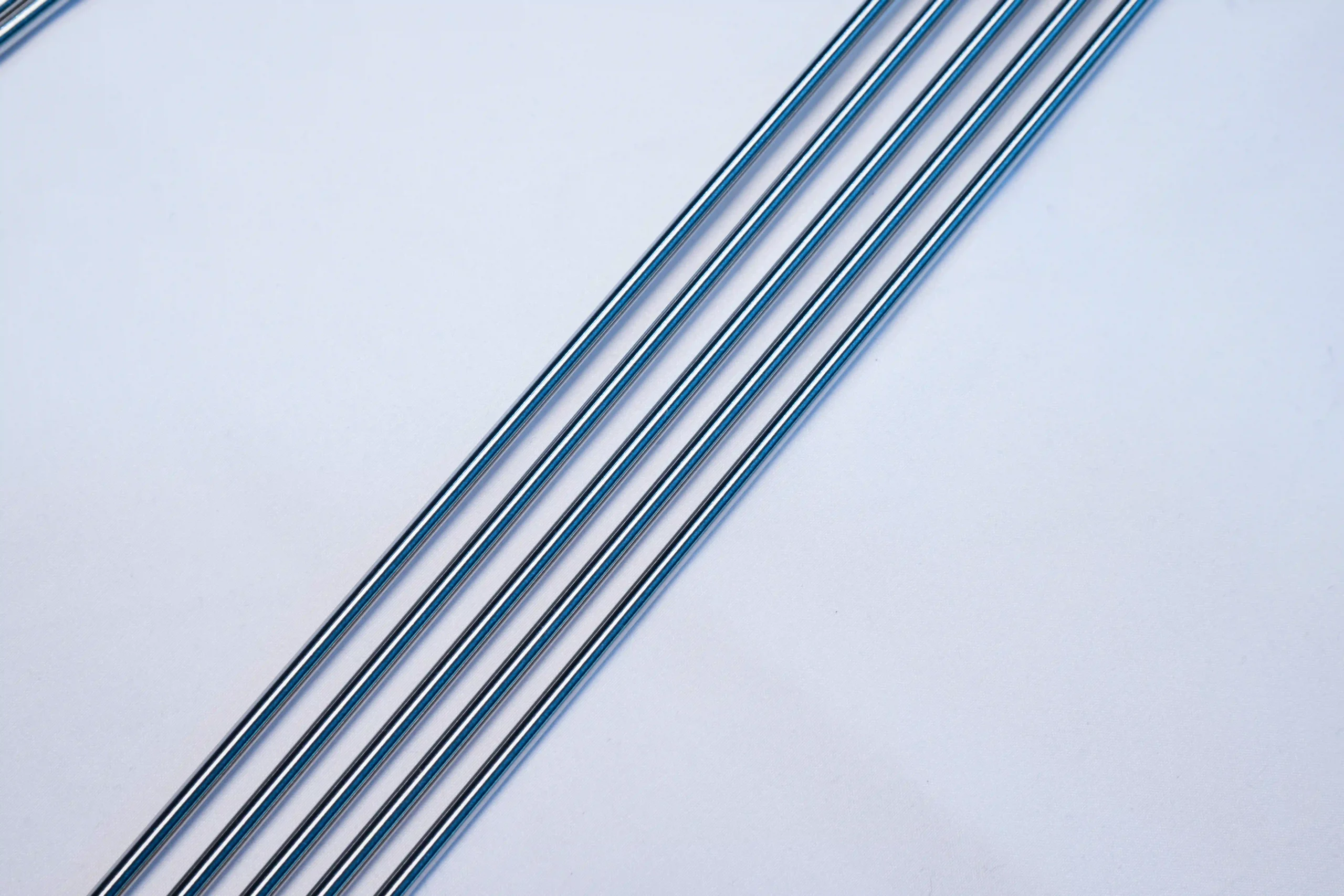
Alkaline working conditions, high purity requirements and complex electrochemical applications demand proper nickel-based materials. Ni200 rod is a mainstream grade of commercially pure nickel. It has outstanding alkali corrosion resistance, stable electrical and thermal conductivity and good workability. It serves chemical, electronic and energy industries widely. Professional nickel material manufacturers adopt vacuum melting, precision rolling and heat treatment technologies. They produce Ni200 rods that comply with ASTM B160 standards. The product range covers standard and custom sizes. Every batch goes through strict composition and non-destructive tests. Nickel and cobalt content stays above 99.0%. We deliver consistent and reliable materials for clients.
1 Why Ni200 Rod Works for Harsh Working Conditions
1.1 Outstanding Alkali Corrosion Resistance
Facilities in chlor-alkali and fine chemical industries run with high-concentration NaOH or KOH solutions all year round. Ordinary stainless steel suffers corrosion easily. Ni200 rod uses high-purity nickel base with Ni+Co ≥ 99.0%. It forms stable passive film in alkaline media and blocks corrosive substances effectively. Factories use Ni200 rod for electrolyzer anode plates and alkali heating pipes. Equipment service life extends greatly. It cuts equipment replacement and maintenance work.
1.2 High Purity for Clean Production
Food processing and pharmaceutical industries set strict rules on material purity. Impurity leaching will damage finished products. Ni200 rod follows clear chemical limits: C ≤ 0.15 %, S ≤ 0.01 %, P ≤ 0.015 %. Its high purity makes it a good choice for equipment that handles acetic acid, citric acid and other food-grade acids. It also sees wide use in pharmaceutical reactors and aseptic filling systems. It keeps finished products compliant with relevant standards.
1.3 Good Electrical and Thermal Conductivity
Electrical conductivity directly affects power consumption and production efficiency for battery and electrochemical equipment. Ni200 rod has electrical conductivity of 12.8 × 10⁶ S/m, equal to 22% IACS. Its thermal conductivity reaches 90.7 W/(m·K). Both indexes perform better than ordinary stainless steel. Manufacturers use Ni200 rod for cathode current collectors of nickel-metal hydride and nickel-cadmium batteries. Battery internal resistance drops and charge-discharge efficiency rises. Ni200 rod also works for electrolytic cells and electroplating equipment. It reduces voltage drop and keeps current distribution stable.
2 Core Technical Parameters and Performance Advantages
2.1 Chemical Composition and Metallurgical Properties
| Element | Standard Content | Impact on Performance |
|---|---|---|
| Ni+Co | ≥ 99.0 % | Core index for alkali resistance and electrical conductivity |
| Fe | ≤ 0.40 % | Excess iron reduces corrosion resistance and conductivity |
| C | ≤ 0.15 % | Affects weldability and high-temperature strength |
| Cu | ≤ 0.25 % | Trace copper improves workability |
| S | ≤ 0.01 % | Controls sulfur content to avoid hot brittleness |
| Mn | ≤ 0.35 % | Improves hot workability |
Ni200 rod composition meets multi-dimensional demands of industrial applications. Ni201 rod has carbon content ≤ 0.02 %. Ni200 rod maintains stable strength from room temperature to 315 ℃. It fits structural parts that require mechanical load capacity. Strict iron control keeps good corrosion resistance in reducing media. Low sulfur and phosphorus content guarantee good weldability and hot workability.
2.2 Mechanical Properties by Different Material States
| Material State | Tensile Strength (MPa) | Yield Strength (MPa) | Elongation (%) | Application Features |
|---|---|---|---|---|
| Annealed (M) | ≥ 380 | ≥ 100 | ≥ 40 | Balanced overall performance, wide application range |
| Cold Worked | Remarkably increased | Remarkably increased | Reduced | For high-strength parts, performance varies with deformation |
Note: Actual performance changes with production process and deformation degree. Take real test data as reference.
Annealed Ni200 rod receives heat treatment at 700 ~ 900 ℃ then cools down slowly. It has uniform grains and fully released internal stress. It balances ductility and strength well. It supports machining, cold bending and deep drawing. It is the common choice for chemical equipment. Cold worked rod gains higher strength but lower ductility. It suits high-hardness shafts and wear-resistant parts. Select proper material state based on service conditions to maximize material performance.
2.3 Temperature Adaptability and Environmental Compatibility
Ni200 rod retains good toughness at liquid nitrogen temperature (-196 ℃). It has no cold brittleness risk. It works for low-temperature storage tanks and liquefied gas pipelines. It runs stably in reducing or neutral atmosphere up to around 315 ℃. Annealed Ni200 rod has relative permeability below 1.02. It fits applications with general magnetic control requirements. Its wide temperature range makes it a universal material for multiple industries.
3 How Custom Machining Affects Corrosion Resistance
3.1 Optimization of Surface Treatment
| Surface Condition | Surface Roughness Ra (μm) | Oxide Film Thickness (nm) | Application Scenarios |
|---|---|---|---|
| Hot Rolled | 3.2 ~ 6.3 | Thin | General industrial use |
| Pickled | 0.8 ~ 1.6 | Medium | Chemical equipment |
| Precision Ground | 0.2 ~ 0.4 | Thick | Precision instruments |
| Electropolished | 0.05 ~ 0.15 | Thick | Medical devices, high-purity applications |
Note: Oxide film thickness and corrosion performance are affected by multiple factors. Verify data via actual tests.
Medical-grade products require electropolishing to form mirror surface and high cleanliness. Industrial equipment can choose pickled finish to balance cost and performance. Ultrasonic cleaning removes metal chips and oil. It keeps oxide film intact.
3.2 Dimensional Accuracy and Stress Control
Cold drawing improves dimensional tolerance to ±0.05 mm but leaves residual stress. Custom production adopts staged annealing at 650 ~ 750 ℃. The process removes work hardening and keeps grain size within ASTM standards. Online stress monitoring systems control residual stress of finished rods effectively.
3.3 Protection Measures for Weld Joints
Gas tungsten arc welding is the mainstream joining method for nickel materials. Pickling removes discolored oxide layer in heat affected zones. Custom welding solutions include full argon shielding, post-weld heat treatment at 540 ~ 650 ℃ and ultrasonic inspection. Weld strength reaches 90 % ~ 100 % of base metal for pressure vessel rods.
4 Material Selection for Industrial Applications
4.1 Solutions for Chemical Corrosion Control
Factories use Ni200 rod for anode busbars of chlor-alkali electrolyzers. It improves electrical conductivity and extends service life. It works reliably for internal parts of PTA hydrogenation reactors under hot acetic acid. Use forged Ni200 rod with diameter 80 ~ 120 mm for mixing shafts in pesticide production. It meets strength requirements for high-speed rotation.
4.2 Marine Engineering and Coastal Facilities
| Application Field | Rod Diameter (mm) | Working Temperature (℃) | Key Performance Requirements |
|---|---|---|---|
| Seawater Pump Shaft | Φ50 ~ Φ150 | 20 ~ 85 | Cavitation resistance, wear resistance |
| Subsea Pipe Support | Φ30 ~ Φ80 | 5 ~ 40 | Stress corrosion resistance |
| Marine Propulsion System | Φ100 ~ Φ200 | -10 ~ 60 | High fatigue strength |
| Offshore Platform Column | Φ200 ~ Φ500 | -20 ~ 45 | Good weldability |
Note: Calculate design life based on working conditions and maintenance rules.
Rods for deep-sea equipment pass pressure tests. Annealed Ni200 rod has yield strength above 485 MPa. Manufacturers use Ni200 rod to make M16 ~ M48 fasteners for coastal wind farms. The fasteners realize long maintenance-free operation.
4.3 Custom Demands for Emerging Industries
Bipolar plate base rods for hydrogen electrolysis cells require tight dimensional tolerance. Multiple cold rolling and online thickness monitoring support mass production. Support rods for semiconductor CVD chambers need relative permeability below 1.002 and iron content ≤ 0.15 %. Special smelting meets these standards. Small-diameter rods (Φ3 ~ Φ10) for medical implants come with complete material and biocompatibility reports.
5 Full Lifecycle Cost-benefit Analysis
5.1 Comparison of Initial Investment and Maintenance Costs
Ni200 rod has higher unit price than 316L stainless steel. It delivers better total cost performance when counting equipment service life and maintenance fees. The final result changes with working conditions. Many chemical plants cut equipment replacement and maintenance costs after switching to nickel materials. Do overall economic evaluation for marine projects based on initial investment, maintenance expense and service life.
5.2 Inventory Management Optimization
Universal Ni200 rod fits multiple application scenarios. It reduces spare part types and raises inventory turnover. Custom services guarantee reasonable delivery cycles. Process stock materials to finish products for urgent orders. It shortens lead time.
5.3 Sustainability Advantages
Nickel materials have high recycling rate. Recycled scrap retains stable performance. Nickel products align with sustainable development goals. Using green energy during production further reduces carbon footprint.
Conclusion
Ni200 rod gains long-term stable performance from self-healing oxide film and high-purity metal matrix. Custom production adjusts surface state, dimensional accuracy and heat treatment for different working conditions. It serves chemical, marine, hydrogen energy and medical industries well. It simplifies material selection and optimizes full lifecycle costs.
FAQ
1. Can Ni200 rod directly replace existing stainless steel equipment?
2. What is the minimum order quantity for custom small batches?
3. How to verify actual corrosion resistance of Ni200 rod?
Find Reliable Ni200 Rod Suppliers
Baoji Titanium Valley Titanium Nickel Zirconium Material Processing Co., Ltd. runs Italian Danieli production lines with annual output of 20,000 tons of nickel rods. We supply high-quality Ni200 rods complying with ASTM B160 and provide custom processing. Contact us for technical solutions and quotations: sales@titaniumvalleys.com
References
- Yang Zhiyuan, Li Zuobang. Research on Corrosion Behavior of Commercially Pure Titanium in Chemical Media[J]. Titanium Industry Progress, 2019, 36(4): 15-20.
- China Titanium, Zirconium and Hafnium Association. Application Handbook of Titanium and Titanium Alloys [M]. Beijing: Metallurgical Industry Press, 2018.
- Wang Lei, Chen Jun. Application and Corrosion Protection of Titanium Materials in Marine Engineering[J]. Corrosion and Protection, 2020, 41(5): 1-6.