
Why Is Nickel 200 Wire a High-Performance Conductive Material for Alkaline Environments?
- Nickel 200 Wire
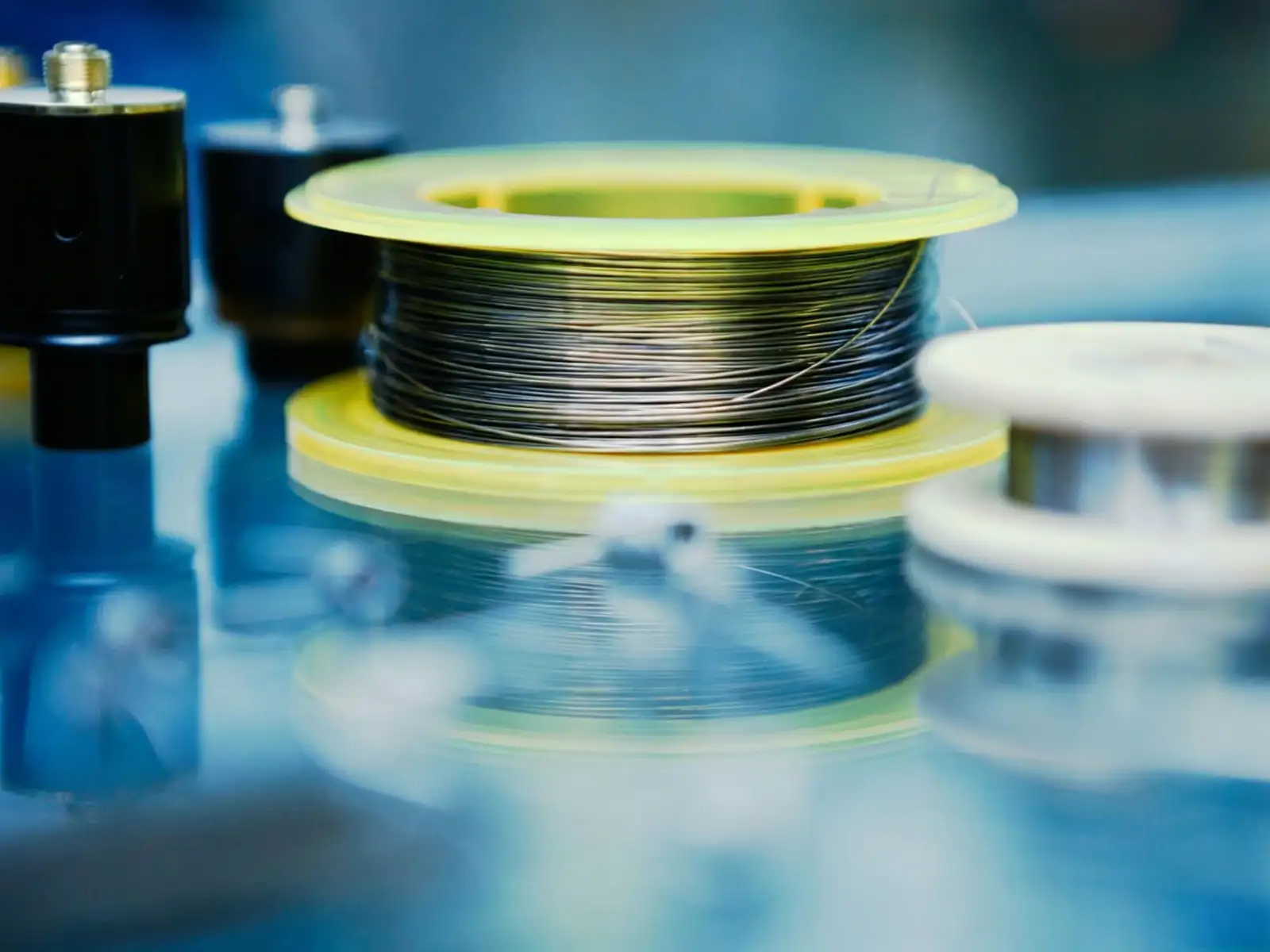
In highly alkaline industrial environments, the balance between equipment corrosion and electrical conductivity has always troubled engineers. Nickel 200 Wire (N02200 pure nickel wire), with a high purity nickel content of more than 99.5%, exhibits excellent corrosion resistance in caustic alkaline solutions while maintaining excellent electrical and thermal conductivity. This material has outstanding performance in key applications such as chlor-alkali electrolysis, electroplating plates, and battery current collectors, with a performance of 5 to 10 times. Relatively good electrical conductivity (among corrosion-resistant alloys), while ferromagnetic properties make it a cautious choice in certain electromagnetic shielding applications. From chemical equipment to medical devices, Nickel 200 Wire is redefining material standards in highly corrosive environments.
1. Why can the material properties of Nickel 200 nickel wire meet the needs of extreme working conditions?
(1) Essential performance improvements brought about by purity advantages
UNS N02200 grade pure nickel wire controls the nickel content above 99.5%. This ultra-high purity directly determines the core performance of the material. 63%~70%, the corrosion rate of pure nickel in alkaline medium can be reduced by more than 90% (this data is based on ASTM G31 standard test, 50% NaOH, 100 ℃ conditions). Strict limits on impurity elements such as iron and copper (both ≤0.10%) avoid the accelerating effect of electrochemical corrosion. This high purity ensures the long-term stability of the material in a reducing atmosphere below 300°C, cathode.
(2) Engineering significance of physical performance parameters
The density of 8.90 g/cm³ provides good structural strength without placing an excessive burden on precision equipment. The melting point of 1453°C gives the material thermal stability under operating conditions below 500°C, which is crucial for high-temperature resistance heating elements. The thermal conductivity of 90 W/(m·K) is at a medium level among metal materials and is efficient enough in heat exchange scenarios that require corrosion resistance. The combination of these parameters enables Nickel 200 Wire to maintain consistent performance across temperature ranges and multi-media environments.
(3) Mechanical properties and processing suitability
The tensile strength of ≥350 MPa in the soft state combined with the elongation of ≥30% gives the material excellent cold working properties. The hardness range of 85~95 HB not only ensures structural strength, but also allows secondary processing such as bending and winding. This plasticity advantage is particularly important when manufacturing complex-shaped electrodes, springs, and wires. The multi-pass cold drawing process can accurately control the diameter within ±0.01 mm, meeting the stringent dimensional tolerance requirements of semiconductor equipment.
Table 1: Performance comparison between Nickel 200 Wire and common conductive materials
| Performance indicators | Nickel 200 Wire | 316 stainless steel | brass | pure copper |
| Alkali corrosion resistance | Excellent | generally | Difference | Difference |
| Conductivity (relative%) | 20-25 | 2-3 | 27 | 100 |
| Non-magnetic | no | no | yes | yes |
| High temperature stability (℃) | 500+ | 600+ | 200 | 300 (oxygen-free copper can reach 400 ℃) |
| relative cost | high | middle | Low | middle |
2. Which industry scenarios must use Nickel 200 Wire?
(1) Core materials in the electrochemical industry
The anodes of electrolytic cells in chlor-alkali production are subject to erosion by high-temperature concentrated alkali solutions above 50°C, and ordinary metal materials will fail within a few months. The mesh anode made of Nickel 200 Wire can last for more than 5 years, significantly reducing downtime maintenance costs. Hangers and conductive rods in the electroplating industry also need to withstand alternating acid and alkali environments. The chemical inertness of pure nickel wire prevents metal ions from contaminating the plating solution. In water electrolysis hydrogen production equipment, Nickel 200 is used as the cathode material of the alkaline electrolyzer, and its low overpotential characteristics directly improve the hydrogen production efficiency.
(2) Precision applications in the electronics industry
The positive and negative lead wires of lithium batteries need to remain stable for a long time in the organic electrolyte. Nickel 200 Wire has become the first choice due to its corrosion resistance and good weldability. Although its ferromagnetism limits its application in strong magnetic environments such as MRI, it can still play a role in non-magnetic field sensitive equipment. Heating elements in semiconductor devices require materials to be repeatedly raised and cooled in a vacuum or in an inert atmosphere. Pure nickel’s low vapor pressure and oxidation resistance ensure long life. For occasions where eddy current losses need to be reduced, nickel-based alloys or special laminated structures can be considered. However, pure nickel has a high resistivity (approximately 4 times that of copper), which significantly increases copper losses in transformer winding applications. It is generally not recommended for conventional windings.
(3) Stringent standards in medical and aerospace industries
Medical guidewires need to remain biologically inert in the human body fluid environment, and the high purity of UNS N02200 ensures no toxic ion precipitation. Its excellent fatigue performance allows the vascular stent to maintain structural integrity under hundreds of thousands of pulsating loads. Fuel system pipe joints in the aerospace field require materials to maintain sealing performance and mechanical strength within the range of -50°C to 200°C. The low-temperature toughness and high-temperature creep resistance of Nickel 200 Wire meet this demand.
Table 2: Corrosion rate of Nickel 200 Wire in different media
| corrosive media | Temperature (℃) | Corrosion rate (mm/year) | applicability |
| 50% sodium hydroxide | 100 | <0.05 | Excellent |
| 10% sulfuric acid | 25 | <0.13 | good |
| 3.5% sodium chloride | 25 | <0.03 | Excellent |
| Concentrated nitric acid | 60 | >5.0 | not applicable |
| organic acid | 80 | <0.08 | good |
3. How to correctly choose the specifications and status of Nickel 200 Wire?
(1) Matching logic between diameter and application scenario
Thin wires with φ0.1~1.0 mm are mainly used for precision electronic components, such as resistance wires, sensor leads and micro springs. This type of product has extremely high requirements on surface quality and needs to be bright annealed to ensure good conductive contact. The medium size of φ1.0~5.0 mm is suitable for manufacturing battery tabs, plating racks and standard fasteners. The semi-bright state provides a balance between processing performance and surface cleanliness. Thick wire or rods with a diameter of 5.0 mm or more are often used for machining to manufacture shaft parts, flanges and large electrodes. The pickled state facilitates subsequent machining.
(2) Effect of surface treatment on performance
The bright surface is precision polished to obtain a roughness of Ra≤0.4 μm. In this state, a dense oxide film is formed on the surface of the material, which improves the resistance to pitting corrosion and is suitable for direct use in electrical contact situations. Pickling the surface removes the oxide scale but retains a slight roughness, which is beneficial for surface activation before subsequent electroplating or welding. The semi-bright state is the result of light polishing after cold drawing, taking into account cost and performance, and is the most common choice for industrial applications. For special needs, electrolytic polishing can also be performed to obtain an ultra-clean surface for use in food and pharmaceutical grade equipment.
(3) Principles for selecting heat treatment conditions
The tensile strength of the soft (annealed) material is about 350 MPa, and the elongation is >30%. It is suitable for cold processing that requires large deformation, such as deep drawing, winding and complex bending. The strength in the hard state (cold drawing state) can reach more than 600 MPa, but the elongation drops to about 10%, making it suitable for springs and structural parts that require high rigidity. The semi-hard state is between the two and has moderate plasticity while maintaining a certain strength. In practical applications, the initial state can be selected according to the subsequent processing technology, and secondary annealing can be performed to adjust the performance if necessary.
Table 3: Typical applications of Nickel 200 Wire with different diameters
| Diameter range (mm) | Main applications | Recommended status | surface requirements |
| 0.05~0.5 | Precision resistance wire, sensor lead | soft state | bright |
| 0.5~2.0 | Battery tabs, small springs | Semi-hard state | semi-bright |
| 2.0~8.0 | Electroplating racks, welding wires | soft state | pickling |
| 8.0~30 | Fastener blanks, electrode rods | soft/hard | Pickling/turning |
| 30 and above | Large electrodes and machined parts | soft state | Pickling/turning |
4. What are the key technical points when using Nickel 200 Wire?
(1) Special requirements for welding processes
Welding of pure nickel materials requires strict control of heat input. Excessive temperature will cause coarse grains and reduce performance. Tungsten arc welding (TIG) is the most recommended method, using ERNi-1 welding wire to obtain a weld with a composition close to that of the base metal. Before welding, acetone should be used to completely remove oil stains, and the welding area should be mechanically polished to expose the metallic luster. The purity of the protective gas needs to be >99.99%, and the back side also needs to be protected by argon gas to prevent oxidation. Slow cooling after welding and stress relief annealing at 600°C × 1 hour can eliminate welding residual stress and prevent cracking.
(2) Precautions for machining
Nickel 200 has a greater tendency to work harden, and it is easy to produce a work hardened layer during cutting, resulting in increased tool wear. High-speed steel or carbide cutting tools should be used to maintain a sharp edge and use a larger rake angle (15~20°). The cutting speed is controlled at 20~40 m/min, and the feed rate is appropriately increased to avoid friction of the tool on the hardened layer. Adequate cooling is crucial. It is recommended to use water-soluble cutting fluid and ensure sufficient flow. When turning a slender shaft, a center frame is required to support it to prevent vibration and bending due to the good plasticity of the material.
(3) Storage and usage environment management
Nickel 200 Wire should be stored in a dry and ventilated environment to avoid contact with elements such as sulfur and phosphorus. When the temperature exceeds 315°C, sulfur vapor will cause grain boundary embrittlement and lead to material failure. This requires special attention in some heat treatment furnaces. Although pure nickel has excellent alkali resistance, it will corrode rapidly in high-temperature and strong oxidizing acids (such as hot concentrated nitric acid). The characteristics of the medium must be clear before use. Oil stains on the surface of the material will carbonize at high temperatures to form carbon deposits, which will affect performance. Alkaline cleaning or solvent cleaning should be carried out before use.
(4) Quality control and inspection standards
When purchasing, suppliers should be required to provide EN 10204 3.1 material certification, including spectral analysis and mechanical property test data. Key applications require intergranular corrosion testing to test the material’s resistance to intergranular corrosion according to ASTM A262 standards. Ultrasonic flaw detection can detect internal defects and is particularly important for rods >10 mm in diameter. Surface quality inspection should be carried out under a 10x magnifying glass, and cracks, inclusions and scratches with a depth >0.05 mm are not allowed. The resistivity test can verify the purity of the material, and the actual measured value should be in the range of 6.5~7.2×10⁻⁸ Ω·m.
5. How to maximize the cost-effectiveness of Nickel 200 Wire?
(1) Full life cycle cost analysis
Although the unit price of Nickel 200 Wire is 2 to 3 times higher than that of stainless steel, its service life under strong alkali conditions can be 5 to 10 times that of the latter. Taking a chlor-alkali electrolyzer as an example, using pure nickel anodes increases the initial investment by 30%, but does not need to be replaced within 5 years, while stainless steel anodes need to be replaced once a year. After calculating downtime losses, labor costs and waste disposal costs, the overall cost of Nickel 200 is actually reduced by more than 40%. This long-life advantage is particularly evident in continuous production processes, which avoids production losses caused by frequent shutdowns.
(2) Design optimization reduces usage
Reasonable structural design can reduce material usage while ensuring performance. The electrode uses a mesh or porous structure instead of a solid rod, which can save 60% of materials while increasing the contact area and improving efficiency. The fasteners use a composite structure, using Nickel 200 only in parts that are exposed to corrosive media, and low-cost materials are used in other parts. The conductor uses nickel-plated copper core wire instead of pure nickel solid wire, which reduces the cost by 70% while maintaining the same conductive performance. These design improvements require an in-depth understanding of material properties and actual operating conditions, and structural optimization through finite element analysis.
(3) Supply chain management and inventory strategy
Establishing a long-term supply relationship can obtain bulk purchase discounts, and usually orders of 500kg or more can enjoy a 5~8% price discount. Reasonably arrange the delivery time according to the production plan to avoid expedited expenses caused by urgent orders. Maintain appropriate inventory for commonly used specifications, and adopt a just-in-time purchasing strategy for non-standard specifications. Cooperating with suppliers with strong processing capabilities and outsourcing part of the secondary processing can reduce own equipment investment and labor costs. Regularly evaluate the quality stability of suppliers. The losses caused by substandard products far exceed the savings brought by price differences.
(4) The economic value of recycling
Waste Nickel 200 materials have high recycling value, and the recycling price of pure nickel scrap can reach 60~70% of that of new materials. Establish a waste classification collection system to avoid mixing with other metals and reducing the recycling value. Chips generated by machining should be collected separately and kept clean. Oxide scale and oil stains will reduce the purchase price of recyclers. Large components such as electrodes can be returned to the factory for remelting after reaching the end of their service life, and recycling can reduce the total material cost by 10 to 15%. This recycling system not only brings economic benefits, but also meets the requirements of sustainable development.
in conclusion
Nickel 200 Wire has become an irreplaceable functional material in key fields such as chemical industry, electronics, and medical care due to its ultra-high purity, excellent alkali corrosion resistance, and excellent electrical and thermal conductivity. The value of this high-performance material can be fully utilized by correctly selecting the specifications, mastering the key points of the processing technology, and implementing full life cycle cost management. Pay attention to its ferromagnetic properties. Brass or pure copper should be used instead in situations where there are no magnetic requirements. With the development of hydrogen energy and high-end manufacturing, the application prospects of Nickel 200 Wire will be broader.
FAQ
Q1: Can Nickel 200 Wire be used in high temperature nitric acid environment?
Not recommended. Pure nickel corrodes very quickly in high-temperature oxidizing acids (especially concentrated nitric acid) and will fail quickly. This material is mainly suitable for reducing media and alkaline environments. For high-temperature oxidizing conditions, nickel-based high-temperature alloys such as Inconel series should be selected.
Q2: How to distinguish Nickel 200 and Nickel 201 materials?
Nickel 201 is a low-carbon version (carbon content ≤0.02%), mainly used in high-temperature working conditions above 315 ℃ to avoid embrittlement caused by graphite precipitation. The performance of the two is similar in normal temperature and medium temperature applications. Nickel 200 is more widely used due to its lower cost. The specific selection needs to be determined based on the operating temperature.
Q3: The resistivity of Nickel 200 Wire is much higher than that of copper. Why is it still used in conductive applications?
Although the electrical conductivity is only 20~25% of copper, pure nickel is the best choice for comprehensive performance when corrosion resistance, high temperature stability or specific welding requirements must be met at the same time. The resistance loss can be compensated by increasing the conductor cross-section, and the overall cost performance is still better than the copper solution using special protection measures.
Looking for a reliable Nickel 200 Wire supplier?
Baoji Baoji Titanium Valley Titanium Nickel Zirconium Material Processing Co., Ltd., as a professional high-end rare metal processing manufacturer, is equipped with Italy’s Danieli continuous rolling line, with an annual production capacity of over 20,000 tons, and can provide customized services for Nickel 200 Wire in full specifications of φ0.1~200 mm. We provide EN 10204 3.1 material certification and full-process technical support. Welcome to contact sales@titaniumvalleys.com to obtain samples and technical solutions.
References
Chinese Corrosion and Protection Society. “Corrosion and Protection Handbook”. Chemical Industry Press, 2009. Chapter 4: Corrosion properties of nickel and nickel alloys.
Lu Shiying, Zhang Tingkai. “Nickel-based and iron-nickel-based corrosion-resistant alloys”. Chemical Industry Press, 1989. Chapter 2: Metallurgy and properties of pure nickel.
Wang Zhengqiao, Wu Youlin. “Applications of Nickel in Chemical Industry”. Shanghai Science and Technology Press, 1985. Chapter 3: Corrosion behavior of nickel in alkali industry.
Editorial Board of “Handbook of Mechanical Engineering Materials”. “Handbook of Mechanical Engineering Materials: Metal Materials”. Machinery Industry Press, 2015. Chapter 7: Performance parameters of nickel and nickel alloys.