
Where Is Gr5 Titanium Wire Used from Extreme Industrial Environments to Advanced Technologies?
- Gr5 titanium wire
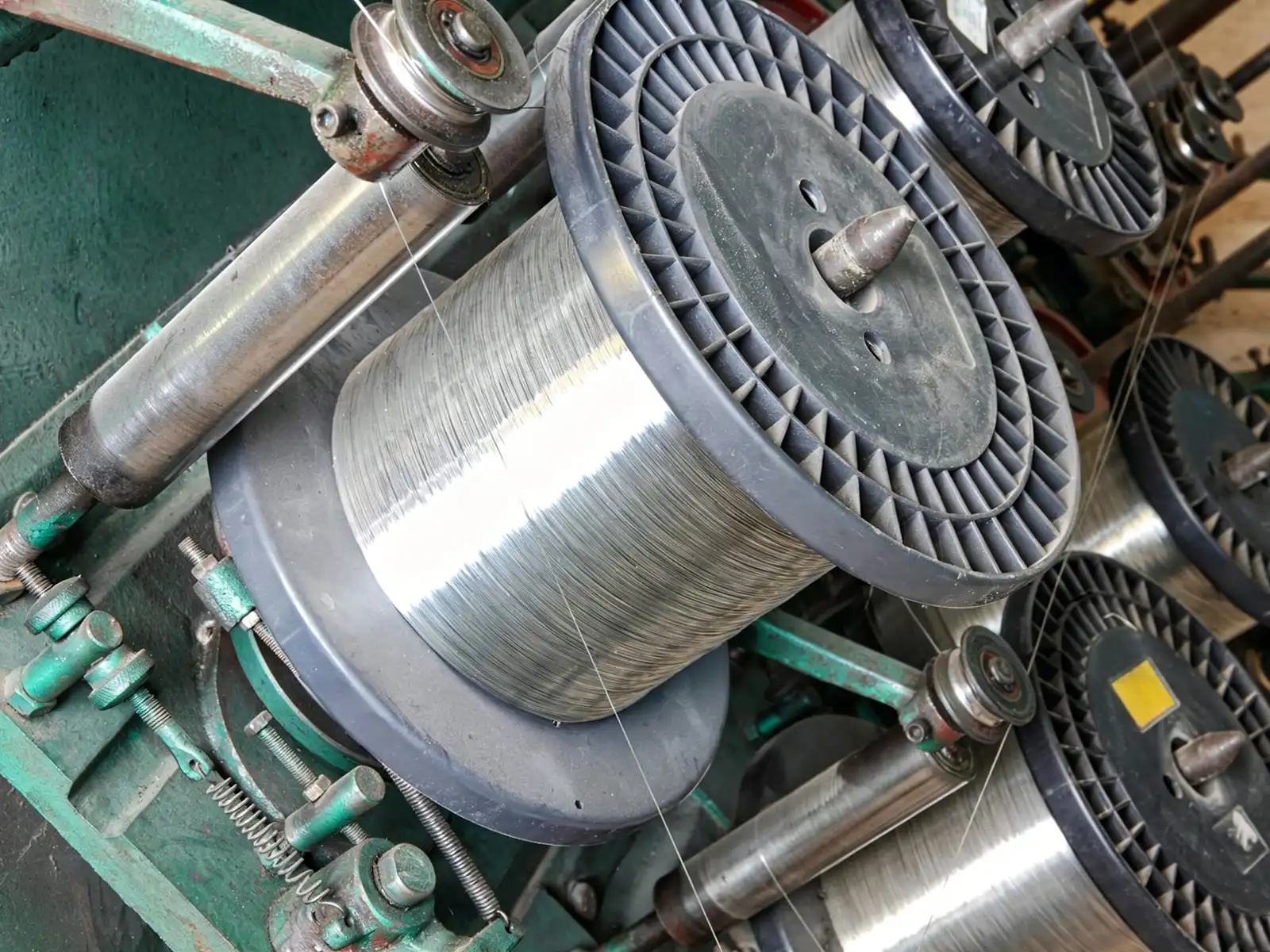
When engineers face the dual challenges of extreme corrosive environments and high-intensity loads, material selection often becomes the key to the success or failure of the project. Gr5 Titanium Wire (Ti-6Al-4V) has been widely used in many high-end fields such as aerospace, marine engineering, medical care, and consumer electronics due to its unique mechanical properties and corrosion resistance. This ?+? dual-phase titanium alloy not only has a specific strength advantage that traditional steel cannot match, ranging from -196 ? to 400 ? (or 450 ?). From Boeing 787 fuselage fasteners to key components of deep-sea oil platforms, Gr5 Titanium Wire is helping engineers break through the performance boundaries of traditional materials. Its density of 4.51 g/cm? is only 57% of steel, and provides a tensile strength more than 1.5 times that of ordinary stainless steel. This combination of properties makes it possible to reduce the weight of the equipment by 30 to 50%, which directly translates into improved fuel efficiency and reduced operating costs.
1. Essential characteristics and industrial value of Gr5 titanium wire
(1) How alloy composition determines performance boundaries
The Ti-6Al-4V system achieves performance balance through precise proportioning: 5.5~6.75% aluminum element strengthens the ? phase and reduces density, and 3.5~4.5% vanadium stabilizes the ? phase to improve toughness. This dual-phase structure gives the material unique advantages?the annealed tensile strength is ?895 MPa and the yield strength is ?828 MPa, while maintaining an elongation of ?10%. Strictly controlling the oxygen content ?0.20% and hydrogen content ?0.015% can effectively avoid hydrogen embrittlement and oxidative embrittlement. Compared with pure titanium Gr1/Gr2, Gr5 retains excellent corrosion resistance while improving its mechanical properties by more than 150%.
(2) Metallurgical evolution from titanium rods to precision wires
Modern production uses vacuum consumable electric arc furnace smelting to ensure composition uniformity. After ? forging and ?+?, a fine and uniform equiaxed or two-state structure is obtained. During the cold drawing stage, multi-pass deformation (single diameter reduction rate 15-25%) combined with intermediate annealing is used to release stress. Only when the cumulative deformation reaches more than 90% can precision dimensions of ?0.1~10 mm be obtained. The continuous rolling line is combined with roller die drawing technology to control the surface roughness to Ra?0.8 ?m and ovality ?0.02 mm. Vacuum heat treatment (750~850 ?/2~4 h) avoids surface oxidation and ensures performance fluctuations between batches <3%.
(3) Application innovations brought about by physical properties
The resistivity of 1.7 ???m makes it suitable for resistance welding, and the elastic modulus of 110 GPa is between steel and aluminum, providing excellent elastic recovery performance. Martensitic stainless steel or carbon steel to facilitate the connection of dissimilar materials. Non-magnetic properties (magnetic susceptibility
2. Durability verification under extreme working conditions
(1) Long-term protection mechanism for marine corrosive environment
The corrosion rate of Gr5 Titanium Wire in seawater is
(2) Full temperature range adaptability from low temperature to high temperature
Tests in the liquid nitrogen temperature zone (-196 ?) show that Gr5 maintains good toughness without cold brittle transition, and the impact energy absorption value is >30 J. In the environmental verification of the aviation hydraulic system at -54?C, the titanium alloy pipeline did not show brittle fracture, but the aluminum alloy had micro-crack expansion. After short-term exposure to 400 ? at the high temperature end, the strength retention rate is >85%, and the oxidation weight gain at 600 ? is
(3) Fatigue strength and vibration environment tolerance
The rotational bending fatigue test (R=-1) shows that the tensile strength of Gr5 Titanium Wire at 10? is approximately 56%~60%. Among the alternating loads endured by aviation fasteners, the service life of titanium alloy bolts is 3 to 5 times that of high-strength steel. Polishing the surface to Ra?0.4 ?m can further increase the fatigue limit by about 15% (relative to the unpolished state). Vacuum annealing eliminates surface microcracks and reduces fatigue notch sensitivity. In the actual vehicle verification of automobile engine valve springs, the stiffness of the titanium wire spring was attenuated by <2% after 5,000 hours of high-frequency vibration (120 Hz), while the carbon steel spring had permanent deformation.
3. Technological breakthroughs in precision welding and fastening applications
(1) Unique advantages as welding filler material
The composition matching between Ti-6Al-4V welding wire and base metal is >98%, which avoids joint embrittlement caused by dissimilar filler wire. During TIG welding, although the low thermal conductivity of titanium wire causes the molten pool to dissipate heat slowly, its unique dual-phase structure and alloy elements can effectively suppress the excessive growth of grains, and the weld structure is close to the base material. Under argon protection (purity ?99.99%), the welding joint coefficient can reach 0.9~0.95, and the tensile strength is ?830 MPa. After using Gr5 welding wire for circumferential seam welding of aero-engine casings, the repair rate dropped from 12% to less than 3%. Compared with nickel-based welding wires that require complex preheating and post-heating processes, titanium alloy welding process windows are wider, reducing production difficulty.
*Note: ER5356 aluminum welding wire requires a special process during TIG welding, including preheating and strict pre-welding cleaning to ensure joint quality.
(2) Weight reduction and efficiency improvement of aviation fasteners
Bolts cold-formed from ?3~6 mm titanium alloy wire have a shear strength of ?550 MPa. Under equal volume replacement, a single fastener can stably reduce weight by about 43% (or more than 40%). After using titanium alloy fasteners on Boeing passenger aircraft, the weight of each aircraft is reduced by about 180 kg, and the fuel cost is saved by more than 500,000 US dollars in 20 years of operation. Isothermal forging (800?C) is used during the head forming process to avoid cracking, and thread rolling reinforcement increases the fatigue life by 2 times. The surface anodized coloring (gold/blue) not only provides visual identification, but also thickens the oxide film to 5~10 ?m to improve wear resistance. Micro screws (?0.8~1.5 mm) in medical devices are processed using ultra-fine titanium wire, which has better biocompatibility than stainless steel and no rejection when implanted into the human body.
(3) Development of ultimate performance of elastic components
The spring stiffness stability prepared by Gr5 Titanium Wire has excellent performance, and the rebound linearity deviation is <1%. The anti-sulfur spring of oil drilling tools has been working in an acidic environment containing H?S/CO? for 3 years without failure, while the carbon steel spring was scrapped after 6 months due to hydrogen-induced cracking. Micro-shrapnel (?0.1~0.3 mm) in electronic equipment utilizes the high elastic modulus of titanium to achieve a cycle life of 100,000 times. Surface shot peening produces -600 MPa residual compressive stress in the surface layer, inhibiting the initiation of fatigue cracks. After using titanium wire for automobile suspension springs, the unsprung mass is reduced, the control response is improved by 20%, and the NVH performance is significantly improved.
4. Cost control and supply chain optimization strategies
(1) Whole-process quality control reduces hidden losses
The raw material batch traceability system ensures that each roll of wire can be traced back to the titanium sponge furnace number, and the chemical composition spectrum analysis deviation is <0.5%. Wire diameter is monitored online during multi-pass drawing (laser diameter measurement accuracy is ?0.002 mm), and out-of-tolerance products are automatically eliminated. Non-destructive testing combines eddy current testing (can detect ?0.05 mm surface defects, special calibration standards are required) and ultrasonic testing (identifies internal holes), with a pass rate of >99.5%. This kind of strict control prevents customers from product recalls due to material defects – the cost of a single recall of aviation parts can easily reach millions of dollars, and the 2% increase in cost of material pre-inspection can avoid 95% of risk exposure.
(2) Customized services to match diverse needs
It provides three states: annealed state (M), cold working state (Y), and cold drawn + annealed state (Y+M) to meet different molding processes. Straight wire lengths of 0.5-3 meters can be accurately cut, and coiled wire single roll weight is adjustable from 5-50kg, reducing secondary processing losses. The surface treatment menu covers pickling (removing scale), mechanical polishing (improving smoothness), electrolytic polishing (ultra-clean surface), and anodizing (functional coating). Small batches of samples can be delivered quickly through negotiation, and VMI inventory management is implemented for batch orders (>1 ton), which shortens the customer’s stocking cycle from 45 days to 7 days and reduces capital usage by 80%.
(3) Quantitative comparison of life cycle costs
Taking fasteners for offshore platforms as an example to calculate the total cost of ownership in 20 years:
Although the initial investment of titanium materials is high, its zero maintenance and long life characteristics reduce the whole life cost by more than 70%, and the investment payback period is usually 3-5 years.
5. Application expansion and technological evolution of emerging industries
(1) New requirements for material performance in hydrogen energy equipment
Hydrogen embrittlement is a key challenge for titanium alloys used in the field of hydrogen storage. By controlling the hydrogen content to <0.015% and optimizing the heat treatment system, Gr5 Titanium Wire can safely serve under 30 MPa hydrogen pressure. The fuel cell bipolar plate is made of titanium wire mesh, which can withstand the acidic and complex environment inside the proton exchange membrane fuel cell for a long time. The conductivity is increased by 5 times through surface nitriding treatment. After the hydrogenation station high-pressure pipeline connectors are made of titanium alloy, they do not need to be replaced during the 40-year design life. Compared with the stainless steel replacement plan of 10 years, the whole life cycle cost is reduced by 60%. In the European Hydrogen Corridor project, 85% of key components are designated to use Ti-6Al-4V.
(2) Biofunctional modification of medical implants
Micro-arc oxidation forms a porous TiO? layer (pore diameter 5-50 ?m) on the surface of orthopedic implant screws, and the osseointegration speed is 3 times faster than that on smooth surfaces. For vascular interventional treatment, drug-eluting titanium wire stents are coated with degradable polymers on the surface to achieve controlled drug release. The local drug concentration is maintained for about 30 days, and the postoperative restenosis rate is significantly reduced. The 10-year survival rate of dental implant abutments processed with ?1.2 mm titanium wire is >98%, far exceeding the 85% of cobalt-chromium alloy. 3D printing technology is combined with titanium wire as a raw material to create a patient-customized skull repair mesh that weighs only 1/3 of a traditional titanium plate. Its X-ray transmittance improves postoperative imaging diagnosis.
(3) Lightweight and quality upgrade of consumer electronics
The high-end smart watch case is woven with ?0.5 mm titanium wire and is only half the weight of stainless steel. It has excellent skin-friendliness and does not cause metal allergies. Folding screen mobile phone hinges use titanium alloy springs, and the torque attenuation is <5% after 200,000 folds, while the stainless steel solution fails after 100,000 times. The drone frame is made of titanium wire braided reinforced carbon fiber composite material (this process is still in the research stage and has shown potential in small batch trial production), which increases the impact strength by about 40% and extends the battery life by 15%. Luxury glasses frames use beta titanium wire (Ti-15V-3Cr-3Al-3Sn) to further reduce weight. A single pair of glasses is less than 10 g. There is no sense of pressure when worn. The corrosion resistance makes seaside vacations require no special maintenance.
Conclusion
Gr5 Titanium Wire is playing an important role in many high-end manufacturing fields due to its high specific strength, corrosion resistance in all environments and wide temperature range stability. From the deep sea to space, from implants in the human body to extremely fast flight, this material is helping engineers solve engineering problems that traditional metals cannot overcome. Choosing suppliers with strict quality certification is not only a matter of obtaining high-performance materials, but also a strategic decision to avoid project risks and optimize life-cycle costs.
FAQ
Q1: How to choose between Gr5 Titanium Wire and pure titanium wire in application?
Pure titanium (Gr1/Gr2) has slightly better corrosion resistance but its strength is only 300~450 MPa. It is suitable for normal temperature scenarios where corrosion resistance is the main priority, such as chemical heat exchangers. Gr5 has a strength of 900 MPa, taking into account corrosion resistance and load-bearing, and is suitable for mechanically sensitive fields such as aviation fastening and high-pressure vessels. If there is no need for high strength and ultimate corrosion resistance is pursued, pure titanium is more economical; Gr5 must be selected for composite load conditions.
Q2: Why is Gr5 welding wire more expensive than stainless steel but still widely used?
Although the unit price is 8 to 12 times that of 304 stainless steel welding wire, the welded joint does not require preheating or post-heat treatment, and the labor cost is reduced by 40%. The corrosion resistance of welds extends the life of equipment by more than three times, and the savings in downtime losses caused by reduced maintenance frequency far exceed the material price difference. The aerospace industry pays more attention to the benefits of weight reduction – every 1 kg of weight reduction can save fuel costs by US$3,000 to US$5,000 over the entire life of the aircraft.
Q3: Is there a minimum order quantity limit for small batch customized titanium wire?
Traditional suppliers often require a minimum order quantity of 500 kg, and some manufacturers use flexible production lines to achieve quick response in small batches of 50 kg. For special specifications such as ?0.15 mm ultra-fine wire or 8-meter ultra-long straight wire, we can provide technical evaluation and proofing services. Bulk customers can sign annual agreements to lock in prices and enjoy VMI consignment inventory and JIT on-time delivery.
Looking for a reliable Gr5 Titanium Wire supplier?
Baoji Baoji Titanium Valley Titanium Nickel Zirconium Material Processing Co., Ltd. owns the Danieli production line in Italy, with an annual output of 10,000 tons of precision titanium wire, serving global aerospace and high-end manufacturing customers. To obtain technical specifications and sample testing, please contact: sales@titaniumvalleys.com
References
Zhao Yongqing, Hong Quan, Ge Peng. Titanium alloy and its processing technology. Beijing: Science Press, 2010.
Zhou Lian, Wang Xiangdong, Feng Yongzhen. Titanium Alloy Handbook. Beijing: Chemical Industry Press, 2005.
Zhang Zhu, Wang Qunjiao, Yuan Shuo. Research progress of titanium alloys for aerospace. Materials Herald, 2007, 21(12): 12-16.
Li Ming, Chen Jun. Surface modification technology of medical titanium alloy materials. Chinese Journal of Medical Devices, 2015, 39(3): 185-189.
Liu Wei, Chen Yonglai, Zhang Fan. Titanium alloy welding process and quality control. Welding Technology, 2012, 41(8): 56-60.