
How Does Gr5 Titanium Wire Redefine Aerospace-Grade Precision Manufacturing?
- Gr5 titanium wire
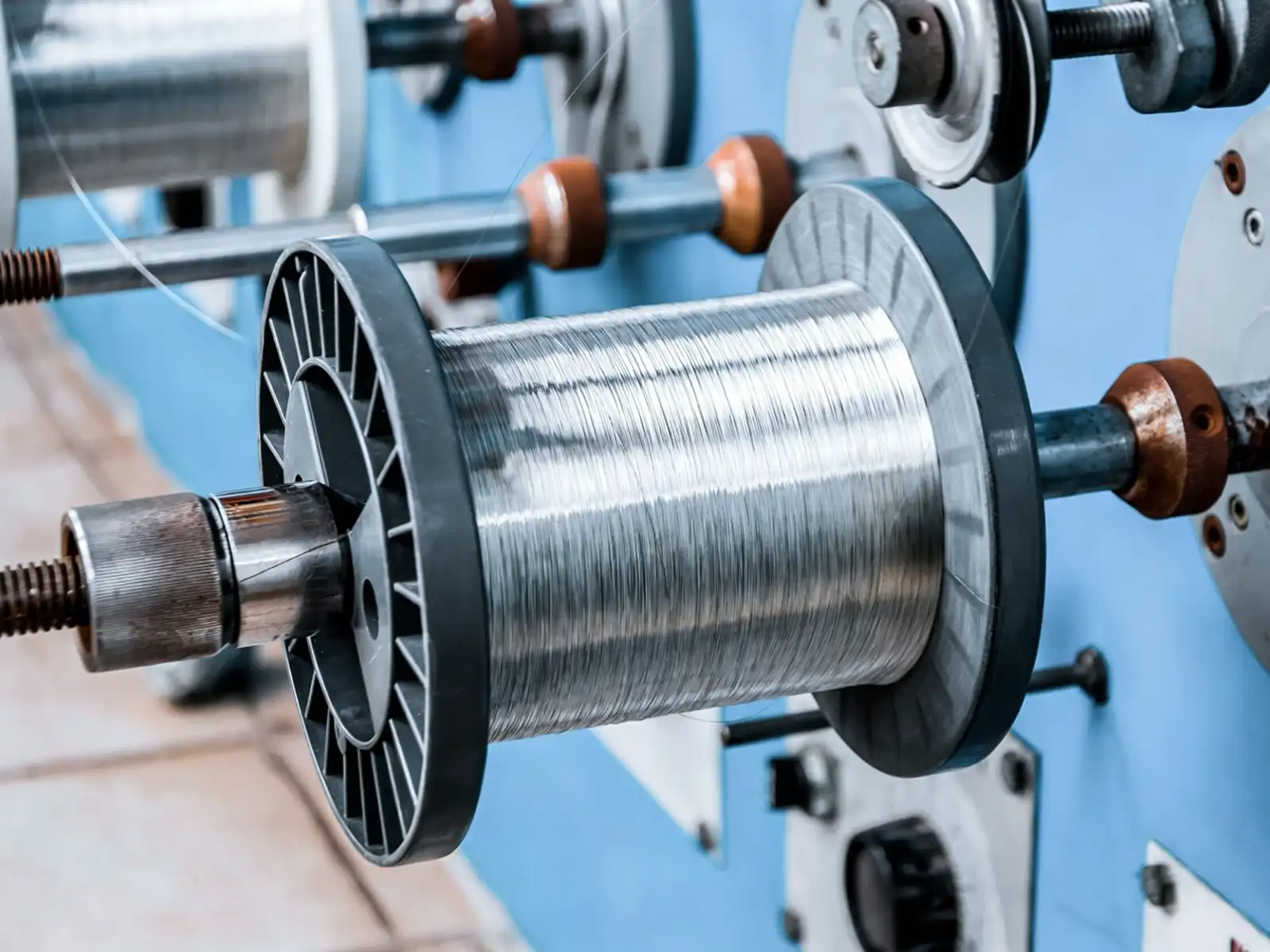
Gr5 Titanium Wire (Ti-6Al-4V), as the most widely used ?+? dual-phase titanium alloy wire in the world, is significantly changing the game rules of precision manufacturing. This material perfectly combines aerospace-grade strength with excellent corrosion resistance. Its density is only 57% of steel, but it can provide more than twice the mechanical strength of pure titanium. From key structural parts in aerospace to precision components for medical devices, from corrosion-resistant parts for deep-sea engineering to lightweight components for high-end consumer electronics, Gr5 Titanium Wire is helping global manufacturers push the boundaries of material performance. Its unique 6% aluminum and 4% vanadium alloy formula gives this material stable performance in the temperature range of -196 ? to 400 ?. With modern continuous rolling wire rod technology and multi-pass precision cold drawing process, it can achieve… and truly meet the stringent requirements for material consistency in automated production.
1. Analysis of the core performance advantages of Gr5 titanium wire
(1) Double excellent characteristics: perfect balance of high strength and high corrosion resistance
Traditional industrial materials often face the dilemma of “having the best of both worlds” – high-strength materials are prone to corrosion, while corrosion-resistant materials are not strong enough. Gr5 titanium alloy breaks this limitation through precise alloying design. Its tensile strength reaches more than 895 MPa, and its yield strength exceeds 828 MPa. It also performs well under harsh conditions such as acid and alkali environments of pH 2~14, seawater immersion, and salt spray corrosion. This dual-excellent characteristic originates from the dense oxide film spontaneously formed on the surface of the titanium alloy, combined with the strengthening effect of the aluminum element and the ?-phase stabilizing effect of the vanadium element to create a material system that is both strong and durable.
(2) Lightweight value: important changes brought about by specific strength advantages
In modern industry pursuing energy efficiency and performance, the specific strength (strength/density ratio) of materials has become a key indicator. The density of Gr5 Titanium Wire is only 4.51 g/cm?. Combined with its high strength characteristics, its specific strength has advantages over stainless steel and aluminum alloys. This means that under the same strength requirements, using titanium wire can reduce the structural weight by 40 to 50%. In the aviation field, every 1 kilogram of weight reduction can save considerable fuel costs during the aircraft’s life cycle; in medical implant applications, lightweight design directly improves patient comfort and recovery speed.
In order to visually demonstrate the material performance advantages of Gr5 Titanium Wire, the following is compared with commonly used metal wires:
Table 1: Performance comparison of Gr5 Titanium Wire and commonly used materials
(3) Process adaptability: full compatibility from welding to cold processing
The processability of materials directly affects manufacturing costs and product quality. Gr5 Titanium Wire shows excellent process adaptability in this regard. As a welding filler material, it has a high degree of composition matching with the base metal, and the weld strength can reach more than 90% of the base metal, without the need for complicated post-weld treatment. In the field of cold working, controlling the recovery and recrystallization of the material through precise annealing processes can effectively adjust its tensile strength and elongation… to meet different needs such as spring manufacturing and precision stamping. Its elastic modulus of 110GPa and good resilience make it an ideal choice for manufacturing high-performance elastic components.
2. The impact of production technology on the quality stability of Gr5 Titanium Wire
(1) Continuous rolling technology: transformation from titanium rods to high-precision wires
Modern Gr5 Titanium Wire production uses advanced continuous rolling technology, which is the key to ensuring product quality consistency. ?Gradient continuous rolling of intermediate rolling mills and high-precision reducing and sizing mills (RSM)?. The core advantage of this process lies in the precise control of temperature and deformation – the reduction rate of each pass is maintained between 15 and 25%, and combined with the online annealing system, it avoids stress concentration and surface defects caused by traditional multiple cold drawings. The automation rate of key processes exceeds 90%, ensuring a high degree of consistency in the performance of each batch of products.
(2) Vacuum heat treatment: a key process to eliminate hidden dangers
Titanium materials are extremely sensitive to interstitial elements such as oxygen and hydrogen, and trace amounts of contamination may lead to embrittlement failure. Vacuum heat treatment technology completely isolates oxygen and nitrogen pollution by annealing in a vacuum environment below 10??Pa, while promoting the diffusion and emission of hydrogen elements. This process controls the hydrogen content below 0.012% and the oxygen content no more than 0.20%, fundamentally eliminating the risks of hydrogen embrittlement and oxygen embrittlement. The annealing temperature is accurately controlled within the range of 700~800 ? (to avoid the growth of ? grains caused by above 850 ?), and the holding time is dynamically adjusted according to the diameter of the wire to ensure the uniform distribution and stable performance of the ?+? dual-phase structure.
(3) Surface treatment and quality control: the last mile to achieve aviation-grade standards
The surface quality of wire directly affects its subsequent processing performance and service life. The pickling treatment uses a HF-HNO? mixed acid system to remove the oxide scale formed during the rolling process and form a uniform passivation layer on the surface. The precision polishing process controls the surface roughness below Ra 0.8 ?m, meeting the stringent requirements of the medical and electronic industries. The whole process quality control covers chemical composition spectral analysis, mechanical properties tensile testing, metallographic structure inspection, eddy current and ultrasonic non-destructive testing. Each roll of product comes with an EN 10204 3.1 material certificate to ensure traceability and quality assurance.
The following are the control points of key process parameters in the production process of Gr5 Titanium Wire:
Table 2: Key control points of Gr5 Titanium Wire production process parameters
3. The core demand for Gr5 Titanium Wire in global high-end manufacturing industries
(1) Aerospace: full coverage from structural parts to welding consumables
The demand for Gr5 Titanium Wire in the aviation industry is diversified. In terms of structural applications, ?3.0~6.0 mm titanium wire is processed into high-strength fasteners and used for connection of load-bearing components such as engine casings and landing gears. Its excellent fatigue performance and high-temperature stability (working temperature can reach 400?C) ensure flight safety. Welding applications are another major area. As a filler material for TIG/MIG welding, Gr5 Titanium Wire is used with ?+? titanium alloy base materials such as Ti-6Al-4V, and the strength coefficient of the welded joint reaches above 0.9. Aerospace manufacturers in the United States and Germany attach great importance to material batch stability and require suppliers to provide detailed melting batch number traceability and performance consistency reports.
(2) Medical devices: the dual test of biocompatibility and precision processing
Medical grade Gr5 Titanium Wire needs to meet the ASTM F136 standard, which has stricter limits on impurity content. Fine-gauge titanium wire with a diameter of 0.5~2.0 mm is used to manufacture connectors for orthopedic implants, threaded structures for dental implants, and braided skeletons for cardiovascular stents. The material’s non-magnetic properties make it fully compatible with MRI equipment, and its non-toxicity and excellent tissue compatibility reduce the risk of implant rejection. Medical device manufacturers in Japan and South Korea have extremely high requirements for surface finish, usually requiring Ra ? 0.4 ?m, and must pass endotoxin detection and cytotoxicity testing, which poses challenges to the clean workshop management and surface treatment processes of the manufacturing companies.
(3) Chemical and marine engineering: long-term reliability in extreme environments
In corrosive environments such as petrochemical and marine engineering, Gr5 Titanium Wire shows irreplaceable value. Tube bundle supports for heat exchangers, cable reinforcements for deep-sea ROV equipment, and pump shafts for desalination plants?these applications require materials that can perform stably over the long term in seawater with chloride ion concentrations as high as 35,000 ppm. Compared with 316L stainless steel, which has a typical service life of 2 to 3 years in such an environment, Gr5 Titanium Wire can serve for more than 15 years without obvious corrosion. Emerging industrial countries such as India and Vietnam are upgrading their chemical industries. The annual growth rate of demand for high-performance corrosion-resistant materials exceeds 20%. However, they also have high expectations for cost performance, which has driven titanium processing companies to optimize production processes and reduce manufacturing costs.
Different application fields have significantly different specifications and performance requirements for Gr5 Titanium Wire, which are summarized as follows:
Table 3: Specification requirements for Gr5 Titanium Wire in different application fields
4. How to choose a suitable Gr5 Titanium Wire supplier
(1) Production capacity assessment: double guarantee of scale and technology
The supplier’s production capacity directly affects order delivery and quality stability. A key enterprise with an annual comprehensive production capacity of 10,000 tons of titanium materials and a comprehensive annual production capacity of 1,000 tons of wire materials, it implements full-process quality control from the procurement of titanium sponge raw materials to the delivery of finished wire materials. The key equipment configuration is a reflection of technical strength – companies equipped with Danieli continuous rolling lines can control the ovality of their products within 0.02 mm, which is far better than the 0.05 mm level of the traditional drawing process. The automation rate of key processes exceeds 90%, which means less interference from human factors and better guarantee of batch consistency. Equipment investment of tens of millions of dollars also reflects the company’s long-term strategic commitment and technology upgrade capabilities.
(2) Customized service capabilities: leaping from standard products to special specifications
High-end applications often require non-standard customization. Excellent suppliers should have the ability to manufacture full specifications of ?0.1~10.0 mm, and can adjust the tensile strength (controlled by annealing temperature and cold working rate), surface condition (pickling/polishing/anodizing), and supply form (coiled wire/straight wire) according to customer needs. Typical cases include: ?0.3 mm ultra-fine titanium wire provided for the electronics industry, which can achieve tensile strength ?950 MPa and elongation ?10% through cold processing; cold-processed titanium wire (CW state) customized for spring manufacturers, with a hardness of HV 350~380; a specific ingredient ratio (Al 6.2%, V 4.0%) developed for welding applications to ensure optimal performance of the deposited metal.
(3) Quality system and certification qualifications: a passport to the international market
To enter developed markets such as Europe, the United States, Japan and South Korea, suppliers must hold corresponding certifications. ASTM B863 and AWS A5.16 are the basic standards, and AMS 4955/4928 is the entry threshold for aerospace suppliers. The EN 10204 3.1 material certificate is issued by an independent third-party organization and contains the chemical composition, mechanical properties measured data and heat treatment records of each batch. ISO 9001 quality management system, AS9100 aviation quality system, ISO 13485 medical device quality system – these certifications reflect the management maturity of the company. Continuous R&D investment is also an important indicator. Only companies that can solve technical problems in the industry such as stable production of ultra-thin specifications (?0.1~0.3 mm) and shape control of wide-width foils can stay ahead in the competition.
5. Common challenges and coping strategies in the application of Gr5 Titanium Wire
(1) Material cost control: the art of balancing performance and economy
The price of Gr5 Titanium Wire is usually 8 to 12 times that of stainless steel wire. The high initial investment often makes purchasers hesitate. A rational evaluation method should be based on the full life cycle cost: although the unit purchase price is high, the replacement cycle is extended by 5 to 10 times due to strong corrosion resistance; the operating energy consumption is reduced due to lightweight; the tool loss and scrap rate are reduced due to good processing performance. In an offshore engineering case, a platform replaced stainless steel fasteners with Gr5 titanium alloy. Although the material cost increased by 60%, the cost savings due to reduced maintenance downtime during the five-year operation cycle exceeded 200% of the material price difference. The supplier’s ability to supply large quantities stably will also affect the price. Annual long-term contracts are usually 15 to 25% cheaper than scattered purchases.
(2) Inventory management optimization: How to deal with multiple specifications and small batches
Precision manufacturing often involves titanium wire of various specifications, and the traditional procurement model leads to inventory backlog and capital occupation. The modern supply chain strategy adopts the “basic inventory + rapid response” model: establishing strategic cooperation with suppliers, who maintain safety stocks of commonly used specifications (such as ?1.0/2.0/3.0 mm), and customers pick up goods in small batches on demand; non-standard specifications are produced to order, but suppliers promise to shorten the delivery cycle to 2-3 weeks. The VMI (Vendor Managed Inventory) model is widely used in the automotive and electronics industries. Suppliers set up consignment warehouses in customer factories and settle accounts based on actual usage, which not only ensures supply continuity but also reduces customer inventory pressure.
(3) Processing technology matching: the key to releasing material properties
The excellent performance of Gr5 Titanium Wire requires matching processing technology to fully utilize it. In welding applications, it is necessary to use argon gas protection (purity ?99.99%) and back shielding gas. The welding current and speed need to be accurately adjusted according to the wire diameter. Overheating will cause grain coarsening and embrittlement. During cold forming, the low elastic modulus of titanium (110GPa vs. 210GPa of steel) means a large amount of springback, and the mold design needs to reserve compensation. The stress relief annealing temperature after molding is controlled at 450~500 ?… to eliminate residual stress without excessive softening. The technical support manuals and process parameter database provided by suppliers can significantly shorten the customer’s process development cycle.
in conclusion
With its comprehensive advantages of high strength, lightweight, and corrosion resistance, Gr5 Titanium Wire is becoming the material of choice in high-end manufacturing fields such as aerospace, medical, and chemical industries. By choosing suppliers with advanced production lines, perfect quality systems and customized service capabilities, coupled with reasonable cost assessment and process matching, companies can fully unleash the performance potential of this material and occupy the technological commanding heights in global competition.
FAQ
Q1: What are the essential differences in performance between Gr5 Titanium Wire and pure titanium wire (TA1/TA2)?
Gr5 is an ?+? dual-phase alloy, which is strengthened by adding 6% aluminum and 4% vanadium. Its tensile strength reaches more than 895 MPa, which is 2-3 times that of pure titanium (240-550 MPa). Pure titanium has better corrosion resistance but insufficient strength. Gr5 provides high strength while maintaining good corrosion resistance and is suitable for load-bearing structural parts.
Q2: How to verify whether the Gr5 Titanium Wire provided by the supplier meets aviation grade standards?
Suppliers are required to provide EN 10204 3.1 material certificates, including third-party testing reports of chemical composition spectral analysis, mechanical property testing, and metallographic structure inspection. Check whether it holds AS9100 aviation quality system certification and AMS 4955/4928 material specification compliance statement. If necessary, entrust an independent laboratory to conduct verification testing.
Q3: What should I pay attention to when using Gr5 Titanium Wire in high temperature environment?
The upper limit of continuous operating temperature of Gr5 titanium alloy is about 400 ?, and it can reach 500 ? in a short time. Above this temperature, the ? phase to ? phase transformation occurs, resulting in a decrease in strength and grain growth. In high-temperature applications, contact with oxygen and nitrogen should be avoided (use an inert atmosphere for protection), and the appropriate annealing state should be selected based on the actual service temperature to optimize high-temperature creep performance.
Looking for a reliable Gr5 Titanium Wire manufacturer?
Baoji Baoji Titanium Valley Titanium Nickel Zirconium Material Processing Co., Ltd., equipped with Italian Danieli continuous rolling production line, has an annual production capacity of 10,000 tons, and provides customized services for ?0.1~10.0 mm full specification Gr5 Titanium Wire. We hold a full range of ASTM, AWS, and AMS certifications, and our products serve the high-end markets in Europe, America, Japan, and South Korea. Contact our technical team today for professional material selection advice and competitive quotes: sales@titaniumvalleys.com
References
Zhang Yongqiang, Chen Wenjun. Titanium alloy materials and their applications[M]. Beijing: Chemical Industry Press, 2015.
Li Hongxiang, Wang Yumin, Zhang Kai. Research on the preparation process and properties of Gr5 Titanium Wire [J]. Rare Metal Materials and Engineering, 2018, 47(6): 1827-1832.
Liu Jian, Zhao Yongqing. Development status and trends of titanium alloy wire for aviation [J]. Materials Herald, 2020, 34(3): 3081-3087.
Yang Zhiqiang, Zheng Xu, Liu Wei. Research on the application of Ti-6Al-4V alloy wire in precision manufacturing [J]. Mechanical Engineering Materials, 2017, 41(9): 65-70.
Zhao Ruifeng, Li Tielin. Optimization of vacuum heat treatment process of titanium alloy wire[J]. Metal Heat Treatment, 2019, 44(12): 145-149.