
How Does Gr2 Titanium Foil Balance Strength and Formability?
- Gr2 titanium foil
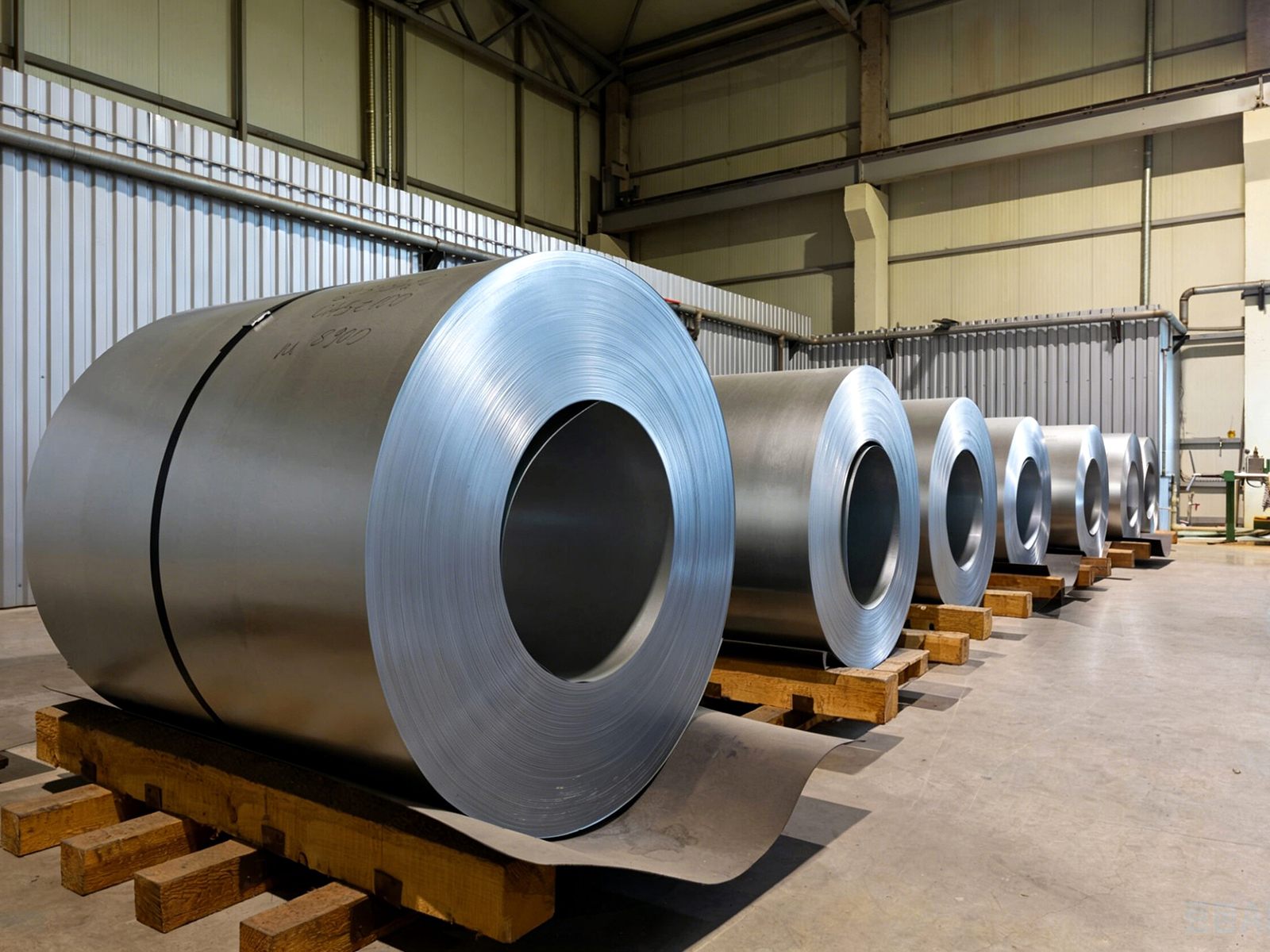
As the most widely used industrial pure titanium material, Gr2 Titanium Foil has successfully found a balance between strength and processability with a titanium purity of ?99.2%, a tensile strength of ?345 MPa and an elongation of ?20%. Compared with Gr1 Titanium Foil, Gr2 improves the structural load-bearing capacity while maintaining excellent corrosion resistance. It is especially suitable for medium-strength corrosive environments such as chemical equipment linings, seawater desalination systems and electrolytic electrodes. Ultra-thin specifications of 0.03~1.0 mm can be achieved through 20-roll precision rolling technology, with a maximum width of 680 mm and a thickness tolerance controlled within ?0.001 mm. Approximately 57% (4.51 g/cm?), it shows the dual advantages of lightweight and reliability in the fields of aerospace, new energy batteries and precision electronic shielding, and is gradually replacing imported products to meet high-end manufacturing needs.
1. Material characteristics and industry positioning of Gr2 titanium foil
(1) Chemical composition and purity standards
Gr2 Titanium Foil belongs to the second grade of industrial pure titanium, with titanium content ?99.2%. Impurity elements are strictly controlled: iron ?0.30%, oxygen ?0.25%, nitrogen ?0.03%, carbon ?0.08%, hydrogen ?0.015%. This composition design enables the material to maintain high purity and use trace oxygen elements to form interstitial atom enhancement effects, increasing the tensile strength to the range of 345~450 MPa, which is approximately 40% higher than the 240 MPa of Gr1, while the elongation remains above 20%. It complies with international standards such as ASTM B265 and EN 10095, and the material grades correspond to UNS R50400 (American standard), 3.7035 (German standard), and BT1-0 (Russian standard) to ensure mutual recognition of the global supply chain.
(2) Balanced design of mechanical properties
The yield strength of Gr2 Titanium Foil is in the range of 275~410 MPa. This moderate strength level enables it to meet the load-bearing requirements of structural parts without causing stamping cracking due to excessive hardness. The density of 4.51g/cm? is only 57% of stainless steel, which can reduce weight by 30~40% in aerospace structural parts applications. The melting point of 1668 ? gives the material long-term temperature resistance of 350 ? and short-term peak tolerance of 540 ?, as well as high temperature resistance. The 20-roll precision cold rolling process achieves microstructure refinement through multi-pass rolling, and the grain size is controlled at 10~15 ?m, which significantly improves the uniformity and fatigue life of the material.
(3) Differential comparison with Gr1 Titanium Foil
Gr2 Titanium Foil enhances strength by increasing the oxygen content. The cost of increased strength is a slight decrease in ductility, but it still meets most of the forming process requirements. In seawater desalination equipment, the yield strength of Gr2 is about 40% higher than that of Gr1, which can reduce the amount of material used in pressure-bearing design; in battery negative electrode current collector applications, the higher strength allows the 0.02 mm ultra-thin foil to maintain dimensional stability and reduce the internal resistance of the battery. The corrosion resistance of the two is equivalent, and both rely on the surface TiO? passivation film to achieve self-healing protection, but Gr2 is more suitable for complex working conditions that require welding or mechanical processing.
2. Precision manufacturing processes and technological breakthroughs
(1) Thickness control capability of 20-roll rolling
The 750 mm twenty-high precision rolling mill is configured with a three-stage roll system of work rolls, intermediate rolls, and backup rolls to increase the maximum rolling force to 3500 KN and the linear speed to 400 m/min. After multiple passes of cold rolling, the reduction rate of each pass is controlled at 15~25%, and the cumulative total reduction rate exceeds 95%. The 3 mm hot-rolled slab can be stably rolled to 0.02 mm. The key breakthrough lies in the shape control system: through hydraulic bending roller and axial roller shifting technology, the elastic deformation of the material is compensated in real time, so that the lateral thickness difference of the 670 mm wide foil is ?0.003 mm, and the flatness is ?5I units. This level of precision solves the “edge wave” and “middle wave” defects of traditional 4-roll or 6-roll mills in ultra-thin specifications, allowing large-size electrolytic cell anode plates to be assembled without secondary leveling.
(2) Continuous annealing ensures structural uniformity
7 The equipment has a heating capacity of up to 1100 ?, and the process window is strictly controlled within the optimal recrystallization temperature range of pure titanium… with a temperature control accuracy of ?2 ?. The titanium foil passes through the heating zone, heat preservation zone, and cooling zone at a speed of 30~80 m/min, with a total residence time of 8~15 minutes to achieve complete recrystallization. After annealing, the microhardness of the material (about 160-180 HV) fluctuates <5HV, and the grain uniformity reaches more than 90%. Compared with traditional box annealing, the continuous process avoids oxidation color differences caused by temperature rise and fall cycles, and the surface finish Ra value is controlled at 0.2~0.4 ?m. For chemical lining applications, a low-temperature annealing process of 550 ~ 650 ? can be customized to retain part of the work hardening effect, increasing the yield strength to 380 MPa, while maintaining an elongation of more than 15% to meet secondary forming needs such as expansion joints or piping.
(3) Surface treatment and cleanliness improvement
The ultrasonic cleaning line peels off rolling grease through high-frequency vibration, and uses alkaline cleaning agents to remove organic residues on the titanium surface. It is then dried with hot air to make the surface tension exceed 40 dyne/cm, which meets the wettability requirements for subsequent coatings or composite material lamination. The grinding process uses a flexible abrasive belt, which can not only eliminate microscopic scratches, but also avoid thickness reduction caused by excessive grinding. The treated foil can be directly used for vacuum coating or anodizing, and the coating bonding strength is 60% higher than that of untreated materials. This combined process breaks through the problem of hydrogen embrittlement caused by traditional pickling and stabilizes the hydrogen content of the material below 10 ppm, ensuring that there is no risk of delayed cracking in welded joints.
3. Matching core application scenarios and performance
(1) Corrosion-resistant lining system for chemical equipment
Gr2 Titanium Foil shows excellent corrosion resistance in hydrochloric acid, sulfuric acid, sodium hydroxide and other media, with a corrosion rate of
(2) Seawater desalination and marine engineering applications
The multi-stage flash (MSF) evaporator heat exchange tube is formed by coil welding of 0.4~0.6 mm Gr2 Titanium Foil, with a tube diameter of 10~25 mm and a wall thickness uniformity of ?0.02 mm. Although the thermal conductivity of titanium is 17W/(m?K) lower than that of copper alloy, it does not produce scaling and corrosion products in seawater, and the heat transfer efficiency decreases by <5%/year. In the sacrificial anode protection system of the ocean platform, the reference electrode shell made of 0.8 mm titanium foil has a self-corrosion potential of -0.15V (vs. SCE) in 3.5% NaCl solution, and the potential stability is better than ?5mV/month. The non-magnetic characteristics of the material (magnetic susceptibility <1.0?10??emu/g) avoid interference with sonar and navigation equipment, and replace easily magnetized nickel-based alloys in deep-sea detector shell applications.
(3) New energy batteries and electrolysis electrodes
0.02 mm ultra-thin Gr2 Titanium Foil is used in special bipolar batteries or new energy batteries with high safety requirements. The nano-layer generated in situ by anodization on the surface of the titanium foil can be directly used as an active material, showing a specific capacity of 185 mAh/g… In an alkaline electrolysis water hydrogen production system, after the 0.5 mm titanium foil anode is plated with an iridium-ruthenium coating, the oxygen evolution current density can reach 0.8 A/cm?, and the service life exceeds 60,000 hours. The material’s low resistivity and resistance to hydrogen penetration reduce the thickness of the fuel cell bipolar plate from graphite’s 3 mm to 0.15 mm, and increase the stack power density by 40%. The one-piece forming of wide-width foil reduces welding points and avoids the problem of increased contact resistance caused by electrochemical corrosion.
4. Quality control system and customized services
(1) Full-process detection and traceability mechanism
The production line is equipped with an online thickness gauge (accuracy ?0.001 mm), surface defect detection system (resolution 0.05 mm?), and ultrasonic flaw detection equipment (detection depth 0.02~1.0 mm) to achieve 100% full inspection. Each roll of product comes with a material certificate, including spectral analysis of chemical composition, tensile test of mechanical properties, metallographic inspection of grain size, and surface roughness profiler data. Establish a batch traceability system, from the titanium ingot smelting number to the final slitting roll number, the entire process can be traced back to the raw material supplier. Key processes such as annealing temperature curves, rolling pressure parameters, cleaning fluid concentration and other data are automatically recorded and kept for 10 years, meeting the aerospace AS9100 quality system audit requirements.
(2) High-precision cutting and size customization capabilities
The slitting line adopts a disc cutter + CNC correction system. The minimum slitting width is 15 mm, the width tolerance is ?0.1 mm, and the burr height is
(3) Stable supply guarantee with an annual output of 3,000 tons
The automated production line, built with an investment of US$36.2 million, is equipped with two 20-roll rolling mills, three annealing lines, and five slitting machines, enabling 24-hour continuous production with an annual production capacity of 3,000 tons. The raw material inventory covers 6 months of consumption, and long-term agreements have been signed with three domestic titanium sponge suppliers to ensure a stable supply of Gr2 titanium ingots. The finished product warehouse adopts constant temperature and humidity storage (temperature 20?5 ?, humidity <60%) to prevent materials from absorbing hydrogen or surface oxidation. The logistics network covers high-end markets such as the United States, Germany, Japan, and South Korea, with a shipping cycle of 15 to 25 days and an expedited service of 3 to 5 days for air transportation. We support small-batch samples with a minimum order of 100 kg, and special specifications can be customized for orders above 1 ton. The delivery cycle is 2 to 4 weeks for regular products and 6 to 8 weeks for customized products, meeting the batch needs in the fields of aerospace, chemical industry, and new energy.
5. Trends in technological innovation and industrial upgrading
(1) Breakthrough in ultra-thin and wide-width rolling technology
The traditional 20-high rolling mill has a width limit of 500 mm under the 0.02 mm specification. By optimizing the roll curve and tension distribution, stable rolling of a width of 670 mm is achieved. Key improvements include: the work roll diameter is reduced from ?60 mm to ?50 mm to increase the rolling contact arc length; the intermediate roll is made of high-chromium bearing steel with a surface hardness of HRC62 to improve wear resistance; the backup roll is equipped with a hydraulic automatic compensation system to correct roll gap changes in real time. This technology expands the area of ??a single foil from 0.3m? to 0.67m?, increases the material utilization rate of electrolytic cell anode plates from 65% to 92%, and reduces stamping waste by 40%. Breakthroughs in ultra-thin specifications have also given rise to emerging applications such as flexible electronics and wearable devices, and research and development below 0.01 mm is progressing.
(2) Extended applications of surface functionalization treatment
Nano-TiO? coating technology uses sol-gel method or magnetron sputtering to prepare a 10~50 nm thick anatase or rutile phase coating on the surface of Gr2 Titanium Foil. The photocatalytic activity is increased by 300% and can be used for air purification and sewage treatment. The conductive polymer composite coating reduces the sheet resistance of the material to
(3) Green manufacturing and circular economy practices
The energy consumption of titanium foil production is about 1.8 times that of aluminum foil. Through the waste heat recovery system, the heat energy of the annealing furnace exhaust gas is converted into preheated air, reducing energy consumption by 22%. The rolling emulsion adopts a closed-loop filtration cycle, the replacement cycle is extended from 15 days to 60 days, and waste liquid emissions are reduced by 75%. The scraps and unqualified products are 100% recycled and re-smelted or downgraded for use in Gr1 titanium materials, with a material utilization rate of 98%. Carbon footprint assessment shows,. In response to the EU Carbon Border Adjustment Mechanism (CBAM), we established a product carbon labeling system to provide compliance support for exports, while exploring hydrogen energy metallurgical technology with the goal of achieving carbon-neutral production by 2030.
in conclusion
Gr2 Titanium Foil is designed with 99.2% high purity and interstitial atom strengthening to achieve the best balance between 345 MPa strength and 20% ductility. With the ?0.001 mm precision of 20-roll finishing and the microstructure uniformity control of continuous annealing, it meets the combined needs of corrosion resistance, lightweight and reliability in chemical industry, marine, new energy and other fields. The annual production capacity of 3,000 tons and the full specification coverage of 0.03~1.0 mm are promoting it to become a cost-effective choice to replace imports and provide key material support for the upgrading of the global high-end manufacturing industry.
FAQ
Q1: How to choose between Gr2 Titanium Foil and Gr1 Titanium Foil in practical applications?
The tensile strength of Gr2 is 40% higher than that of Gr1, and it is suitable for scenes that require pressure bearing or structural support, such as chemical linings and desalination heat exchangers. Gr1 has better ductility and is suitable for processes that require high deformation, such as deep drawing and superplastic forming. The corrosion resistance of the two is equivalent, and the choice is mainly based on strength requirements.
Q2: How to ensure the flatness of 0.02 mm ultra-thin Gr2 Titanium Foil?
Through the hydraulic roll bending system of the 20-roll mill, the material rebound is compensated in real time, and combined with the high-precision leveling line’s processing speed of 150 m/min, the flatness of the 670 mm wide foil is ?5I units. The residual stress after annealing is
Q3: Can Gr2 Titanium Foil meet food grade and medical grade applications?
The material itself has excellent biocompatibility, is non-toxic and non-magnetic, but requires additional surface passivation treatment to make the oxide film thickness more than 10nm and pass FDA or ISO 10993 cytotoxicity testing. It is recommended to choose Gr5 titanium alloy for medical implants, while Gr2 is more suitable for device shells and experimental equipment.
Customized services and technical support
As a professional manufacturer and supplier of Gr2 Titanium Foil, Baoji Baoji Titanium Valley Titanium Nickel Zirconium Material Processing Co., Ltd. relies on a US$36.2 million automated production line to provide 0.03~1.0 mm?15~680 mm ultra-thin wide titanium foil customization for aerospace, chemical equipment, new energy batteries and other industries. The annual output is 3,000 tons and the supply is stable, supporting small batch samples and large-scale mass production. The full-process quality traceability system ensures that each roll of material meets the ASTM B265 international standard. Welcome to contact sales@titaniumvalleys.com to obtain technical specifications and sample testing services.
References
Chen Jun, Zhao Yongqing, Chang Hui. Mechanical properties and microstructure evolution of industrial pure titanium TA2 [J]. Rare Metal Materials and Engineering, 2018, 47(3): 956-961.
Zhao Yongqing, Hong Quan, Ge Peng, et al. Application and development trends of titanium alloys in aerospace [J]. Materials Herald, 2011, 25(7): 102-107.
Wang Haijun, Liu Qing. Ultra-thin titanium foil precision rolling technology and surface quality control [J]. Chinese Journal of Nonferrous Metals, 2020, 30(11): 2567-2576.
Li Jia, Zhang Yan, Wang Lei. Current application status of industrial pure titanium in chemical equipment [J]. Chemical Equipment and Pipelines, 2019, 56(3): 45-49.