
What Makes Gr2 Titanium Foil a Balanced High-Performance Commercially Pure Titanium Material?
- Gr2 titanium foil
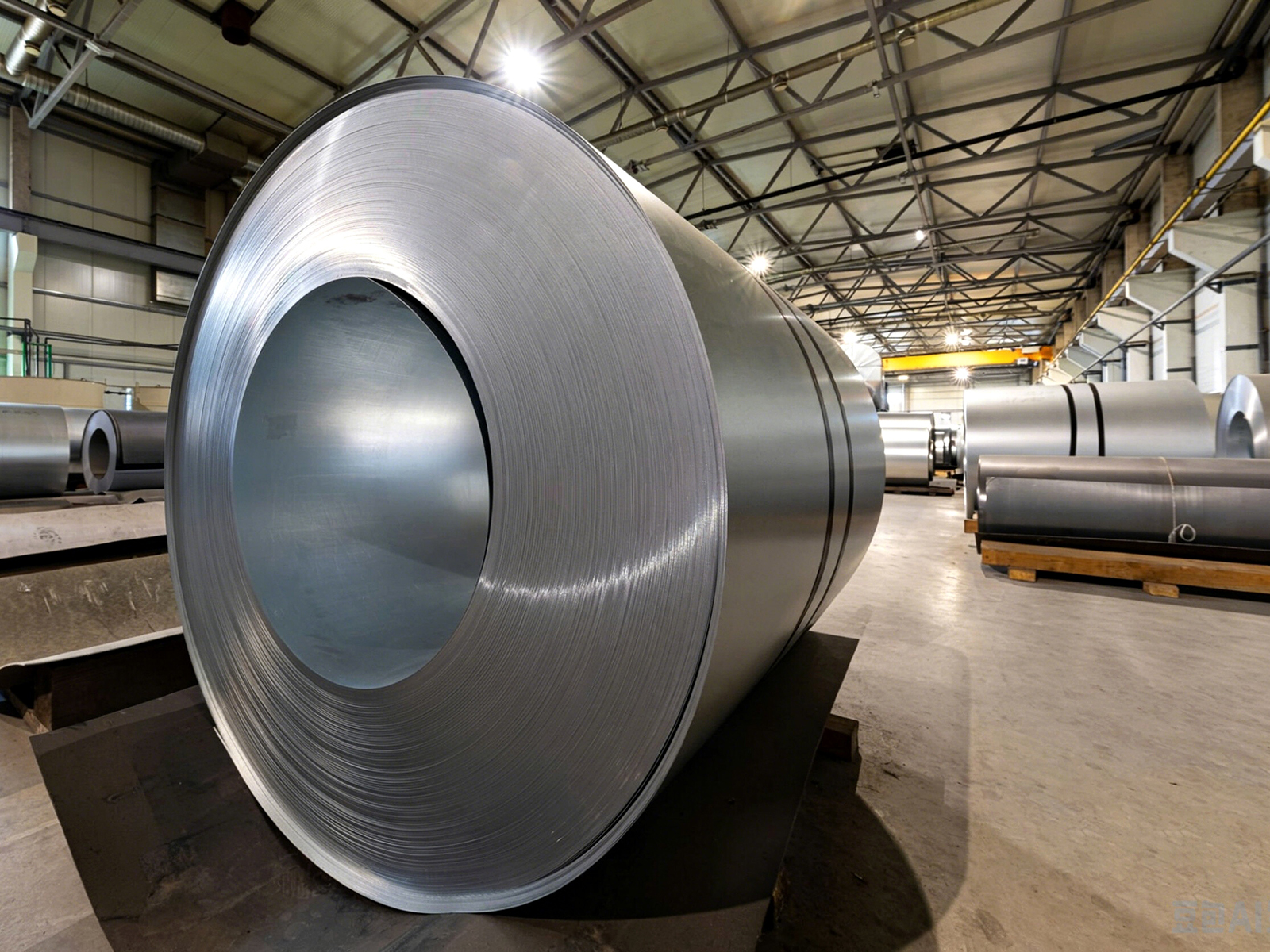
As the most widely used grade of industrial pure titanium, Gr2 Titanium Foil uses titanium with a purity of ?99.2% as the base material and uses precision cold rolling technology to produce ultra-thin materials with a thickness of 0.02~1.0 mm. Compared with Gr1 Titanium Foil, Gr2 maintains excellent ductility and corrosion resistance while increasing its tensile strength to ?345 MPa and yield strength of 275~410 MPa, achieving an ideal balance between strength and formability. Its density is only 4.51g/cm?, which is about 60% of steel. A dense TiO? passivation film is naturally formed on the surface, which performs better than most stainless steels in corrosive environments such as seawater, acid and alkali. This comprehensive performance makes it the material of choice in chemical equipment, seawater desalination, electrolysis electrodes, aerospace and other fields. It not only meets the needs of medium-strength structures, but also has lightweight and long-lasting anti-corrosion properties.
1. Analysis of core material properties of Gr2 titanium foil
(1) Precise control of chemical composition
The chemical composition control of Gr2 Titanium Foil directly affects its mechanical properties and processing stability. The titanium content ?99.2% ensures the basic purity of the material, the iron content ?0.30% avoids excessive hardening while improving strength, the oxygen content ?0.25% enhances the material strength through the gap strengthening mechanism, and nitrogen, carbon, and hydrogen prevent the precipitation of brittle phases. This composition design makes Gr2 Titanium Foil have higher strength than Gr1 (Fe?0.20%, O?0.18%), while maintaining an elongation of more than 20%, achieving the dual requirements of “processability” and “sufficient strength” in industrial applications.
(2) Engineering value of mechanical properties
The tensile strength of Gr2 Titanium Foil is ?345 MPa, which is between Gr1 (240 MPa) and Gr4 (550 MPa). This value can provide sufficient load-bearing capacity in thin-walled structures. The yield strength range of 275-410 MPa enables it to have good resistance to deformation during stamping without exacerbating mold wear due to excessive strength. The elongation of ?20% ensures the feasibility of complex forming processes such as bending and stretching, and the strength of the welded joint can reach more than 90% of the base material. The material can still maintain stable mechanical properties under long-term use at 350?C or short-term operation at 540?C, which is crucial for chemical equipment lining and heat exchanger applications.
(3) Corrosion resistance mechanism and environmental adaptability
The corrosion resistance of Gr2 Titanium Foil comes from the TiO? passivation film spontaneously formed on the surface. This oxide layer, which is only a few nanometers thick, remains stable in the pH range of 2 to 12 and can resist erosion by seawater, chloride solutions, dilute sulfuric acid, nitric acid and other media. In seawater desalination systems, its corrosion rate is less than 0.01 mm/year, which is much better than 0.1~0.5 mm/year of 316L stainless steel. Gr2 Titanium Foil also performs well with strongly oxidizing acids such as fuming nitric acid or moderately concentrated hydrochloric acid, making it an ideal choice for lining chemical equipment. The non-magnetic characteristics of the material (?r?1.0) avoid electromagnetic interference and have unique advantages in precision instruments and electronic shielding applications.
2. Breakthrough in manufacturing technology of ultra-thin wide titanium foil
(1) Thickness control capability of 20-roller finishing technology
The core of producing 0.02~1.0 mm ultra-thin Gr2 Titanium Foil lies in 20-roll precision cold rolling technology. Through its multi-stage roll system configuration, the 750 mm 20-high rolling mill can evenly disperse 3500 kN rolling force to the work roll…3500 KN can evenly disperse 3500 KN to the work roll, reducing the elastic deformation of the roll system and achieving thickness accuracy control of ?0.001 mm. In the multi-pass cold rolling process, the reduction rate of each pass is controlled at 15~25%, and the cumulative total deformation reaches more than 85%. This progressive thinning not only ensures the uniformity of the material structure, but also avoids edge cracking. The rolling speed of up to 400 m/min combined with the tension control system allows the thickness of the 670 mm wide material to fluctuate ?0.005 mm over the entire length, and the flatness of the plate reaches Class I standards.
(2) Continuous annealing microstructure homogenization process
There are high-density dislocations and residual stress inside the cold-rolled Gr2 Titanium Foil, and the plasticity must be restored through annealing. The continuous annealing line adopts 7-zone electric heating control, and the temperature is set in the range of 650~750?C. The accuracy of ?2?C ensures the consistency of the recrystallization process. The argon protective atmosphere avoids high-temperature oxidation, and the non-stop continuous operation allows the strip to stay in the furnace for accurately controllable time, forming small and uniform equiaxed grains (average grain size 10~30 ?m). This organizational structure gives the material isotropic mechanical properties, eliminating local brittleness or strength fluctuations caused by uneven organization. The elongation can be restored to 20~25% after annealing, providing a good process window for subsequent stamping and bending.
(3) Functional improvement of surface treatment
The ultrasonic cleaning line processes the strip at a linear speed of 30 m/min and uses the cavitation effect of 40 kHz ultrasonic waves to remove surface oil stains and particles. After cleaning, the surface tension reaches more than 40 dyne/cm, which meets high cleanliness requirements for coatings and composites. The polishing line adjusts the surface roughness to Ra 0.2~0.8 ?m through controlled mechanical grinding, which not only improves the visual consistency of the material, but also enhances the bonding strength with the polymer film. For applications that require a mirror effect, electrolytic polishing or chemical polishing can be further used to achieve a surface reflectivity of more than 85%. The high-precision leveling line runs at a speed of 150 m/min. Through the combined action of tension and bending rollers, the internal residual stress of the material is eliminated and the flatness is improved to ?3 mm/m, ensuring dimensional stability during subsequent precision cutting and use.
3. Application practice of Gr2 Titanium Foil in key fields
(1) Systematic application of chemical anti-corrosion equipment
In chlor-alkali industrial electrolyzers, the anode base material made of Gr2 Titanium Foil withstands double corrosion from 30% NaCl solution and chlorine gas, and has a service life of more than 8 years, which is much longer than the 2 to 3 years of nickel-based alloys. The lining of the chemical reactor is made of 0.5 mm thick Gr2 Titanium Foil, which is combined with the carbon steel matrix through explosive compounding or bonding processes. It not only utilizes the structural strength of the steel but also exerts the anti-corrosion properties of titanium, reducing the total equipment cost by 40%. The heat exchange tube bundle of the sulfuric acid concentration tower is rolled from 0.3 mm titanium foil and operates stably in a sulfuric acid environment of 80~120?C and a concentration of 60~90%. The heat transfer efficiency is 15% higher than that of tantalum materials, and the cost is only 1/3 of it. These applications fully prove the economy and reliability of Gr2 Titanium Foil under strong corrosion conditions.
(2) Core materials of seawater desalination system
The heat exchange tubes of the multi-stage flash evaporation (MSF) seawater desalination device are welded and formed with 0.4 mm Gr2 Titanium Foil. The tube length can reach 6 meters. A single device uses more than 8 tons of titanium foil. The material was operated in high-salinity seawater at 70~90?C for a long time. After 10 years, testing showed that the corrosion depth was
(3) Performance optimization of new energy electrolysis electrodes
The cathode substrate of the alkaline electrolysis water hydrogen production device uses 0.2 mm Gr2 Titanium Foil. After the surface is coated with a nickel-molybdenum alloy catalytic layer, it operates stably for 5000 hours under the working conditions of 30% KOH solution, 80 ? C, and 1.5 A/cm?, and the hydrogen evolution overpotential only increases by 20 mV. The bipolar plate of the proton exchange membrane (PEM) electrolyzer is stamped into a flow field structure using 0.3 mm titanium foil and modified with a precious metal coating on the surface. The contact resistance is
4. Customized production and quality assurance system
(1) Precision slitting technology for ultra-thin and wide-width materials
Slitting the 670 mm wide raw material roll into finished products of various specifications ranging from 15 to 670 mm places extremely high requirements on equipment precision and process control. The precision slitting line is equipped with a laser width gauge for real-time monitoring. The slitting tool is made of carbide and maintains an edge radius of
(2) Whole-process quality monitoring mechanism
From raw materials entering the factory to finished products leaving the warehouse, an inspection system with 15 key control points has been established. The chemical composition of titanium ingots is analyzed using a direct-reading spectrometer to ensure that the content of each element meets the ASTM B265 standard; hot-rolled billets are inspected for internal defects by ultrasonic flaw detection, and batches with inclusions or cracks are eliminated. During the cold rolling process, the thickness is measured every 100 meters, and the data is automatically entered into the MES system to generate quality traceability files; after annealing, samples are taken for metallographic inspection, and the grain size rating reaches 7~8 to be qualified. The mechanical properties test of the finished product is carried out in accordance with the ASTM B265 standard. Three samples are taken from each roll, and the tensile, yield, and elongation rates must all meet the standards before release. The surface quality uses visual inspection combined with an optical microscope to ensure that there are no defects such as scratches, folds, oxidation, and color difference. The surface roughness is measured with a profilometer, and the data deviation is controlled within ?10%.
(3) Stable supply capability in large quantities
The annual production capacity of 3,000 tons relies on the efficient operation and lean management of automated production lines. The 20-high rolling mill operates in tandem, with a single-shift output of up to 8 tons; the continuous annealing line operates 24 hours a day, with a daily processing capacity of more than 15 tons. The raw material inventory maintains a safety reserve of more than 500 tons, and strategic cooperation is established with upstream titanium ingot suppliers to ensure the stability of the supply chain. For large order needs in the aerospace and electronics industries, we can provide a 6 to 12-month production schedule to lock in specifications and delivery dates. The logistics system covers major industrial areas around the world. Export products are vacuum packed and reinforced with wooden boxes to ensure that materials are not dampened or deformed during long-distance transportation. It has supplied more than 800 tons to more than 20 countries including the United States, Germany, Japan, and South Korea, with a customer repurchase rate of more than 85%.
5. Industrial upgrading path driven by technological innovation
(1) The breakthrough significance of seven key technologies
Baoji Baoji Titanium Valley Titanium Nickel Zirconium… The seven core technologies conquered in the production of ultra-thin wide Gr2 Titanium Foil directly solve the long-standing pain points in the industry. Surface color difference control technology optimizes the annealing atmosphere and cooling rate to achieve a color consistency of ?E
(2) Equipment investment and industrial chain coordination
Of the US$36.2 million investment in the production line, equipment costs account for 65%, of which core equipment such as the 750 mm 20-roll mill and continuous annealing line are all world-class. Through introduction, digestion, absorption and re-innovation, we have mastered the key process parameter database of ultra-thin strip rolling and formed a control model with independent intellectual property rights. Establish a technical alliance with upstream titanium ingot manufacturers to jointly develop low-oxygen and low-iron pure titanium ingots, reducing the oxygen content in the raw materials from 0.20% to 0.15%, and increasing the material plasticity by 15%; cooperating with downstream application companies to develop customized products, and developing 0.05 mm ultra-thin foil materials for the battery industry, which reduces the weight of current collectors by 30% and increases battery energy density by 5%. This collaborative innovation model across the entire industry chain accelerates the transformation of technological achievements into market value.
(3) Expansion of future application scenarios
With the rapid development of the hydrogen energy industry, the annual growth rate of demand for Gr2 Titanium Foil in electrolyzers, hydrogen storage container linings and other fields exceeds 40%. The anti-corrosion requirements of offshore wind power platforms have driven the development of large-sized titanium foil composite plates, with the consumption of a single project reaching more than 50 tons. Medical implants are evolving towards minimally invasive and personalized directions. Ultra-thin titanium foils below 0.02 mm are made into artificial vascular stents and skull repair pieces through 3D printing or precision stamping. The market size is expected to exceed US$1 billion in 2030. The demand for 5G shielding materials in the electronic information industry has surged. Gr2 Titanium Foil is replacing traditional copper foil as the first choice for the new generation of electromagnetic shielding due to its non-magnetic, high conductivity and weldability. Baoji Baoji Titanium Valley Titanium Nickel Zirconium… has launched the second phase expansion project with an annual output of 5,000 tons, and has laid out technical reserves for thinner (0.005 mm) and wider (800 mm) specifications, striving to become a major supplier in the global high-end titanium foil market in the next 3-5 years.
in conclusion
Gr2 Titanium Foil achieves the best balance of strength, plasticity and corrosion resistance through precise composition control and advanced processing technology, becoming the most widely used grade in the industrial pure titanium series. The stable mass production of 0.02~1.0 mm ultra-thin wide specifications breaks through the technical bottleneck of traditional titanium processing and provides cost-effective material solutions for key fields such as chemical anti-corrosion, seawater desalination, and new energy electrolysis. With the continuous innovation of manufacturing technology and the continuous expansion of application scenarios, Gr2 Titanium Foil will play a more important role in the process of upgrading the global manufacturing industry to lightweight and durability.
FAQ
Q1: How to choose between Gr2 Titanium Foil and Gr1 Titanium Foil in practical applications?
Gr2 Titanium Foil is about 40% stronger than Gr1 and is suitable for structural parts that need to withstand moderate loads, such as chemical equipment linings and heat exchanger tube bundles; Gr1 has better ductility and is suitable for superplastic forming or extremely thin-walled parts. If the application environment is not particularly corrosive and requires certain strength support, Gr2 is more cost-effective.
Q2: Can 0.02 mm ultra-thin Gr2 Titanium Foil be welded?
TIG argon arc welding or laser welding can be performed, but the welding parameters need to be strictly controlled. It is recommended to use pulse welding to reduce heat input, and the back side of the welding area is filled with argon for protection. The strength of the joint after welding can reach 85~90% of the base metal. For ultra-thin specifications, it is recommended to use resistance spot welding or ultrasonic welding to avoid the risk of burn-through.
Q3: How will the performance of Gr2 Titanium Foil change in high temperature environment?
The mechanical properties are basically stable when used for a long time below 350 ?. Obvious creep will occur when the temperature exceeds 450 ?. Oxidation weight gain needs to be evaluated for short-term working conditions above 540 ?. If long-term high temperature resistance is required, it is recommended to use Gr5 titanium alloy or TA2 titanium material, and consider surface coating protection to extend service life.
Looking for a reliable Gr2 Titanium Foil supplier?
Baoji Baoji Baoji Titanium Valley Titanium Nickel Zirconium… Titanium Nickel Zirconium Material Processing Co., Ltd., as a professional Gr2 Titanium Foil manufacturer and factory, has an advanced production line with an annual output of 3,000 tons, and can provide 0.02-1.0 mm full specification customized services. Our products have served high-end customers in more than 20 countries around the world, with stable quality and reliable delivery. Contact sales@titaniumvalleys.com now to get technical solutions and quotations!
References
Zhao Yongqing, Xi Zhengping, Qu Hennglei, et al. Phase transformation and heat treatment of titanium alloy[M]. Changsha: Central South University Press, 2016.
Zhang Wenyu. Research progress on corrosion resistance of titanium alloys[J]. Corrosion Science and Protection Technology, 2010, 22(4): 347-350.
Li Chao, Wang Wenqi, Liu Jinsong, et al. Research on cold rolling and annealing processes of industrial pure titanium plates [J]. Rare Metal Materials and Engineering, 2018, 47(1): 123-127.
Wang Xiangdong, Lu Fusheng, Jia Kun, et al. Application of titanium and titanium alloys in chemical equipment [J]. Chemical Machinery, 2015, 42(3): 285-290.