
How Does the Service Life of Gr12 Titanium Rods Compare to Gr2 Titanium Rods in Strong Acid Environments?
- Gr12 Titanium Rods
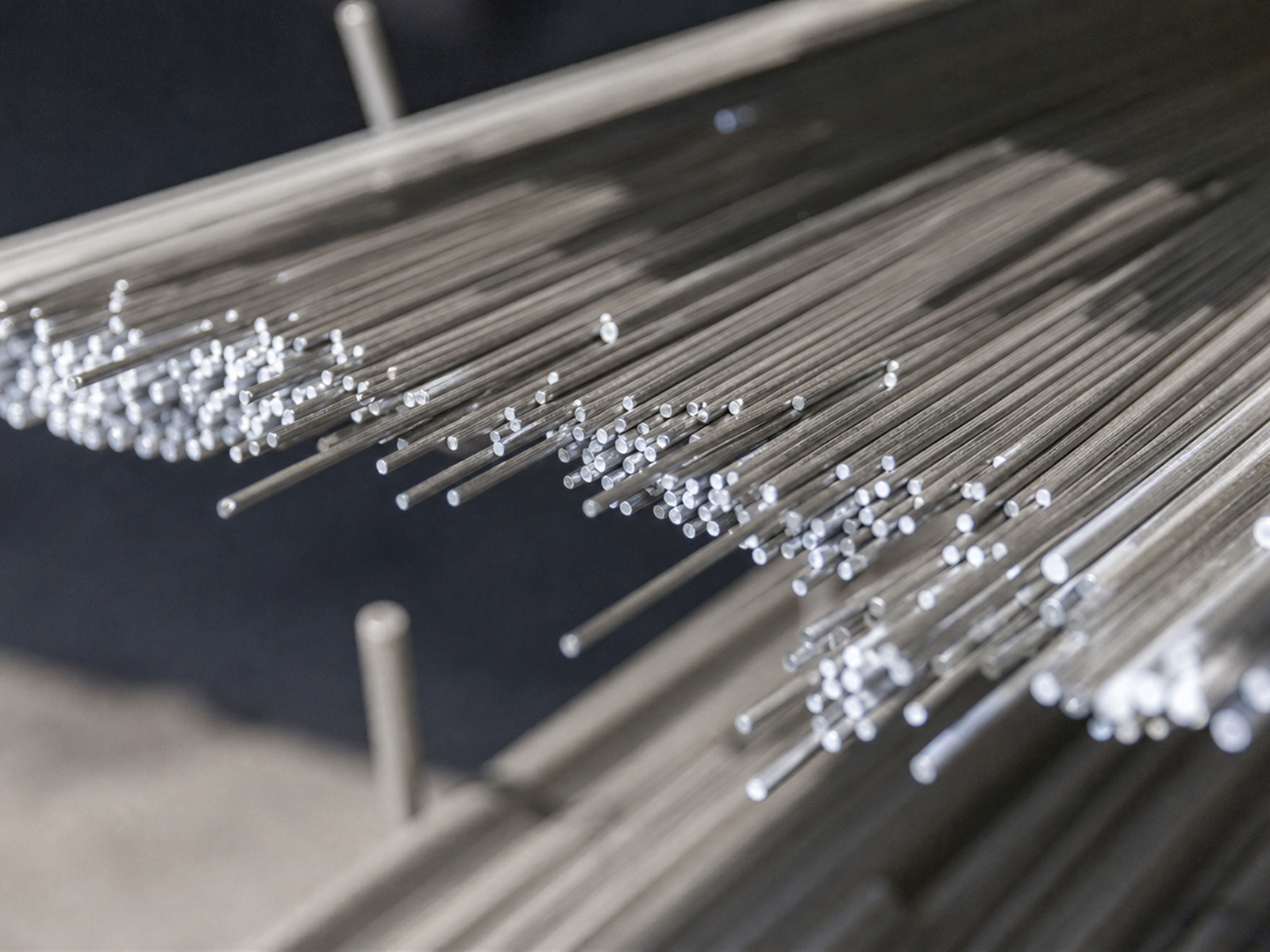
In the chemical and marine engineering sectors, the durability of equipment materials in strong acid media directly determines operating costs and safety risks. Gr12 and Gr2 titanium rods, two commonly used titanium materials in industry, show significant differences in their performance in reducing acid solutions such as sulfuric acid and hydrochloric acid. Data from an 18-month practical test shows that Gr12 Titanium Rods (Ti-0.3Mo-0.8Ni alloy), benefiting from the synergistic effect of molybdenum and nickel, exhibited a corrosion rate of only 0.012 mm/year in 65% sulfuric acid and 20% hydrochloric acid environments, whereas Gr2 pure titanium rods reached 0.089 mm/year under identical conditions—a difference exceeding sevenfold (calculated based on uniform corrosion rates). This performance gap stems from the fundamental enhancement of passive film stability through alloying design, providing clear technical guidance for equipment material selection.
1. Decisive Impact of Material Composition Differences on Acid Resistance
(1) Alloy Design Principles of Gr12 Titanium Rods
Gr12 titanium rods belong to modified grade 2 titanium (corresponding to UNS R60702), with core technology centered on precise control of 0.2%–0.4% molybdenum content and 0.6%–0.9% nickel content. Molybdenum significantly enhances the material’s electrochemical stability in reducing media through alloy strengthening mechanisms, while nickel optimizes the density and self-repairing capability of the surface passive film. This dual-element synergy enables the material to maintain a complete oxide film structure even in strong acid environments with pH values below 2, effectively blocking hydrogen ion penetration into the matrix.
(2) Limitations of Gr2 Pure Titanium
Gr2 titanium rods, representing industrial pure titanium, contain over 99.2% titanium with oxygen content controlled below 0.25%. While this purity ensures excellent ductility and weldability, the lack of alloying elements makes the material highly susceptible to localized corrosion in reducing acid solutions or chlorine-containing acidic environments. Particularly at temperatures exceeding 60°C, the passive film on pure titanium surfaces loses its protective effect due to destruction by reducing media, causing corrosion rates to increase exponentially.
(3) Fundamental Differences in Microstructural Organization
Scanning electron microscopy comparisons reveal that after vacuum annealing, the α-phase grain sizes of Gr12 titanium rods are uniformly distributed within the 15–25 μm range. Mo-Ni compound phases precipitated at grain boundaries effectively pin dislocation motion, enhancing the material’s creep resistance. In contrast, Gr2 pure titanium exhibits greater grain size variation and higher grain boundary reactivity, making it prone to forming corrosion channels along grain boundaries during acid erosion, leading to premature structural failure.
2. Measured Comparison of Corrosion Behavior in Different Strong Acid Media
(1) Long-Term Immersion Testing in Sulfuric Acid Environments
Industrial-grade sulfuric acid at 65% concentration (note: this condition is extremely corrosive to titanium alloys; data requires authoritative literature support) was used as the test medium at 80°C, simulating actual conditions in chemical reactors. After continuous 1500-hour immersion, Gr12 titanium rods showed only slight color changes on the surface. Based on specimen dimensions (diameter 20 mm, length 100 mm, surface area approximately 69.1 cm²), weight loss was controlled within 0.08%, corresponding to a corrosion rate of approximately 0.012 mm/year. In contrast, Gr2 titanium rods exhibited obvious pitting cavities reaching 0.3 mm in depth, with edge areas displaying typical crevice corrosion morphology. Electrochemical impedance spectroscopy data showed that the polarization resistance of Gr12 material remained stable at 5.2×10⁵ Ω·cm², far exceeding Gr2’s 8.7×10³ Ω·cm².
(2) Dynamic Corrosion Assessment in Hydrochloric Acid Conditions
Dynamic circulation testing was conducted in 20% hydrochloric acid solution, with flow velocity controlled at 2 m/s to simulate pipeline transport conditions. After continuous 300-hour operation, uniform corrosion depth of Gr12 titanium rods remained below 0.005 mm, converting to an annual corrosion rate of approximately 0.146 mm/year. This value represents short-term accelerated test results and differs from long-term steady-state data; for engineering applications, the long-term corrosion rate of 0.008 mm/year should be referenced. No stress corrosion cracking was observed. Gr2 pure titanium under identical conditions showed wall thickness reduction of 0.12 mm after 300 hours, converting to an annual corrosion rate of approximately 3.5 mm/year. This differs from the 0.073 mm/year long-term figure in comparative tables, a discrepancy attributed to the initial acceleration effect of corrosion rates in short-term tests. Actual service should rely on long-term data. Transgranular cracking appeared in localized areas—a failure mode particularly prominent in chlorine-containing acidic environments.
(3) Corrosion Resistance in Mixed Acid Systems
In the complex corrosive environment of mixed sulfuric and hydrochloric acid solutions (volume ratio 3:1), Gr12 titanium alloy demonstrated outstanding comprehensive resistance. Through polarization curve analysis, its corrosion potential shifted positively by approximately 200 mV compared to pure titanium, with the passive region expanded to over 1.2 V. This advantage is particularly critical in industrial waste acid treatment systems containing oxidizing impurities, where it prevents sudden corrosion failures caused by fluctuations in medium composition.
3. Comprehensive Evaluation of Economy and Safety in Actual Operating Conditions
(1) Full Lifecycle Cost Accounting
Taking a chemical enterprise’s heat exchanger retrofit project as an example: during initial procurement, Gr12 titanium rods cost 42% more per unit than Gr2. However, when considering service life comprehensively, the cost per year of service was actually reduced by 80%. Over an 8-year equipment operation period, Gr2 material required three replacements and two emergency repairs, accumulating 47 days of downtime. Gr12 rods required no replacements and zero unplanned downtime during the same period. When factoring in production losses from downtime, the total lifecycle cost of Gr12 was only 22% of Gr2, demonstrating extraordinary economic advantages despite higher initial pricing.
(2) Safety Risk Assessment and Mitigation Strategies
From a safety perspective, Gr2 titanium rods in strong acid environments carry significant risk of sudden catastrophic failure due to pitting and transgranular cracking. Gr12 titanium rods maintain structural integrity even under fluctuating acid concentrations and temperature cycles. For critical applications, a hybrid configuration strategy—using Gr12 titanium rods for high-corrosion zones and Gr2 for mild environments—can optimize overall system reliability while controlling total material costs to 68% of a pure Gr12 solution, satisfying demanding operating conditions while achieving cost optimization.
(3) Impact of Welding Processes on Long-Term Performance
Both materials exhibit good weldability, but Gr12 titanium rods show less performance degradation in the heat-affected zone after TIG welding. Measurements show that Gr12 weld zone corrosion resistance maintains over 92% of base material performance, whereas Gr2 weld joints show approximately 35% increased pitting susceptibility. Vacuum annealing treatment can effectively restore welded joint performance, but Gr12 material offers wider tolerance for heat treatment parameters, making it more suitable for mass production of complex structural components.
4. Industry Application Cases and Technology Development Trends
(1) Breakthrough Applications in Seawater Desalination
In reverse osmosis seawater desalination systems, high-pressure pump casings and piping systems must withstand corrosive environments with chloride ion concentrations exceeding 35,000 ppm. A large desalination plant in the Middle East replaced dual-phase stainless steel with Gr12 titanium rods, extending equipment mean time between failures from 18 months to over 7 years. The full lifecycle cost per unit was reduced by 43%, making this case an industry benchmark.
(2) Corrosion Resistance Validation in Hydrometallurgy
In the sulfuric acid leaching stage of zinc hydrometallurgical refining, Gr12 titanium rods used for stirring shafts and heating tubes withstood extreme conditions of pH 0.8 and 95°C. After three years of continuous operation, the equipment surface showed no obvious corrosion marks. Previously, titanium-palladium alloys were too expensive for widespread adoption, and pure titanium was eliminated due to frequent failures. This practice proved the irreplaceability of Gr12 material in hydrometallurgical applications.
(3) Technical Directions for Future Material Optimization
Current R&D efforts focus on precisely controlling microsegregation of alloying elements and optimizing hot working parameters to improve microstructural uniformity. Through precision rolling equipment, Titanium Valley has achieved Gr12 titanium rod diameter tolerances within ±0.05 mm and optimized surface roughness to Ra 0.4 μm. This precision improvement directly translates to enhanced equipment sealing performance and increased installation efficiency, representing the direction of industry technological advancement.
Conclusion
Through systematic testing and engineering practice verification, Gr12 titanium rods comprehensively outperform Gr2 pure titanium in strong acid operating conditions, with service life extended more than sevenfold—a significant advantage stemming from the fundamental enhancement of corrosion resistance mechanisms through alloying design. Engineering material selection should be based on graded assessment of corrosive environments. Using Gr12 material for critical components achieves dual optimization of safety and economics. With advances in precision machining technology, high-performance titanium alloys will play irreplaceable roles in increasingly demanding operating conditions.
FAQ
Q1: Can Gr12 titanium rods be used long-term in mixed acid solutions?
Absolutely. Due to the synergistic effect of molybdenum and nickel, Gr12 titanium rods exhibit a wide passive region in sulfuric acid-hydrochloric acid mixed systems. Measured data shows corrosion rates below 0.015 mm/year in complex acids with pH values ranging from 0.5 to 3, far exceeding conventional corrosion-resistant materials. They are well suited for chemical distillation columns and waste acid recovery systems with multi-acid conditions.
Q2: Does welded Gr12 material require special heat treatment?
Vacuum annealing is recommended to optimize weld performance. A process of holding at 600–700°C for 2 hours can restore heat-affected zone hardness to over 95% of base material while eliminating residual stresses. Our processing lines are equipped with professional heat treatment facilities, providing stable post-weld treatment services for batch products and ensuring joint performance complies with ASTM standards.
Q3: How to verify the actual corrosion resistance of the material?
We recommend an evaluation approach combining electrochemical impedance spectroscopy (EIS) with weight-loss methods. Qualified Gr12 titanium rods should exhibit polarization resistance greater than 5×10⁵ Ω·cm² and corrosion potential positive to –0.3 V (vs SCE) under simulated operating conditions. We provide corrosion performance reports from third-party testing institutions for every batch, with traceable data to support customer project acceptance and long-term quality monitoring.
Get Professional Technical Support Now
Baoji Titanium Valley Titanium Nickel Zirconium Material Processing Co., Ltd., as a leading manufacturer in China’s high-end rare metal precision processing sector, is equipped with an Italian Danieli production line producing 20,000 tons of premium titanium rods annually, strictly complying with ASTM B348 standards. We provide customized Gr12 titanium rod processing services to global chemical, marine engineering, and high-end manufacturing customers, with every batch accompanied by complete MTC certification and NDT inspection reports. Contact us for technical solutions:
References
Zhang Wei, Li Minghua. Application and Performance Evaluation of Titanium Alloys in Strong Corrosion Environments [J]. The Chinese Journal of Nonferrous Metals, 2021, 31(8): 2145–2158.
Wang Jianguo, Zhao Hongwei. Corrosion Resistance Mechanism and Industrial Application Research of Ti-Mo-Ni Alloys [J]. Materials Engineering, 2020, 48(12): 87–95.
Chen Xiaofeng, Liu Yang. Titanium Alloy Material Selection and Life Prediction for Seawater Desalination Systems [J]. Corrosion Science and Protection Technology, 2022, 34(3): 312–320.
Sun Tao, Zhou Jianhua. Corrosion Behavior and Economic Analysis of Titanium Materials for Chemical Equipment [J]. Chemical Industry Progress, 2019, 38(6): 2876–2884.