
What Are the 5 Key Points for High-Quality Welding Using ASTM B550 Zirconium Wire?
- ASTM B550 Zirconium Wire
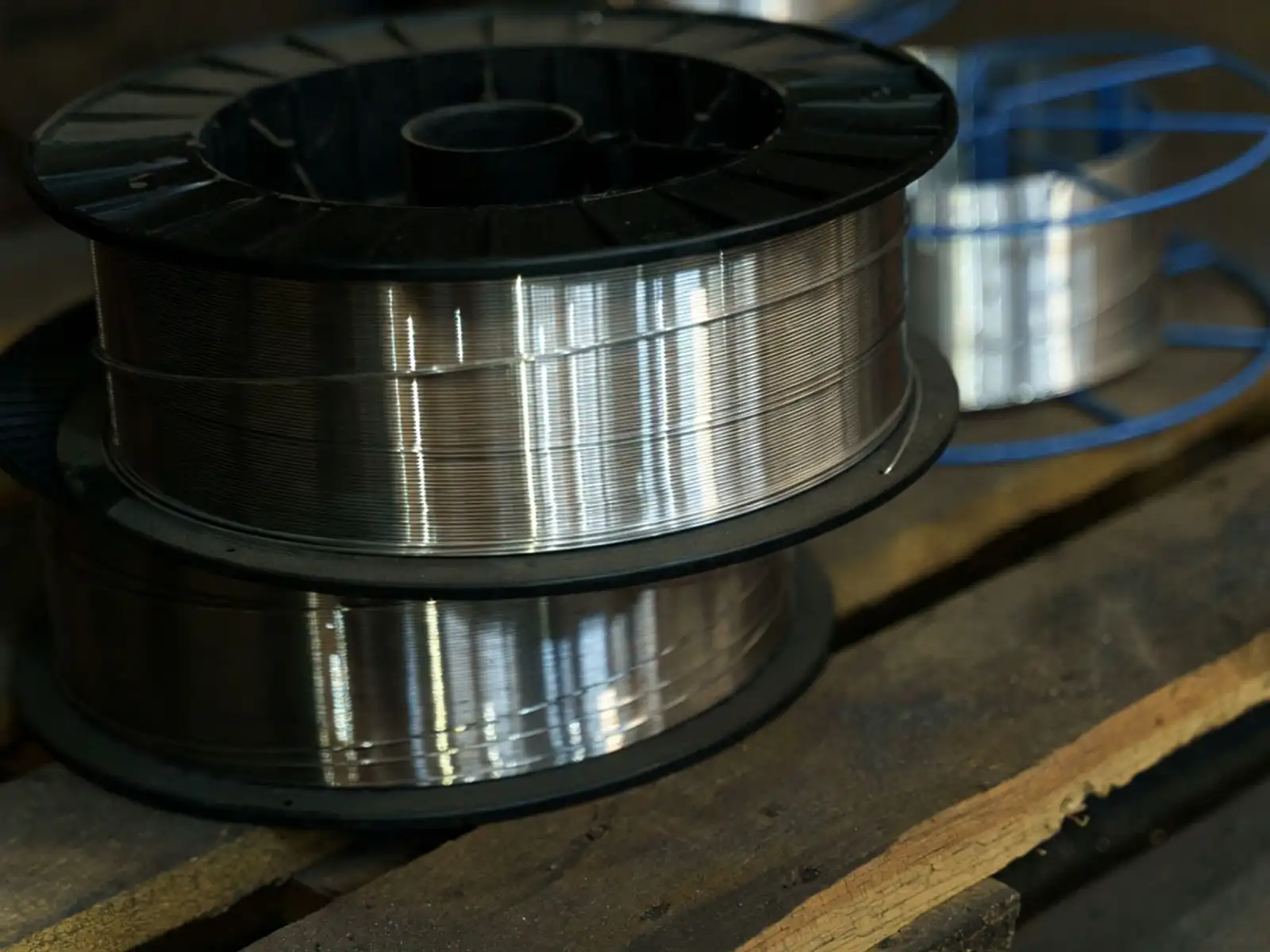
Welding zirconium wire to ASTM B550 specifications requires meticulous control of atmospheric conditions, heat input, filler material selection, joint preparation, and post-weld treatment. Zirconium’s high affinity for oxygen, nitrogen, and hydrogen at elevated temperatures makes it one of the most atmosphere-sensitive welding materials, demanding rigorous procedural controls to achieve welds with corrosion resistance and mechanical properties equal to the base material. Mastering these five key points ensures reliable zirconium welds for nuclear, chemical, and medical applications where failure is not an option.
1. Atmospheric Control: The Non-Negotiable Foundation
(1) Inert Gas Shielding Purity Requirements
Zirconium welding requires argon or helium shielding gas with oxygen content below 50 ppm and dew point below -60°C (equivalent to moisture content below 3 ppm). Grade 99.995% pure argon (4.5N or higher) is the minimum acceptable specification. Back-purge of the weld interior with identical high-purity gas prevents internal oxidation, which is invisible externally but catastrophically reduces corrosion resistance. Gas flow rates of 10–20 L/min for TIG welding and 15–30 L/min for orbital welding ensure adequate turbulence-free coverage of the weld zone.
(2) Enclosure and Containment Strategies
For critical welds, the entire joint and surrounding 150–200 mm area must be enclosed in a temporary chamber filled with high-purity argon. Chamber oxygen levels must be maintained below 100 ppm throughout welding and cooling to below 300°C. Oxygen monitors with alarm thresholds at 150 ppm provide real-time verification. Chamber integrity is tested by pressure decay or helium leak detection before welding commences. For orbital welding of small-diameter pipes, integrated trailing shields and internal mandrels with argon purge achieve equivalent atmospheric protection.
(3) Color Indication as a Quality Check
The color of the weld zone after welding provides immediate visual assessment of atmospheric protection quality. Silver or straw-colored welds indicate excellent protection with minimal oxidation. Dark straw, blue, gray, or white colors signify increasing levels of oxygen/nitrogen pickup, with gray and white indicating alpha-case formation and potential embrittlement. Acceptance criteria per AWS D17.1 permit only silver to light straw coloration for nuclear and critical chemical processing welds.
2. Heat Input and Welding Parameter Control
(1) Optimal Current and Voltage Settings
Zirconium wire welding requires precise heat input control to avoid excessive grain growth, distortion, and weld metal dilution. For TIG welding of 0.5–2.0 mm zirconium wire, direct current electrode negative (DCEN) at 30–100 A with 1.0–2.4 mm pure tungsten or 2% thoriated tungsten electrodes (2.38° cone angle) produces stable arcs. Travel speeds of 100–300 mm/min and arc voltages of 8–12 V maintain heat input between 0.5–2.0 kJ/mm, optimizing weld microstructure and mechanical properties.
(2) Pulsed Current for Thin Wire
For zirconium wire below 1.0 mm diameter, pulsed TIG welding with peak currents of 40–80 A and background currents of 10–20 A at frequencies of 1–10 Hz provides superior control of melt pool size and penetration. Pulsing reduces average heat input by 30–50% compared to DC welding, minimizing heat-affected zone width and preserving base metal properties adjacent to the weld.
3. Filler Material and Joint Preparation
(1) Matching Filler Wire Composition
Filler wire should match the base material grade—Grade 1 zirconium wire (UNS R60701) for Grade 1 base material, Grade 2 (UNS R60702) for Grade 2. Filler wire diameter should be 0.5–1.0 mm smaller than base material thickness for optimal feed control. Filler wire must be stored in sealed containers with desiccant and used within 24 hours of opening to prevent surface contamination.
(2) Joint Surface Preparation
Weld joint surfaces must be meticulously cleaned to remove oil, grease, oxide, and machining contaminants. Degreasing with acetone or isopropyl alcohol followed by stainless steel wire brushing dedicated exclusively to zirconium (never reused for carbon steel or stainless steel) ensures contaminant-free surfaces. Joint geometry should be single-V or U-groove with root face of 0.25–0.5 mm and root gap of 0.5–1.5 mm for butt joints in wire and thin section applications.
4. Post-Weld Treatment and Inspection
(1) Post-Weld Annealing
Welded zirconium assemblies may require post-weld annealing at 650–750°C in vacuum or hydrogen atmosphere to relieve residual stresses, dissolve embrittling hydrides, and restore corrosion resistance in the heat-affected zone. Annealing duration of 30–60 minutes followed by controlled cooling at 50–100°C/hour prevents recontamination and ensures uniform microstructure across the weld joint.
(2) Non-Destructive Examination
All zirconium wire welds undergo visual inspection per AWS D1.6/D1.6M, followed by dye penetrant testing (ASTM E165) to detect surface-breaking defects. For critical applications, radiographic examination (ASTM B564) verifies internal weld integrity, accepting no cracks, incomplete fusion, or porosity exceeding 1.0 mm diameter. Ultrasonic testing (ASTM E114) provides additional verification for thicker sections and structural welds.
(3) Corrosion Testing
Welded joints are evaluated for corrosion resistance through copper sulfate-sulfuric acid pickling tests per ASTM E275, where acceptable surfaces show no flash attack after the prescribed immersion period. For nuclear applications, boiling magnesium methoxide corrosion tests per ASTM E309 verify that weld and HAZ corrosion resistance matches the base material.
5. Operator Qualification and Procedural Compliance
(1) Welder Performance Qualification
All zirconium welders must be qualified per ASME Section IX or AWS D17.1 (aerospace standard), demonstrating consistent production of sound welds with acceptable atmospheric protection. Qualification tests include bend tests, tensile tests, and microscopic examination of the weld microstructure. Recertification is required every 6 months to ensure ongoing proficiency.
(2) Welding Procedure Specifications (WPS)
Qualified Welding Procedure Specifications document all parameters—gas type and flow rate, current settings, travel speed, joint preparation, filler material, and post-weld treatment—ensuring reproducibility across operators and shifts. WPS compliance is verified through welder performance records, gas purity logs, and chamber oxygen concentration monitoring during each weld operation.
Conclusion
High-quality welding of ASTM B550 zirconium wire demands uncompromising attention to atmospheric control, heat input management, joint preparation, post-weld treatment, and procedural compliance. Each of these five key points is interdependent—weakness in any one area compromises the entire weld. Organizations that invest in proper equipment, trained personnel, and rigorous quality systems achieve zirconium welds with corrosion resistance and mechanical properties matching the base material, ensuring reliable performance in the most demanding nuclear, chemical, and medical applications.
FAQ
Q1: Can zirconium wire be welded outdoors without an enclosure?
Outdoor welding of zirconium is strongly discouraged. Wind disrupts inert gas shielding, and ambient humidity introduces hydrogen that causes porosity and embrittlement. If outdoor welding is unavoidable, wind shields and humidity-controlled enclosures are mandatory, with continuous oxygen and dew point monitoring.
Q2: What is the maximum allowable gap for zirconium wire butt joints?
For TIG welding of zirconium wire up to 2.0 mm diameter, the root gap should not exceed 0.5 mm. Larger gaps require backing rings or internal mandrels to support the molten weld pool and prevent sagging or burn-through.
Q3: How long must argon purging continue after welding stops?
Argon purging must continue until the weld zone cools below 300°C, typically 5–10 minutes for thin wire and 15–30 minutes for thicker sections. Premature exposure to air while the metal is above 300°C causes rapid oxidation and alpha-case formation, degrading corrosion resistance and mechanical properties.
Contact Titanium Valley
Baoji Titanium Valley Titanium Nickel Zirconium Material Processing Co., Ltd. supplies ASTM B550 zirconium welding wire with EN 10204 3.1 certification, high-purity shielding gas recommendations, and welding procedure consultation. Contact us for material data and quotations:
References
American Welding Society. AWS D17.1: Specification for Fusion Welding for Nuclear Facilities [S]. 2021.
ASM International. Welding, Brazing, and Soldering of Zirconium and Its Alloys [M]. ASM Handbook Volume 6, 1993.
Liu, Y., et al. Atmospheric Control in Zirconium Welding: A Review [J]. Journal of Materials Processing Technology, 2020, 285: 116789.
ASTM International. ASTM B550-20 Standard Specification for Zirconium and Zirconium Alloy Wire [S]. 2020.