
What Are the Electrical Conductivity and Thermal Conductivity of Nickel 200 Nickel Foil?
- Nickel 200 Nickel Foil
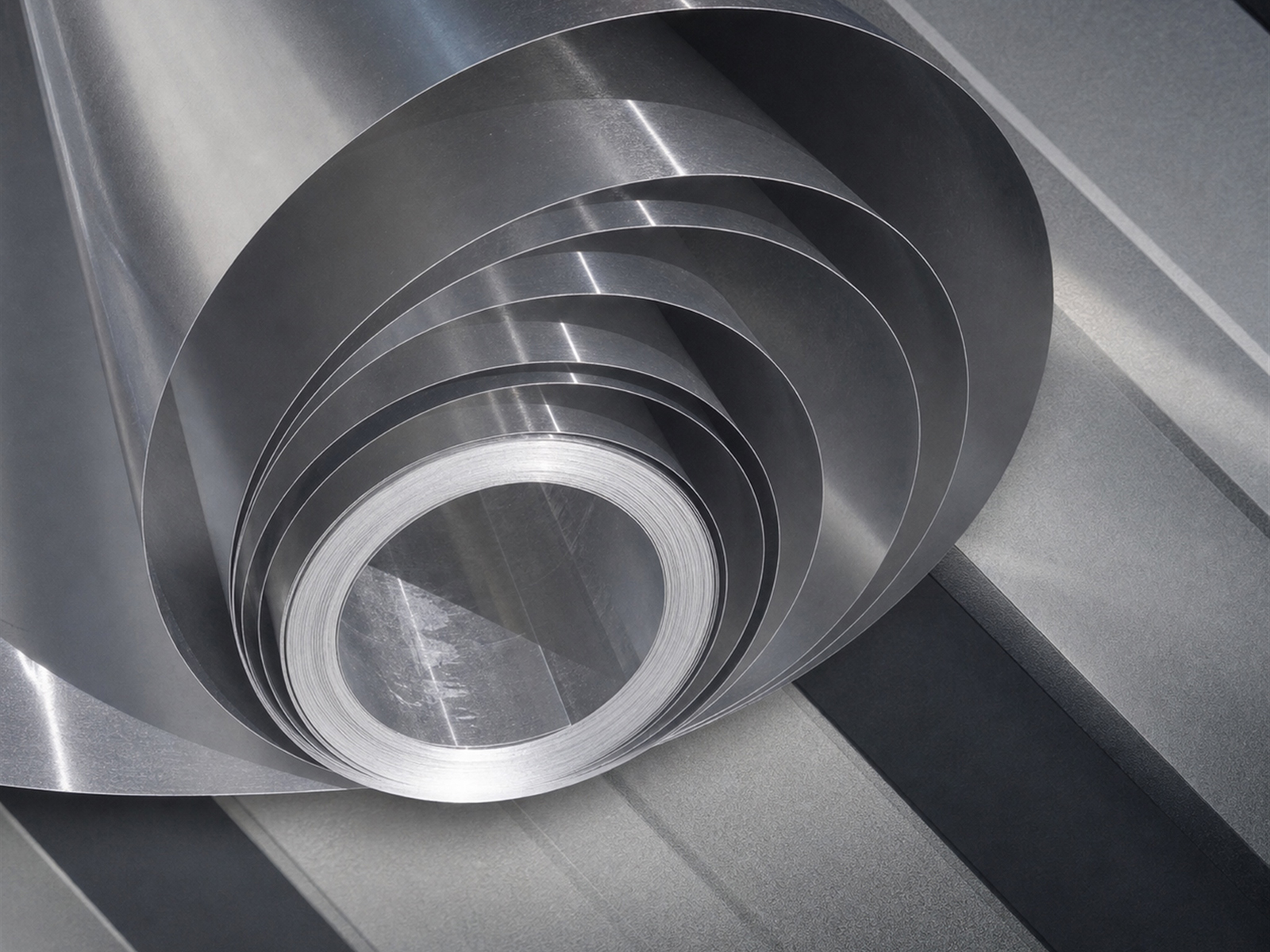
Nickel 200 Nickel Foil, produced from high-purity electrolytic nickel conforming to ASTM B160 specifications (Ni+Co >= 99.0%), exhibits electrical and thermal conductivity properties that make it uniquely valuable for applications requiring the simultaneous management of electrical current and heat. While its conductivity is lower than copper and aluminum, Nickel 200 foil offers superior corrosion resistance, higher operating temperature capability, and magnetic responsiveness that copper cannot provide. This article examines the electrical conductivity, thermal conductivity, and their temperature dependence in Nickel 200 nickel foil, along with practical applications that leverage these properties.
1. Electrical Conductivity of Nickel 200 Foil
(1) Absolute Conductivity Values
Annealed Nickel 200 foil exhibits an electrical conductivity of approximately 22.6% IACS (International Annealed Copper Standard), corresponding to a resistivity of 4.41 x 10^-8 ohm.m at 20 degrees C. In absolute terms, this equals 22.7 x 10^6 S/m. For comparison, pure copper has a conductivity of 100% IACS (5.96 x 10^7 S/m), making Nickel 200 approximately 38% as conductive as copper. While this may seem limiting, the conductivity of Nickel 200 is sufficient for many electrical applications where corrosion resistance and mechanical strength are equally important.
(2) Effect of Cold Working on Conductivity
Cold working reduces Nickel 200 foil electrical conductivity by increasing electron scattering from dislocation structures. Half-hard temper (YH) foil shows approximately 5-8% reduction in conductivity compared to annealed (M temper) material. Full-hard temper (FH) foil may exhibit 10-15% conductivity reduction. Stress-relief annealing at 500-600 degrees C restores conductivity to near-annealed values without significant grain growth or dimensional change.
(3) Temperature Dependence
The electrical resistivity of Nickel 200 foil increases linearly with temperature at a rate of approximately 0.0069 per degree C (temperature coefficient of resistance, TCR). From 20 to 100 degrees C, resistivity increases from 4.41 x 10^-8 to 4.66 x 10^-8 ohm.m. This positive TCR enables Nickel 200 foil to serve as a resistance temperature detector (RTD) element in moderate-temperature sensing applications, though platinum remains preferred for precision measurements.
2. Thermal Conductivity of Nickel 200 Foil
(1) Absolute Conductivity Values
Annealed Nickel 200 foil exhibits a thermal conductivity of approximately 91 W/(m.K) at 25 degrees C. This value is roughly 40% of copper (401 W/(m.K)) but significantly higher than stainless steel (16 W/(m.K)) and titanium alloys (6.7 W/(m.K)). The relatively high thermal conductivity enables effective heat dissipation in electrical and electronic applications where Nickel 200 foil serves simultaneously as electrical conductor, structural support, and thermal management component.
(2) Temperature Dependence
Thermal conductivity of Nickel 200 foil decreases with increasing temperature, dropping to approximately 75 W/(m.K) at 100 degrees C and 60 W/(m.K) at 300 degrees C. This decline follows the increased phonon-scattering at elevated temperatures. For thermal management applications operating above 200 degrees C, the reduced thermal conductivity must be accounted for in heat sink and spreader design calculations.
(3) Thermal Diffusivity
The thermal diffusivity of Nickel 200 foil (alpha = k/rho.Cp, where k is thermal conductivity, rho is density, and Cp is specific heat) is approximately 23.5 x 10^-6 m2/s at room temperature. This parameter governs the rate of temperature equalization through the foil thickness and is critical for transient thermal analysis in pulsed-power and cyclical heating applications.
3. Electrical and Thermal Property Correlation
(1) Wiedemann-Franz Law Validation
The ratio of thermal conductivity to electrical conductivity in Nickel 200 foil approximately obeys the Wiedemann-Franz law (k/sigma = L.T, where L is the Lorenz number), confirming that electronic transport dominates both electrical and thermal conduction mechanisms. The Lorenz number for Nickel 200 at room temperature is approximately 2.45 x 10^-8 W.ohm/K2, close to the theoretical free-electron value of 2.44 x 10^-8 W.ohm/K2.
(2) Impurity Effects on Dual Conductivity
Interstitial impurities (oxygen, nitrogen, carbon) and substitutional impurities (iron, cobalt, sulfur) degrade both electrical and thermal conductivity proportionally. ASTM B160 Nickel 200 foil with total impurity content below 1.0% maintains conductivity values within 5% of theoretical maximum. For applications requiring maximum conductivity, ultra-high-purity nickel (99.9% minimum) should be specified.
4. Practical Applications
(1) Battery Current Collectors
Nickel 200 foil serves as current collector in lithium-ion, nickel-metal hydride, and alkaline battery cells, where its moderate electrical conductivity (sufficient for current collection), excellent corrosion resistance in electrolyte environments, and weldability outweigh the higher conductivity available from copper or aluminum. Battery-grade Nickel 200 foil thicknesses range from 12 to 100 microns with conductivity controlled within +/-5% of specification.
(2) Electrical Shielding and Grounding
Nickel 200 foil provides electromagnetic interference (EMI) shielding through both reflection (due to electrical conductivity) and absorption (due to magnetic permeability). Foil thicknesses of 0.1-0.5 mm deliver shielding effectiveness of 40-80 dB across 100 kHz to 1 GHz frequency ranges, suitable for electronics enclosures, cable shielding, and RF isolation applications.
(3) Thermal Management Components
The combination of moderate thermal conductivity and excellent corrosion resistance makes Nickel 200 foil suitable for heat spreaders, thermal interface layers, and heatsink fins in corrosive environments where aluminum or copper would rapidly degrade. Chemical processing equipment, marine electronics, and offshore instrumentation benefit from Nickel 200 foil thermal management solutions that combine heat dissipation with material durability.
Conclusion
Nickel 200 nickel foil delivers a balanced combination of electrical conductivity (22.6% IACS) and thermal conductivity (91 W/(m.K)) that, while inferior to copper and aluminum, is more than adequate for its primary applications in battery technology, EMI shielding, and thermal management. The material’s true advantage lies not in absolute conductivity performance but in the synergistic combination of conductivity with corrosion resistance, magnetic properties, high-temperature stability, and mechanical strength. Engineers selecting materials for applications requiring concurrent electrical, thermal, and environmental performance should consider Nickel 200 foil as a compelling alternative to higher-conductivity but less durable materials.
FAQ
Q1: Can Nickel 200 foil replace copper foil for electrical wiring?
No. Nickel 200 foil’s conductivity is only 38% of copper, meaning it would need to be approximately 2.6 times thicker to carry the same current with equivalent resistive heating. Copper remains the superior conductor for wiring applications where corrosion environment is benign.
Q2: How does cold rolling affect Nickel 200 foil thermal conductivity?
Cold rolling has a smaller effect on thermal conductivity than on electrical conductivity. Thermal conductivity typically decreases by only 3-5% in cold-rolled Nickel 200 foil compared to annealed material, as phonon transport is less affected by dislocation structures than electron transport.
Q3: What is the maximum operating temperature for Nickel 200 foil in electrical applications?
Nickel 200 foil can operate continuously at temperatures up to 600 degrees C in air, limited by accelerated oxidation above 500 degrees C. In inert or reducing atmospheres, continuous operating temperature can reach 800 degrees C. For intermittent service, temperatures up to 1000 degrees C are achievable.
Contact Titanium Valley
Baoji Titanium Valley Titanium Nickel Zirconium Material Processing Co., Ltd. supplies high-purity Nickel 200 foil conforming to ASTM B160 specifications, available in thicknesses 0.05-3.0 mm with certified electrical and thermal conductivity data. Battery-grade, EMI shielding-grade, and thermal management-grade products available. Contact us for technical data and quotations:
References
Callister, W.D., Rethwisch, D.G. Materials Science and Engineering: An Introduction [M]. 10th ed. Wiley, 2018.
ASM International. ASM Handbook, Volume 2: Properties and Selection: Irons, Steels, and High-Performance Alloys [M]. ASM International, 1990.
ASTM International. ASTM B160-20 Standard Specification for Nickel and Nickel Rods and Bars [S]. 2020.