
What Are the Magnetic Properties and Linear Expansion Coefficient of Nickel 200 Nickel Wire?
- Nickel 200 Nickel Wire
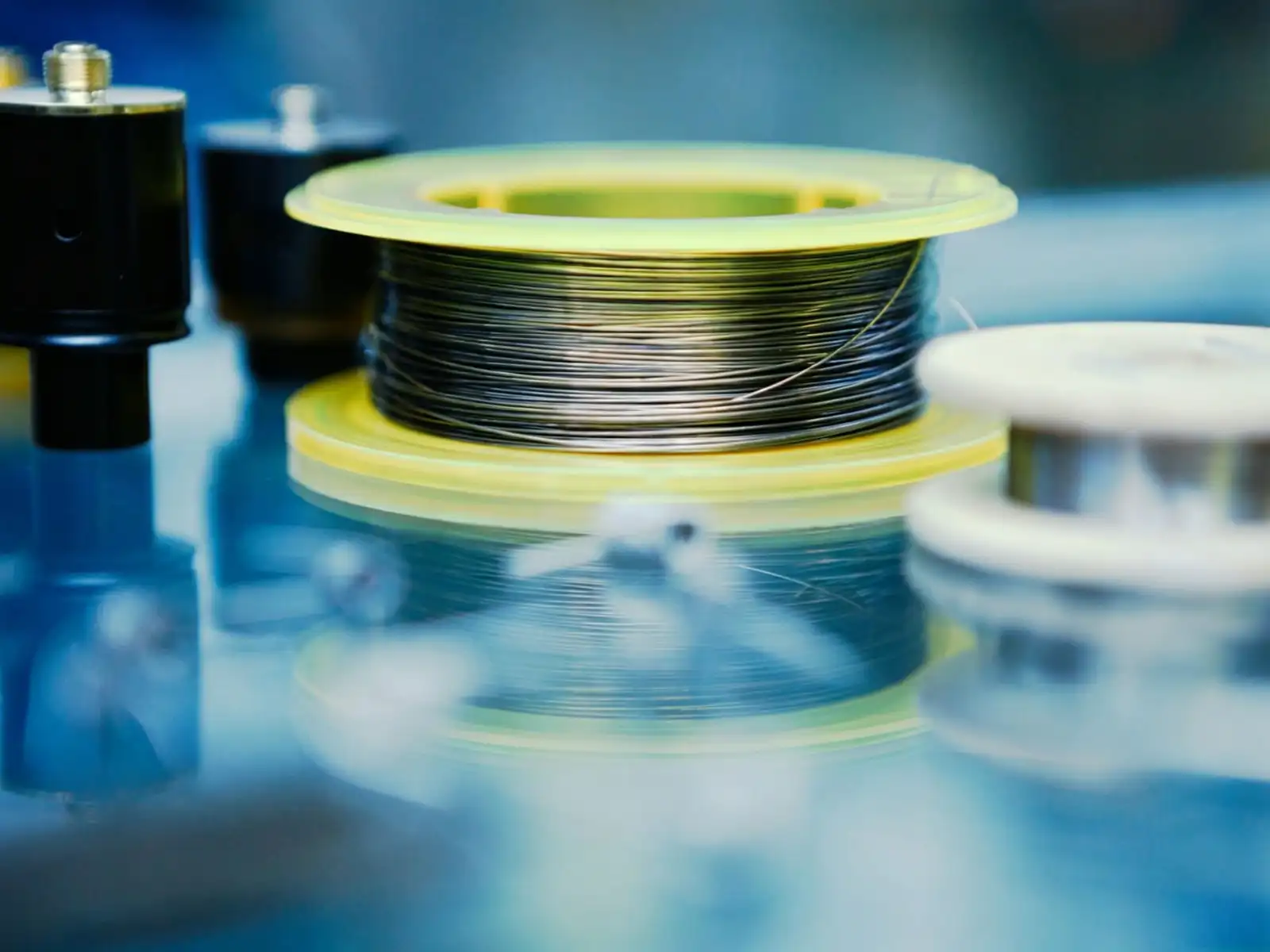
Nickel 200 Nickel Wire, produced from high-purity electrolytic nickel conforming to ASTM B160 specifications (Ni+Co >= 99.0%), exhibits unique magnetic and thermal expansion characteristics that distinguish it from other electrical and structural wire materials. Its ferromagnetic behavior at room temperature, predictable linear thermal expansion coefficient, and stable properties across temperature variations make Nickel 200 wire indispensable in magnetic sensors, precision resistors, thermal compensation devices, and electrical contact applications. This article provides comprehensive technical data on the magnetic properties and linear expansion coefficient of Nickel 200 nickel wire.
1. Magnetic Properties of Nickel 200 Wire
(1) Ferromagnetic Behavior and Curie Temperature
Nickel 200 wire is ferromagnetic at room temperature with a saturation magnetization of approximately 545 emu/g (545 A.m2/kg). The Curie temperature—the point above which nickel loses its ferromagnetic properties and becomes paramagnetic—is 358 degrees C (631 K). Below the Curie temperature, Nickel 200 wire exhibits spontaneous magnetization and responds to external magnetic fields, making it suitable for magnetic sensing, shielding, and actuation applications. Above 358 degrees C, the material transitions to paramagnetic behavior with a magnetic susceptibility of approximately 0.0005, rendering it ineffective for magnetic applications at elevated temperatures.
(2) Magnetic Permeability
The initial magnetic permeability of annealed Nickel 200 wire ranges from 100 to 200 (relative permeability mu_r), while maximum permeability reaches 150-300 under optimal magnetizing conditions. Cold working reduces permeability by introducing dislocations that pin magnetic domain walls. Annealing at 600-800 degrees C in hydrogen or vacuum atmosphere restores permeability to near-maximum values. For magnetic shielding applications requiring high permeability, final annealing after all forming operations is essential.
(3) Coercivity and Magnetic Hysteresis
Annealed Nickel 200 wire exhibits low coercivity of 40-80 A/m, indicating soft magnetic behavior with minimal energy loss during magnetization cycles. The narrow hysteresis loop area (approximately 200-500 J/m3) makes Nickel 200 suitable for applications requiring rapid magnetic response with minimal residual magnetism. Cold-worked wire shows increased coercivity (80-150 A/m) due to internal stress pinning domain walls, which may be advantageous for permanent magnet applications but detrimental to sensing applications requiring linear magnetic response.
2. Linear Thermal Expansion Coefficient
(1) Temperature-Dependent Expansion Behavior
The linear thermal expansion coefficient of Nickel 200 wire varies with temperature, reflecting the anharmonicity of atomic vibrations in the nickel crystal lattice. From 20 to 100 degrees C, the average coefficient is 13.0 x 10^-6/K. Between 20 and 300 degrees C, it increases to 13.5 x 10^-6/K. At 20-500 degrees C, the coefficient reaches 14.0 x 10^-6/K. This temperature dependence must be accounted for in precision applications where dimensional stability across temperature ranges is critical.
(2) Comparison with Other Wire Materials
Compared to common wire materials, Nickel 200 exhibits a moderate thermal expansion coefficient—higher than tungsten (4.5 x 10^-6/K) and molybdenum (5.2 x 10^-6/K) but lower than copper (17 x 10^-6/K) and aluminum (23 x 10^-6/K). This intermediate expansion behavior enables Nickel 200 wire to serve as a thermal expansion matching intermediary between dissimilar materials in bimetallic strips, compensated wires, and precision assembly applications.
3. Combined Magnetic and Thermal Performance
(1) Temperature Effect on Magnetic Properties
Magnetic properties of Nickel 200 wire degrade progressively with increasing temperature. Saturation magnetization decreases approximately 0.1% per degree C rise from room temperature to the Curie point. Magnetic permeability shows a more pronounced decline above 200 degrees C, reducing shielding effectiveness in high-temperature environments. For magnetic applications above 200 degrees C, alternative materials such as permalloy or cobalt-iron alloys should be considered.
(2) Thermal Cycling Stability
Nickel 200 wire maintains stable magnetic and dimensional properties through repeated thermal cycling between -50 and 300 degrees C. After 1000 thermal cycles, changes in coercivity are less than 5%, and dimensional changes are fully reversible within the expected thermal expansion tolerance. This stability makes Nickel 200 wire ideal for automotive sensors, aerospace instrumentation, and industrial control systems experiencing regular temperature fluctuations.
4. Applications Leveraging Magnetic and Thermal Properties
(1) Magnetic Field Sensors and Probes
Nickel 200 wire serves as the sensing element in fluxgate magnetometers and magnetic field probes, where its high permeability and low coercivity enable sensitive detection of weak magnetic fields. The predictable thermal expansion coefficient ensures that sensor geometry remains stable across operating temperatures, maintaining calibration accuracy.
(2) Thermal Compensation Wires
In precision measuring instruments, Nickel 200 wire is paired with materials having higher thermal expansion coefficients to create bimetallic compensation elements. The known expansion coefficient of Nickel 200 enables accurate prediction of compensation displacement across temperature ranges, correcting for thermal drift in mechanical and electrical measurement systems.
(3) Electrical Contacts and Heating Elements
Nickel 200 wire electrical contacts benefit from the material’s combination of moderate electrical conductivity (14.3 x 10^6 S/m), magnetic responsiveness for magnetic latching mechanisms, and thermal expansion compatibility with ceramic insulators and connector housings. As heating element wire, Nickel 200 operates stably up to 800 degrees C in air, with oxidation resistance maintained by the protective NiO surface scale.
Conclusion
Nickel 200 nickel wire offers a distinctive combination of ferromagnetic properties and predictable thermal expansion behavior that enables diverse engineering applications. Its room-temperature ferromagnetism with low coercivity, temperature-dependent expansion characteristics, and stable performance through thermal cycling make it the material of choice for magnetic sensors, thermal compensation devices, and precision electrical components. Engineers specifying Nickel 200 wire should account for the Curie temperature limit (358 degrees C) for magnetic applications and the temperature-dependent expansion coefficient for precision dimensional requirements.
FAQ
Q1: Is Nickel 200 wire magnetic at room temperature?
Yes. Nickel 200 wire is ferromagnetic at room temperature with a relative permeability of 100-300, responding strongly to magnetic fields. It loses ferromagnetic properties above its Curie temperature of 358 degrees C.
Q2: What is the linear expansion coefficient of Nickel 200 wire at 25 degrees C?
The linear thermal expansion coefficient of annealed Nickel 200 wire at 25 degrees C is approximately 13.0 x 10^-6/K. This value increases slightly to 13.5 x 10^-6/K at 100 degrees C and 14.0 x 10^-6/K at 200 degrees C.
Q3: Can Nickel 200 wire be used in high-temperature magnetic applications?
Nickel 200 wire magnetic properties degrade significantly above 200 degrees C and are lost entirely above 358 degrees C (Curie temperature). For magnetic applications above 200 degrees C, cobalt-iron alloys (e.g., Permendur) with Curie temperatures above 500 degrees C should be considered.
Contact Titanium Valley
Baoji Titanium Valley Titanium Nickel Zirconium Material Processing Co., Ltd. supplies high-purity Nickel 200 wire conforming to ASTM B160 specifications, available in diameters 0.05-6.0 mm with magnetic property data sheets and thermal expansion coefficients. EN 10204 3.1 certification available. Contact us for technical data and quotations:
References
Kauzmann, W. The Properties of Liquid Nickel and Its Alloys [J]. Chemical Reviews, 1939, 24(2): 269-302.
ASM International. ASM Handbook, Volume 2: Properties and Selection: Irons, Steels, and High-Performance Alloys [M]. ASM International, 1990.
ASTM International. ASTM B160-20 Standard Specification for Nickel and Nickel Rods and Bars [S]. 2020.