
Why Is Gr2 Titanium Wire the Preferred Choice for Seawater Environment Sand Filter Assembly Components?
- Gr2 Titanium Wire
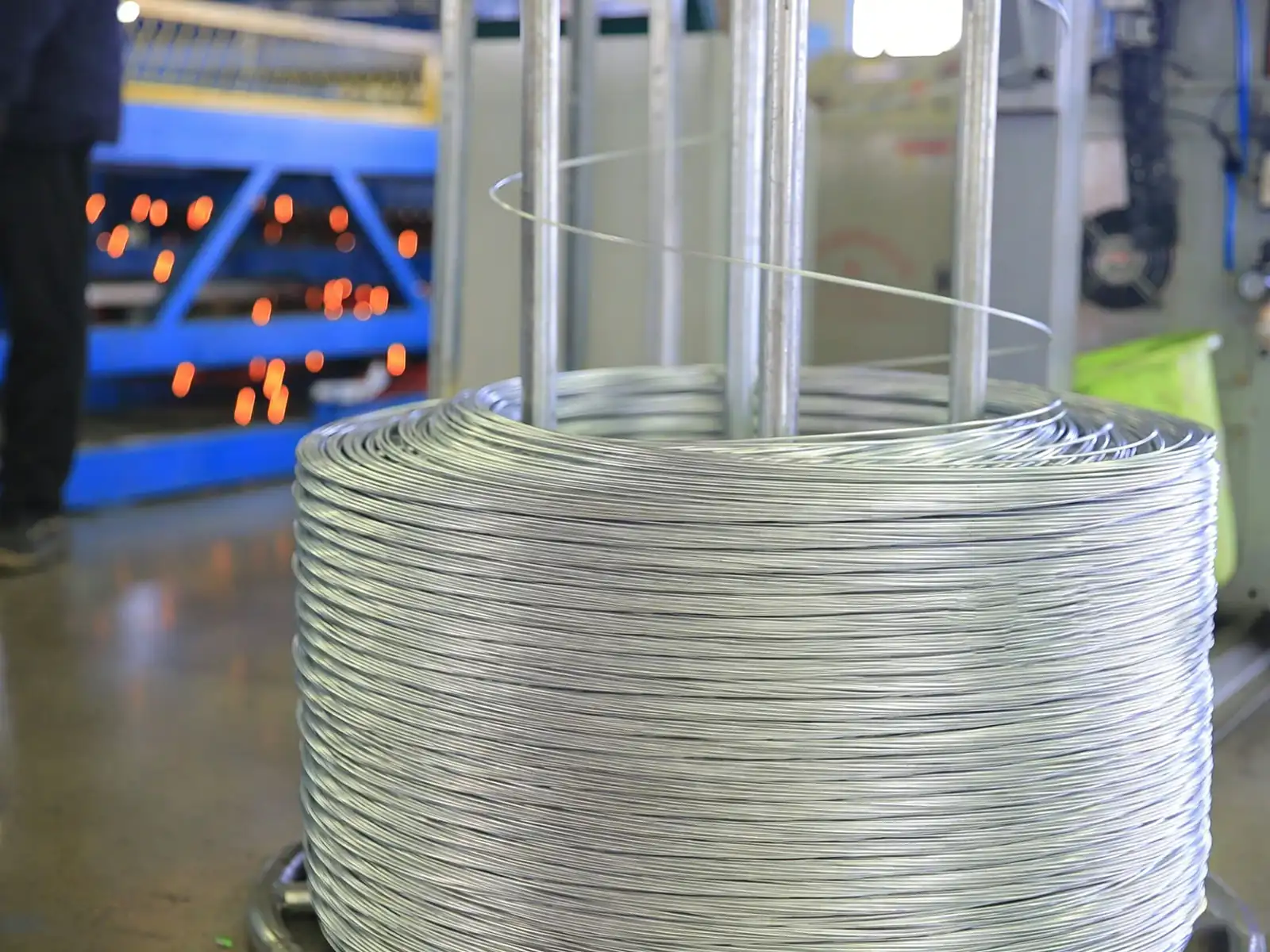
Sand filter assembly components in seawater environments—including filter screens, support grids, retaining rings, and flow distribution tubes—require materials that combine exceptional corrosion resistance with adequate mechanical strength, formability, and cost-effectiveness. Gr2 Titanium Wire (commercially pure Ti-Grade 2 per ASTM B348/B863) has emerged as the preferred material for these critical components, outperforming duplex stainless steels, nickel alloys, and conventional titanium grades in comprehensive lifecycle assessments. This selection is driven by Gr2’s optimal balance of corrosion resistance, mechanical properties, fabricability, and total cost of ownership in aggressive seawater service conditions.
1. Seawater Environment Challenges for Filter Materials
(1) Corrosive Species and Operating Conditions
Seawater contains approximately 3.5% dissolved salts, with chloride ions at 19,000 ppm being the dominant corrosive species. Additional aggressive agents include dissolved oxygen (5–8 mg/L), sulfate-reducing bacteria, suspended silica particles, and variable temperatures (5–35°C in most installations). Sand filter assemblies operate under cyclic loading from flow pulsation, occasional chemical cleaning with hypochlorite, and mechanical abrasion from sand particles flowing through the filter media. Materials must resist pitting, crevice corrosion, stress corrosion cracking, and erosion-corrosion simultaneously.
(2) Failure Modes of Conventional Materials
Duplex stainless steels (2205, 2507) experience pitting and crevice corrosion in stagnant seawater zones, particularly at wire-to-wire intersections in filter screens where oxygen concentration cells develop. Aluminum bronze wires lose protective oxide films under high-flow conditions, exposing fresh metal to rapid attack. Standard 316L stainless steel shows visible pitting within 6 months in warm seawater (>25°C) and complete perforation within 2 years. These failure modes necessitate frequent filter replacement, production downtime, and increasing maintenance costs.
2. Gr2 Titanium Wire Properties for Seawater Service
(1) Corrosion Resistance Mechanism
Gr2 titanium wire forms a stable, self-healing TiO₂ passive film that is immune to chloride attack. The pitting potential of Gr2 titanium in seawater exceeds +800 mV (SCE), far above the corrosion potential of seawater (≈–200 mV SCE), ensuring the passive film remains thermodynamically stable. Crevice corrosion resistance in stagnant seawater at temperatures up to 60°C is excellent, with no measurable corrosion rate by weight loss methods. This immunity to chloride-induced localized corrosion is the primary driver for Gr2 selection in seawater filter applications.
(2) Mechanical Properties and Wire Formability
Gr2 titanium wire exhibits tensile strength of 345–450 MPa (annealed condition) with elongation of 20–25%, providing adequate strength for filter structural components while maintaining ductility for complex wire forming operations. The wire can be bent, coiled, welded, and woven without cracking or loss of corrosion resistance. Fatigue strength in seawater (10⁷ cycles) reaches approximately 280 MPa, ensuring reliable performance under cyclic flow-induced vibration loads typical in filter systems.
(3) Compatibility with Sand Filter Manufacturing Processes
Gr2 titanium wire is compatible with all standard filter manufacturing processes including resistance welding, TIG welding, braze welding, and mechanical crimping. Welded joints retain 95–100% of base material corrosion resistance when shielded with high-purity argon. Wire weaving on conventional looms produces filter meshes with apertures from 25 μm to 5 mm, maintaining uniform corrosion resistance across the entire screen surface.
3. Comparative Performance in Field Applications
(1) Long-Term Service Data
Field installations comparing Gr2 titanium wire sand filters against 2205 duplex stainless steel and aluminum bronze demonstrate that Gr2 components achieve service lives exceeding 20 years with zero corrosion-related failures. In contrast, 2205 SS filters required screen replacement after 5–7 years due to crevice corrosion at wire intersections, and aluminum bronze filters showed erosion-corrosion thinning after 3–4 years of operation. The extended service life of Gr2 titanium eliminates unplanned shutdowns and production losses associated with filter failure.
(2) Cleaning Chemical Compatibility
Sand filters are periodically cleaned with sodium hypochlorite solutions (200–500 ppm available chlorine) to remove biofouling. Gr2 titanium wire shows no corrosion acceleration in hypochlorite concentrations up to 1000 ppm, while stainless steel components suffer accelerated pitting in these oxidizing environments. This compatibility reduces cleaning chemical restrictions and simplifies maintenance procedures.
4. Economic Justification
(1) Total Lifecycle Cost Analysis
While Gr2 titanium wire costs 3–4 times more than duplex stainless steel on a per-kg basis, the extended service life (20+ years vs. 5–7 years) and elimination of replacement downtime reduce total lifecycle cost by 40–50%. For continuous-operation facilities such as desalination plants, power station intake systems, and offshore platforms, the cost of unplanned downtime (\,000–\,000 per hour) far exceeds material cost differences, making Gr2 titanium the economically rational choice.
Conclusion
Gr2 titanium wire provides the optimal combination of corrosion immunity, mechanical adequacy, fabricability, and lifecycle cost-effectiveness for seawater sand filter assembly components. Its resistance to chloride-induced pitting, crevice corrosion, and hypochlorite attack ensures reliable performance over 20+ years of continuous service. As seawater treatment and desalination facilities prioritize availability and reduce maintenance burdens, Gr2 titanium wire filter components will continue to replace conventional materials as the industry standard for critical seawater filtration applications.
FAQ
Q1: Can Gr2 titanium wire be welded in the field for sand filter repair?
Yes, Gr2 titanium wire can be TIG welded in field repair situations using portable argon-shielded welding setups. Proper shielding with argon back-purge ensures weld zone corrosion resistance. Welded repairs have demonstrated corrosion performance equal to base material in seawater service.
Q2: Is Gr2 titanium wire suitable for brackish water applications?
Gr2 titanium wire performs excellently in brackish water (salinity 0.5–2%), where chloride concentrations are lower than seawater. The material provides a margin of safety beyond requirements, making it suitable for estuarine and inland coastal water treatment facilities.
Q3: What wire diameters are available for Gr2 titanium filter screen fabrication?
Gr2 titanium wire is available in diameters from 0.1 mm to 4.0 mm, covering the full range of filter screen mesh sizes from fine filtration (25 μm apertures with 0.1–0.2 mm wire) to coarse screening (5 mm apertures with 2.0–4.0 mm wire). Custom diameters and tempers (annealed, half-hard, full-hard) are available upon request.
Contact Titanium Valley
Baoji Titanium Valley Titanium Nickel Zirconium Material Processing Co., Ltd. supplies Gr2 titanium wire for seawater filter applications, available in diameters 0.1–4.0 mm with EN 10204 3.1 certification. Custom weaving and component fabrication services available. Contact us for technical data and quotations:
References
Fontana, M.G. Corrosion Engineering [M]. 3rd ed. McGraw-Hill, 1986.
Sieradzki, E., et al. Titanium for Seawater Applications [J]. Materials Performance, 2019, 58(8): 34–41.
ASTM International. ASTM B348-20 Standard Specification for Titanium and Titanium Alloy Bars and Billets [S]. 2020.
ASTM International. ASTM B863-20 Standard Specification for Titanium and Titanium Alloy Wire [S]. 2020.