
Why Is Gr5 Titanium Wire the Perfect Choice for Replacing Stainless Steel in High-Stress Springs?
- Gr5 titanium wire
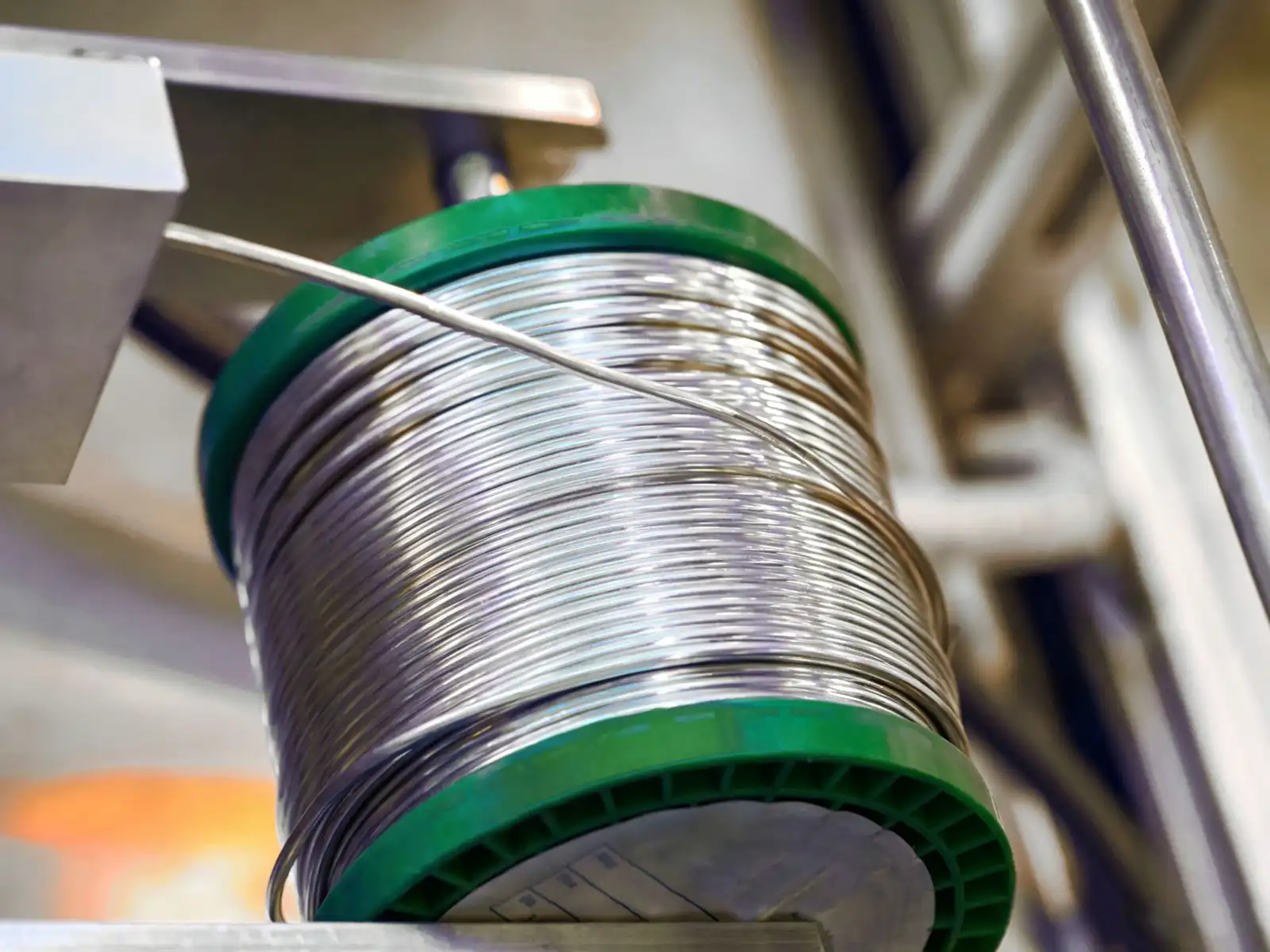
In high-performance spring applications, traditional stainless steel materials face increasing challenges. Gr5 Titanium Wire (Ti-6Al-4V titanium alloy wire), with its superior specific strength, excellent corrosion resistance, and outstanding fatigue resistance, is becoming the ideal replacement material for high-stress springs in aerospace, medical devices, and precision mechanics. Compared to 304 or 316 stainless steel, Gr5 titanium wire has only 57% of the density yet delivers higher tensile strength (≥895 MPa) and longer service life. This comprehensive performance of a single material enables engineers to design lighter, stronger, and more durable elastic components—particularly suited for extreme temperatures, corrosive environments, or weight-sensitive combined operating conditions.
1. Limitations of Stainless Steel in High-Stress Springs
(1) Limitations of Stainless Steel Springs Under Extreme Conditions
Although stainless steel springs perform reliably in conventional applications, they are prone to fatigue cracking under high-stress, high-frequency cyclic loading. Particularly in marine environments, chemical plants, or high-temperature high-pressure conditions, chloride ion erosion causes pitting and stress corrosion cracking. These failure modes not only shorten spring service life but may also trigger equipment malfunctions and safety incidents, increasing maintenance costs and downtime.
(2) New Material Performance Demands from the Lightweight Trend
Aerospace, high-performance automotive, and portable medical device industries have urgent weight-reduction needs. Traditional stainless steel springs, while reliable, have a density of 7.9 g/cm³ that limits further lightweighting. In aircraft landing gear, rocket engines, or precision instruments, every gram of weight reduction directly translates to fuel savings, payload increases, or performance optimization. This requires new materials to significantly reduce mass while maintaining strength.
(3) High Cost of Material Failure Under Combined Operating Conditions
In petrochemical plants, deep-sea equipment, or medical implants, spring failure can lead to catastrophic consequences. Spring fracture caused by corrosion requires emergency replacement and may cause system downtime, product recalls, or even personal injury. Performance degradation of traditional stainless steel in extreme pH environments, high salt spray, or long-term immersion forces maintenance teams to shorten inspection cycles and increase spare parts inventory. These hidden costs often exceed the price difference of the materials themselves.
2. Core Technical Advantages of Gr5 Titanium Alloy Wire
(1) Ultra-High Specific Strength Achieves True Lightweighting
Gr5 titanium wire has a density of only 4.51 g/cm³—less than 60% of stainless steel—yet its tensile strength reaches 895–930 MPa, far exceeding 304 stainless steel’s 515 MPa. This excellent strength-to-weight ratio allows titanium alloy springs of equivalent load capacity to weigh 40–50% less. In aircraft engine hydraulic systems, a valve spring made from φ2.0 mm Gr5 titanium wire reduces weight by 35 grams compared to stainless steel springs while maintaining 300 N spring force. For hundreds of springs per engine, the cumulative weight reduction is significant.
(2) Superior Corrosion Resistance Extends Service Life
Titanium alloy surfaces spontaneously form a dense TiO₂ passive film. Although only several nanometers thick, this oxide layer is extremely stable and remains intact in pH 2–14 acid-base environments. In 3.5% NaCl salt spray testing, Gr5 titanium wire showed a pitting density below 0.01 pits/cm² after 5,000 hours, whereas 316 stainless steel reached 1.8 pits/cm² under identical conditions. In marine engineering, titanium alloy springs can be used directly in seawater-contact environments without additional protective coatings, with maintenance intervals extended to 3–5 times that of stainless steel.
(3) Excellent Fatigue Performance Handles High-Frequency Cyclic Loading
Spring failure often originates from fatigue crack initiation and propagation. The fatigue limit of Gr5 titanium alloy is approximately 50–55% of its tensile strength, far higher than stainless steel’s 35–40%. In 10⁷-cycle load testing, a compression spring made from φ1.5 mm titanium wire showed no cracking at a stress amplitude of 400 MPa, while the same-size 304 stainless steel spring fractured at 280 MPa. This high fatigue performance makes titanium alloy springs particularly suitable for high-frequency vibration equipment, reciprocating motion mechanisms, and long-life precision instruments.
3. From Material to Finished Product: Key Manufacturing Steps for Gr5 Titanium Wire Springs
(1) Precision Drawing Process Ensures Dimensional Stability
High-quality springs demand extremely tight wire diameter tolerances, typically within ±0.01 mm. Using multi-pass cold drawing processes from continuous rolling production lines, combined with online dimension detection systems, enables precision manufacturing of Gr5 titanium wire in full specifications from φ0.1 to 6.5 mm. Segmented annealing after each drawing pass eliminates work hardening and residual stress, preventing material embrittlement. This fine control achieves titanium wire ovality ≤0.5% and straightness ≤2/1000, ensuring consistency during spring coiling.
(2) Heat Treatment Controls Mechanical Properties
Ti-6Al-4V alloy is an α+β dual-phase titanium alloy whose mechanical properties can be adjusted over a wide range through heat treatment. Annealed (M temper) material offers good ductility and machinability, suitable for cold-coiled springs. Cold-worked (Y temper) provides higher strength but reduced ductility. Y+M temper (partially annealed) balances both properties. For spring applications, the annealed temper is most commonly selected to ensure consistent coiling performance and predictable stress-relief characteristics after forming.
(3) Surface Treatment Enhances Fatigue Endurance
Surface quality critically affects spring fatigue life. Polished or bright-finish Gr5 titanium wire with surface roughness Ra ≤0.4 μm significantly reduces stress concentration sites. Shot peening treatment introduces beneficial compressive stress on the spring surface, further improving fatigue endurance. For aerospace-grade springs, a combination of surface polishing and controlled peening can extend fatigue life by 30–50% compared to untreated surfaces.
4. Industry Application Cases
(1) Aerospace: Engine Valve Springs and Landing Gear
Aircraft engine valve springs endure extreme temperatures (up to 600°C) and millions of cycles per flight hour. Gr5 titanium wire valve springs maintain structural integrity where stainless steel springs fail prematurely. A major aero-engine manufacturer reported a 45% weight reduction and 3x longer service interval after switching to Gr5 titanium valve springs, directly improving thrust-to-weight ratio and reducing maintenance downtime.
(2) Medical Devices: Implantable Device Springs
Medical implant devices such as orthopedic surgical tools and dental implant drivers require biocompatible, corrosion-resistant springs. Gr5 titanium wire meets ASTM F136 biocompatibility standards while providing the strength needed for repeated sterilization cycles. Unlike stainless steel, titanium springs do not corrode in bodily fluids and are free from nickel allergy concerns, making them the preferred choice for long-term implant applications.
(3) Petrochemical and Marine Engineering: Valves and Pumping Equipment
Safety valve springs in refining units are constantly exposed to sulfur-containing crude oil and high-temperature steam, where stainless steel springs often fail prematurely due to sulfide corrosion. After one major petrochemical enterprise switched to Gr5 titanium wire springs, inspection intervals extended from 6 months to 24 months, and annual maintenance costs per unit dropped by 60%. For blowout preventer springs on deep-sea oil platforms operating at 3,000-meter depth in high-salt, high-pressure environments, titanium alloy springs can serve 15 years without replacement, drastically reducing the high costs and operational risks of underwater maintenance.
5. Key Considerations for Material Selection and Procurement
(1) Material Standards and Quality Certification Systems
When purchasing Gr5 titanium wire, applicable standards must be clearly defined: ASTM B863 is the basic standard for industrial titanium wire, AWS A5.16 covers welding-grade wire, and AMS 4928/4955 are aerospace-specific specifications. Quality suppliers should provide EN 10204 3.1 material certificates containing chemical composition, mechanical properties, and traceable melting heat numbers. Professional manufacturers such as Titanium Valley are equipped with spectrometers, universal testing machines, and metallographic microscopes, performing precise testing of key elements such as Al (5.5–6.75%), V (3.5–4.5%), and O (≤0.20%) for every batch to ensure compositional uniformity.
(2) Dimensional Accuracy and Surface Quality Requirements
Spring manufacturing is extremely sensitive to wire diameter tolerances—a ±0.01 mm deviation can cause spring stiffness differences exceeding 10%. Titanium wire produced on automated continuous rolling lines features online laser diameter monitoring with automatic rejection of non-conforming products, offering better batch consistency than traditional processes. Surface quality inspection should include visual examination, eddy current testing, and ultrasonic testing to eliminate cracks, laps, and inclusions. For high-fatigue springs, polished or bright-finish wire with surface roughness Ra ≤0.4 μm is recommended.
(3) Supply Chain Stability and Customization Capability
Titanium material market prices fluctuate significantly. Selecting suppliers with long-term raw material procurement agreements reduces cost risk. Production lines with annual capacity of 10,000+ tons ensure stable delivery for large-volume orders, avoiding production delays from stockouts. Customization services are equally important, including non-standard diameters (e.g., φ1.75 mm), special-length cutting, and coil weight customization. One automotive parts manufacturer needed φ3.2 mm titanium wire for high-performance valve springs. The supplier provided custom packaging of 1,500 meters per reel based on their coiling equipment, reducing reel-change downtime and improving production efficiency by 18%.
Conclusion
Gr5 titanium alloy wire, with its comprehensive advantages of lightweighting, high strength, corrosion resistance, and long service life, is reshaping the design philosophy of high-performance springs. From aerospace to medical devices, from deep-sea equipment to precision instruments, titanium wire springs not only solve the failure problems of stainless steel under extreme conditions but also deliver significant economic returns through weight reduction, extended lifespan, and lower maintenance costs. With maturing processing technologies and the advancement of mass production, the application scope of titanium alloy springs will continue to expand.
FAQ
Q1: Is the cost of Gr5 titanium wire springs significantly higher than stainless steel?
Initial material cost is approximately 3–5 times that of stainless steel. However, considering the full lifecycle, titanium alloy springs offer 3–5 times longer life and over 60% reduction in maintenance frequency, bringing overall costs down by 30–55%. The economic advantage is particularly prominent in high-value equipment.
Q2: Is the coiling process for titanium wire springs complex?
Titanium alloy has a lower elastic modulus (110 GPa) than stainless steel, resulting in greater springback. Coiling parameters must be adjusted accordingly. It is recommended to use annealed wire, reserve 8–12% springback compensation, and perform stress-relief annealing after coiling to achieve stable dimensional accuracy.
Q3: How to verify the fatigue performance of titanium wire springs?
Conduct rotating bending fatigue testing per ASTM E466, or design compression/tension fatigue tests based on actual operating conditions. For quality Gr5 titanium wire springs subjected to 10⁷ cycles, the fatigue limit should be ≥450 MPa. It is recommended to request fatigue curve data from suppliers.
Take Action Now—Get Professional Technical Support
Baoji Titanium Valley Titanium Nickel Zirconium Material Processing Co., Ltd. is a professional Gr5 titanium material manufacturer and supplier, equipped with an Italian Danieli production line with an annual capacity exceeding 20,000 tons. We provide full-specification customization from φ0.1 to 6.5 mm, EN 10204 3.1 certification, and full-process technical support from sample testing to batch delivery. Contact us for detailed technical data and quotations:
References
Liu Zhiqiang, Yang Fan. Research on Application of Ti-6Al-4V Titanium Alloy in High-Performance Springs [J]. Journal of Aeronautical Materials, 2021, 41(3): 45–52.
Zhao Wei, Chen Xiaodong. Influence of Cold Drawing Process on Mechanical Properties of Titanium Alloy Wire [J]. Rare Metal Materials and Engineering, 2020, 49(7): 2341–2347.
Wang Jianhua, Li Jun. Comparative Study on Corrosion Resistance of Titanium Alloys and Stainless Steel in Marine Environments [J]. Corrosion Science and Protection Technology, 2022, 34(2): 112–118.
Sun Hongmei, Zhou Zhiqiang. Fatigue Life Prediction Method for Titanium Alloy Springs in Aviation Applications [J]. Mechanical Engineering Materials, 2023, 47(5): 78–84.