
Why Use Gr12 Titanium Rod in High-Temperature Chloride Environments?
- Gr12 Titanium Rod
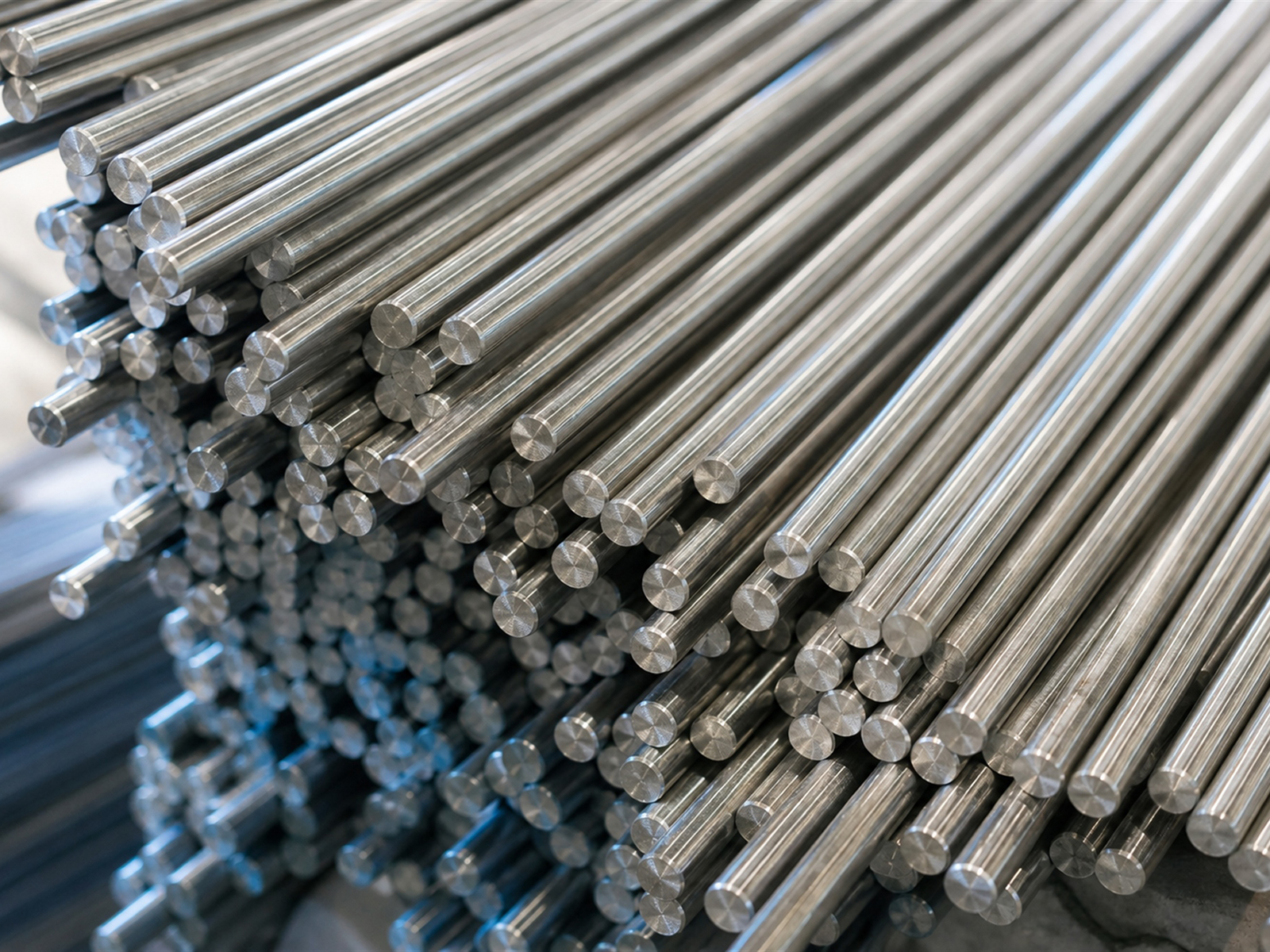
Gr12 Titanium Rod (modified Grade 2 titanium alloy, UNS R60702, containing 0.2–0.4% Mo and 0.6–0.9% Ni) provides exceptional resistance to high-temperature chloride environments where conventional titanium grades and stainless steels fail prematurely. The synergistic effect of molybdenum and nickel alloying elements stabilizes the passive oxide film against chloride-induced breakdown, enabling reliable service in seawater at elevated temperatures, offshore desalination systems, chemical processing with chloride-containing acids, and marine engineering applications. This article examines the mechanisms, performance data, and engineering considerations that make Gr12 titanium rod the material of choice for these aggressive service conditions.
1. Chloride-Induced Corrosion Mechanisms in Titanium
(1) Pitting and Crevice Corrosion Initiation
Chloride ions (Cl⁻) adsorb onto titanium oxide surfaces, locally disrupting the protective TiO₂ film and creating active dissolution sites. At temperatures above 60°C in seawater, the pitting potential of Grade 2 titanium shifts nobler than the corrosion potential, triggering spontaneous pit initiation. Crevice geometries—such as bolted joint interfaces, gasket contacts, and sediment deposits—create oxygen concentration cells that accelerate localized attack within the crevice, where chloride concentration can become 10–100 times higher than the bulk solution.
(2) Stress Corrosion Cracking (SCC)
While commercially pure titanium is generally resistant to chloride stress corrosion cracking, Grade 2 titanium experiences SCC at temperatures above 120°C in chloride concentrations exceeding 1000 ppm and pH values below 4. The combined action of tensile stress (residual or applied) and aggressive chloride chemistry produces intergranular or transgranular crack propagation, leading to sudden catastrophic failure without warning deformation. This failure mode is particularly dangerous in pressure-containing components such as heat exchanger tubes and piping.
2. How Gr12 Alloying Elements Enhance Chloride Resistance
(1) Molybdenum: Repassivation Catalyst
Molybdenum (0.2–0.4% in Gr12) dramatically enhances repassivation kinetics at chloride-damaged sites. Mo⁶⁺ ions released from the alloy surface migrate to pit nuclei, promoting rapid reformation of the protective oxide film before pits can propagate. Electrochemical testing shows that Gr12 titanium exhibits a pitting potential 200–300 mV nobler than Grade 2 in boiling 42% MgCl₂ solution (ASTM G48 Method A), effectively eliminating pitting susceptibility under conditions that rapidly destroy Grade 2 titanium.
(2) Nickel: Cathodic Modification
Nickel (0.6–0.9% in Gr12) modifies the cathodic reaction kinetics on the titanium surface, reducing the driving force for anodic dissolution at defect sites. The Ni addition shifts the mixed potential in a protective direction and promotes uniform passive film growth. In combination with molybdenum, nickel provides synergistic enhancement of crevice corrosion resistance, with Gr12 maintaining immunity to crevice corrosion in seawater at temperatures up to 100°C—compared to approximately 30°C for Grade 2 titanium.
3. Performance Data in High-Temperature Chloride Environments
4. Engineering Applications
(1) Seawater Desalination Plants
Multi-stage flash (MSF) and multi-effect蒸馏 (MED) desalination plants operate with seawater heated to 90–120°C in chloride-rich environments. Gr12 titanium rod heat exchanger tubes and piping components deliver 20+ year service lives with zero corrosion-related failures, compared to 3–5 years for duplex stainless steel and less than 1 year for 316L stainless steel. The material’s immunity to chloride stress corrosion cracking eliminates the risk of catastrophic tube rupture that could contaminate product water.
(2) Offshore Oil and Gas Platforms
Offshore production equipment exposed to hot, chloride-containing brine water (salinity 3.5–250%, temperatures 40–150°C) requires materials with guaranteed corrosion resistance. Gr12 titanium rod is specified for wellhead components, flow line risers, and cooling water systems where failure would result in production shutdowns costing \,000–\,000 per day. Field data from North Sea and Gulf of Mexico installations confirm Gr12 titanium performance exceeding 15 years without corrosion-related maintenance.
(3) Chemical Processing with Chloride-Containing Acids
Processes involving hydrochloric acid, ferric chloride, or zinc chloride solutions at elevated temperatures require materials resistant to both acid attack and chloride-induced localized corrosion. Gr12 titanium rod provides reliable service in dilute HCl (<2%, <60°C) and zinc chloride leaching circuits where stainless steels suffer rapid penetration.
5. Fabrication and Specification Guidelines
(1) Material Selection and Standard Compliance
Gr12 titanium rod should be specified per ASTM B348 (for bars and billets) or GB/T 3620.1 (Chinese standard for Ti-0.3Mo-0.8Ni alloy), with chemical composition verification confirming Mo (0.2–0.4%), Ni (0.6–0.9%), O (≤0.20%), Fe (≤0.30%), and H (≤0.015%). EN 10204 3.1 material certificates with full analytical reports are recommended for critical applications.
(2) Welding Considerations
Gr12 titanium rod is weldable by GTAW, EBW, and laser welding with matching filler wire. Proper argon shielding (O₂ < 50 ppm, dew point < -60°C) during welding and post-weld cooling below 300°C preserves the alloy’s enhanced chloride resistance in the weld zone. Post-weld annealing at 650–750°C in vacuum or hydrogen atmosphere restores optimum mechanical properties and corrosion resistance.
Conclusion
Gr12 titanium rod represents a significant advancement in chloride-resistant titanium alloys, with molybdenum and nickel additions providing synergistic protection against pitting, crevice corrosion, and stress corrosion cracking at temperatures where Grade 2 titanium fails. For engineers designing equipment for high-temperature chloride environments—whether in desalination, offshore oil and gas, or chemical processing—Gr12 titanium rod delivers proven, long-term corrosion resistance that justifies its premium material cost through extended service life, reduced maintenance, and eliminated failure risk.
FAQ
Q1: What is the maximum chloride concentration and temperature for Gr12 titanium rod service?
Gr12 titanium rod demonstrates immunity to chloride-induced corrosion in seawater (19,000 ppm Cl⁻) at temperatures up to 100°C. In more concentrated chloride solutions, performance depends on pH, dissolved oxygen, and presence of oxidizing agents. Consult corrosion data charts for specific service conditions.
Q2: How does Gr12 titanium rod cost compare to Grade 2?
Gr12 titanium rod costs approximately 15–25% more than Grade 2 on a per-kg basis due to alloying element additions and tighter composition control. However, the extended service life in chloride environments often results in 50–70% lower total lifecycle cost.
Q3: Is Gr12 titanium rod suitable for cryogenic chloride service?
Yes. Gr12 titanium rod maintains excellent toughness and corrosion resistance at cryogenic temperatures down to -196°C. The Mo-Ni alloying additions do not adversely affect low-temperature properties, making Gr12 suitable for LNG and cryogenic chloride handling applications.
Contact Titanium Valley
Baoji Titanium Valley Titanium Nickel Zirconium Material Processing Co., Ltd. supplies Gr12 titanium rod with optimized Mo-Ni alloying for chloride resistance, available in diameters 10–300 mm with EN 10204 3.1 certification. Technical consultation for material selection available. Contact us for quotations:
References
Fontana, M.G. Corrosion Engineering [M]. 3rd ed. McGraw-Hill, 1986.
Callister, W.D. Materials Science and Engineering: An Introduction [M]. 10th ed. Wiley, 2018.
ASTM International. ASTM G48-20 Standard Test Methods for Pitting and Crevice Corrosion Resistance of Stainless Steels and Related Alloys [S]. 2020.
ASTM International. ASTM B348-20 Standard Specification for Titanium and Titanium Alloy Bars and Billets [S]. 2020.