
Nickel 200 Wire in Lead Frames and Electronic Vacuum Components: Which Grade Offers the Best Conductivity?
- Nickel 200 Wire
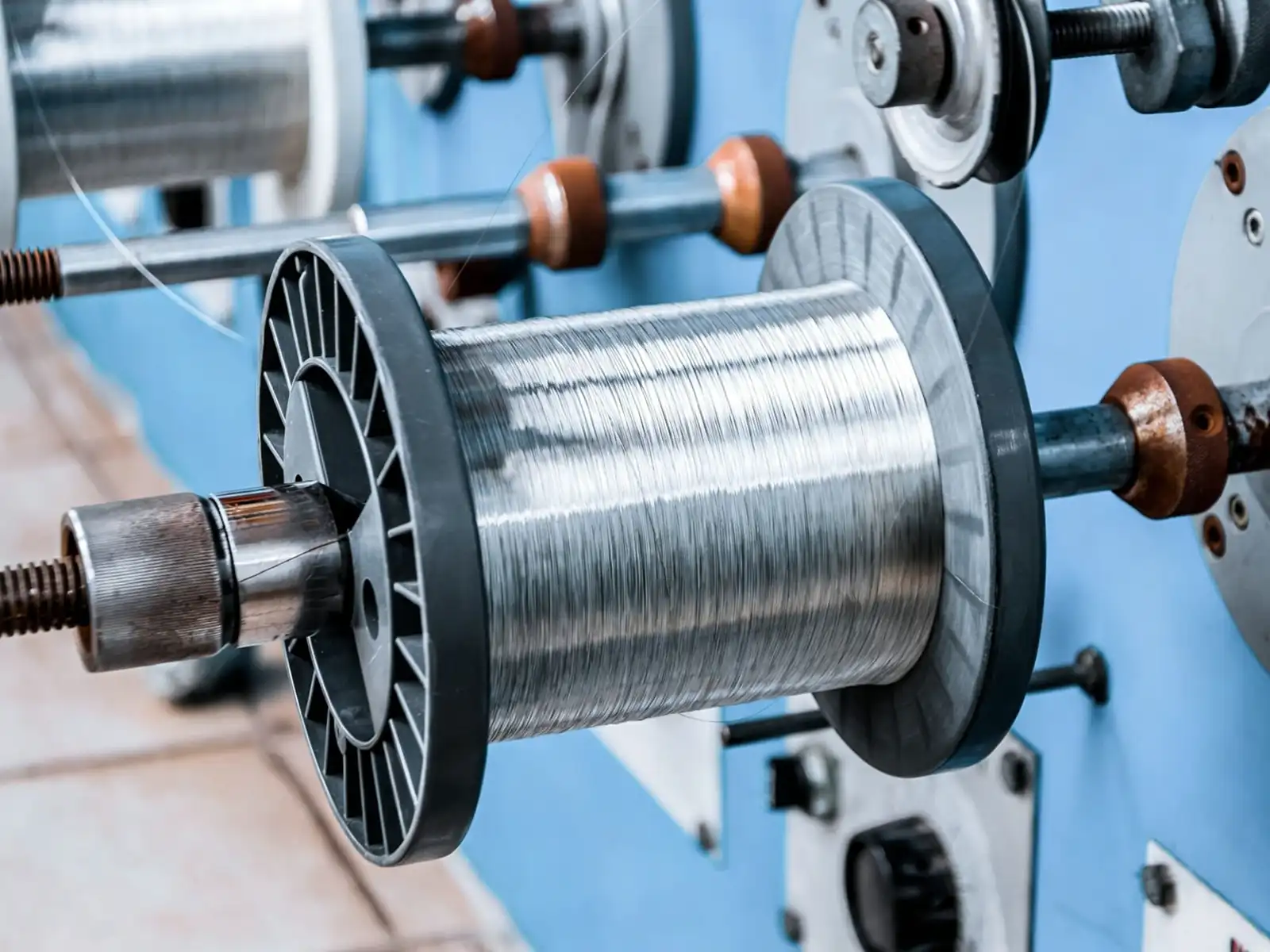
Nickel 200 Wire Nickel 200 (commercially pure nickel) wire is widely used in semiconductor lead frames, electronic vacuum components, and electrical contact applications due to its excellent electrical conductivity, thermal stability, and corrosion resistance. This article examines the applications of Nickel 200 wire in lead frames and electronic vacuum components and evaluates its performance characteristics.
1. Material Properties of Nickel 200
(1) Electrical and Thermal Conductivity
Nickel 200 wire exhibits electrical conductivity of approximately 22.6% IACS (International Annealed Copper Standard) at 20 degrees C, with thermal conductivity of 90.9 W/m-K. While lower than copper, these values are sufficient for lead frame and vacuum component applications where mechanical strength and corrosion resistance are equally important.
| Property | Nickel 200 | Copper (C110) | Stainless 316L |
|---|---|---|---|
| Conductivity (% IACS) | 22.6% | 100% | 2.5% |
| Thermal Conductivity (W/m-K) | 90.9 | 401 | 16.3 |
| Density (g/cm3) | 8.90 | 8.96 | 8.00 |
| Melting Point (degrees C) | 1455 | 1085 | 1400 |
(2) Mechanical Properties
Nickel 200 wire provides tensile strength of 380-550 MPa (depending on temper), yield strength of 200-480 MPa, and elongation of 10-45%. The material can be cold-worked to varying degrees of hardness, allowing customization of mechanical properties for specific lead frame and vacuum component requirements.
2. Lead Frame Applications
(1) Semiconductor Package Lead Frames
Nickel 200 wire is drawn into thin strips and stamped into lead frame configurations for IC packages, power modules, and optoelectronic devices. The material provides excellent dimensional stability, solderability, and resistance to thermal cycling fatigue. Lead frames made from Nickel 200 wire support wire bonding, provide electrical interconnection, and dissipate heat from the semiconductor die.
(2) High-Power and High-Frequency Applications
For high-power LED packages, RF modules, and power MOSFETs, Nickel 200 wire lead frames offer superior thermal management and signal integrity compared to lower-conductivity alternatives. The material coefficient of thermal expansion (13.4 ppm/K) provides good match with silicon (2.6 ppm/K) and ceramic substrates.
3. Electronic Vacuum Components
(1) Vacuum Seal and Feedthrough Components
Nickel 200 wire is used to fabricate vacuum feedthrough pins, seal wires, and hermetic connector contacts. The material low outgassing rate (< 10^-12 torr-L/cm^2-s) and excellent vacuum compatibility make it ideal for ultra-high vacuum (UHV) and extreme high vacuum (XHV) applications.
(2) Electron Beam and Ion Beam Components
In electron beam lithography, SEM columns, and ion implantation systems, Nickel 200 wire forms electron gun filaments, beam collimators, and vacuum gate valves. The material high melting point and resistance to electron beam heating ensure long service life under intense thermal loads.
4. Surface Treatment and Plating Options
Nickel 200 wire can be plated with gold, silver, tin, or palladium to enhance solderability, contact resistance, and corrosion resistance for specific electronic applications. Electroplating processes are well-established and produce uniform coatings with excellent adhesion.
5. Quality Control and Standards
Nickel 200 wire for electronic applications must comply with ASTM B576 (standard specification for nickel wire and rod) and customer-specific requirements for conductivity, dimensional tolerance, and surface quality. Vacuum compatibility testing per ASTM E595 confirms low outgassing performance.
Conclusion
Nickel 200 wire provides an optimal combination of electrical conductivity, mechanical strength, and vacuum compatibility for lead frame and electronic vacuum component applications. Its proven reliability and manufacturability make it the material of choice for semiconductor packaging and vacuum electronics.
FAQ
Q1: What wire diameter is typical for lead frame applications?
Lead frame wire diameters typically range from 0.2 to 1.5 mm, depending on the package type and current carrying requirements.
Q2: Can Nickel 200 wire be soldered?
Yes, Nickel 200 wire accepts standard lead-free and tin-lead solders with proper flux and surface preparation.
Q3: How does Nickel 200 compare to Kovar for lead frames?
Kovar offers better CTE match to ceramics, while Nickel 200 provides higher conductivity and lower cost.
Contact Us
Baoji Titanium Valley Titanium Nickel Zirconium Material Processing Co., Ltd. supplies Nickel 200 wire. Contact us at sales@titaniumvalleys.com.
References
[1] ASTM B576-22. Standard Specification for Nickel Wire and Rod for Electrical Purposes.
[2] Schajer G.S. Semiconductor Packaging Materials[M]. Springer, 2023.
[3] Vacuums Science and Technology[M]. ASM Handbook Volume 11, 2022.