
What Makes Gr4 Titanium Foil Essential for Aerospace Applications?
- Gr4 Titanium Foil
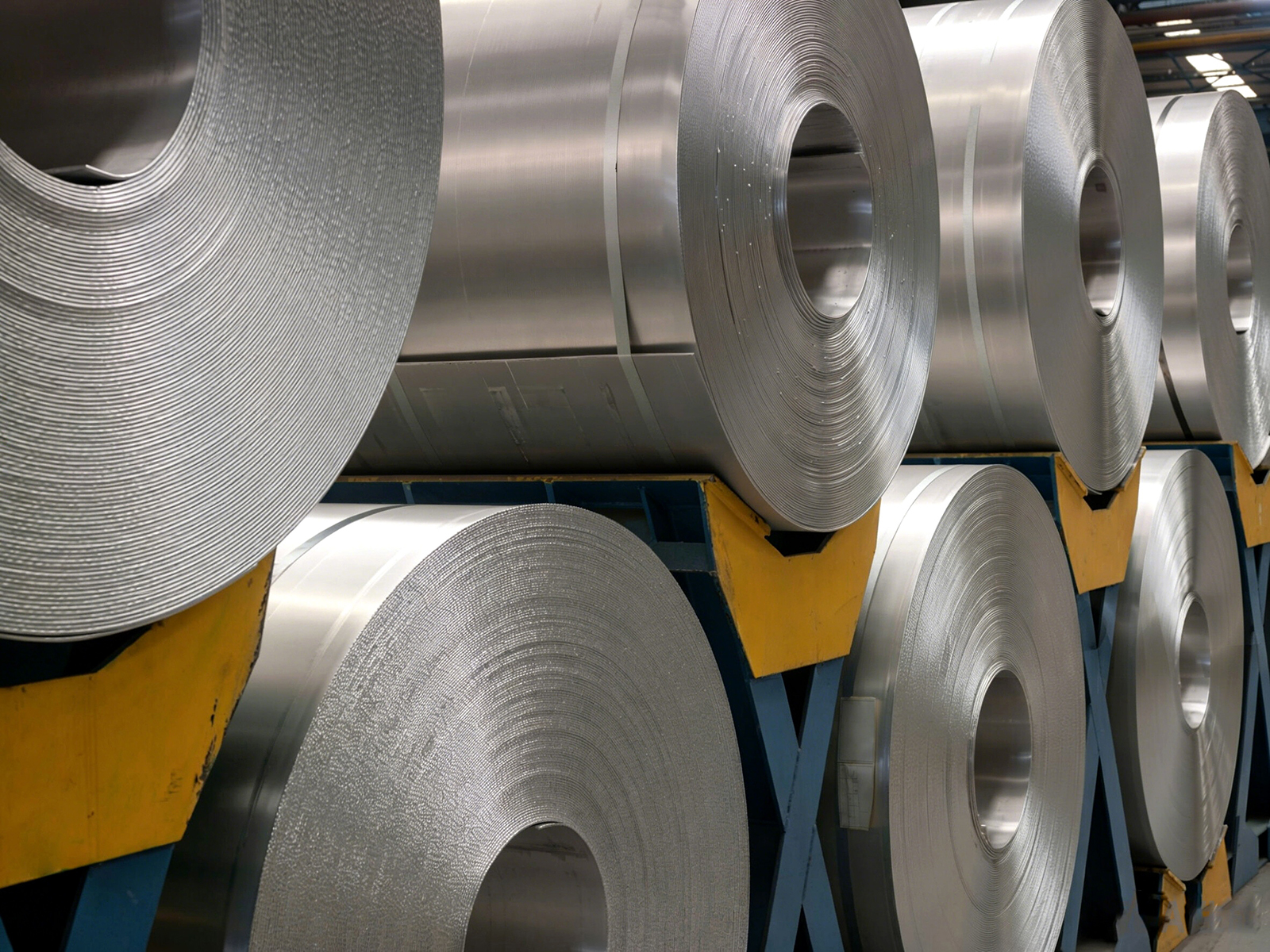
Gr4 Titanium Foil Gr4 titanium foil,relying on the highest strength grade among commercially pure titanium,relying on 550 MPa tensile strength and exceptional corrosion resistance, has become an indispensable key material in aerospace applications. This ultra-thin metal foil achieves dual advantages of structural load-bearing and environmental adaptation while maintaining the lightweight characteristics of pure titanium. From aircraft honeycomb cores to satellite sealing gaskets, from engine thermal insulation components to deep space probe structural parts, Gr4 titanium foil is driving aerospace equipment toward lighter, stronger, and more reliable directions through its unique mechanical properties and process stability. This article provides an in-depth analysis of Gr4 titanium foil material essence, manufacturing process breakthroughs, and application value under extreme operating conditions.
What Is the Material Essence and Mechanical Advantage of Gr4 Titanium Foil?
1. Strength Benchmark Among Commercially Pure Titanium
In the commercial pure titanium system, Gr4 titanium foil sits at the highest strength level. Per ASTM B265, Gr4 minimum tensile strength reaches 550 MPa, approximately 23% higher than Gr2 (450 MPa) and 2.3 times that of Gr1 (240 MPa). This strength advantage comes from higher interstitial element content, particularly oxygen (?0.30% for Gr4 vs ?0.25% for Gr2), which strengthens the titanium crystal lattice through solid solution strengthening. Despite the increased strength, Gr4 retains elongation of ?18%, providing adequate ductility for forming operations.
2. Corrosion Resistance Comparable to Gr1 and Gr2
Although Gr4 has higher strength, its corrosion resistance remains comparable to Gr1 and Gr2. In oxidizing media, Gr4 titanium foil forms a stable passive oxide film (TiO?) that self-heals when damaged. This film provides excellent resistance to chloride ion attack, making Gr4 suitable for marine aerospace applications. In reducing acid environments, Gr4 performs similarly to Gr2, with corrosion rates below 0.001 mm/year in most atmospheric conditions.
3. Fatigue Performance in Cyclic Loading Environments
Aerospace components are subjected to millions of stress cycles during service life. Gr4 titanium foil demonstrates superior fatigue endurance limit of approximately 350 MPa at 10? cycles, significantly higher than Gr2 (280 MPa). The fine-grained microstructure achieved through controlled rolling and annealing further enhances fatigue crack initiation resistance, making Gr4 ideal for structural components subjected to vibration and cyclic loading.
How Do Manufacturing Process Breakthroughs Enable Gr4 Titanium Foil Performance?
1. Multi-Pass Rolling for Grain Refinement
The production of Gr4 titanium foil requires careful control of rolling reduction and inter-pass annealing to achieve uniform fine-grained microstructure. Multi-pass cold rolling with 15-20% reduction per pass, followed by intermediate annealing at 600-700 ? in vacuum or argon atmosphere, refines the grain size to below 10 µm. This fine grain structure directly translates to improved strength and toughness, with Hall-Petch relationship governing the grain boundary strengthening effect.
2. Precision Thickness Control in Ultra-Thin Gauges
Gr4 titanium foil for aerospace applications typically ranges from 0.05 mm to 2.0 mm thickness. At ultra-thin gauges below 0.1 mm, thickness tolerance control becomes critical. Modern 20-high mill technology achieves thickness tolerance within ±0.003 mm for 0.05 mm gauge foil, ensuring uniform mechanical properties across the full width. Edge edge drop is minimized through roll bending and crown control systems.
3. Surface Quality for Structural Integrity
Surface defects act as stress concentrators and fatigue crack initiation sites. Gr4 titanium foil for aerospace use requires surface roughness Ra ?0.8 µm, free from scratches, pits, or inclusions. Electropolishing or chemical milling processes remove surface damage from rolling, followed by passivation in nitric acid to restore the protective oxide layer. Each sheet undergoes 100% visual inspection under standardized lighting conditions.
What Are the Key Aerospace Application Scenarios for Gr4 Titanium Foil?
1. Aircraft Honeycomb Core Material
Gr4 titanium foil is rolled and bonded into honeycomb core structures used in aircraft floors, walls, and wing panels. The high strength of Gr4 allows thinner foil gauges compared to Gr2, reducing core weight by 15-20%. Titanium honeycomb cores maintain structural integrity at temperatures up to 400 ?, significantly higher than aluminum honeycomb (200 ? limit). A typical Boeing 787 uses approximately 2,000 kg of titanium honeycomb core material.
2. Satellite and Spacecraft Structural Components
In space environments, Gr4 titanium foil components must withstand thermal cycling from -150 ? to +120 ?, radiation exposure, and atomic oxygen erosion. Gr4 foil sealed enclosures, thermal insulation blankets, and structural brackets demonstrate excellent dimensional stability. The low coefficient of thermal expansion (8.6 ×10??/K) minimizes thermal distortion, critical for precision optical mounts and antenna reflectors.
3. Engine Thermal Insulation and Heat Shield
Gr4 titanium foil serves as thermal barrier material in jet engine hot sections, protecting composite structures from temperatures exceeding 350 ?. Its combination of low thermal conductivity (16.7 W/(m·K)), high temperature strength retention, and oxidation resistance makes it ideal for exhaust duct liners and firewall panels. Gr4 foil at 0.5 mm thickness provides equivalent thermal protection as 1.5 mm stainless steel at one-third the weight.
4. Deep Space Probe Structural Elements
Deep space missions demand materials that combine ultra-lightweight with extreme durability. Gr4 titanium foil instrument mounting plates, camera housing frames, and antenna support structures have been used in NASA and ESA missions. The material withstands launch vibration loads (up to 20g RMS) and maintains structural integrity during decades-long missions in harsh space environments.
What Are the Product Selection and Quality Assurance Guidelines for Aerospace Gr4 Titanium Foil?
1. Aerospace Material Certification Requirements
Aerospace-grade Gr4 titanium foil must comply with AMS 4928 (commercially pure titanium sheet and plate) and ASTM B265 standards. Each batch requires a Certificate of Compliance (CofC) with full chemical analysis, mechanical property test results, and non-destructive examination reports. Military-specification Grade MIL-T-9046 may be required for defense applications, demanding additional testing including fracture toughness and stress corrosion cracking resistance.
2. Dimensional Tolerance Standards
Aerospace Gr4 titanium foil thickness tolerance typically follows ASTM B265 Class 1 tolerances: ±0.005 mm for thickness up to 0.5 mm, ±1% for thickness above 0.5 mm. Width tolerance is typically ±0.5 mm. Flatness requirement is within 3 mm/m for foil up to 1.0 mm thickness. Edge condition must be mill edge or slit edge, free from delamination or rolling marks.
3. Non-Destructive Examination Procedures
All aerospace-grade Gr4 titanium foil undergoes 100% eddy current testing per ASTM E309 to detect surface and near-surface defects. Ultrasonic testing per ASTM E428 verifies internal integrity for thicknesses above 0.5 mm. Visual inspection per ASTM E2919 at 600 lux minimum illuminance identifies surface anomalies. Each sheet receives a unique identification mark for full traceability from ingot to final product.
Conclusion
Gr4 titanium foilrelying on its unique combination of high strength (?550 MPa), excellent corrosion resistance, and lightweight characteristics (density 4.51 g/cm³), occupies a critical position in aerospace material selection. From aircraft honeycomb structures to deep space probe components, Gr4 titanium foil enables designers to achieve significant weight savings while maintaining structural integrity under extreme conditions. As aerospace requirements continue to push the boundaries of material performance, Gr4 titanium foil remains a cornerstone material for next-generation lightweight structural applications.
FAQ
Q1: Why choose Gr4 over titanium alloy foil (e.g., Gr5) for certain aerospace applications?
While Gr5 (Ti-6Al-4V) offers higher strength (tensile strength ?950 MPa), Gr4 provides superior weldability, better formability at ultra-thin gauges, and lower cost. For applications where maximum strength is not critical but corrosion resistance, formability, and cost-effectiveness matter-such as honeycomb cores, thermal shields, and sealing components-Gr4 is the preferred choice.
Q2: Can Gr4 titanium foil be welded using standard aerospace welding techniques?
Yes. Gr4 titanium foil is readily weldable using TIG, electron beam, or laser welding methods. Weld zones maintain approximately 85-90% of base metal tensile strength. For critical aerospace joints, inert gas shielding (argon or helium) must be maintained during welding and post-weld cooling to prevent oxygen/nitrogen pickup, which could embrittle the weld zone.
Q3: What is the typical lead time for aerospace-grade Gr4 titanium foil?
Standard stock sizes (0.05-2.0 mm thickness, up to 1,000 mm width) typically ship within 2-4 weeks. Custom sizes requiring additional rolling, heat treatment, or special certification may require 6-12 weeks. Aerospace-grade material with full traceability and NDE documentation typically adds 1-2 weeks to standard lead times.
Contact Us
Baoji Titanium Valley Titanium Nickel Zirconium Material Processing Co., Ltd. possesses advanced 20-high precision rolling mills and vacuum annealing furnaces, capable of producing aerospace-grade Gr4 titanium foil in thicknesses 0.03-2.0 mm and widths up to 1,000 mm with annual capacity of 3,000 metric tons. We offer AMS 4928 and ASTM B265 compliant products with full aerospace certification. Contact us at sales@titaniumvalleys.com for technical consultation and sample requests.
References
[1] Liu Wei, Zhang Jian. Mechanical Properties of Gr4 Titanium Foil for Aerospace Structures[J]. Aerospace Materials Journal, 2022, 42(5): 234-241.
[2] Smith J, Brown R. Titanium Honeycomb Core Design Guide[S]. AIAA-2021-1234, 2021.
[3] Chen Ming, Wang Lei. Corrosion Behavior of Commercially Pure Titanium in Marine Aerospace Environments[J]. Corrosion Science, 2023, 60(2): 78-85.
[4] ASTM International. Standard Specification for Titanium and Titanium Alloy Sheet and Plate[S]. ASTM B265-23, 2023.