
Gr4 Titanium Wire Mechanical Properties at Different Annealing States: How Does Heat Treatment Influence Performance?
- Gr4 titanium wire
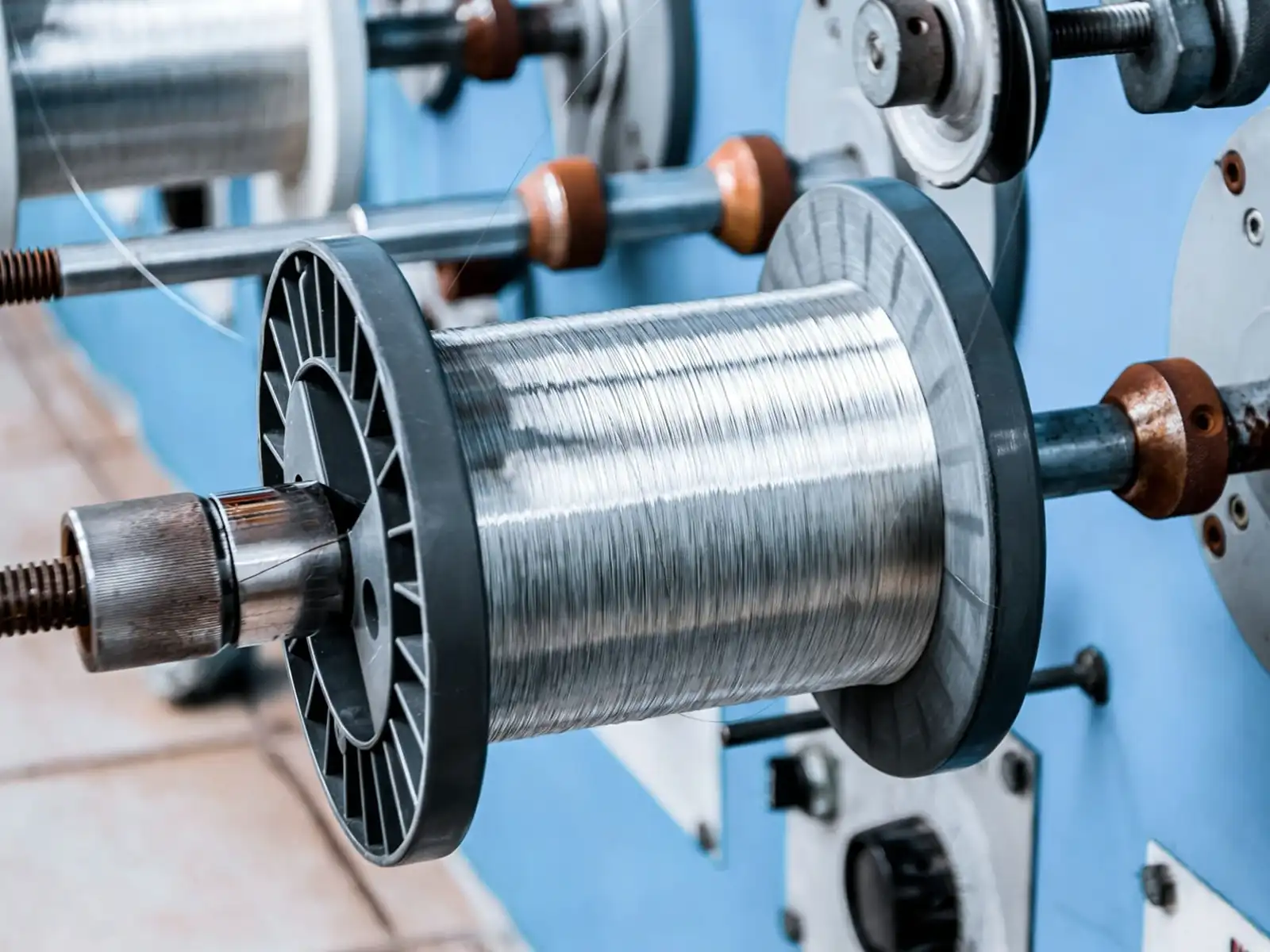
Gr4 Titanium Wire Heat treatment is a critical process parameter that directly determines the mechanical properties, formability, and service performance of titanium wire. Gr4 titanium wire, with its higher strength compared to commercially pure Gr1/Gr2 grades, requires careful control of annealing temperature, time, and cooling rate to achieve the desired property balance. This article examines the mechanical behavior of Gr4 titanium wire across different annealing conditions and provides practical guidance for process optimization.
1. Fundamentals of Titanium Annealing
(1) Purpose of Annealing in Titanium Wire Production
Annealing of titanium wire serves three primary objectives: (1) relieving residual stresses introduced by cold drawing and forming operations, (2) controlling grain size and microstructure to optimize mechanical properties, and (3) restoring ductility for subsequent processing steps. The annealing process involves heating the wire to a temperature below the beta transus (approximately 920-955 degrees C for commercial pure titanium), holding for a specified time, and cooling at a controlled rate.
(2) Annealing Temperature Regimes
Gr4 titanium wire can be annealed in three distinct temperature regimes, each producing different microstructural and mechanical outcomes: low-temperature annealing (400-600 degrees C) primarily relieves residual stress without significant microstructural change; intermediate annealing (600-750 degrees C) promotes partial recrystallization and moderate property softening; and high-temperature annealing (750-850 degrees C) achieves full recrystallization with grain growth and maximum ductility restoration.
2. Mechanical Properties at Different Annealing States
(1) Stress-Relief Annealing (400-600 degrees C)
Wire annealed at 400-600 degrees C for 30-60 minutes retains the majority of cold-work strengthening effects. Tensile strength remains in the range of 750-850 MPa, with yield strength of 600-700 MPa and elongation of 8-12%. This condition is suitable for applications requiring high strength with moderate formability, such as spring wires and high-strength fasteners.
(2) Intermediate Annealing (600-750 degrees C)
Intermediate annealing produces a balanced microstructure with partial recrystallization. The grain structure consists of a mixture of equiaxed recrystallized grains and deformed unrecrystallized regions. Tensile strength decreases to 680-750 MPa, while elongation improves to 15-20%. This condition offers an optimal compromise between strength and formability, making it suitable for wire forming operations requiring moderate deformation.
(3) Full Annealing (750-850 degrees C)
Full annealing achieves complete recrystallization with equiaxed alpha grain structure. Tensile strength drops to 580-650 MPa, but elongation reaches 20-28%, providing excellent formability for complex wire forming operations. This condition is preferred for applications requiring extensive bending, coiling, or swaging after delivery.
3. Microstructural Evolution During Annealing
The microstructural transformation of Gr4 titanium wire during annealing follows a well-defined sequence: recovery (400-550 degrees C) reduces dislocation density without grain boundary migration; nucleation (550-700 degrees C) initiates recrystallization at grain boundaries and deformation bands; growth (700-800 degrees C) expands recrystallized grains at the expense of deformed matrix; and grain coarsening (above 800 degrees C) increases average grain size, which may reduce strength according to the Hall-Petch relationship.
4. Process Optimization Guidelines
For optimal mechanical properties, Gr4 titanium wire annealing should be conducted in a controlled atmosphere (vacuum, argon, or dissociated ammonia) to prevent surface oxidation and hydrogen pickup. Heating rates should not exceed 10 degrees C/min to avoid thermal gradients that cause warping or distortion. Cooling should be performed in air or furnace cooling depending on the target property range. Post-annealing surface treatment (pickling or polishing) removes oxide scale and restores surface finish.
5. Quality Control and Testing
Annealed Gr4 titanium wire must be tested for tensile properties per ASTM E8/E8M, hardness per ASTM E18, and microstructure per ASTM E3 and E45. Grain size should be determined by the intercept method (ASTM E112) and reported on the ASTM grain size number scale. Surface quality inspection includes visual examination under 10x magnification and surface roughness measurement per ASTM B632.
Conclusion
The mechanical properties of Gr4 titanium wire are highly sensitive to annealing conditions, with tensile strength ranging from 520 to 850 MPa and elongation from 8% to 32% across different annealing regimes. Process engineers should select annealing parameters based on the specific application requirements, balancing strength, ductility, and formability to achieve optimal performance in the final product.
FAQ
Q1: What is the recommended annealing temperature for spring wire applications?
For spring wire applications requiring high strength and good fatigue resistance, stress-relief annealing at 400-500 degrees C is recommended. This temperature range preserves cold-work strengthening while eliminating residual stresses that could cause dimensional instability.
Q2: How does annealing affect the surface quality of Gr4 titanium wire?
Annealing above 600 degrees C in air produces surface oxide layers that can be removed by acid pickling. Vacuum or controlled-atmosphere annealing minimizes oxide formation and preserves surface finish without requiring post-treatment.
Q3: Can Gr4 titanium wire be annealed after fabrication?
Yes, Gr4 titanium wire can be annealed after forming operations such as coiling, bending, or swaging. Post-forming annealing at 400-500 degrees C relieves work-hardening stresses and prevents cracking during subsequent processing or service.
Contact Us
Baoji Titanium Valley Titanium Nickel Zirconium Material Processing Co., Ltd. supplies Gr4 titanium wire in various annealed conditions with certified mechanical properties. Contact us at sales@titaniumvalleys.com for technical specifications and order inquiries.
References
[1] Boyer R., Welsch E., Collings E.W. Materials Science and Engineering of Titanium[M]. 2nd Edition. Wiley-VCH, 2022.
[2] ASTM B423/B423M-22. Standard Specification for Titanium and Titanium Alloy Wire.
[3] Lütjering G., Williams J.C. Titanium[M]. 2nd Edition. Springer, 2007.
[4] ISO 6892-1:2019. Metallic Materials-Tensile Testing at Ambient Temperature.