
Gr5 Titanium Alloy Bar Fatigue Resistance Under Extreme Loading Conditions: Which Grade Performs Best?
- Gr5 Titanium Bar
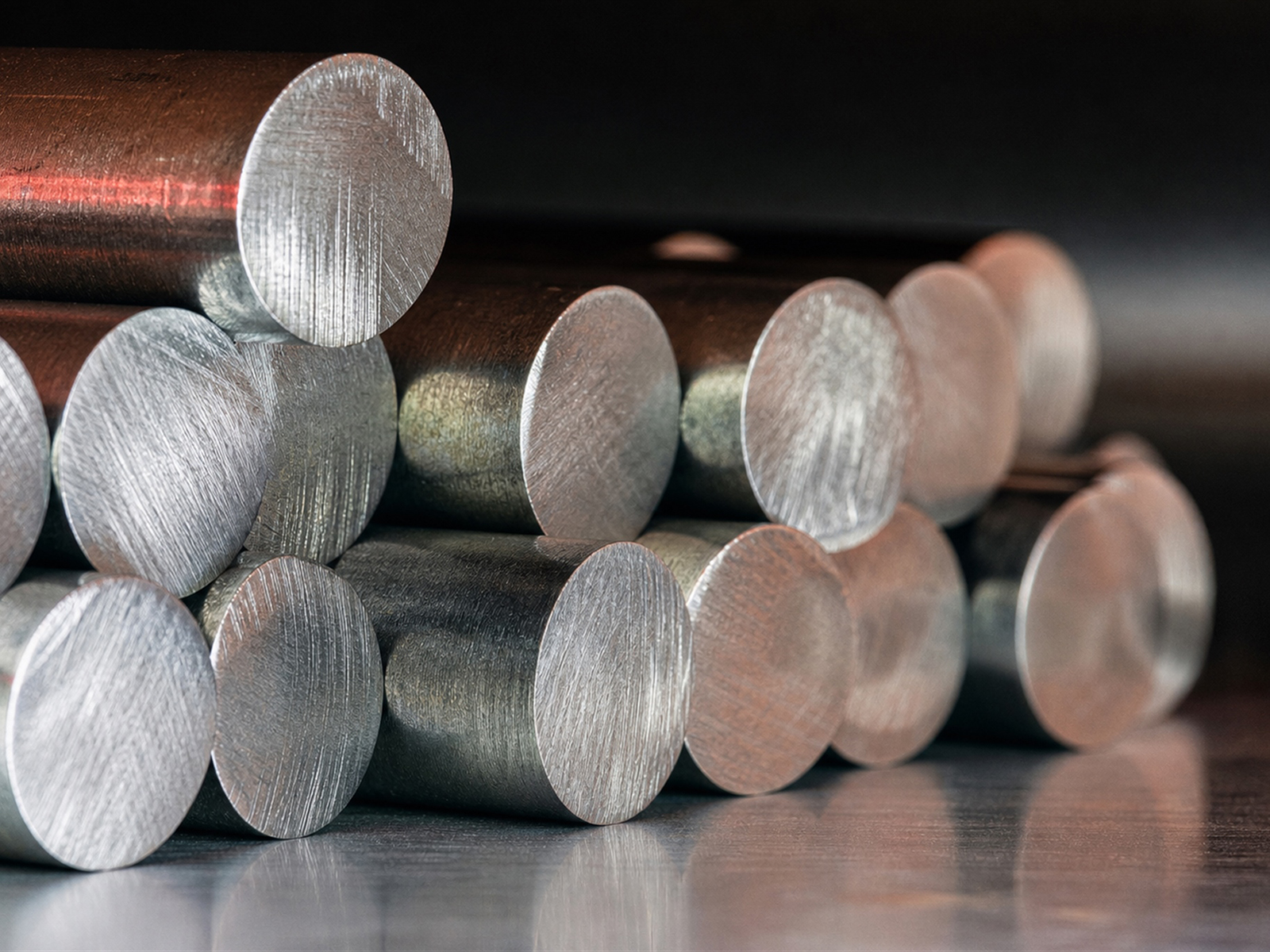
Gr5 Titanium Bar Fatigue resistance is a critical performance criterion for titanium components subjected to cyclic loading in extreme environments. Gr5 (Ti-6Al-4V) titanium alloy bar demonstrates superior fatigue performance compared to commercially pure titanium grades, making it the preferred material for aerospace, marine, and high-performance engineering applications. This article evaluates the fatigue behavior of Gr5 titanium alloy bar under extreme loading conditions and provides comparative analysis with alternative titanium grades.
1. Fatigue Fundamentals for Titanium Alloys
(1) Fatigue Mechanisms in Alpha-Beta Titanium
Gr5 titanium alloy exhibits a dual-phase microstructure consisting of alpha (HCP) and beta (BCC) phases. Fatigue crack initiation typically occurs at alpha-beta phase boundaries, surface defects, or inclusions. Crack propagation proceeds through the alpha phase with limited plastic deformation, resulting in characteristic fatigue striations observable by SEM.
(2) S-N Curve Characteristics
Gr5 titanium bar displays a well-defined S-N curve with an endurance limit of approximately 550-600 MPa at 10^8 cycles (rotating bending). This endurance limit represents 60-65% of the ultimate tensile strength, significantly higher than Gr1/Gr2 titanium (45-50% of UTS). The fatigue strength is further influenced by surface finish, residual stress state, and environmental conditions.
2. Extreme Environment Testing
(1) High-Temperature Fatigue (250-400 degrees C)
At elevated temperatures, Gr5 titanium bar maintains fatigue resistance up to 300 degrees C. Above this temperature, oxidation-induced surface degradation reduces fatigue life. Protective coatings (aluminide, silicide) extend usable temperature range to 400 degrees C for intermittent service.
(2) Corrosion Fatigue in Marine Environments
Gr5 titanium bar exhibits exceptional corrosion fatigue resistance in seawater and humid chloride environments. Unlike stainless steels and aluminum alloys, Gr5 shows no significant reduction in fatigue limit when tested in 3.5% NaCl solution. This makes it ideal for marine structural components, offshore platforms, and ship propeller shafts.
(3) Thermomechanical Fatigue
Under combined thermal cycling and mechanical loading, Gr5 titanium bar demonstrates superior resistance to ratcheting and creep-fatigue interaction. The alpha-beta microstructure provides stable deformation behavior across temperature ranges of -50 to 300 degrees C.
3. Surface Engineering and Fatigue Enhancement
Surface treatments significantly improve Gr5 titanium bar fatigue performance: shot peening introduces compressive residual stresses (-400 to -600 MPa) that retard crack initiation; laser shock peening achieves deeper compressive layers (0.5-1.0 mm); and electropolishing removes surface defects that serve as fatigue crack nucleation sites.
4. Applications in Extreme Loading Scenarios
Gr5 titanium alloy bars are used in aircraft landing gear, turbine engine disks, high-performance connecting rods, and pressure vessel components where fatigue resistance under extreme cyclic loading is paramount. The material consistently outperforms 4140 steel, 17-4PH stainless, and aluminum alloys in weight-normalized fatigue comparisons.
Conclusion
Gr5 titanium alloy bar delivers outstanding fatigue resistance under extreme loading conditions, with endurance limits exceeding 60% of UTS and exceptional performance in corrosive and high-temperature environments. Its fatigue superiority makes it the material of choice for critical aerospace, marine, and industrial applications.
FAQ
Q1: What is the fatigue life expectancy of Gr5 titanium bar?
Gr5 titanium bar typically exceeds 10^7 cycles at 550-600 MPa without failure, with many applications demonstrating survival beyond 10^8 cycles.
Q2: How does surface finish affect Gr5 fatigue performance?
Ground surfaces (Ra 0.4-0.8 um) provide optimal fatigue performance. Rough surfaces (Ra > 3 um) can reduce fatigue limit by 20-30%.
Q3: Can Gr5 titanium bar be repaired after fatigue damage?
Minor surface fatigue damage can be repaired by polishing or laser cladding. Extensive subsurface damage requires component replacement.
Contact Us
Baoji Titanium Valley Titanium Nickel Zirconium Material Processing Co., Ltd. supplies Gr5 titanium alloy bars certified to ASTM B348. Contact us at sales@titaniumvalleys.com.
References
[1] Suresh S. Fatigue of Materials[M]. 3rd Edition. Cambridge University Press, 2022.
[2] ASTM E466-22. Standard Practice for Conducting Force Controlled Constant-Amplitude Axial Fatigue Tests.
[3] Boyer R. An Atlas of S-N Curves for Titanium Alloys[M]. ASM International, 2023.