
Which International Standards Does Gr1 Titanium Wire Comply With?
- Gr1 Titanium Wire
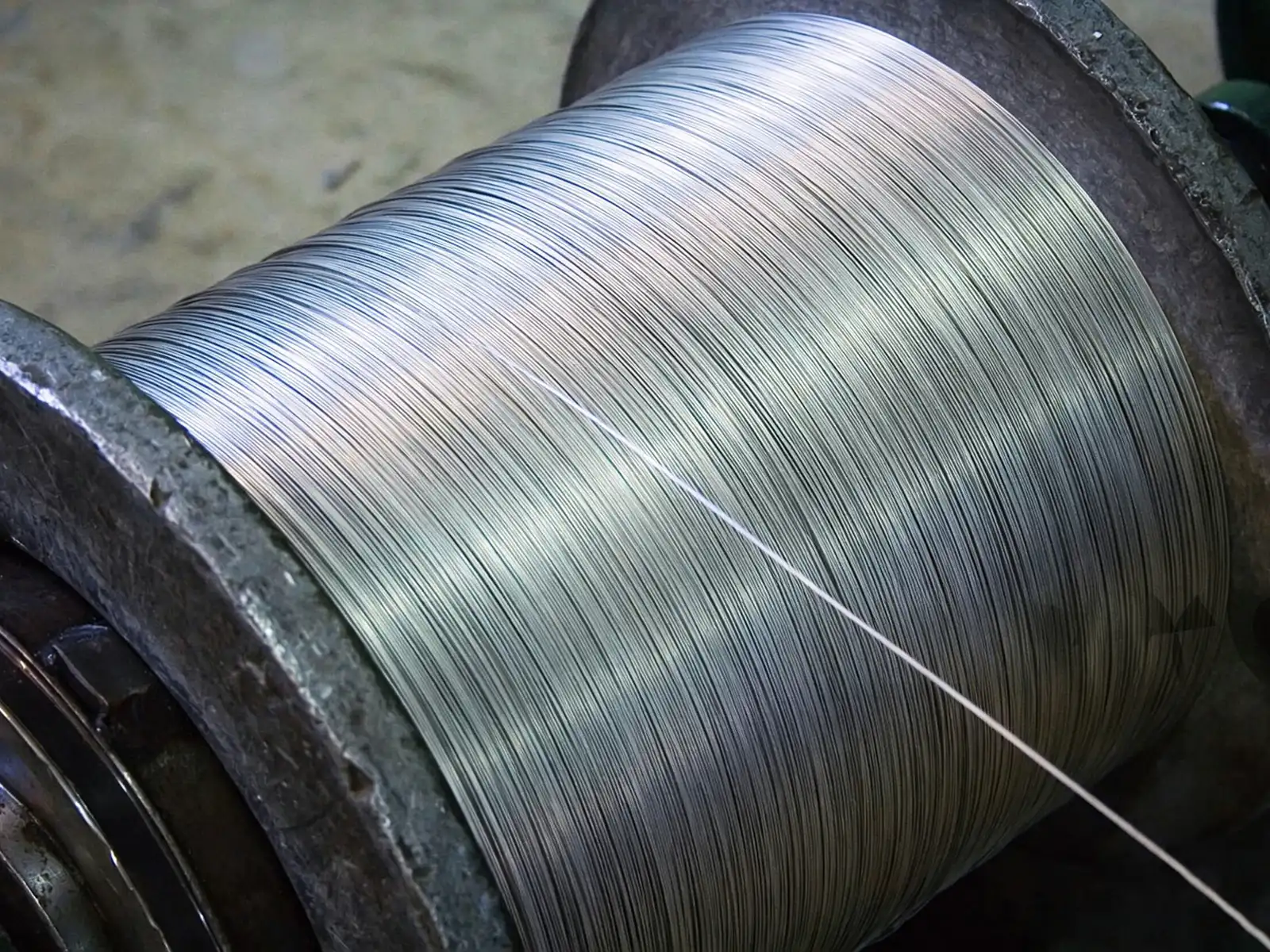
Gr1 titanium wire, as the highest purity grade among industrial pure titanium wires, is regulated by multiple authoritative standards worldwide. The main applicable standards include the American ASTM B863, the international ISO standard system, the European EN standard series, Japan’s JIS H4630, and Russia’s GOST 19807. These standards provide detailed specifications regarding chemical composition, mechanical properties, surface quality, and dimensional tolerances, ensuring the reliable use of the material in high-end fields such as aerospace, medical implants, chemical corrosion protection, and marine engineering. Although different standard systems have variations, they converge on core requirements such as high purity (Ti≥ 99.5%), low impurity control, and stable mechanical performance. Understanding these standards helps users select materials accurately and ensures product compliance and long-term performance stability.
1. What Should You Know About ASTM B863, Core Standard for the North American Market?
(1) What Should You Know About Scope of ASTM B863 Standard?
ASTM B863 is a standard for titanium and titanium alloy wire established by the American Society for Testing and Materials, covering everything from pure titanium to various alloy systems. The standard clearly specifies the chemical composition limits for Gr1 titanium wire: oxygen ≤ 0.18%, iron ≤ 0.20%, carbon ≤ 0.08%, nitrogen ≤ 0.03%, with titanium purity required to be above 99.5%. This strict control of impurities ensures excellent plasticity and corrosion resistance of the material, making it particularly suitable for applications requiring deep drawing, bending, or complex forming.
(2) What Should You Know About Mechanical Performance and Condition Classification?
ASTM B863 divides titanium wire into annealed (Annealed), half-hard (Y2), and hard (Y) states based on the degree of annealing. Gr1 in the annealed state has a tensile strength of ≥ 340 MPa, a yield strength of ≥ 275 MPa, and an elongation of ≥ 20%, meeting the requirements for high plasticity processing. The half-hard and hard states enhance strength by controlling the amount of cold working, making them suitable for elastic components or structural parts that require higher rigidity. This flexible state selection allows the same material to adapt to diverse working conditions.
(3) What Should You Know About Dimensional Tolerances and Surface Quality Requirements?
The standard sets strict tolerance intervals for diameter, usually ranging from ± 0.05mm to ± 0.2mm, depending on the size of the wire. Surface conditions are classified into three types: pickled, bright drawn, and black skin. The bright surface has a roughness of Ra ≤ 0.4um and is suitable for direct use in precision welding or visible parts. The straightness requirement is ≤ 2mm per meter to ensure stable operation of automatic wire feeding equipment and to prevent deviation and instability of the weld pool during welding.
2. What Should You Know About ISO and EN Standards, European and Global Unified System?
(1) What Should You Know About ISO 5832-2 Medical Device Specific Standard?
ISO 5832-2 specifically targets titanium materials for surgical implants, requiring lower levels of trace elements and more stringent biocompatibility verification. Grade 1 titanium wire must pass the ISO 10993 series of biological evaluation tests, including cytotoxicity, sensitization, and implantation reaction assessments. This standard ensures that the material can be safely used for components in long-term contact with the human body, such as bone screws, dental implants, and cardiovascular stents, and European medical device manufacturers generally treat it as a mandatory procurement reference.
(2) What Should You Know About EN 10204-3.1 Material Certificate Requirements?
The European standard EN 10204 specifies the types of inspection documents for metal materials. A 3.1 certificate requires the manufacturer to provide independently verified data on chemical composition, mechanical properties, and traceability. Each batch of Gr1 titanium wire must have the heat number labeled, linking the full process records from titanium sponge to finished wire. This strict documentation management system allows end users to trace the source of raw materials, meeting the quality audit requirements of the aerospace and nuclear power sectors.
(3) What Should You Know About Partial Adoption of DIN 17861 in the European Market?
Although DIN 17861 has been partially replaced by EN standards, Germany’s high-end manufacturing industry still partially follows its traditional requirements for titanium wire dimensional accuracy. This standard imposes extremely strict limits on concentricity, ovality, and surface defects. For example, the ovality of a φ3.0mm titanium wire (the difference between the maximum and minimum diameter) must be controlled within 0.15mm. Coupled with vacuum arc remelting (VAR) processes and multiple-pass cold drawing with intermediate annealing, it can achieve grain refinement and uniform microstructure, improving fatigue life and stress corrosion resistance.
3. What Should You Know About JIS H4630, the First Choice of Japan’s Precision Electronics Industry?
(1) What Should You Know About the Specificity of Chemical Composition in JIS Standards?
The Japanese Industrial Standard JIS H4630 differs slightly from ASTM in impurity control, particularly emphasizing that the hydrogen content must be ≤ 0.0125%. Hydrogen embrittlement is a hidden risk for titanium materials during electron beam welding or high-temperature service. The Japanese standard ensures that materials do not experience brittle fracture in precision applications such as semiconductor manufacturing equipment and liquid crystal panel fixtures through vacuum annealing (a process of heating in a vacuum environment to remove hydrogen and reduce oxidation) and strict hydrogen content testing.
(2) What Should You Know About Surface Treatment and Cleanliness Requirements?
The Japanese electronics industry has extremely high requirements for the surface cleanliness of titanium wire, and the JIS standard includes corresponding test methods for ionic contaminants. The surface of bright-drawn titanium wire must not have residual oil, chloride ions, or sulfides, and ultrasonic cleaning followed by vacuum packaging is usually employed. This kind of cleaning treatment prevents contamination risks in subsequent processes, making it particularly suitable for applications sensitive to particle control, such as OLED evaporation equipment and medical minimally invasive instruments.
(3) What Should You Know About Ultra-fine Specification Dimensional Accuracy?
The Japanese market demands a large quantity of ultra-fine titanium wires ranging from φ0.06mm to φ0.5mm, used for sensor leads, flexible circuit supports, and other miniature structures. JIS H4630 sets tolerance requirements for ultra-fine wire diameters at the ± 0.01mm level. With the combination of a roll die drawing process and an online laser diameter measuring system, high consistency can be achieved in mass production. The length of a single spool can reach over 500 meters, enabling continuous automated production.
4. What Should You Know About GOST 19807 and the Standard Alignment with Emerging Markets?
(1) What Should You Know About Standards System of Russia and CIS Countries?
GOST 19807 is a titanium wire standard established during the Soviet era and is still widely used in Russia, Kazakhstan, and other countries. This standard names Gr1 titanium wire as BT1-00, with chemical composition requirements basically equivalent to ASTM, but there are differences in mechanical property testing methods. Buyers need to pay attention to conversion factors to avoid acceptance disputes caused by standard differences. Russian chemical and offshore engineering projects usually specify GOST-certified materials.
(2) What Should You Know About Trends in Standards Adoption in India and Southeast Asia?
In the process of industrial upgrading in India, a dual standard system of ISO and ASTM is gradually being adopted, but the local Indian Bureau of Standards (BIS) standards are still mandatory for some public projects. Southeast Asian electronics manufacturing bases such as Vietnam and Thailand directly adopt JIS or ASTM standards, simplifying the integration with international supply chains. Suppliers need to provide material certificates and third-party test reports according to the target market, issued by international certification bodies such as SGS or TÜV.
(3) What Should You Know About Dual Recognition of ASTM and EN in the Middle East?
Titanium wire used in Middle Eastern seawater desalination and petrochemical projects typically receives certification according to both ASTM B863 and EN standards. Due to the harsh local conditions of high temperature, high salinity, and high humidity, the verification of material corrosion resistance is particularly stringent. Gr1 titanium wire must pass a salt spray test of more than 48 hours (according to ASTM B117 standard) and simulated seawater immersion tests to prove that it exhibits no pitting or crevice corrosion under chloride ion concentrations greater than 35, 000 ppm, meeting the design life of more than 30 years for seawater pipelines and desalination equipment.
5. What Should You Know About Standard Compliance Verification and Quality Assurance System?
(1) What Should You Know About Key Testing Items for Chemical Composition Analysis?
Authoritative laboratories use ICP-OES (Inductively Coupled Plasma Optical Emission Spectroscopy) or ICP-MS (Mass Spectrometry) techniques to determine the content of trace elements in titanium wires. Light elements such as oxygen, nitrogen, and hydrogen need to be precisely quantified using the inert gas fusion (IGF) method, with detection limits reaching the ppm level. At least three samples from each batch are taken for full elemental analysis, and the data must be archived in association with the furnace number, with a traceability period of no less than 15 years.
Test items | Testing method | Precision requirements | Application standard |
Oxygen content | Inert Gas Fusion-Infrared Absorption Method | ± 5ppm | ASTM E1409 |
Nitrogen content | Inert Gas Melting-Thermal Conductivity Method | ± 5ppm | ASTM E1937 |
Carbon content | Combustion-Infrared Absorption Method | ± 10ppm | ASTM E1941 |
Metals such as iron and aluminum | ICP-OES | ± 0.005% | ASTM E2371 |
(2) What Should You Know About Standard Procedure for Mechanical Performance Testing?
Tensile tests are performed according to ASTM E8 or ISO 6892, with a gauge length of 50 mm and a tensile speed of 10 mm/min. The typical elongation after fracture of Gr1 titanium wire in the annealed state usually reaches 24%-28%, exceeding the minimum standard requirement (≥ 24%). Hardness testing is carried out using a Vickers hardness tester (HV5 load), with no fewer than 5 points tested per batch to obtain an average value. Cold-worked titanium wire requires additional fatigue performance evaluation, and can only be used for dynamic load components if it does not fracture after ≥ 10⁷ cycles.
(3) What Should You Know About Control of Surface Quality and Dimensional Accuracy?
Surface defect inspection includes visual inspection and fluorescent penetrant testing (PT). The surface of bright titanium wire must be free of cracks, folds, pitting, and other defects, with minor scratches allowed to a depth of less than 0.05 mm. Dimensional measurements are monitored online using a laser diameter gauge, with a sampling frequency of ≥ 100 times per meter, and products exceeding tolerances are automatically removed. Straightness is measured using a 5-meter inspection platform with a micrometer, and the data is recorded in the MES system to achieve full-process quality traceability.
Performance indicators | Gr1 annealed state | Gr1 semi-rigid | Gr1 hard state |
Tensile strength (MPa) | 340-450 | 380-480 | 480-650 |
Yield Strength (MPa) | 275-380 | ≥ 350 (typical value) | ≥ 420 |
Elongation (%) | ≥ 24 | 12-18 | 8-12 |
Vickers Hardness (HV) | 140-180 | 180-220 | 220-260 |
6. Why Is Industry Application and Standards Matching Strategy Important?
(1) What Should You Know About Stringent Certification in the Aerospace Field?
Aerospace manufacturers such as Boeing and Airbus require titanium wire suppliers to be certified under the AS9100 quality management system and to provide materials that comply with AMS (Aerospace Material Specifications). Although Grade 1 titanium wire belongs to the civilian grade, it still needs to meet traceability and batch stability requirements when used in non-load-bearing parts such as harness fasteners and shielding covers. Each batch must be accompanied by a PPAP (Production Part Approval Process) document package, including at least 18 documents such as dimensional reports, material certificates, and process cards.
(2) What Should You Know About Dual Standard Verification of Medical Devices?
The U.S. FDA recognizes ASTM standards, while the EU CE certification requires compliance with ISO 5832-2 and EN standards. Medical-grade Gr1 titanium wire needs additional biocompatibility testing, including cytotoxicity (ISO 10993-5), sensitization (ISO 10993-10), and blood compatibility (ISO 10993-4). The materials must be packaged in a sterile environment, accompanied by a sterilization validation report and a traceable UDI (Unique Device Identification) code.
(3) What Should You Know About Corrosion Resistance Certification in Chemical and Marine Engineering?
Chemical equipment manufacturers usually require titanium wire to pass NACE (National Association of Corrosion Engineers) standard tests, simulating environments such as sulfuric acid, hydrochloric acid, and alkaline solutions. Grade 1 titanium wire has a corrosion rate of <0.025 mm/year in the pH 2-12 range, far superior to 316 stainless steel. Marine engineering projects need to provide material certification from DNV-GL (Det Norske Veritas Germanischer Lloyd) or Lloyd’s Register to prove its reliability over a 30-year design life in splash and tidal zones of seawater.
Application field | Leading standard | Key verification items | Typical applications |
Aerospace | ASTM B863 + AMS | Traceability, batch stability | Fasteners, wiring harness |
Medical devices | ISO 5832-2 + ASTM F67 | Biocompatibility, sterility | Bone screws, dental implants |
Chemical equipment | ASTM B863 + NACE | Corrosion resistance, high-temperature stability | Heat exchanger, reactor |
Electronics Manufacturing | JIS H4630 | Cleanliness, dimensional accuracy | Sensors, shielding materials |
Marine Engineering | ASTM B863 + DNV | Resistance to seawater corrosion and fatigue performance | Seawater pipelines, mooring system |
7. What Is the Conclusion?
The international standard system for Gr1 titanium wire constitutes the quality cornerstone of the global supply chain. From North America’s ASTM to Europe’s ISO/EN, from Japan’s JIS to Russia’s GOST, these standards complement and converge with each other in terms of chemical composition, mechanical properties, surface quality, and other aspects. Users need to select materials with the corresponding standard certifications based on the end-use scenarios, while also paying attention to the completeness of third-party inspection reports, material certificates, and process documentation. Strict adherence to standards not only ensures product compliance but also controls material stability from the source, reducing lifecycle costs.
FAQ
Q1, What Is the Most Commonly Used International Standard for Gr1 Titanium Wire?
The most commonly used is the American ASTM B863, which is the core standard for the North American market and covers pure titanium and titanium alloy wires. The standard specifies that Gr1 titanium wire must have a titanium purity of ≥ 99.5%, oxygen ≤ 0.18%, and iron ≤ 0.20%, and it is classified into annealed, half-hard, and hard conditions, with tensile strengths of ≥ 340 MPa, 380 MPa, and 480 MPa, respectively. This standard is widely adopted in fields such as chemical industry and marine engineering.
Q2, What Special Standards Must Gr1 Titanium Wire for Medical Implants Meet?
The medical field requires the implementation of ISO 5832-2 specific standards, which demand lower content of trace elements, and must pass ISO 10993 series biocompatibility tests (cytotoxicity, sensitization, blood compatibility, etc.). At the same time, it must comply with ASTM F67 or EN standards, with a UDI unique device identifier and sterile packaging verification report, in order to obtain FDA or CE certification.
Q3, What Are the Main Differences Between the Japanese JIS H4630 Standard and ASTM?
JIS H4630 places greater emphasis on controlling hydrogen content (≤ 0.0125%) and prevents hydrogen embrittlement through vacuum annealing, making it suitable for electron beam welding scenarios. At the same time, this standard requires ultra-fine wires (φ0.06-0.5mm) to have a dimensional tolerance of ± 0.01mm, and surface cleanliness must pass ion contamination tests, making it widely used in semiconductor equipment and precision sensors.
Q 4, What Material Certificates Are Required for Gr1 Titanium Wire Exported to Europe?
EN 10204-3.1 certificate is required, including independently verified chemical composition, mechanical properties, and traceability data. Each batch must be marked with the melt furnace number, linking the full-process records from sponge titanium to finished wire. In the aerospace field, an additional PPAP package is required, including dimension reports, process cards, and no fewer than 18 items of documentation.
What Should You Know About Contact Us?
If you need more technical support or quotation information about Gr1 titanium wire, you are welcome to contact us. We provide complete material certificates and third-party inspection reports, and can customize the diameter, surface treatment, and packaging method as needed. You are welcome to contact us via email at sales@titaniumvalleys.com to confirm your specific requirements and obtain product samples, technical data, and detailed quotation information.
References
- Liu Zhenhua, Zhao Xiaodong. Comparative Study of the Standard System of Titanium and Titanium Alloy Wire Materials [J]. Materials Review, 2020, 34(5): 050-055.
- Wang Jianguo. Current Development Status of International Standards for Pure Titanium Materials for Surgical Implants [J]. China Medical Devices Information, 2019, 25(12): 18-22.
- Zhang Wei, Li Ming. Analysis of the Application of Japanese JIS Standards in Precision Electronic Materials [J]. Electronic Materials and Packaging, 2021, 21(3): 45-49.
- Chen Zhiqiang. Analysis of European Metal Material Inspection Document Standard EN 10204 [J]. Metallurgical Standardization and Quality, 2018, 56(4): 30-34.