
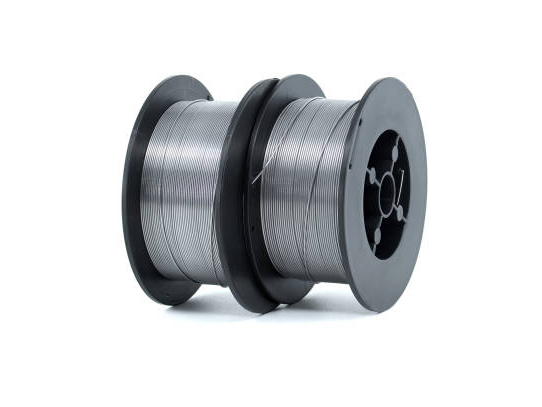
Gr1 titanium wire has good biocompatibility, great corrosion resistance and ultra-high purity. It is an ideal material for modern medical device manufacturing. As the highest purity grade of commercially pure titanium (Ti≥99.5%), Gr1 titanium wire fully meets international medical material standards including ISO 5832-2 and ASTM F67. It is non-toxic, non-magnetic and low-density, so it works well in implants, surgical instruments and dental materials. Compared with stainless steel and cobalt-chromium alloy, Gr1 titanium wire is more stable and causes no rejection inside the human body. It also has good cold working performance, and workers can easily make complex medical parts with it. All these advantages make it a safer and more reliable choice for the medical industry.
Why Can Gr1 Titanium Wire “Fool” the Human Immune System?
Natural Oxide Film Builds a Human-Friendly Barrier
Gr1 titanium wire quickly forms a stable titanium oxide protective film on its surface. This nano-scale passive film only has a thickness of several nanometers and owns strong chemical stability. After implantation into the human body, the oxide film stops metal ions from releasing effectively, and avoids local tissue inflammation or systemic allergic reactions. Clinical data show titanium materials have a tissue compatibility score over 98%, much higher than traditional medical stainless steel.
It Does Not Only Match the Human Body, But Also Fuses with Bone Actively
Excellent Osseointegration Brings Long-Term Stable Support
In orthopedic implantation, Gr1 titanium wire has good osseointegration performance. The porous structure of its surface oxide layer offers a good attachment base for bone cells, and helps osteoblasts proliferate and differentiate. Medical research proves the bonding strength between titanium implants and bone tissue reaches 20-30MPa. This direct structural connection guarantees long-term stability of implants.
Implant Safety Material with More Than Half a Century of Clinical Verification
Gr1 titanium materials have over 50 years of clinical application history and prove safe enough. Its chemical inertness keeps the material stable in human body environment without degradation or corrosion. Large-scale epidemiological tracking shows titanium implants have a 10-year survival rate over 95% and a 20-year survival rate above 85%, far better than other metal materials.
Why Can Gr1 Titanium Wire Serve Stably for a Long Time in the Human Corrosive Environment?
Natural TiO₂ Protective Film Resists Erosion from Complex Body Fluid
Human body fluid contains chloride ions, protein, amino acid and other complex components with a pH value from 7.35 to 7.45. This environment causes strong corrosion to common metals. Gr1 titanium wire forms natural TiO₂ oxide film and shows great passivation performance in body fluid. Even in normal saline with chloride ion concentration up to 9g/L, its corrosion rate is only 0.001 mm/year.
Performance Remains Perfect After Repeated High-Temperature Sterilization
Medical devices need multiple high-temperature steam sterilization, ethylene oxide disinfection or gamma ray irradiation. Gr1 titanium wire keeps stable under 134℃ high-pressure steam. After 500 sterilization cycles, its surface morphology and mechanical performance almost stay the same. This stability ensures long-term reliability of reusable medical devices.
It Maintains Excellent Corrosion Resistance Against Strong Oxidizing Disinfectants
Medical staff often use strong oxidizing disinfectants like hydrogen peroxide and sodium hypochlorite in medical environments. Gr1 titanium wire has strong corrosion resistance to these chemicals. It has no pitting corrosion or stress corrosion cracking even after long-time soaking in 3% hydrogen peroxide solution. This feature is vital for surgical instruments and endoscope components.
Performance Comparison Between Gr1 Titanium Wire and 316L Stainless Steel as Human Implants
In normal saline at 37℃, the corrosion rate of Gr1 titanium wire is less than 0.001 mm/year while 316L stainless steel is 0.05 mm/year, with a corrosion resistance advantage over 50 times. In plasma environment, Gr1 titanium wire corrosion rate is 0.0008 mm/year and 316L stainless steel is 0.08 mm/year, with an advantage of 100 times. In 3% hydrogen peroxide solution, Gr1 titanium wire corrosion rate is 0.002 mm/year and 316L stainless steel is 0.12 mm/year, with an advantage of 60 times.
How Do Ultra-High Purity and Precision Machining Support Minimally Invasive Medical Device Manufacturing?
Influence of Purity Control on Performance
Gr1 titanium wire has purity ≥99.5%, oxygen content ≤0.18% and iron content ≤0.20%. Strict composition control keeps consistent material performance. Precise control of impurity elements directly affects the plasticity and fatigue strength of the material. Medical-grade Gr1 titanium wire uses vacuum melting and multiple refining processes to limit interstitial elements to the lowest level, and its elongation rate reaches over 20%.
Manufacturing Capacity of Ultra-Fine Specifications
Modern minimally invasive medical devices need ultra-fine titanium wire with diameter from 0.06 mm to 0.5 mm. The Italian Danieli continuous rolling production line and cold drawing process realize precision control of dimensional tolerance at ±0.02 mm. This precision is essential for making vascular stents, pacemaker wires and nerve stimulation electrodes.
Medical Standards for Surface Quality
Medical-grade Gr1 titanium wire has surface roughness Ra≤0.4 μm. Bright wire drawing or electrolytic polishing treatment makes its surface cleanliness reach medical grade standards. Its surface has no oil stain, oxide scale or scratches, so it avoids bacterial adhesion and tissue irritation and meets ISO 10993 biological evaluation standards.
Dimensional Consistency and Batch Stability
The production line with over 90% automation rate keeps performance fluctuation of each batch product within 3%. The full-process online detection system monitors diameter, ovality and surface defects with 100% inspection. Single coil weight can exceed 100 kg with no intermediate welding points, and it ensures continuity and consistency in mass production of medical devices. Medical-grade Gr1 titanium wire has purity ≥99.5% while ordinary industrial grade is ≥99.0%, with a 0.5% increase. Its oxygen content is ≤0.18% versus ≤0.25% for industrial grade, down by 28%. Surface roughness Ra≤0.4 μm compares with Ra≤0.8 μm of industrial grade, upgraded by 50%. Dimensional tolerance ±0.02 mm is 60% better than industrial grade ±0.05 mm.
In Which Specific Medical Fields Does Gr1 Titanium Wire Show Irreplaceable Value?
Orthopedic Implants and Repair Systems
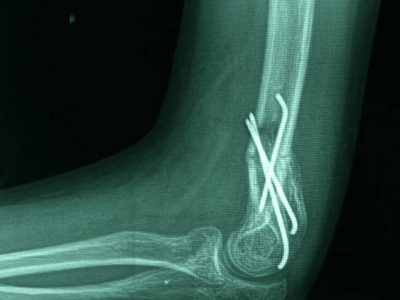
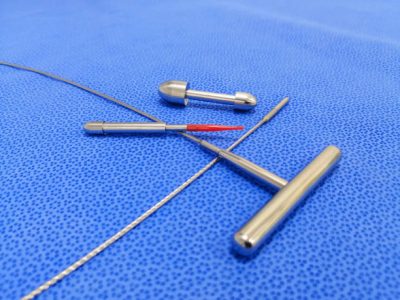
Orthopedic implants such as spinal fusion cages, intramedullary nails, bone plates and bone screws widely use Gr1 titanium wire as basic material. Its elastic modulus is 110 GPa, much lower than stainless steel at about 200 GPa and closer to human bone of 10-30 GPa. It effectively reduces stress shielding effect and promotes bone reconstruction. Braided orthopedic cables use stranded multi-strand Gr1 titanium wire with breaking strength over 1200 N and good flexibility.
Cardiovascular Interventional Devices
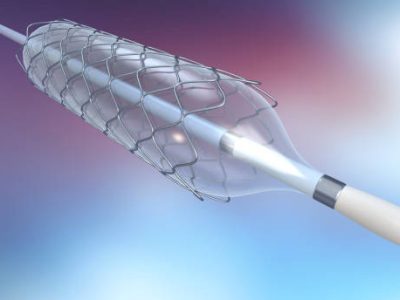
Cardiovascular devices like coronary stents, guide wires and occluders have strict requirements on material performance. Workers make mesh stent structures with ultra-fine Gr1 titanium wire of 0.1-0.3 mm diameter through laser cutting and electrolytic polishing. Its radial support force, resilience and fatigue life pass verification of 400 million pulsating cycles, and it can work stably under heart beating for a long time.
Dental Implant and Orthodontic Materials
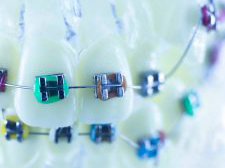
Dental implants, orthodontic arch wires and crown bases all adopt Gr1 titanium wire. The oral environment has pH value changing from 4.5 to 8.0 and bears cyclic stress from chewing. Gr1 titanium wire has good acid and alkali resistance and fatigue strength to fit this environment perfectly. Orthodontic arch wires with diameter 0.4-1.0 mm gain good elastic performance after special heat treatment.
Neurosurgery and Minimally Invasive Devices
Deep brain stimulation electrodes, nerve repair catheters and minimally invasive surgical instruments need non-magnetic materials. Gr1 titanium wire has paramagnetic property with magnetic susceptibility <1×10⁻⁶, and it fully matches MRI examination. Ultra-fine titanium wire of 0.06 mm diameter can weave into nerve repair catheters to offer mechanical support and allow nerve regeneration.
Surgical Instruments and Implant Accessories
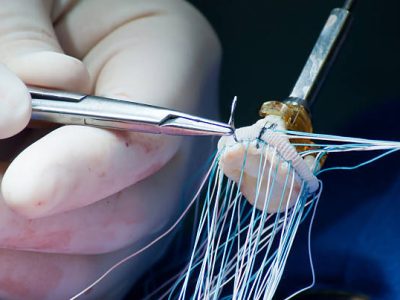
Workers make surgical suture needles, stapler nails and endoscope biopsy forceps with Gr1 titanium wire. Its good cold working performance supports precision forming of complex shapes. Its hardness reaches HV260 after cold deformation to meet cutting and clamping needs. Its low density at 4.51 g/cm³ also reduces operation burden for surgeons. In orthopedics, typical products include spinal fusion cages and bone plates, requiring osseointegration and fatigue strength, and Gr1 titanium wire has matched elastic modulus and high biological activity. In cardiovascular field, it makes coronary stents and occluders needing radial support and pulsation resistance, with advantages of ultra-fine specification and long fatigue life. In dentistry, it applies to implants and orthodontic wires against corrosion and with elasticity, and owns acid and alkali resistance and heat treatment performance. In neurosurgery, it makes electrodes and repair catheters for non-magnetism and flexibility, compatible with MRI and fit for ultra-fine weaving. For surgical instruments, it produces suture needles and endoscopes needing hardness and light weight, with good cold working performance and low density.
How to Guarantee Consistency of Medical-Grade Gr1 Titanium Wire Through Quality Control System?
Raw Material Traceability and Inspection
Manufacturers build batch traceability system starting from titanium sponge selection for medical-grade Gr1 titanium wire production. Every batch of raw material goes through spectral analysis, oxygen-nitrogen-hydrogen detection and mechanical performance test to meet ASTM B863 and ISO 5832-2 standards. Vacuum arc remelting (VAR) process eliminates segregation, and ingot flaw detection ensures no internal defects.
Full-Process Automatic Monitoring
The Italian Danieli production line has thousands of sensors to monitor key parameters in real time, including heating temperature with error ±5℃, rolling speed with error ±2% and tension control with error ±3%. The closed-loop control system makes automatic adjustment and avoids human interference. Online ultrasonic flaw detection and eddy current testing achieve 100% non-destructive testing to ensure surface and internal quality.
Batch Performance Verification System
Every batch of medical titanium wire provides complete material certificate EN 10204-3.1, covering chemical composition, mechanical performance, metallographic structure and surface quality. Staff carry out sampling inspection on tensile property, hardness and elongation rate by batch with a 100% pass rate. Third-party laboratories complete biocompatibility evaluation according to ISO 10993 standards.
Cleanliness and Packaging Standards
Medical-grade Gr1 titanium wire goes through multi-stage ultrasonic cleaning to remove surface oil and particles. Workers conduct vacuum packaging or nitrogen-filled protection in a clean room environment to prevent oxidation and pollution. Packaging materials meet medical device standards, and product labels mark batch number, specification and inspection date with full traceability from production to application.
Conclusion
Gr1 titanium wire has good biocompatibility, excellent corrosion resistance and ultra-high purity, and it becomes an indispensable core material for modern medical devices. It applies widely from orthopedic implants and cardiovascular stents to dental restoration and neurosurgical instruments, and promotes the development of minimally invasive medical technology. Strict quality control system and precision machining capacity ensure product consistency and reliability, and offer solid guarantee for patient safety and treatment effect.
FAQ
1.What is the difference between Gr1 titanium wire and Gr2 titanium wire in medical applications? Gr1 titanium wire has higher purity (Ti≥99.5%) and lower oxygen content (≤0.18%), with better plasticity and cold working performance. Medical implants prefer Gr1, while surgical instruments needing higher strength can choose Gr2. Both have equivalent biocompatibility, but Gr1 fits more for making minimally invasive devices with complex forming needs.
2.What influence does surface treatment of medical Gr1 titanium wire have on performance?
Pickling removes oxide scale and forms even passive film to improve corrosion resistance. Bright wire drawing cuts surface roughness down to Ra≤0.4 μm and reduces bacterial adhesion. Anodizing thickens oxide film to hundreds of nanometers and further enhances biological activity. Different surface treatments meet functional needs of specific medical devices.
3.How to verify Gr1 titanium wire meets medical device regulatory requirements?
Medical titanium wire needs to follow material standards ISO 5832-2 and ASTM F67, and pass ISO 10993 biological evaluation including cytotoxicity, sensitization and irritation tests. Suppliers shall provide EN 10204-3.1 material certificate, third-party test reports and FDA/CE certification documents to ensure material traceability and regulatory compliance.
4.Choose Professional Gr1 Titanium Wire Manufacturer?
Baoji Titanium Valley Titanium Nickel Zirconium Material Processing Co., Ltd. owns advanced Italian Danieli production lines. It specializes in producing medical-grade Gr1 titanium wire with annual output of 5000 tons. It provides full solutions covering ultra-fine specification from 0.06 mm and customized surface treatment. For medical titanium material technical support or product consultation, please contact us: sales@titaniumvalleys.com
References
1.Cui Zhenduo, Zhu Jiamin, Jiang Hui, et al. Research Progress of Surface Modification of Ti and Titanium Alloys in Biomedical Field[J]. Surface Technology, 2024.
2.Bai Xiaowei. Research Progress of Titanium Alloy Materials in Orthopedic Application[J]. The Fourth Medical Center of PLA General Hospital, 2025.
3.Bai Xuehan, Fan Lin, Zhao Mingyu, et al. Research Progress of Medical Titanium and Titanium Alloy Surface Coatings[J]. Titanium Industry Progress, 2022(3): 33-40.
4.Zhang Qinghua, Fan Hong. Detection of Cytotoxicity and Genotoxicity of Three Kinds of Metal Materials for Orthodontic Anchorage[J]. Journal of Practical Stomatology.