
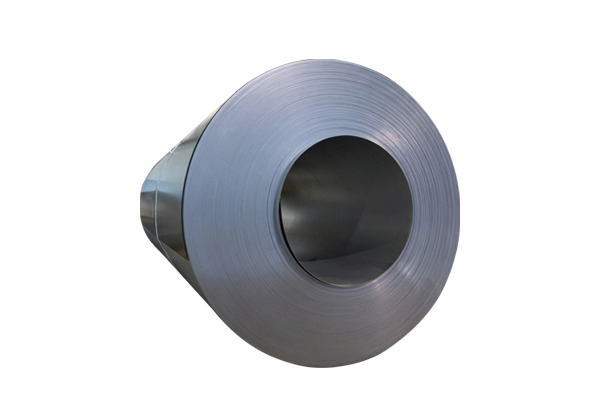
Gr1 and Gr2 titanium foil are the most widely used pure titanium materials in industry. Both feature excellent corrosion resistance, non-magnetic properties, light weight and good biocompatibility. Their core difference lies in controlled trace elements. This difference creates two clear performance orientations. Gr1 foil delivers high purity and superior formability for ultra-corrosive environments and precision forming. Gr2 foil balances strength and ductility. It suits most industrial structural and anti-corrosion scenarios. This article explains their standard composition, mechanical features, typical uses and core strengths for accurate material selection.
1. Basic Understanding: Essential Differences Between Gr1 and Gr2 Titanium Foil
Both Gr1 and Gr2 titanium foil belong to single-phase alpha pure titanium. They contain no aluminum or vanadium alloy elements. Tiny gaps exist in the titanium crystal lattice. Oxygen and iron occupy these gaps and change material performance. Higher oxygen and iron content improves hardness and tensile strength. It also slightly reduces ductility and extreme corrosion resistance.
Gr1 titanium foil has higher purity and fewer impurities. It offers better formability, extreme corrosion resistance and safer biocompatibility. Gr2 titanium foil raises trace element content within standard limits. It gains higher mechanical strength while retaining most pure titanium advantages. It serves as a universal grade for general industrial use.
2. Chemical Purity and Standard Composition (ASTM B265)
All data follows the latest ASTM B265 standard. Trace element content decides material grade and application boundary.
Gr1 Titanium Foil
Oxygen content ≤ 0.18%. Iron content ≤ 0.20%. Titanium purity ≥ 99.50%. Low impurities stabilize the crystal structure. The material deforms easily. It resists local corrosion and avoids impurity precipitation in high-purity working environments.
Gr2 Titanium Foil
Oxygen content ≤ 0.25%. Iron content ≤ 0.30%. Titanium purity ≥ 99.25%. Slightly higher trace elements greatly boost mechanical performance. It keeps good ductility and overall corrosion resistance. It only falls behind Gr1 in ultra-severe corrosion and ultra-precision forming scenarios.
3. Mechanical Properties: Balance Between Strength and Ductility
Gr1 and Gr2 titanium foil share the same density of 4.50 g/cm³. The weight is about 60% of carbon steel. Their lightweight advantage stays consistent. The key difference appears in strength and forming tolerance.
Gr1 Titanium Foil: High Ductility for Precision Forming
Tensile strength ≥ 240 MPa. Yield strength ≥ 138 MPa. Elongation ≥ 24%. It features low work hardening rate. It supports deep drawing, micro bending and complex curved forming. It hardly cracks or concentrates stress during processing. It fits fuel cell bipolar plates, micro acoustic diaphragms and ultra-thin shielding parts.
Gr2 Titanium Foil: Balanced Performance for Structural Use
Tensile strength ≥ 345 MPa. Yield strength ≥ 275 MPa. Elongation ≥ 20%. Its tensile strength increases by about 43% compared with Gr1. It resists deformation, buckling and fatigue better. It still handles regular stamping and bending easily. It works well for parts that need both corrosion resistance and structural stability.
4. Corrosion Resistance: Purity Decides Service Limit
Both grades form a dense and self-repairing titanium dioxide film on the surface. The film effectively blocks acid, chloride and seawater erosion. Both last much longer than stainless steel and aluminum alloy in common corrosive conditions.
Gr1 titanium foil shows obvious advantages in extreme environments. Its uniform lattice and low impurities prevent intergranular corrosion and local erosion. In high-temperature concentrated nitric acid (175 °C), its corrosion rate is less than half of Gr1. It avoids metal precipitation and medium contamination in pharmaceutical and high-purity chemical production.
Gr2 titanium foil performs steadily in medium corrosion scenarios. It adapts to seawater desalination, salt spray environments and general acid-base equipment. Its higher strength resists water pressure and vibration load. It delivers better comprehensive cost performance for ordinary industrial projects.
5. Industry Selection Guide
5.1 Medical and Biomedical Industry
Gr1 titanium foil is the preferred grade for implant devices. High purity and excellent biocompatibility reduce immune rejection risks. It suits vascular stents, skull repair plates and minimally invasive implant parts. Its good formability supports customized precision shaping.
Gr2 titanium foil applies only to in-vitro medical equipment. It makes device shells, auxiliary fixtures and non-contact structural parts. It provides stable strength and surface cleanliness without implant-level biological requirements.
5.2 Electronics and New Energy Industry
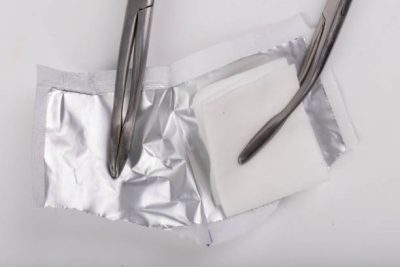
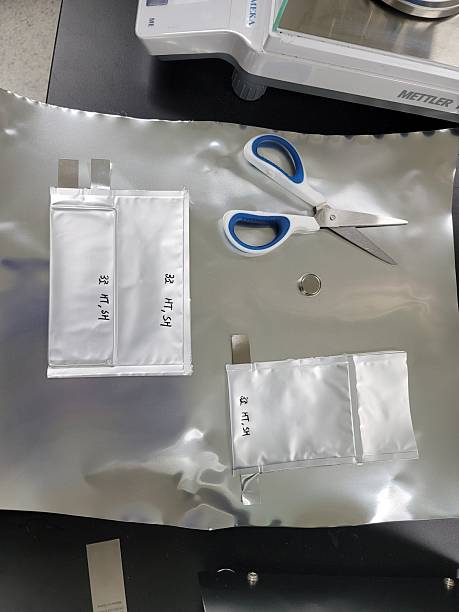
Gr1 titanium foil is ideal for battery current collectors, precision tabs and fuel cell bipolar plates. It maintains stable electrochemical performance in electrolyte environments. It supports ultra-thin rolling and complex flow channel stamping. It reduces internal resistance and improves battery energy density. It also serves 5G EMI shielding and ultra-thin heat dissipation structures.
Gr2 titanium foil mainly works for new energy structural parts. It makes battery outer shells and protective liners. Its higher strength improves impact resistance and structural stability.
5.3 Chemical and Pharmaceutical Industry
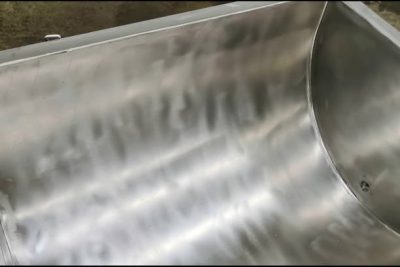
Gr1 titanium foil fits ultra-severe chemical working conditions. It lines pharmaceutical reaction kettles and high-temperature acid heat exchange tubes. It prevents medium pollution and equipment failure. Its service life can reach decades and greatly reduces maintenance downtime.
Gr2 titanium foil matches general chemical anti-corrosion needs. It applies to seawater cooling systems, common acid-base tank liners and auxiliary chemical structures. It balances corrosion resistance and mechanical stability under pressure fluctuation.
5.4 Aerospace and Defense Industry
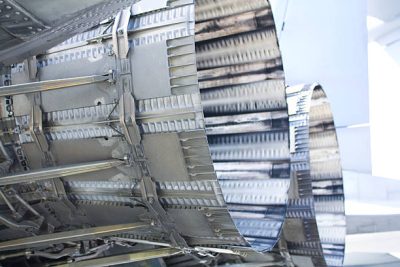
Gr1 titanium foil serves non-load-bearing functional components. It makes thermal insulation blankets, sound insulation plates and precision instrument liners. It relies on flexibility, non-magnetism and light weight to optimize aircraft performance.
Gr2 titanium foil focuses on lightweight load-bearing structures. It produces aerospace gaskets, reinforcing patches and small support brackets. It reduces overall weight while ensuring structural rigidity and fatigue resistance. Both grades meet aerospace quality traceability standards.
5.5 Hydrogen Energy and Solar Energy Industry
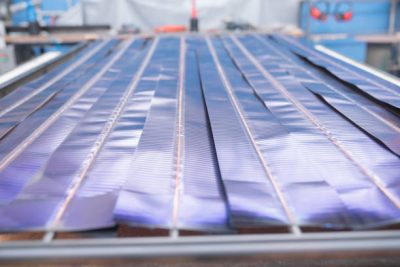
Gr1 titanium foil is a classic material for PEM fuel cell bipolar plates. It resists electrochemical corrosion and keeps stable conductivity. It forms complex flow channels through low-cost stamping. It also works for precision accessories in solar thermal power systems.
Gr2 titanium foil fits offshore wind power and coastal new energy structures. It balances seawater corrosion resistance and mechanical fatigue resistance for long-term outdoor service.
6. Core Advantages of Gr1 Titanium Foil
6.1 Simplify Production and Reduce Cost
Gr1 titanium foil has elongation above 24% and low work hardening. It finishes complex forming in one step. It needs no repeated annealing. It shortens production cycles, lowers energy consumption and reduces defective rates. It effectively avoids cracking and deformation in micro-precision part processing.
6.2 Longer Service Life in Extreme Environments
Low impurity content brings ultra-stable chemical properties. In boiling strong acid environments, its corrosion resistance is far better than Gr2. It extends equipment service life from 15 years to more than 30 years in chemical workshops. It cuts maintenance frequency and production downtime to offset higher initial material cost.
6.3 Lightweight Upgrade for Industrial Products
The 4.50 g/cm³ density greatly reduces product weight compared with steel and nickel alloy. In the battery industry, ultra-thin Gr1 foil lowers single battery weight and improves device endurance and portability. In aerospace, lightweight design improves fuel efficiency and flight stability.
7. Material Selection and Procurement Standards
The selection rule is clear. Choose Gr1 for precision forming, medical implantation, extreme corrosion and high-purity scenarios. Choose Gr2 for structural load-bearing, medium corrosion and general industrial scenarios. Reasonable selection balances performance and budget.
Check supplier capacity during procurement. Verify ISO 13485 for medical projects and AS9100 for aerospace projects. Confirm precision control up to ±0.001 mm for ultra-thin products. Request complete MTC reports and XRF composition verification to ensure full traceability. Custom services such as precision slitting, bright annealing and ultra-clean cleaning can improve production efficiency.
8. Conclusion
Gr1 and Gr2 titanium foil have no absolute superiority. They adapt to different application scenarios. Gr1 suits high-end scenarios that require high purity, precise forming, biological safety and extreme corrosion resistance. Gr2 suits general industrial scenarios that need balanced strength and cost performance. Both grades outperform traditional stainless steel and aluminum alloy in lightweight, durability and stability. Matching the right grade with working conditions and reliable suppliers maximizes product performance and reduces full-cycle costs.
FAQ
1. What is the main difference between Gr1 and Gr2 titanium foil?
Purity and mechanical balance. Gr1 has higher purity, better ductility and stronger extreme corrosion resistance. It fits precision and high-purity scenarios. Gr2 has higher tensile strength and structural stability. It suits load-bearing and general anti-corrosion projects.
2. Can Gr1 and Gr2 titanium foil be welded?
Yes. Use pure argon shielding (≥99.99% purity) to isolate air during welding. Silver or straw-yellow weld color means qualified welding. Dark or gray welds show oxidation pollution. Strictly control heat input to avoid deformation and perforation for ultra-thin foil.
3. How to verify genuine Gr1 and Gr2 titanium foil?
Check MTC reports to match ASTM B265 standard data on composition and mechanical properties. Use portable XRF spectrometers for on-site component testing. Invite third-party institutions to complete tensile, metallographic and corrosion tests for high-end projects.
Professional Solutions from Titanium Valley
Baoji Titanium Valley specializes in high-precision Gr1 and Gr2 titanium foil. We adopt advanced 20-high rolling mills, continuous annealing lines and ultra-sonic cleaning lines. We stably produce ultra-thin foil down to 0.001 mm with a tolerance of ±0.001 mm. Our annual output reaches 3000 tons. We support sample research, small-batch trial production and mass delivery. All products comply with ASTM B265 standards and complete traceability systems. We serve medical, new energy, aerospace, chemical and marine industries. For technical consultation, customization and sample testing, please contact: sales@titaniumvalleys.com
References
- GB/T 3621—2007, Titanium and Titanium Alloy Sheets and Plates[S].
- ASTM B265-20, Standard Specification for Titanium and Titanium Alloy Sheet, Strip, and Plate[S].
- Research on Preparation Technology of Ultra-thin and Wide Titanium Foil[J]. Special Casting & Nonferrous Alloys, 2022.
- Processing Properties of Commercially Pure Titanium[J]. Electroplating & Environmental Protection, 1991.
- Study on Tensile Anisotropy of Ultra-thin Titanium Foil for Bipolar Plates[J]. Rare Metal Materials and Engineering, 2025.