
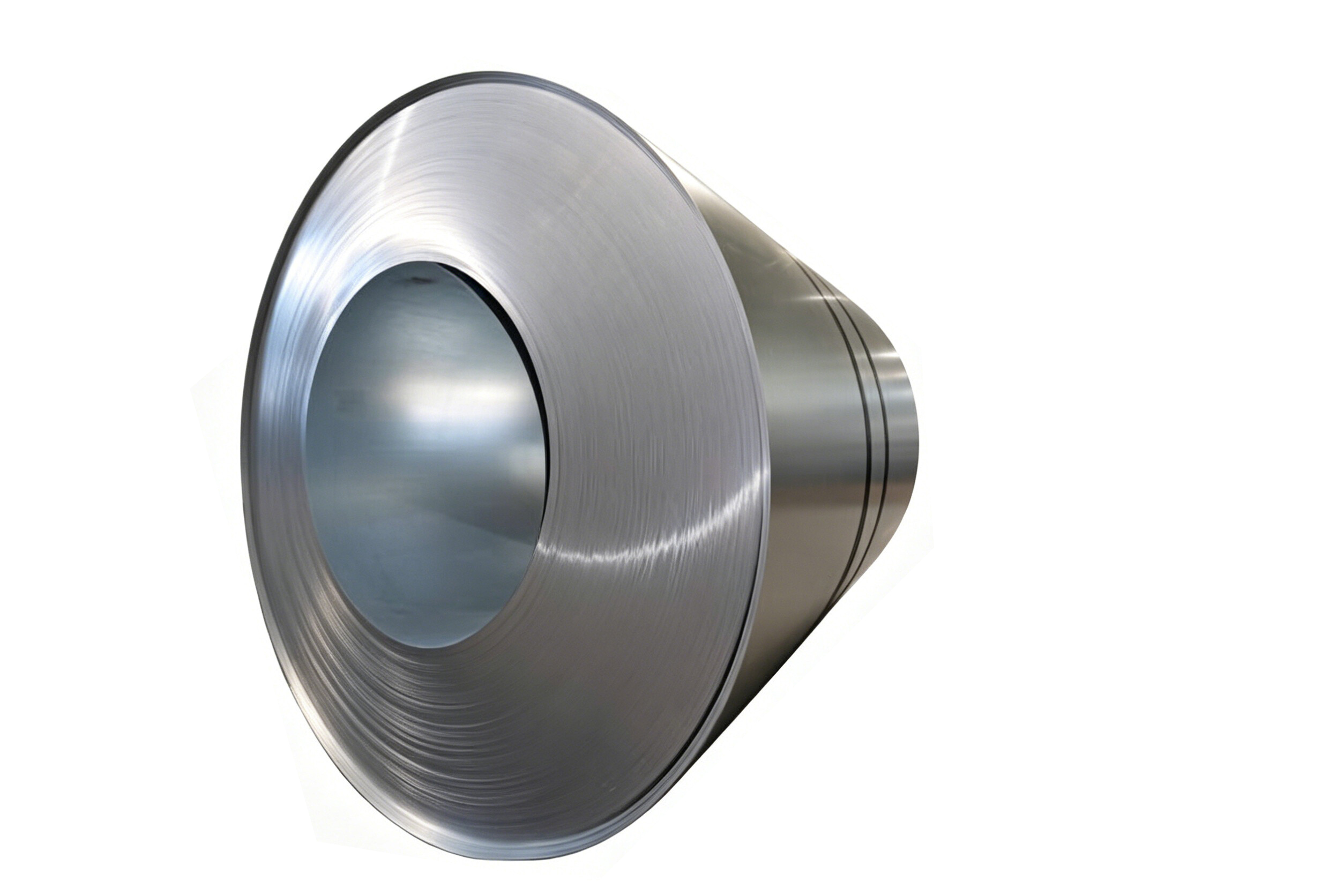
Grade 1 titanium foil works well in physical stress, chemical conditions and high temperature environments.It is alpha-phase commercial pure titanium with purity ≥99.5%, tensile strength ≥370MPa and elongation ≥25%.It balances strength and toughness well. So it does not crack easily during stamping, bending and other high-stress forming processes.
Its density is only 4.51 grams per cubic centimeter. This value is 57% of steel’s density.It helps cut weight greatly in aerospace design.
Grade 1 titanium foil also stays stable in corrosive liquid and high-temperature oxidation conditions.It forms a tight oxide film on its surface. The film keeps its structure intact for a long time in acid, alkali and salt spray environments.
Many application scenarios need both mechanical stress resistance and chemical corrosion resistance.Typical uses include electronic shielding and fuel cell electrodes.Grade 1 titanium foil can bear multiple complex working conditions at the same time. This ability is very important for these applications.
How do the basic mechanical properties of Grade 1 titanium foil support pressure bearing?
Strength basis determined by micro structure
Grade 1 titanium foil has an alpha-phase structure.It is made by 20-high precision rolling and argon annealing.The annealing temperature error is within ±2℃.This process creates even grain distribution inside the material.
The even structure makes internal dislocation slip more coordinated.It avoids local damage caused by concentrated stress.
Cold rolled titanium foil without annealing is different.Recrystallization annealed Grade 1 titanium foil keeps yield strength ≥250MPa with steady elongation above 25%.
The material can release stress through plastic deformation under pressure.It greatly lowers the risk of brittle fracture.
Thickness uniformity directly affects stress distribution under pressure.
We use a 750 mm 20-high precision rolling mill to make Grade 1 titanium foil.Its thickness tolerance can stay within ±0.001 mm.
This control is very important for ultra-thin foil from 0.02 mm to 1.0 mm.
Take 0.05 mm titanium foil as an example.If thickness change goes over 5%, some parts become weak easily.These weak parts yield first under pressure.They will make the whole material fail soon.
Strict thickness control makes large foil bear force evenly.This works well for electromagnetic shielding pressing and fuel cell assembly.
It also prevents sealing failure and uneven current flow caused by thickness difference.
The relationship between anisotropy and pressure direction
The rolling process makes the material have certain anisotropy.The strength along the rolling direction is 10% to 15% higher than the transverse direction.
For wide titanium foil with width from 350 mm to 670 mm,we use multi-pass rolling and optimized tension control.It can cut the strength difference down to less than 8%.
In real use cases, designers need to arrange the foil rolling direction properly.They follow the main stress direction in actual work.
Take fuel cell membrane electrode assembly as an example.If we set the rolling direction the same as gas flow pressure direction,the compression fatigue life can rise by 15% to 20%.
What is the corrosion resistance mechanism of Gr1 titanium foil in chemical corrosion environments?
Self-repair feature of oxide film
Gr1 titanium foil forms a TiO₂ passive film right away in air or water.The film thickness ranges from 2 nm to 5 nm.This dense oxide film acts as the first protection against chemical corrosion.
It works well in strong acid and strong alkali environments.The pH range covers 1 to 14.If part of the film gets damaged, it can regrow in just a few seconds.
This self-repair ability lets the material serve long-term use.It fits for chemical equipment lining and seawater desalination devices.It can resist continuous erosion from corrosive media.
Strict impurity control keeps the oxide film complete, with O≤0.18% and Fe≤0.20%.
It stops micro cell corrosion caused by inclusions.
Critical conditions for stress corrosion cracking
Pure titanium has great corrosion resistance.But it may still have stress corrosion cracking, also called SCC, under special conditions.
Studies show Gr1 titanium faces SCC risk in certain media.Common media include methanol mixed with HCl and red fuming nitric acid.The risk appears when stress goes over 60% of yield strength.It also happens when temperature rises above 80℃.
We can set working stress within a safe range, with the usual design stress ≤180MPa.We also avoid the temperature range of sensitive media.These ways can effectively prevent this kind of material failure.
Ultrasonic cleaning and alkali washing can clean the foil surface.They remove surface dirt and leftover oil.The surface dyne value keeps steady at 44 dyn/cm.This method reduces the starting points of stress corrosion cracking.
Pitting resistance in chloride ion environment
Marine engineering and chemical industries often face high-pressure corrosion with chloride ions.
Gr1 titanium foil is tested in 3.5% NaCl solution at normal temperature and static state.Its pitting potential reaches +800 mV versus SCE.
This value is much higher than 316L stainless steel.316L stainless steel only ranges from +300 mV to +400 mV.
Gr1 titanium foil hardly gets pitting holes.It works well for long exposure in sea splash zones and salt spray conditions.
316L stainless steel may develop pitting corrosion in just one to two years under the same conditions.Gr1 titanium foil can keep its full structure for more than ten years, with uniform corrosion depth <5μm/10 years.
It is a perfect choice for seawater coolers and desulfurization towers.
Material Type Pitting Potential (mV vs SCE) in 3.5% NaCl Solution (Room Temperature, Static) Typical Service Life Application Scenarios
Gr1 Titanium Foil +800 No obvious pitting for over 10 years Seawater desalination, chemical equipment lining
316L Stainless Steel +300 ~ +400 Pitting may occur in 1 to 2 years Ordinary chemical equipment
6061 Aluminum Alloy -700 Several months to 1 year without protection Non-corrosive structural parts
Performance change rules under combined temperature and stress conditions
Analysis of low-temperature embrittlement critical point
Pure titanium has a close-packed hexagonal structure.It may turn from tough to brittle at low temperature in theory.
Gr1 titanium foil has high purity and few impurities.Its ductile-brittle transition temperature is lower than -196℃.
Tests are done under liquid nitrogen environment at -196℃.The material still keeps elongation above 18%.Its impact energy drops by no more than 30%.
It fits many special working scenes.Common uses include low-temperature storage tanks and spacecraft shells.These parts bear low temperature and mechanical stress at the same time.
Ordinary carbon steel turns brittle obviously at -40℃.This is why titanium foil is the first choice for polar engineering.
Strength and ductility balance in medium temperature range
The temperature range here is from room temperature to 300℃.The tensile strength of Gr1 titanium foil drops slightly as temperature rises.It falls by 8% to 10% for every 100℃ increase.But its ductility gets much better.
At 200℃, its elongation can reach over 35%.Its hardness drops to 80 HB.This makes the material easy to process in warm forming work.
Fuel cell bipolar plates work at 80℃ to 90℃.They bear gas pressure of 0.2 to 0.3 MPa.They also need stable size for electric conduction channels.
Gr1 titanium foil keeps strength ≥320MPa at this temperature.It can resist deformation under gas pressure.Its good ductility stops tiny cracks caused by thermal expansion and contraction.
High temperature oxidation and bearing capacity decline
Titanium foil oxidizes faster when temperature goes above 400℃.The oxide film becomes thicker and loses its protective effect gradually.
At 600℃, the oxide layer can reach tens of micrometers.The foil surface turns hard, while the base strength drops below 200 MPa.
If the material bears mechanical stress at the same time,the oxide layer will crack and fall off.This speeds up corrosion of the base material.
Some parts need to bear pressure at high temperature, such as aero-engine heat shields.People should limit the working temperature of Gr1 titanium foil within 350℃.They can also use surface coating to block oxygen.
In the design of chemical heat exchangers,we control medium temperature and flow speed.We keep the pipe wall temperature below 250℃.This way ensures safe service for more than 20 years.
Temperature Range (℃) Tensile Strength (MPa) Elongation (%) Oxidation Rate (mg/cm²·h) Recommended Application
-196~25 380~390 25~28 Negligible Low-temperature containers, aerospace
100~300 340~370 30~38 <0.01 Fuel cells, heat exchangers
350~500 250~320 20~25 0.05~0.15 Temporary high-temperature working conditions
Above 500 <200 15~20 >0.3 Not recommended for long-term use
Cumulative influence of processing technology on material properties
Work hardening and springback control
Gr1 titanium foil will produce work hardening during cold processing.Every 10% cold deformation can raise its strength by 15 to 20 MPa.At the same time, its elongation drops by 3% to 5%.
Battery shells and complex shielding parts need deep stamping.Excessive hardening will make later forming hard to carry out.It also easily causes edge cracking.
Intermediate annealing can remove work hardening.The temperature stays between 650℃ and 750℃ for 1 to 2 hours.This method can restore the ductility of the material.
The 20-high rolling mill uses multi-pass rolling with small deformation each time.Traditional 2-high rolling mill uses large deformation in one single pass.The 20-high mill can control hardening degree much better.The finished titanium foil keeps enough strength.It also has good forming performance.
Residual stress distribution and elimination
Uneven processing pressure creates residual stress inside the material.It shows as sheet warping and local wave shape on the surface.
We use optimized leveling tension and continuous annealing process.It can reduce residual stress to below 50 MPa.
X-ray diffraction tests show clear results.Wide titanium foil treated by automatic production lines has stable stress.Its residual stress fluctuation along the width is <15MPa.
It keeps large-area foil flat during electromagnetic shielding pressing and lamination.It avoids delamination and bonding failure caused by released internal stress.
Surface integrity and fatigue resistance performance
Many parts bear repeated stress in actual use.Examples include pulsating pressure vessels and shielding parts in vibration environments.Surface quality directly decides the fatigue life of the material.
Gr1 titanium foil adopts sanding process and ultrasonic cleaning.Its surface roughness can be kept below Ra 0.4 μm.There are no visible scratches, indentations or other defects.
Fatigue tests are carried out at room temperature with stress ratio R=0.1.Smooth foil can bear stress amplitude of ±150 MPa.It can stand 10 million cycles without any cracks.
Its service life is 3 to 5 times longer than rough surface samples, with the roughness of rough samples >Ra 1.0μm.
The support layer of fuel cell proton exchange membrane needs high surface quality.Tiny surface flaws may become the starting point of membrane perforation.Good surface treatment is the key to guarantee fuel cell stack reliability.
Adaptability verification in actual application scenarios
Commercial aircraft cabins keep positive pressure of 0.8 to 1.0 atmosphere at an altitude of ten thousand meters.The aircraft skin goes through one pressure cycle every takeoff and landing.
We use 0.3~0.5 mm Gr1 titanium foil for local stiffeners and thermal insulation layers.Its high strength prevents fatigue cracks after 50,000 to 80,000 pressure cycles.
Titanium foil is 28% lower in density than aluminum alloy.It can be made 15% to 20% thinner under the same strength requirement.One single aircraft can reduce weight by 50 to 80 kilograms.
Satellite solar cell substrates use ultra-thin 0.02 mm titanium foil.It bears strong vibration pressure with dozens of g acceleration during launch.It also endures space temperature cycles from -150℃ to +120℃.It can resist erosion from atomic oxygen as well.
The overall performance of Gr1 titanium foil meets the 15-year in-orbit service life requirement.
Precision pressing process in the electronics industry
Flexible printed circuit boards are also called FPC.Multi-layer copper foil and polyimide film need hot pressing.The working condition is 180℃ to 200℃ and 2 to 3 MPa pressure.
We can use titanium foil as the electromagnetic shielding layer.Its thickness tolerance stays within ±0.001 mm.It also keeps good flatness.These features avoid bubbles and misalignment between layers after pressing.
The deformation of 0.05 mm titanium foil is <0.3% under such process pressure.Aluminum foil deformation reaches 1.5% to 2.0% under the same condition.
This advantage matters a lot for large shielding boards.Typical products include 5G base stations and server parts.Stable size directly improves electromagnetic compatibility and heat dissipation.
In this kind of static pressing use,the titanium foil can work as long as the whole device.No replacement is needed during service time.

Electrochemical pressure in the new energy field
Proton exchange membrane fuel cell stacks have bipolar plates.These plates bear supply pressure of hydrogen and air.The pressure ranges from 0.15 MPa to 0.3 MPa.They also bear assembly clamping force of 1 MPa to 1.5 MPa.
Flow field plates are made by stamping Gr1 titanium foil.They work in acid conditions at 80℃ with pH value between 2 and 3.After 5000 hours of operation, their thickness loss is <2μm and contact resistance increase is <5%.
Graphite plates break easily.Stainless steel plates suffer corrosion easily.Titanium foil solves these two problems well.
It raises the volumetric power density of fuel cell stacks by 40%.It extends the service life to more than 8000 hours.
Battery tab welding areas bear instant high pressure during ultrasonic welding.The pressure can reach several hundred MPa.
Wide titanium foil with width ≥500mm adopts integrated design.It cuts down the number of welding seams.It lowers contact resistance by 60%.It also greatly reduces potential failure points.

Corrosion and pressure combined working conditions in chemical equipment
Anode base materials in chlor-alkali electrolytic cells stay in saturated salt water for a long time.The water temperature keeps at 80℃ to 90℃.They bear electrolytic pressure and corrosion from chlorine gas released at the anode.
Gr1 titanium foil is coated with precious metal catalytic layers.Its corrosion thickness loss is <50μm within a 10-year running cycle.Some titanium alloys have a thickness loss of 100 to 150 μm in the same period.
Seawater desalination evaporators use heat exchange pipes made of 0.4 mm titanium foil.The internal steam pressure is 0.5 MPa.The outer seawater side keeps negative pressure at -0.02 MPa.
The pipe wall stress is about 120 MPa.Its safety factor is >3.
The titanium pipe has no pitting holes within 15 years of service.Ordinary stainless steel pipes need replacement every 2 to 3 years.Titanium foil can cut the full-cycle cost by more than 70%.
Application Field Typical Pressure Condition Gr1 Titanium Foil Specification Key Performance Requirement Expected Service Life
Aircraft Cabin Cyclic pressure difference 0.8 atm 0.3~0.5 mm Fatigue strength, weight reduction 50,000 cycles
FPC Shielding Layer Laminating pressure 2~3 MPa 0.03~0.08 mm Thickness uniformity, flatness Whole service life of equipment
Fuel Cell Air pressure 0.2 MPa + clamping force 1.5 MPa 0.05~0.1 mm Acid corrosion resistance, electrical conductivity 8000 hours
Chlor-alkali Electrolysis Hydraulic pressure 0.3 MPa + electrochemical corrosion 0.8~1.0 mm Chlorine corrosion resistance, catalytic coating adhesion 10 years
Conclusion
Gr1 titanium foil has unique micro structure, strict size control and good corrosion resistance.It shows excellent adaptability in environments with multiple coupled factors.These factors include mechanical stress, chemical corrosion and high temperature.
It works well from low temperature of -196℃ to medium temperature of 350℃.It also performs well in strong acid (pH 1) and saturated salt water.It keeps stable under pulsating fatigue and continuous static load.The material always maintains structural integrity and performance stability.
The trends are accelerating these days.They include aerospace lightweight, new energy high efficiency and electronic equipment miniaturization.The bearing capacity of Gr1 titanium foil will be verified and expanded in more high-end applications.
FAQ
1. What is the minimum producible thickness of Gr1 titanium foil? How does its pressure resistance change under ultra-thin specifications?
Standard production lines can stably produce foil with a thickness of 0.02 mm.Custom processes can reach 0.01 mm or even 0.008 mm.
The absolute strength of ultra-thin foil decreases slightly.But its specific strength, strength divided by density, stays unchanged.
It fully meets the demands of low-stress scenarios such as electromagnetic shielding.The key is to guarantee thickness uniformity and avoid local stress concentration.
2. Compared with titanium alloy foil, what are the advantages and disadvantages of pure Gr1 titanium foil in pressure-bearing applications?
The strength of pure Gr1 titanium is slightly lower than alloys like Ti-6Al-4V.But it has better ductility and corrosion resistance.Its cost is 30% to 40% lower.
For working conditions with medium and low stress <250MPa and severe corrosion,Gr1 titanium foil is the best choice for cost performance.
High-stress structural parts >400MPa need titanium alloy materials.It should be noted that alloy elements may reduce corrosion resistance in certain media.
3. What test methods can verify whether the pressure resistance of Gr1 titanium foil meets standards?
We adopt multiple test methods in combination.They include tensile test to confirm strength and elongation,hardness test to evaluate structural uniformity,metallographic analysis to check grains and inclusions,thickness scanning to verify dimensional tolerance,residual stress measurement by X-ray or hole-drilling method,and pressure fatigue test under simulated working conditions.
Third-party test reports shall comply with standards such as ASTM B265.
Reliable Gr1 Titanium Foil Manufacturer — Titanium Valley
Baoji Titanium Valley Titanium Nickel Zirconium Material Processing Co., Ltd. (Titanium Valley)owns an annual production capacity of 3,000 tons for ultra-thin and wide titanium foil production lines.The thickness tolerance is controlled within ±0.001 mm.
We support customized demands for aerospace, electronics, new energy and other industries.Contact us for professional technical solutions and sample testing:sales@titaniumvalleys.com
References
Zhang Zhu, Xie Shuisheng, Zhao Yunhao, et al. Plastic Processing Technology of Titanium Materials[M]. Beijing: Metallurgical Industry Press, 2010.
Study on Stress Corrosion Behavior of Commercially Pure Titanium in Corrosive Environment[J]. Journal of Chinese Society for Corrosion and Protection, 2022, Vol.42, No.3.
Hu Jiaqi, Zhou Kexin, Li Tao, et al. Research progress on stress corrosion cracking and hydrogen embrittlement behavior of titanium materials[J]. Powder Metallurgy Industry, 2024, 34(06): 154-165.
Song Ke, Wang Xiaoliang, Zhang Cunman. Research progress on titanium bipolar plates for proton exchange membrane fuel cells[J]. Renewable Energy Resources, 2024, No.9.