
Detailed Guide to Nickel 201 Foil Essential Knowledge for Engineers
- Nickel 201 Foil
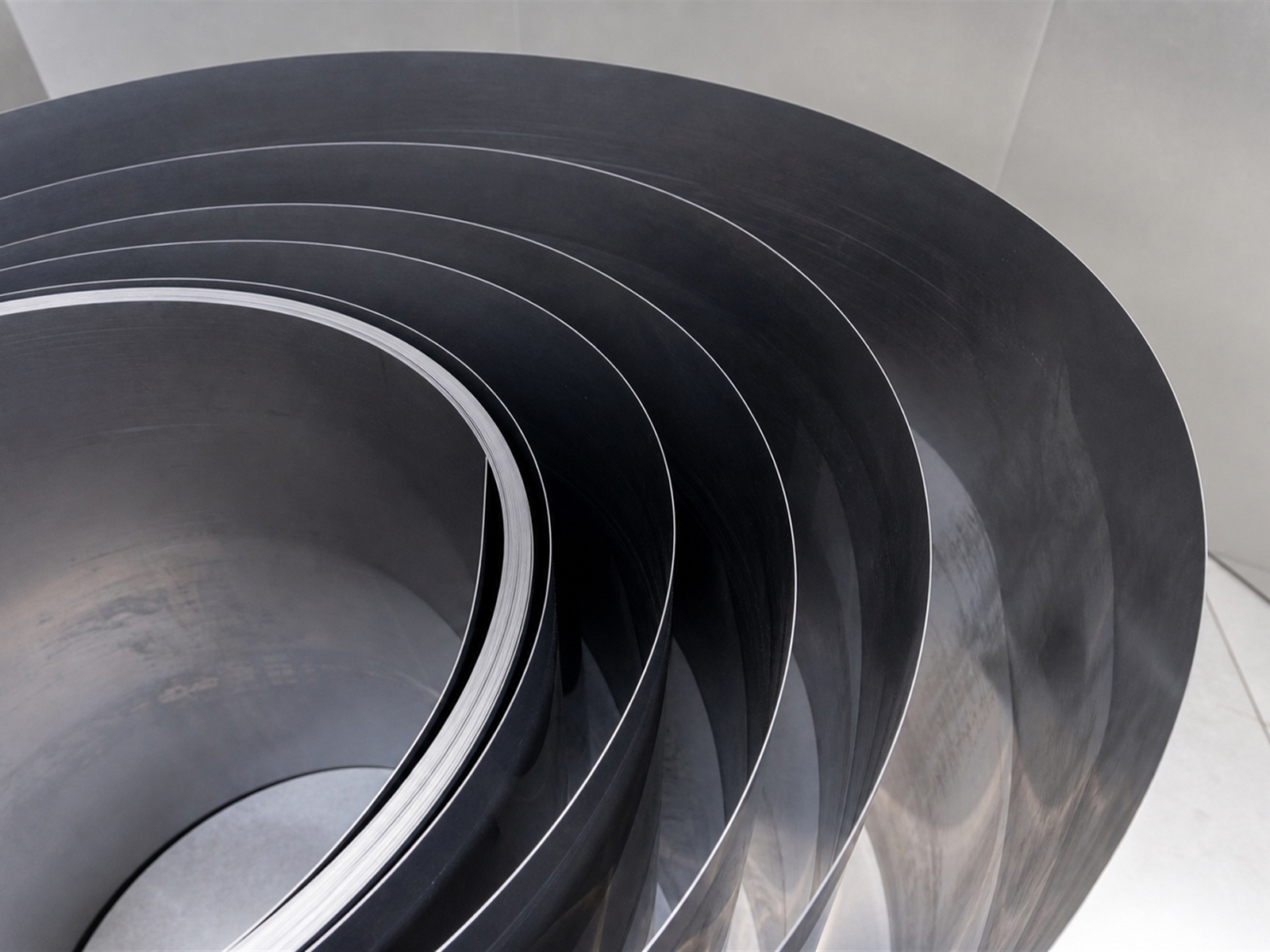
Nickel 201 (UNS N02201) foil, a low-carbon industrial pure nickel material, plays a crucial role in high-temperature caustic liquid processing and corrosive environments. Compared with conventional Nickel 200, Nickel 201 strictly controls carbon content at ≤0.02 %, effectively eliminating the risk of graphitization at temperatures above 315 °C. This article covers seven key aspects of Nickel 201 foil engineering knowledge: material definition, chemical composition, physical properties, mechanical properties, corrosion resistance, processing techniques, and application fields.
1. Definition of Nickel 201 Foil
Nickel 201 corresponds to the UNS number N02201 in Materials International standards and is classified as a low-carbon industrial pure nickel foil. The nickel content is ≥99.0 %, carbon content ≤0.02 %, iron content ≤0.4 %, and copper content ≤0.2 %. The primary technical standard governing Nickel 201 is ASTM B90 (Standard Specification for Nickel and Nickel Alloy Sheet, Strip, and Foil).
2. Chemical Composition of Nickel 201
- Nickel (Ni): ≥99.0 %
- Carbon (C): ≤0.02 %
- Iron (Fe): ≤0.40 %
- Copper (Cu): ≤0.20 %
- Manganese (Mn): ≤0.35 %
- Silicon (Si): ≤0.35 %
- Sulfur (S): ≤0.01 %
The low carbon content is the key distinguishing feature between Nickel 201 and Nickel 200, and it is the fundamental reason for Nickel 201’s unique advantages in high-temperature applications.
3. Physical Properties of Nickel 201
- Density: 8.90 g/cm³
- Melting Point: 1446 °C
- Thermal Conductivity: 90.7 W/(m·K) at 20 °C
- Electrical Resistivity: 6.84 × 10⁻⁸ Ω·m at 20 °C
- Coefficient of Linear Thermal Expansion: 13.0 × 10⁻⁶ /°C (20–100 °C)
- Specific Heat Capacity: 444 J/(kg·K) at 20 °C
4. Mechanical Properties of Nickel 201
Typical mechanical properties of annealed Nickel 201 foil:
- Tensile Strength: 380–470 MPa
- Yield Strength (0.2 % offset): 125–165 MPa
- Elongation: ≥35 %
Property Comparison
| Performance Indicator | Nickel 201 | Nickel 200 | Gr2 Pure Titanium | 316L Stainless Steel |
| Carbon Content (%) | ≤0.02 | ≤0.15 | – | ≤0.08 |
| Nickel Content (%) | ≥99.0 | ≥99.0 | ≥99.0 | – |
| Tensile Strength (MPa) | 380–470 | 380–480 | 340–450 | 515–620 |
| Elongation (%) | ≥35 | ≥35 | ≥20 | ≥20 |
| Density (g/cm³) | 8.90 | 8.90 | 4.51 | 8.0 |
5. Corrosion Resistance of Nickel 201
- Alkali Corrosion Resistance:In sodium hydroxide solutions with concentrations up to 70 %, the corrosion rate at boiling temperature is below 0.01 mm/year.
- Organic Acid Resistance:In organic acids such as acetic acid and formic acid, the corrosion rate remains below 0.1 mm/year.
- Chloride Resistance:No pitting or crevice corrosion occurs in chloride-containing environments.
- Reducing Acid Limitation:Corrosion resistance is poor in hydrochloric acid and sulfuric acid (reducing acids).
Corrosion Rate Data
| Corrosive Medium | Concentration | Temperature | Nickel 201 Corrosion Rate |
| 50 % NaOH | 50 % | Boiling | <0.01 mm/year |
| Seawater | — | Ambient | <0.001 mm/year |
| 5 % H₂SO₄ | 5 % | Ambient | 0.5–1.0 mm/year |
| Acetic Acid | 10 % | Ambient | <0.05 mm/year |
6. Processing Techniques for Nickel 201
- Cold Forming:Annealed Nickel 201 exhibits excellent cold formability and can be deep-drawn, bent, and flanged.
- Welding:Compatible with TIG, MIG, and resistance welding. ERNi-2 filler metal is recommended.
- Machining:Nickel 201 has good machinability. Sharp cutting tools and ample coolant are recommended.
7. Typical Application Fields of Nickel 201
- Chlor-Alkali Industry: High-temperature caustic evaporators and concentrators
- Pulp and Paper Industry: Kraft process digester vessels
- Food Processing: High-temperature sterilization equipment and concentration tanks
- Environmental Protection Equipment: Flue gas desulfurization systems
- Nuclear Industry: Nuclear reactor cooling systems
Application Performance Summary
| Application Field | Operating Temperature | Corrosive Medium | Nickel 201 Performance |
| Chlor-Alkali Industry | 100–150 °C | Concentrated NaOH | Excellent |
| Pulp & Paper Industry | 150–170 °C | NaOH + Na₂S | Outstanding |
| Food Processing | 100–140 °C | Caustic cleaning + Organic acids | Good |
| Flue Gas Desulfurization | 60–90 °C | Chloride + Sulfur-containing | Good |
8. Conclusion
Nickel 201 foil demonstrates unique material advantages in harsh operating conditions such as high-temperature caustic liquid treatment, thanks to its low-carbon design and excellent high-temperature and corrosion-resistant properties. Engineers should fully consider operating temperature, medium characteristics, and cost factors when selecting materials, and apply Nickel 201 foil appropriately.
FAQ
Q1: What is the main difference between Nickel 201 and Nickel 200?
Carbon content: Nickel 201 ≤0.02 %, Nickel 200 ≤0.15 %. This ensures that Nickel 201 will not experience graphitization above 315 °C.
Q2: Can Nickel 201 undergo heat treatment?
Yes. Nickel 201 can be annealed at 600–800 °C to relieve processing stresses and restore ductility.
Q3: Why is Nickel 201 more expensive than Nickel 200?
Production requires stricter decarburization processes, resulting in higher costs. The price premium is typically 5–15 %.
Finding a Reliable Nickel 201 Foil Supplier
Baoti Titanium Valley Titanium Nickel Zirconium Material Processing Co., Ltd. is a professional manufacturer of high-end rare metal processed products. Equipped with a Danieli rolling production line from Italy, the company produces over 1,000 metric tons of nickel foil annually and offers full-size customization with EN 10204 3.1 certification. Contact us now for technical support and quotation: sales@titaniumvalleys.com
For a broader view of available grades, supply forms, and related specifications, explore our Nickel Foil category.
For product-level details and supply options, you can also review our Nickel 201 Foil page.
References
[1] ASTM B90-21 Standard Specification for Nickel and Nickel Alloy Sheet, Strip, and Foil. West Conshohocken: ASTM International, 2021.
[2] GB/T 5231-2012 Chemical Composition of Processed Nickel and Nickel Alloys. Beijing: Standards Press of China, 2012.