
How Can Gr12 Titanium Wire Control Heat Exchanger Crevice Corrosion
- GR12 Titanium Wire
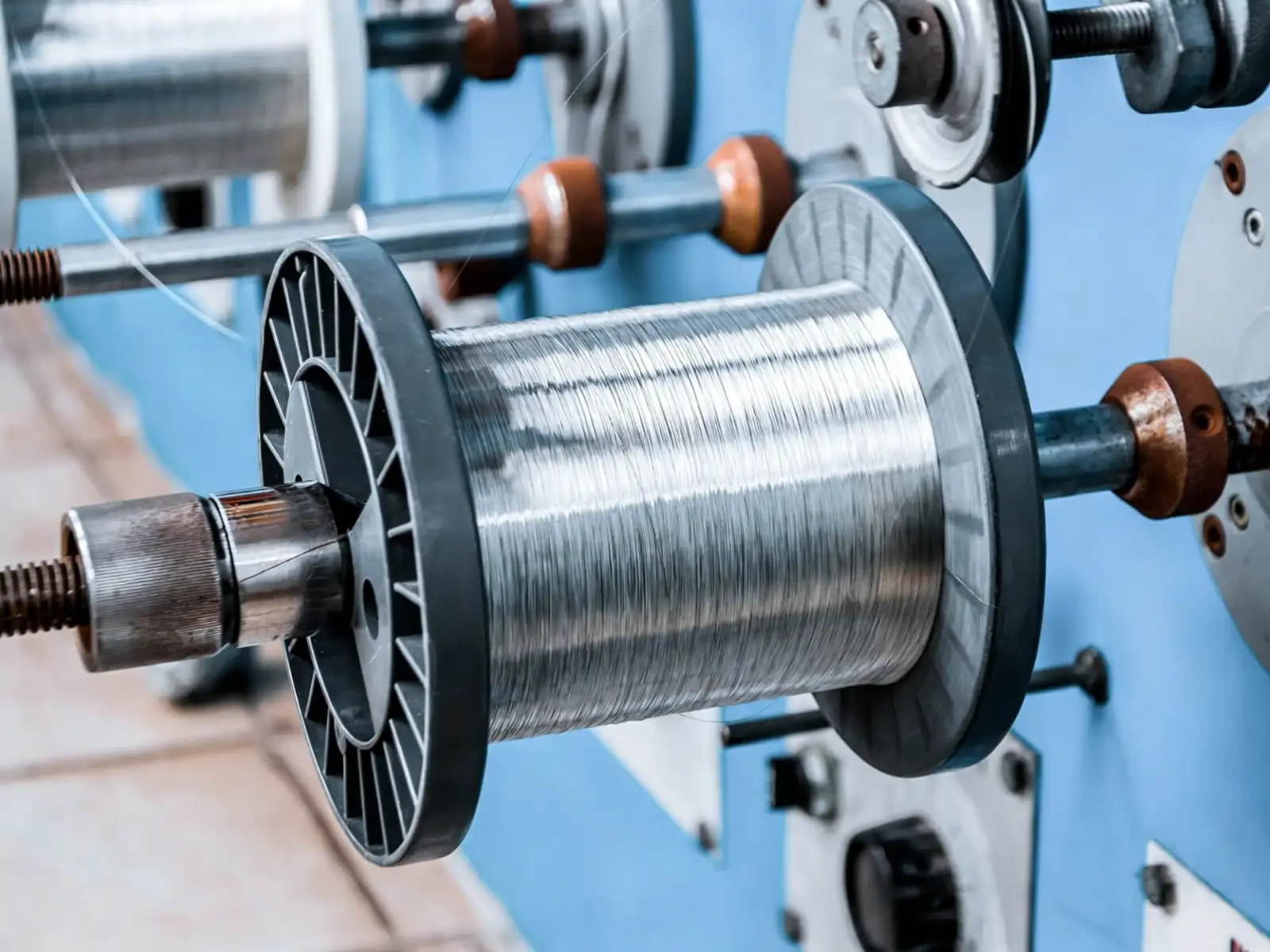
When heat exchangers operate in chemical processing, seawater desalination, and energy industries, narrow areas such as tube sheet joints and expanded joint seams are highly susceptible to crevice corrosion, leading to premature equipment failure. GR12 titanium wire (Ti-0.3Mo-0.8Ni alloy), (through) molybdenum-nickel alloying significantly enhancing resistance to crevice corrosion, can serve as heat exchanger tube bundle welding material, crevice repair filling wire, and structural reinforcement material.
1. What Is the Crevice Corrosion Mechanism in Heat Exchangers and Root Causes of Traditional Material Failure?
(1) Electrochemical Process of Crevice Corrosion
Tiny gaps (typically 0.025 to 0.5 mm) formed during heat exchanger tube sheet and tube expansion or welding impede medium circulation. Oxygen concentration difference between inside and outside crevices causes crevice interior to form anodic zones. Metal ion hydrolysis produces H₂, reducing pH to 2 to 3, while chloride ions migrate inward enriching to concentrations 10 to 100 times external levels. This acidification-plus-high-chloride environment creates aggressive conditions accelerating localized corrosion.
(2) Performance Limitations of Commercial Pure Titanium
Grade 1 and Grade 2 commercial pure titanium, although possessing good corrosion resistance, exhibit passivation film instability in reducing acids (such as hydrochloric acid, dilute sulfuric acid) and high-temperature chloride environments. During long-term heat exchanger operation, temperatures at tube sheet crevices reach 80 to 150 degrees Celsius; chloride concentration in seawater or process media increases, causing pure titanium susceptible to pitting penetration expanding into crevice corrosion.
(3) Corrosion Risks of Stainless Steel Materials
Austenitic stainless steels such as 316L and 904L possess stress corrosion cracking (SCC) and pitting tendencies in chloride environments. Expansion residual stress (combined with) operating temperature fluctuations accelerates crack initiation. Although super stainless steels (such as 254SMO) improve corrosion resistance, costs are high and welding processes complex, making maintenance difficult.
2. What Alloy Corrosion Resistance Mechanisms and Technical Advantages Does GR12 Titanium Wire Possess?
(1) Molybdenum-Nickel Synergistic Passivation Film Strengthening
GR12 titanium wire contains 0.2 to 0.4 percent molybdenum and 0.6 to 0.9 percent nickel. Molybdenum forms MoO₃·nH₂O hydrated oxide layer within the passivation film, significantly enhancing film density and self-repair capability; nickel improves alloy potential in reducing media, inhibiting hydrogen embrittlement. Synergistic (effects) of both elements increase passivation film breakdown potential by 200 to 300 mV, crevice corrosion resistance markedly improved.
(2) Wide-Temperature-Range Chloride Ion Erosion Resistance
Experimental data shows GR12 titanium wire immersed in simulated seawater (3.5 percent NaCl, 80 degrees Celsius) for 5,000 hours exhibits crevice corrosion depth below 0.01 mm, while Grade 2 pure titanium under identical conditions shows obvious pitting within 48 hours. In hot concentrated brine (200 ppm Cl⁻, pH 4 to 6, temperature 120 degrees Celsius) environments, GR12 maintains stable passivation film, corrosion rate below 0.001 mm/year, far exceeding conventional titanium and stainless steel alternatives.
(3) Excellent Weldability and Processing Stability
GR12 titanium wire tensile strength reaches 480 to 620 MPa with elongation at least 18 percent, combining medium-high strength with good plasticity. Its thermal expansion coefficient (8.9×10⁻⁶ per degree C) closely matches titanium tube sheets, minimizing welding residual stress and preventing joint cracking during thermal cycling. Wire diameter tolerance controlled within +/-0.02 mm, ensuring smooth wire feeding without slipping, compatible with TIG/MIG welding processes.
3. What Engineering Application Paths Exist for GR12 Titanium Wire in Heat Exchanger Corrosion Prevention?
(1) New Heat Exchanger Tube Bundle Welding
Employing phi 1.2 to 2.4 mm GR12 titanium wire as filling material, performing TIG root welding plus MIG fill welding on titanium tubes and tube sheets. Prior to welding, tube sheet contact surfaces require mechanical grinding to remove oxide scale, controlling gap at most 0.15 mm. Welding parameters set at current 80 to 150 A, argon flow rate 12 to 15 L/min, backing argon protection ensuring molten pool quality. This process produces weld joints with crevice corrosion resistance exceeding base material by 50 percent.
(2) In-Service Equipment Crevice Repair and Re-Welding
For heat exchangers already experiencing slight crevice corrosion, GR12 titanium wire can perform local build-up welding repair. Repair (process) includes: defect area ground to expose fresh metal, acetone degreasing, dilute nitric acid pickling and passivation, argon arc welding multi-layer build-up (single layer thickness at most 2 mm), post-weld stress relief annealing (holding at 450 to 550 degrees Celsius for 1 to 2 hours). Build-up layer metallurgically bonds with base material, restoring equipment service life by 5 to 8 years.
(3) Preventive Structural Reinforcement Applications
For high-risk crevice areas (such as U-tube bends at tube sheet junctions), GR12 titanium wire woven mesh or (wrapped) reinforcement rings can be (pre-embedded) during design phase. This proactive protection approach, by deploying corrosion-resistant reinforcements at risk areas, forms physical isolation and electrochemical barriers, preferentially consuming corrosive media, protecting main structures. Reinforcement ring diameter tolerance +/-0.05 mm, closely matching tube sheet expansion requirements.
4. What Key Points Exist for Material Selection and Quality Control?
(1) Influence of Compositional Segregation on Corrosion Resistance
When molybdenum content in GR12 titanium wire falls below 0.2 percent, resistance to reducing acids significantly decreases; nickel content exceeding 0.9 percent may cause beta phase precipitation, reducing plasticity. Premium wire employs vacuum melting plus double arc remelting processes, ensuring Mo and Ni distribution uniformity (segregation degree below 5 percent). During procurement, spectrographic analysis reports should be verified, (focusing confirmation) that Mo and Ni contents fall within standard ranges.
(2) Surface Quality and Dimensional Precision Control
Drawing scratches and oxide scale (residue) on wire surfaces become corrosion initiation points. Recommended to select finished products processed through pickling plus bright drawing, with surface roughness Ra at most 0.8 micrometers. Diameter tolerance strictly controlled within +/-0.02 mm per ASTM B863, ensuring automatic welding wire feeding speed stability. Coiled wire should check single-coil length (recommended at least 1,000 meters continuous without splices).
(3) Batch Traceability and Third-Party Testing Certification
Critical projects should require suppliers to provide: furnace batch traceability reports (full-process records from titanium ingot to finished wire), mechanical property testing (tensile, bend, impact), intergranular corrosion testing (boiling ferric chloride method 24 hours), dimensional inspection reports (sampling 100 percent length). When involving pressure vessel welding, ASME Section II or EN 10204-3.1 material certificates should be required.
5. What Life Cycle Economic Benefits and Industry Practice Cases Exist?
(1) Initial Investment versus Long-Term Cost Comparison
GR12 titanium wire unit price is approximately 1.6 to 1.8 times Grade 2 pure titanium wire, but heat exchanger crevice corrosion failure replacement costs include: downtime losses (chemical plant daily output value loss can reach 500,000 to 2,000,000 RMB), tube bundle replacement costs (material plus labor accounting for 30 to 40 percent of equipment original value), environmental treatment fees. Heat exchangers welded with GR12 wire demonstrate 3 to 5 times extended service life, lifecycle cost reduction exceeding 60 percent compared to traditional materials.
(2) Seawater Desalination Industry Application Validation
A multi-stage flash (MSF) seawater desalination plant in the Middle East, originally employing Grade 2 pure titanium plus TIG welding for evaporator tube sheets, experienced dense pitting at tube sheet joints after 18 months operation, forcing premature major overhaul. After switching to GR12 titanium wire welding, in concentrated brine sections (chloride ion concentration 60,000 to 80,000 ppm, temperature 110 degrees Celsius), operated continuously for 48 months without corrosion leakage, saving over USD 2 million in maintenance costs.
(3) Coal-Fired Power Plant Desulfurization System Retrofit Experience
A 600 MW coal-fired unit wet flue gas desulfurization absorber, originally employing 316L stainless steel tube sheets plus stainless steel wire welding for coolers, experienced weld stress corrosion cracking due to chloride ion plus SO₂ corrosion, requiring 3 to 4 annual repairs. During technical retrofit, replaced with GR12 titanium tubes plus GR12 titanium wire welded tube sheets, and performed GR12 wire build-up welding repair on original crack areas. Post-retirement operation showed zero corrosion-related failures over 36 months.
(4) Conclusion
GR12 titanium wire, (through) molybdenum-nickel alloying (bringing) outstanding crevice corrosion resistance, has become core material controlling heat exchanger local corrosion failure. Its long-term stability in high-temperature chloride and reducing acid media, (combined with) excellent welding process adaptability and batch quality consistency, eliminates crevice corrosion (hidden dangers) at source, significantly extending equipment operating cycles and reducing lifecycle costs.
FAQ
Q1: Is GR12 Titanium Wire (Ti-0.3Mo-0.8Ni) Completely Identical to Other Similar Grade Titanium Wires?
Composition and performance are basically consistent; GR12 is an ASTM standard grade. During procurement, explicitly requiring compliance with latest ASTM B863 standard ensures Mo and Ni content plus impurity element control meet international specifications, avoiding performance deviations caused by standard differences.
Q2: Does Welding GR12 Titanium Wire Require Preheating or Post-Weld Heat Treatment?
Conventional thin-wall heat exchanger tube sheet welding (wall thickness at most 10 mm) requires no preheating, but ambient temperature should be at least 10 degrees Celsius with no condensation on workpiece surfaces. Post-weld heat treatment depends on design requirements: non-pressure-bearing components may require no treatment; pressure vessel welds recommended 450 to 550 degrees Celsius annealing for 1 to 2 hours to eliminate residual stress, improving stress corrosion resistance.
Q3: How to Judge Whether Supplier-Provided GR12 Titanium Wire Quality Is Reliable?
Verify three key documents: chemical composition spectrographic analysis report (Mo and Ni above standard median values), mechanical property and intergranular corrosion test reports (requiring international recognized laboratory (such as TÜV, SGS) certification stamps), dimensional inspection reports (diameter deviation within +/-0.02 mm). Request trial samples for welding tests, examining molten pool fluidity, weld formation quality, and post-weld corrosion resistance.
Procuring High-Quality GR12 Titanium Wire, Choose Titanium Valley Nonferrous Material Processing Manufacturer
Baoji Titanium Valley Titanium Nickel Zirconium Material Processing Co., Ltd. professionally manufactures GR12 titanium wire compliant with ASTM B863 standards, supplying full specifications from phi 0.1 to 6.5 mm, (supporting) furnace batch traceability and international third-party testing certification. Providing stable bulk supply and customized processing services for global chemical, marine engineering, and energy clients. Contact: sales@titaniumvalleys.com
References
Li Minghua, Zhang Jianguo. Research on Crevice Corrosion Behavior of Titanium and Titanium Alloys in Marine Engineering [J]. Chinese Journal of Corrosion and Protection, 2021, 41(3): 245-253.
Wang Deping, Liu Peng. Electrochemical Behavior and Passivation Film Characteristics of Ti-Mo-Ni Alloys in Chloride Environments [J]. Materials Engineering, 2020, 48(7): 112-119.
Chen Xiaoming, Zhao Haitao. Crevice Corrosion Failure Analysis and Protection Technology of Heat Exchanger Tube Sheet Weld Joints [J]. Chemical Equipment and Piping, 2019, 56(4): 67-74.
Sun Zhiqiang, Wu Jianhua. Selection and Process Optimization of Titanium Alloy Welding Materials for Seawater Desalination Equipment [J]. Welding Technology, 2022, 51(2): 88-95.