
How Does Heat Treatment Significantly Improve the Hardness of Gr5 Titanium Foil?
- Gr5 Titanium Foil
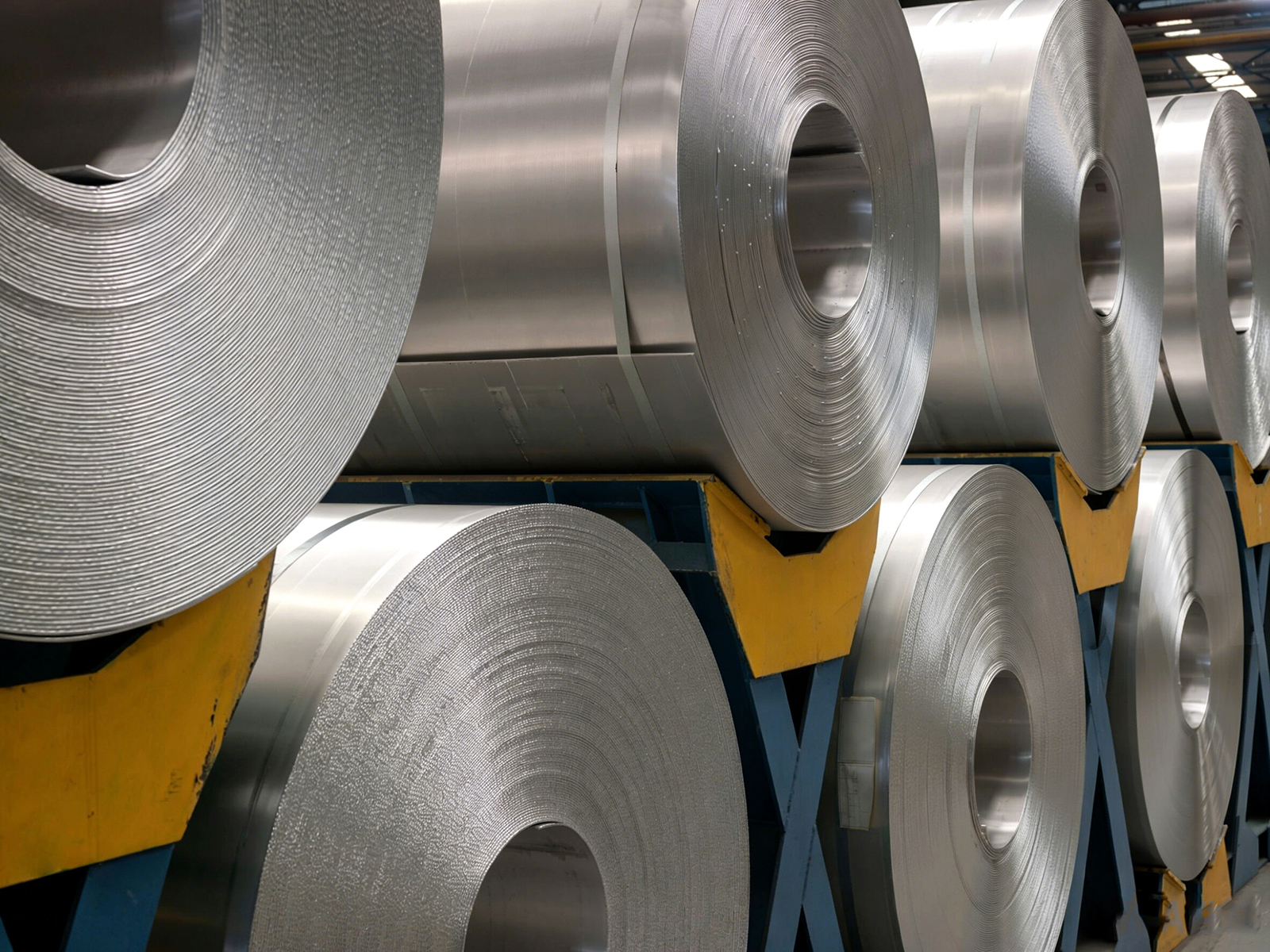
Gr5 Titanium Foil (Ti-6Al-4V per ASTM B265) is the most widely used aerospace-grade titanium alloy, valued for its excellent combination of strength, toughness, and corrosion resistance. However, the as-received annealed condition typically providing 900-950 MPa tensile strength may not meet the surface hardness and wear resistance requirements for certain applications such as spring components, bearing surfaces, and wear pads. Strategic heat treatment processes including solution treating, aging, and cryogenic treatment can significantly increase Gr5 titanium foil hardness while maintaining acceptable ductility and fracture toughness. Understanding the metallurgical mechanisms and optimizing heat treatment parameters enables engineers to achieve the precise hardness-strength balance required for specific applications.
1. Metallurgical Basis of Gr5 Titanium Hardening
(1) Alpha-Beta Phase Transformation
Gr5 titanium alloy possesses a dual-phase microstructure consisting of approximately 90% alpha phase (hexagonal close-packed) and 10% beta phase (body-centered cubic) in the annealed condition. The alpha phase provides corrosion resistance and ductility, while the beta phase contributes strength. Heat treatment manipulates the volume fraction, morphology, and distribution of these phases to achieve desired hardness. Solution treating above the beta transus temperature (approximately 995 degrees C) transforms the entire structure to beta phase. Subsequent quenching traps the beta phase as martensitic alpha-prime structure, which is harder but more brittle than the equilibrium alpha-plus-beta microstructure.
(2) Precipitation Hardening Mechanism
Aging treatment of solution-treated Gr5 foil at 500-550 degrees C for 2-8 hours precipitates fine alpha particles within the beta matrix, creating a dispersion-strengthened microstructure. These coherent precipitates impede dislocation motion, increasing hardness and yield strength. Peak aging conditions produce maximum hardness approximately 15-25% above the annealed condition value. Over-aging at higher temperatures or longer times coarsens the precipitates, reducing hardness but improving fracture toughness and stress corrosion resistance.
2. Heat Treatment Processes for Hardness Enhancement
(1) Solution Treating and Quenching
Solution treating Gr5 titanium foil at 900-950 degrees C (beta transus minus 20-45 degrees C for alpha-plus-beta treatment) followed by water or air quenching produces a supersaturated beta phase structure. Foil thickness influences cooling rate effectiveness—foils below 0.5 mm thickness cool rapidly enough for full martensitic transformation, while thicker sections may retain some equilibrium beta phase. Quenching medium selection balances hardness achievement against distortion risk: water quenching provides maximum hardness but higher distortion, while air or oil quenching reduces distortion with slightly lower hardness gains.
(2) Aging Treatment Parameters
Aging at 500-550 degrees C for 2-4 hours produces peak hardness in solution-treated Gr5 foil, typically achieving 34-38 HRC (approximately 1100-1200 MPa tensile strength). Extended aging up to 8 hours at 500 degrees C further increases hardness by 2-5 HRC through continued precipitate coarsening and microstructural stabilization. For applications requiring maximum toughness rather than maximum hardness, higher temperature aging (600-650 degrees C) reduces hardness by 5-10 HRC while significantly improving fracture toughness and fatigue resistance.
(3) Cryogenic Treatment
Sub-zero treatment at -80 to -196 degrees C after solution treating and aging promotes complete transformation of retained beta phase to alpha-prime and refines alpha precipitate morphology. Cryogenic treatment typically increases hardness by 2-5 HRC beyond conventional aging and improves dimensional stability by eliminating metastable phases that could transform during service. This treatment is particularly valuable for precision instrument components and aerospace spring applications where hardness consistency and long-term stability are critical.
3. Hardness and Property Trade-offs
4. Practical Applications and Selection Guide
(1) Spring and Elastic Components
Springs and elastic elements benefit from peak-aged Gr5 foil (34-38 HRC) providing high yield strength and fatigue resistance. The elevated hardness ensures resistance to permanent set under cyclic loading, extending spring service life by 2-3 times compared to annealed material in high-stress applications.
(2) Wear Surfaces and Bearing Components
Wear-resistant Gr5 titanium components require surface hardness above 35 HRC to resist abrasive and adhesive wear. Solution treated and cryogenically treated foil achieves the hardness levels necessary for bearing surfaces, bushings, and sliding contacts operating in corrosive environments where steel bearings would rapidly deteriorate.
(3) Precision Instrument Components
Dimensional stability is paramount for precision instruments. Over-aged Gr5 foil (30-33 HRC) offers good hardness with superior dimensional stability and fracture toughness, making it ideal for gauge blocks, adjustment screws, and instrument frames that must maintain accuracy over extended service life.
Conclusion
Heat treatment provides a powerful tool for tailoring the hardness and mechanical properties of Gr5 titanium foil to specific application requirements. By understanding the metallurgical mechanisms of alpha-beta phase transformation, precipitation hardening, and cryogenic stabilization, engineers can select optimal heat treatment parameters that achieve the desired hardness while maintaining adequate ductility, fracture toughness, and corrosion resistance. The ability to customize Gr5 titanium foil properties through heat treatment significantly expands its applicability across aerospace, medical, industrial, and precision engineering domains.
FAQ
Q1: What is the maximum achievable hardness for Gr5 titanium foil?
The maximum hardness achievable for Gr5 titanium foil through heat treatment is approximately 40 HRC (around 1250 MPa tensile strength) using solution treatment followed by cryogenic treatment and peak aging. Further hardness increases require alloy composition changes or alternative titanium alloys such as Ti-10V-2Fe-3Al.
Q2: Does heat treatment affect the corrosion resistance of Gr5 titanium foil?
Heat treatment has minimal effect on the general corrosion resistance of Gr5 titanium foil. All heat treatment conditions maintain excellent resistance to seawater, chlorine solutions, and most chemical environments. However, highly stressed, high-hardness conditions may show slightly reduced resistance to stress corrosion cracking in specific aggressive environments.
Q3: Can Gr5 titanium foil be heat treated after forming?
Yes. Gr5 titanium foil can be solution treated and aged after cold forming operations. However, forming must be performed in the annealed condition, with heat treatment applied as a final operation. Post-forming heat treatment relieves forming-induced residual stresses and achieves the desired final mechanical properties.
Contact Titanium Valley
Baoji Titanium Valley Titanium Nickel Zirconium Material Processing Co., Ltd. supplies heat-treatable Gr5 titanium foil with customized hardness specifications, available in thicknesses 0.05-3.0 mm with EN 10204 3.1 certification and full heat treatment documentation. Contact us for technical data and quotations:
References
Callister, W.D., Rethwisch, D.G. Materials Science and Engineering: An Introduction [M]. 10th ed. Wiley, 2018.
ASM International. ASM Handbook, Volume 4A: Physical Modeling and Computation of Steel Processing [M]. ASM International, 2002.
ASTM International. ASTM B265-20 Standard Specification for Titanium and Titanium Alloy Sheet and Plate [S]. 2020.