
What Are the Comparison of Gr2 and Gr5 Titanium Wire: Differences in Strength, Corrosion Resistance and Uses?
- Gr5 titanium wire
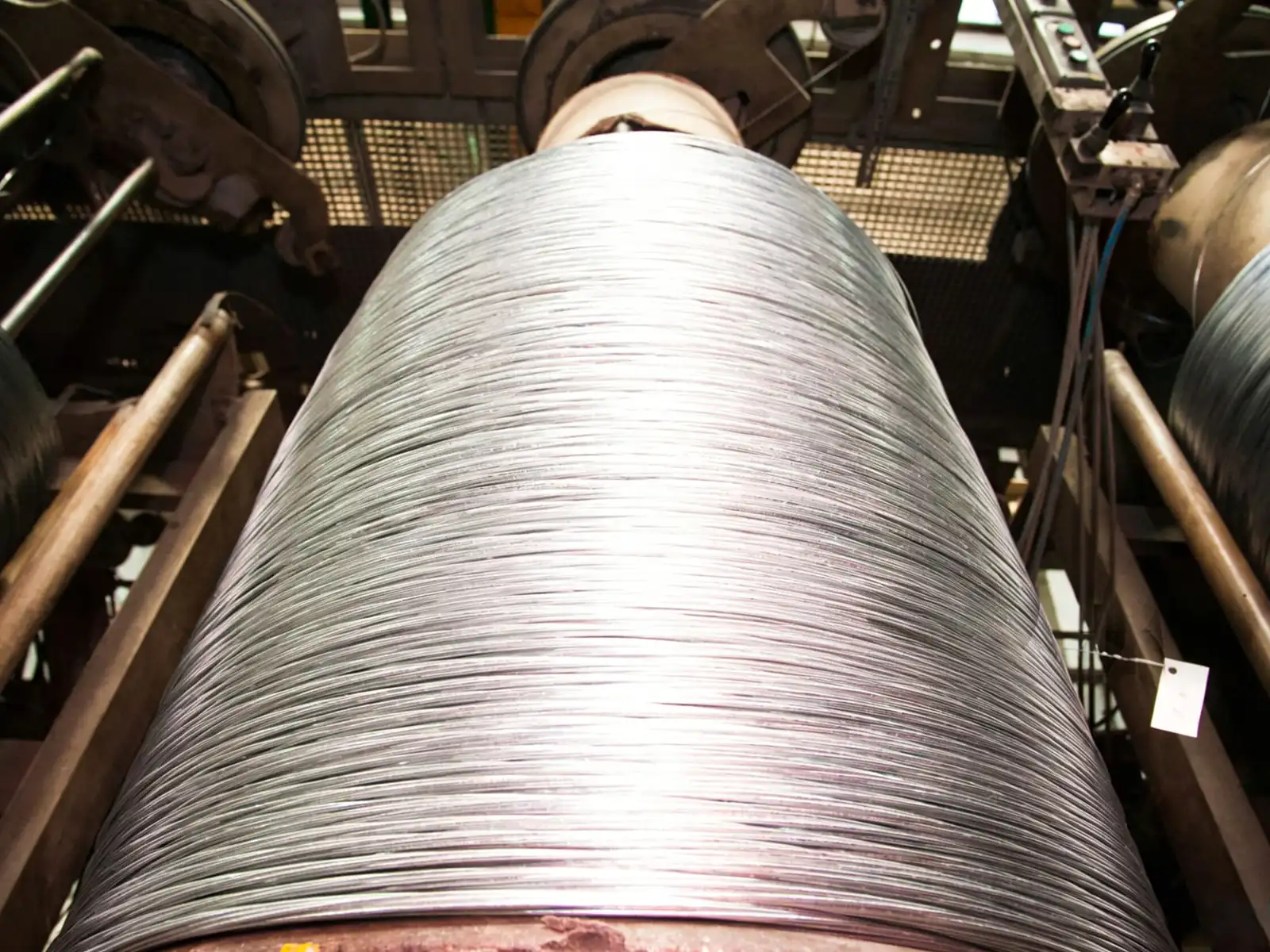
Among the choices of industrial pure titanium and titanium alloy materials, Gr2 titanium wire and Gr5 titanium wire are the two most widely used specifications. As a representative of industrial pure titanium, Gr2 is known for its excellent corrosion resistance and good processing performance. The tensile strength is usually between 400-500MPa. It is suitable for chemical equipment, marine engineering and other fields that require extremely high corrosion resistance. Gr5 (Ti-6Al-4V) is an α-β titanium alloy that is strengthened by aluminum vanadium elements and has a tensile strength of 895-930MPa. It is the first choice material for aerospace and medical implants. There are significant differences in strength levels, corrosion resistance mechanisms and application scenarios between the two. Understanding these differences is of great significance for optimizing material selection and reducing production costs.
1. What Are the Differences in Chemical Composition and Microstructure Between Gr2 and Gr5 Titanium Wires?
(1) What Are the Composition Characteristics of Gr2 Industrial Pure Titanium?
The titanium purity of Gr2 titanium wire reaches more than 99.2%, the oxygen content is controlled within 0.25%, and the iron content does not exceed 0.30%. This high-purity formula ensures that the material forms a stable titanium oxide protective film in a salt spray environment, providing long-term protection for chemical anti-corrosion. Since impurity elements are strictly limited, the grain structure of Gr2 titanium wire is uniform and the elongation can reach 15-20%. It is especially suitable for precision processing processes such as cold drawing and bending forming.
(2) What Should You Know About Alloying Design of Gr5 Titanium Alloy?
Gr5 titanium wire contains 6% aluminum and 4% vanadium. The aluminum element acts as an alpha phase stabilizer to improve the high-temperature strength of the material, and vanadium acts as a beta phase stabilizer to improve the hot processing performance of the alloy. This dual-phase structure enables Gr5 to maintain a certain degree of plastic deformation while maintaining high strength. The alloy design makes its density approximately 4.43g/cm³, slightly lower than Gr2’s 4.51g/cm³, further achieving weight reduction goals in the aviation field.
(3) What Are the the Influence Mechanism of Microstructure on Performance?
Gr2 titanium wire exhibits a single α-phase equiaxed crystal structure with clear grain boundaries and no precipitated phases. This structure gives the material excellent low-temperature toughness and will not cause brittle fracture in a liquid hydrogen environment of -253℃. In the dual-phase structure of Gr5, the α phase provides the strength foundation, and the β phase improves toughness matching. After solid solution treatment in the β phase zone, a basket structure is formed, which greatly improves fatigue resistance. The difference in microstructure directly determines the reliability performance of the two materials under extreme working conditions.
Table 1: Comparison of chemical compositions of Gr2 and Gr5 titanium wires (mass fraction %)
| element | Gr2 industrial pure titanium | Gr5 titanium alloy |
| Ti | ≥99.2 | margin |
| Al | – | 5.5-6.75 |
| V | – | 3.5-4.5 |
| O | ≤0.25 | ≤0.20 |
| Fe | ≤0.30 | ≤0.30 |
| C | ≤0.08 | ≤0.08 |
| N | ≤0.03 | ≤0.05 |
| H | ≤0.015 | ≤0.015 |
2. What Are the Strength Performance Comparison: From Mechanical Data to Actual Load-bearing Capacity?
(1) What Are the the Difference in Magnitude Between Tensile Strength and Yield Strength?
The tensile strength range of Gr2 titanium wire is 400-500MPa, the yield strength is about 275-420MPa, and the yield-to-strength ratio is moderate, which can meet the structural needs in moderate stress environments. In comparison, the tensile strength of Gr5 titanium wire reaches 895-930MPa, the yield strength is not less than 828MPa, and the strength level is more than twice that of Gr2. This significant gap makes Gr5 an irreplaceable choice in high-stress scenarios such as aviation fasteners and medical bone nails.
(2) What Should You Know About Intensity Control Under Different Heat Treatment Conditions?
Gr2 titanium wire is usually available in three states: annealed, semi-hard and hard. The annealed state has the highest elongation and is suitable for deep drawing processing; the hard strength can reach 550-750MPa, but the elongation drops to 5-8%. Gr5 titanium wire can achieve a precise balance between strength and plasticity through aging strengthening treatment. The annealed state is used for complex shape processing, and the aged state is used for load-bearing parts, allowing greater flexibility in heat treatment.
(3) What Are the Strength Retention Rate Under High and Low Temperature Environments?
The upper limit of the use temperature of Gr2 titanium wire is 300℃. Above this temperature, grain coarsening will occur and the strength will decrease. Gr5 titanium alloy can maintain high strength below 400℃ and is suitable for hot-end applications such as engine parts. On the low-temperature side, both have no low-temperature embrittlement at -253℃, but Gr5 has more sufficient toughness reserves in extremely cold environments due to the alloy strengthening mechanism, and has better impact resistance.
Table 2: Comparison of mechanical properties of Gr2 and Gr5 titanium wires
| Performance indicators | Gr2 annealed state | Gr2 hard state | Gr5 annealed state | Gr5 aging state |
| Tensile strength (MPa) | 400-500 | 550-750 | 895-930 | 1030-1100 |
| Yield strength (MPa) | 275-420 | – | 828-862 | 930-1000 |
| Elongation (%) | 15-20 | 5-8 | 10-14 | 8-10 |
| Hardness(HV) | 140-200 | 220-300 | 280-340 | 320-380 |
| Operating temperature (C) | ≤300 | ≤300 | ≤400 | ≤400 |
3. What Should You Know About In-depth Analysis of Corrosion Resistance: Passivation Film Stability and Environmental Adaptability?
(1) What Should You Know About the Formation Mechanism and Protective Effect of Natural Passivation Film?
The moment the Gr2 titanium wire surface contacts air or water, a TiO2 passivation film with a thickness of 2-7nm will spontaneously form. This dense oxide film has self-healing ability in a medium with a pH value of 4-10, and can quickly regenerate even if it is scratched. In a salt spray test simulating a seawater environment, the surface of Gr2 titanium wire showed no pitting corrosion or rust spots after 480 hours of testing. The corrosion rate was less than 0.01mm/year, which is much better than 316L stainless steel.
(2) What Are the Performance of Gr5 Alloy in Different Corrosive Media?
The corrosion resistance of Gr5 titanium wire in oxidizing acids (such as nitric acid and chromic acid) is equivalent to that of Gr2. However, in reducing acid environments (such as sulfuric acid and hydrochloric acid), the passive film may be damaged due to the preferential oxidation of aluminum elements. In practical applications, Gr5 is more used in stress corrosion-sensitive environments, and its high strength characteristics avoid the expansion of corrosion cracks caused by stress concentration. In the marine atmospheric environment, the long-term corrosion resistance of Gr5 is close to that of Gr2, which can meet the service requirements for more than 20 years.
(3) What Should You Know About Corrosion Resistance Comparison Under Special Working Conditions?
In a seawater environment with a chloride ion concentration exceeding 19, 000 ppm, Gr2 titanium wire remains stable, while ordinary stainless steel will suffer from perforation corrosion. Gr5 performs slightly worse than Gr2 in chloride environments, but this gap can be bridged through surface passivation treatment. In an alkaline environment (pH>12), hydrogen embrittlement may occur in both, and the hydrogen content needs to be controlled below 0.015%. For working conditions where high stress and corrosive media exist at the same time, Gr5 has stronger resistance to stress corrosion cracking.
4. How Is Differentiation Analysis of Application Fields: From Industrial Anti-corrosion to Cutting-edge Manufacturing?
(1) How Is Core Application Scenarios of Gr2 Titanium Wire?
The chemical industry is the largest consumer market for Gr2 titanium wire, which is used to manufacture heat exchanger tube bundles, electrolytic cell anodes, reactor stirring shafts and other equipment. Its excellent corrosion resistance extends the equipment maintenance cycle by 3-5 times and reduces downtime losses. In marine engineering, anti-corrosion nets woven with Gr2 titanium wire are used for seawater desalination pretreatment and do not need to be replaced within a 30-year service life. In terms of welding materials, ERTi-2 welding wire ensures that the weld has the same corrosion resistance as the base metal, and the joint strength reaches more than 90% of the base metal.
(2) What Should You Know About the Key Role of Gr5 Titanium Wire in High-end Manufacturing?
In the aerospace field, Gr5 titanium wire is used to manufacture aircraft landing gear bolts, engine blade locking wires and other safety parts. Its high specific strength characteristics can reduce the weight of a single aircraft by 200-300kg. Among medical devices, orthopedic implants (intramedullary nails, spinal fusion cages) processed by Gr5 titanium wire have high strength, but the elastic modulus (about 110GPa) is much higher than human bone (10-30GPa). The stress shielding effect needs to be alleviated through structural design, and the osseointegration effect after implantation is excellent. In the 3℃ electronics industry, ultra-fine Gr5 titanium wire (φ0.1-0.3mm) is used in the middle frame of high-end mobile phones to achieve the perfect unity of structural strength and lightweight.
(3) What Should You Know About Material Selection Strategies for Emerging Fields?
The hydrogen energy industry is developing rapidly, and fuel cell bipolar plates require conductive materials that are resistant to hydrogen corrosion. Gr2 titanium wire braided mesh becomes an ideal choice after coating. In the field of sports equipment, golf clubs with shafts wound with Gr5 titanium wire can increase the hitting speed by 8-12%. In the glasses industry, frames made of beta titanium wire (such as Ti-15Mo, etc.) weigh only 1/3 of traditional materials and have excellent memory resilience. The differences in emphasis on strength and corrosion resistance in different fields determine the basic logic of material selection.
Table 3: Comparison of typical applications of Gr2 and Gr5 titanium wires
| Application areas | Gr2 titanium wire | Gr5 titanium wire |
| Chemical equipment | Corrosion-resistant pipes, heat exchangers, electrolyzers | High pressure vessel fasteners |
| Marine Engineering | Desalination system, anti-corrosion net | Deep sea drilling platform load-bearing parts |
| welding materials | ERTi-2 welding wire (industrial pure titanium welding) | ERTi-5 welding wire (titanium alloy welding) |
| Aerospace | Liquid hydrogen delivery pipeline | Landing gear, engine parts, fasteners |
| medical device | Surgical instruments, dental implant abutments | Orthopedic implants, cardiovascular stents |
| electronic products | Non-magnetic shields, precision springs | Mobile phone middle frame, laptop hinge |
| Sporting Goods | Bicycle brake lines, fasteners for sports equipment | Golf clubs, tennis racket frames |
5. What Should You Know About Cost-effectiveness and Material Selection Decisions: Full Life Cycle Value Assessment?
(1) What Are the Differences in Raw Material Prices and Processing Costs?
The market price of Gr2 titanium wire is about 60-70% of Gr5. For chemical projects that consume large quantities, the material cost advantage is obvious. Gr5 titanium wire has high processing costs due to the complex addition of alloy elements and heat treatment. However, in high value-added fields such as aerospace and aerospace, the economic value created per unit weight far exceeds the material investment. In terms of precision machining, the good ductility of Gr2 reduces tool wear and scrap rate, while Gr5 requires special tools and cutting fluids.
(2) What Should You Know About Comprehensive Calculation of Service Life and Maintenance Costs?
In a marine corrosive environment, the service life of Gr2 titanium wire equipment is 5-10 times that of stainless steel. Although the initial investment increases by 30-50%, when converted to a 20-year service life, the comprehensive cost is reduced by more than 40%. The fatigue life of Gr5 titanium wire under high stress cycle conditions reaches more than 10⁷ times, which is 3-5 times that of aluminum alloy, reducing downtime losses caused by frequent replacement. In the full life cycle assessment, the reliability of materials is often more critical than the purchase price.
(3) How Is Optimal Material Selection Logic for Different Application Scenarios?
For scenarios where the strength requirement is less than 500MPa and the corrosive environment is harsh, Gr2 titanium wire is the most cost-effective choice. When the structural parts bear stress exceeding 600MPa or need to reduce weight by more than 50%, Gr5 titanium wire cannot be replaced. Some companies adopt a composite strategy: use Gr5 for the main load-bearing parts and Gr2 for the auxiliary connectors to achieve a balance between cost and performance. Material selection needs to be combined with working condition stress analysis, media corrosion testing and economic evaluation to avoid the risk of over-design or under-configuration.
6. What Is the Conclusion?
Gr2 and Gr5 titanium wires have their own advantages in strength, corrosion resistance and application fields. Gr2 titanium wire dominates the chemical industry, marine and other anti-corrosion fields with its excellent corrosion resistance and processing friendliness, while Gr5 dominates the high-end markets of aviation and medical care with its ultra-high strength. Material selection decisions should comprehensively evaluate mechanical requirements, environmental factors and full life cycle costs, accurately match material performance and actual working conditions, and achieve technical and economic optimization.
FAQ
Q1: Can Gr2 titanium wire replace Gr5 for medical implants?
Gr2 titanium wire is not strong enough to meet the mechanical requirements of load-bearing implants such as hip stems, but it can be used in low-stress areas such as dental implant abutments. Gr5’s high strength and good biocompatibility make it a standard material for orthopedic implants, complying with ISO 5832-3 medical grade titanium alloy specifications.
Q2: How to judge whether Gr2 or Gr5 titanium wire should be chosen for a project?
The core judgment is based on the working stress level: when the design stress is less than 300MPa and the corrosive environment is harsh, Gr2 is preferred; when the stress exceeds 500MPa or weight reduction is required, Gr5 must be used. At the same time, processing difficulty and cost budget need to be considered, and it is recommended to verify the rationality of material selection through finite element analysis.
Q3: Can Gr2 and Gr5 titanium wires be welded to each other?
Can be welded but handle with caution. The melting points of the two materials are close (Gr2 is 1668℃ and Gr5 is 1660℃), but the difference in alloy elements will lead to uneven weld structure. It is recommended to use ERTi-2 welding wire as the filling material, control the heat input at 0.8-1.2kJ/mm, and perform stress annealing treatment after welding to ensure that the joint strength reaches more than 85% of the Gr2 base metal.
7. Looking for a Reliable Gr2 Titanium Wire Manufacturer?
Baoji Titanium Valley Titanium Nickel Zirconium Material Processing Co., Ltd. focuses on the precision production of industrial pure titanium and titanium alloy wires. It owns a Danieli continuous rolling production line in Italy with an annual production capacity of over 20, 000 tons. We provide Gr2 titanium wire that meets ASTM B863 standards and customized processing services, equipped with complete 3.1 material certification and technical support. Contact us now for samples and quotes: sales@titaniumvalleys. com
For a broader view of available grades, supply forms, and related specifications, explore our Titanium Wire category.
For product-level details and supply options, you can also review our AMS 4956 aerospace Gr5 ELI titanium wire page.
References
- Wang Jinyou, Zhao Yongqing, Yang Guanjun. Titanium alloy design. Beijing: Chemical Industry Press, 2008.
- Zhao Yongqing, Chen Guang, Yang Guanjun. Phase transformation and heat treatment of titanium alloy. Changsha: Central South University Press, 2012.
- Zhang Xiyan, Zhao Yongqing, Bai Chen. Titanium alloys and applications. Beijing: Chemical Industry Press, 2005.
- Hu Yaojun, Li Xianjun. Corrosion and protection of titanium. Beijing: Chemical Industry Press, 2010.