
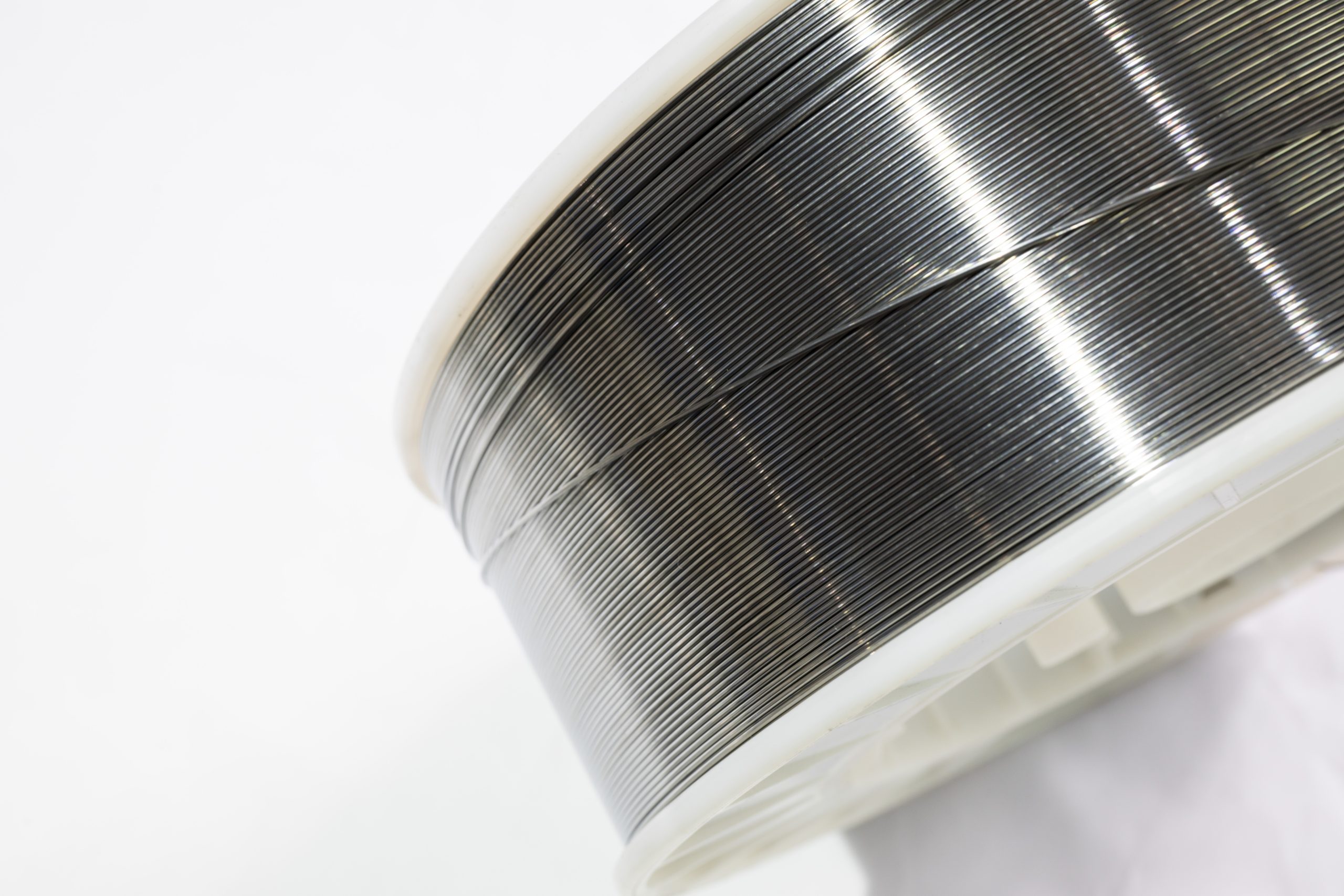
Nickel 200 wire (UNS N02200) is high-grade commercially pure nickel. Its combined nickel and cobalt content sits no lower than 99.0%, and typical values reach above 99.5%. It carries multiple grade labels worldwide. Its US standard name is Nickel 200 (UNS N02200), and its matching European grade is Ni99.5 (2.4060). It delivers strong resistance to alkaline corrosion, steady electrical and thermal conductivity, and easy forming ability. Manufacturers widely use Nickel 200 wire in chemical plants, electronics, medical devices, precision machinery and high-temperature industries. It keeps stable performance inside strong alkaline solutions, reducing acid liquids and medium-high temperature working conditions. It acts as a key functional metal for modern manufacturing. This article covers its chemical makeup, physical traits, mechanical features and real industrial applications.
1. Chemical Composition and Purity Standards of Nickel 200 Wire
1.1 Breakdown of Core Ingredients
Nickel 200 wire follows international standards including ASTM B166. Its total nickel plus cobalt content stays above 99.0%. Internal factory standards push this figure over 99.5%. This high purity delivers stable material performance under complex working environments. Iron content stays below 0.40% and copper content below 0.25%. Controlled levels of these two elements cut risks of sensitization corrosion in specific liquids. Suppliers supply ultra-high-purity variants for strict applications, with iron ≤ 0.10% and copper ≤ 0.10%.
1.2 Limits on Impurity Elements
Manganese and silicon each hold a maximum limit of 0.35%. Carbon cannot exceed 0.15%. Low ratios of these elements maintain the wire’s good plasticity and welding capacity. Sulfur stays under 0.01% and phosphorus below 0.015%. Factory internal standards set even tighter caps. These low impurity levels stop the wire from polluting chemical liquids during electrochemical work. The material fits food and medical sectors that demand extreme material purity.
1.3 How Purity Decides Material Performance
High-purity nickel forms a crystal structure that gives Nickel 200 wire weak magnetic properties and low magnetic permeability. This trait proves critical for precision electronics and MRI medical tools sensitive to magnetic interference. High purity also delivers strong anti-corrosion performance in strong alkaline liquids. It runs steadily for long periods inside sodium hydroxide and potassium hydroxide solutions. Ordinary stainless steel cannot match this advantage.
| Element | ASTM B166 Standard Requirement | Typical In-House High-Purity Standard |
|---|---|---|
| Ni+Co | ≥ 99.0% | ≥ 99.5% |
| Fe | ≤ 0.40% | ≤ 0.10% |
| Cu | ≤ 0.25% | ≤ 0.10% |
| Mn | ≤ 0.35% | ≤ 0.05% |
| Si | ≤ 0.35% | ≤ 0.05% |
| C | ≤ 0.15% | ≤ 0.10% |
| S | ≤ 0.01% | ≤ 0.005% |
| P | ≤ 0.015% | ≤ 0.002% |
2. Physical and Mechanical Features of Nickel 200 Wire
2.1 Key Physical Performance Metrics
Nickel 200 wire has a density of 8.90 g/cm³. Its melting point ranges from 1435°C to 1446°C, with a typical reading of 1453°C. It counts as a high-melting-point metal. Its room-temperature resistivity hits 6.84×10⁻⁸ Ω·m. This value lands between copper and stainless steel, so it works well for heating parts that need fixed resistance. Its thermal conductivity reaches 70 W/(m·K). It transfers heat efficiently and suits heat exchanger components.
2.2 Balance of Mechanical Strength and Plasticity
Annealed Nickel 200 wire meets ASTM B166 rules with tensile strength above 380 MPa. Its yield strength ranges from 120 MPa to 170 MPa, elongation sits above 35%, and hardness falls between 85 HB and 110 HB. This balanced strength and ductility lets the material bear moderate mechanical stress and complete complex processing such as cold drawing, stamping and bending. Cold working raises its overall strength, while annealing restores its plastic forming ability.
2.3 Temperature Resistance Performance
The wire maintains solid toughness across temperatures from -196°C to 400°C. It never develops low-temperature brittleness like some alloy materials. It retains usable mechanical properties under 600°C. Users must avoid working conditions with sulfur-rich atmospheres above 315°C. Sulfur brittleness will appear under these conditions, with grain boundary cracks and sharp drops in mechanical strength.
| Performance Category | Parameter | Typical Value |
|---|---|---|
| Physical Properties | Density | 8.90 g/cm³ |
| Melting Point | Around 1453°C | |
| Resistivity | 6.84×10⁻⁸ Ω·m | |
| Thermal Conductivity | 70 W/(m·K) | |
| Mechanical Properties (Annealed State) | Tensile Strength | ≥ 380 MPa |
| Yield Strength | 120–170 MPa | |
| Elongation | ≥ 35% | |
| Hardness | 85–110 HB |
3. Corrosion Resistance and Environmental Adaptability of Nickel 200 Wire
3.1 Outstanding Performance in Strong Alkaline Environments
Nickel 200 wire shows powerful anti-corrosion ability inside sodium hydroxide, potassium hydroxide and other strong alkaline liquids. It stays stable even under high concentration and high temperature. It becomes the top material for cathode parts of chlor-alkali electrolytic cells and components inside alkali evaporators. Its corrosion rate drops dozens of times lower than regular stainless steel, and it greatly extends equipment service life.
3.2 Good Tolerance for Reducing Acid Liquids
Nickel 200 wire resists corrosion well inside dilute sulfuric acid (low concentration, room temperature) and phosphoric acid. Factories build chemical pumps, valves and filter screens with this material. One key note: aerated or high-temperature environments push up the corrosion rate of pure nickel in dilute sulfuric acid. Users need to assess specific working conditions before selection. This material cannot stand high-temperature oxidizing acids such as concentrated nitric acid and aqua regia. Design plans must avoid these liquids entirely.
3.3 Stable Performance in Seawater and Salt Mist
Nickel 200 wire fights pitting corrosion and crevice corrosion inside seawater and salt mist with chloride ions. It fits marine engineering and ship equipment production. Users must watch for strong oxidizing chloride solutions, especially liquids containing hypochlorite. Stress corrosion cracking may form under these conditions. Reasonable structural design and stress control remove this risk.
3.4 Limits for High-Temperature Oxidation and Sulfur-Rich Atmospheres
Nickel 200 wire grows a protective oxide film in oxygen-rich high-temperature environments. Its anti-oxidation capacity cannot match nickel-chromium alloys. Sulfur brittleness easily develops inside sulfur-rich atmospheres above 315°C. The material develops grain cracks and loses most mechanical strength. Pick Nickel 201 low-carbon wire or chromium-containing nickel-based alloys as substitutes for such working conditions.
4. Industrial Application Scenarios and Solutions for Nickel 200 Wire
4.1 Chemical and Chlor-Alkali Industry Applications
Chlor-alkali manufacturers use Nickel 200 wire to make cathode conductive parts for ion-exchange membrane electrolytic cells, filter screens for alkali circulation pipelines and heat transfer tubes inside evaporators. Its high purity stops product contamination, and its strong alkali resistance lengthens equipment running cycles and cuts maintenance costs. Petrochemical factories install this material widely inside desulfurization towers and alkali washing towers.

4.2 Electronics and Semiconductor Industry Applications
Stable electrical conductivity and weak magnetism make Nickel 200 wire ideal for transformer windings, precision resistors and lead frames. Lithium battery factories use it as connecting strips and tab materials for current collectors. Its reliable welding performance and conductive traits raise battery energy density and extend charge cycle life. Manufacturers also build heating elements and fixture parts for semiconductor processing machines from this wire.
4.3 Medical Devices and Biotechnology Applications
Medical-grade Nickel 200 wire produces guide wires, elastic components for surgical tools and dental instruments. Its weak magnetic properties create full compatibility with MRI machines. It carries good biocompatibility and resists corrosion from human body fluids. It serves hemodialysis equipment and drug filtration systems. Its high purity stops heavy metal ions from leaking into liquids and protects patient safety. Factories build elastic parts for precise surgical instruments with this wire. Note: Manufacturers avoid pure nickel for long-term implanted stents; this material only works for non-implant medical tools.
4.4 Aerospace and High-Temperature Applications
Nickel 200 wire is not a standard high-temperature alloy, yet it works for medium-temperature environments below 600°C. Examples include non-high-temperature parts of gas turbines and low-temperature sealing pieces for rocket engines. Its strong low-temperature toughness fits low-temperature valves and liquid nitrogen delivery pipelines. Aerospace plants also select this wire for fasteners and wiring connectors.

4.5 Precision Machinery and Instrument Applications
Watch factories make hairsprings and precision springs from Nickel 200 wire. They rely on its stable elastic modulus and anti-fatigue performance. Lab instruments use this wire for pH electrodes, reference electrodes and other electrochemical sensors, thanks to its steady electrochemical traits and corrosion resistance. Automated equipment builds tiny drive shafts and connecting pins from the wire, with benefits from its easy processing and stable dimensional accuracy.

| Application Field | Typical Products | Core Performance Requirements | Core Benefits |
|---|---|---|---|
| Chemical & Chlor-Alkali Industry | Electrolytic Cathodes, Alkali Filter Screens | Strong Alkali Resistance, High Purity | Longer Equipment Service Life |
| Electronics & Batteries | Transformer Windings, Battery Tabs | Electrical Conductivity, Weak Magnetism | Higher Energy Efficiency & Reliability |
| Medical Devices | Guide Wires, Elastic Surgical Parts | Biocompatibility, MRI Compatibility | Guaranteed Patient Safety |
| Precision Machinery | Watch Hairsprings, Sensors | Dimensional Stability, Fatigue Resistance | Higher Measurement Precision & Stability |
| High-Temperature Equipment | Heating Elements, Fixtures | Heat Resistance, Limited Oxidation Resistance | Extended Working Cycles |
5. Size Selection and Quality Control of Nickel 200 Wire
5.1 Dimension Specifications and Tolerance Standards
Nickel wire refers to products with diameter below 6 mm. Its diameter range covers 0.1 mm to 6 mm. Products with diameter 6 mm or wider fall into the bar category. Factories customize ultra-fine wire thinner than 0.05 mm on demand. Standard wire holds diameter tolerance at ±0.01 mm or tighter grades. Its straightness stays below 2 mm per 1000 mm. Custom lengths range from 300 mm to 6000 mm. High dimensional precision ensures smooth automatic feeding during mass production.
5.2 Surface Finishes and Treatment Processes
Nickel 200 wire supplies multiple surface finishes to match different application needs: bright finish, semi-bright finish, pickled finish and polished finish. Bright finish comes from precision drawing and polishing. Its surface roughness Ra ≤ 0.4 μm, and it fits electronic connectors that demand clean surfaces and stable conductive contact. Pickled finish removes oxide scales and creates an active clean surface, ready for later welding or electroplating work.
5.3 Production Process and Quality Assurance
The full production workflow follows this order: nickel ingot → multi-pass cold drawing → intermediate annealing → surface treatment → inspection → packaging. Continuous rolling and drawing lines run with high automation levels. Matching heat treatment and polishing equipment keep consistent performance across all production batches. Full-process quality checks include spectrum analysis for chemical composition, tensile testing for mechanical performance and 100% dimensional inspection. The production line maintains high qualified product rates.
5.4 Standard Compliance and Certification System
All products follow global standards such as GB/T 5235, ASTM B166 and JIS H 4551. Factories issue EN 10204 3.1 material test certificates to meet export and high-end industrial standards. The whole factory quality management system holds ISO 9001 certification. Medical-grade wire carries additional ISO 13485 certification. A complete traceability system links every wire coil back to its raw material batch and full production parameters.
5.5 Custom Manufacturing Support
The factory accepts small trial orders and large mass production orders. It customizes wire diameter, length, tolerance range and surface treatment according to client demands. It supplies special cross-section wire such as square wire and hexagonal wire to solve unique assembly requirements. Large-weight coil packaging supports continuous automatic production lines for buyers and cuts downtime from coil changes.
Conclusion
Nickel 200 wire carries nickel purity above 99.0%, strong alkaline corrosion resistance, reliable electrical and thermal conductivity and easy forming capacity. It acts as a vital raw material for chemical, electronic, medical and aerospace sectors. Its stable performance inside strong alkaline liquids, reducing solutions and medium-high temperature environments solves common production problems including equipment corrosion, liquid contamination and insufficient conductive performance. It extends equipment service life, cuts routine maintenance costs and stabilizes overall manufacturing output.
FAQ
Q1: What differences exist between Nickel 200 wire and Nickel 201 wire?
Nickel 200 wire limits carbon content to 0.15%, while Nickel 201 caps carbon at 0.02%. Low-carbon Nickel 201 resists graphitization better above 315°C. It avoids material brittleness caused by carbon precipitation along grain boundaries and suits high-temperature working conditions. Both grades deliver similar performance under room temperature and medium-temperature environments. Buyers make selections based on exact working temperature ranges.
Q2: Can workers weld Nickel 200 wire? What rules do they need to follow?
Nickel 200 wire holds excellent welding capacity. Available welding methods include TIG welding, MIG welding and resistance welding. Workers select nickel-based welding filler metals such as ERNi-1 during welding. They avoid sulfur-containing cutting oil to prevent workpiece pollution. They set low preheating temperatures to stop oversized grain growth. Post-weld annealing removes internal stress and restores the material’s full anti-corrosion ability.
Q3: How should users store and maintain Nickel 200 wire?
Store all wire coils in dry and well-ventilated warehouses. Keep the wire away from acid and alkaline chemicals. Wrap bright-finish wire with plastic film to block surface oxidation and discoloration. Slight surface oxidation forms after long storage. Clean these layers with dilute hydrochloric acid or dedicated rust removers, then rinse all residue with clean water. Check every wire coil for surface cracks and oil stains before processing to guarantee finished part quality.
Looking for a Reliable Nickel 200 Wire Supplier?
Baoji Titanium Valley Titanium Nickel Zirconium Material Processing Co., Ltd. works as a professional manufacturer and supplier of Nickel 200 wire. The factory installs advanced Italian Danieli production lines with annual output above 20,000 tons. It supplies custom wire sizes from φ4 mm to φ200 mm. All products meet ASTM, GB, JIS and other international standards, and each shipment carries official EN 10204 3.1 material certificates. Contact our team to request material samples, formal quotations and full technical solutions: sales@titaniumvalleys.com
References
- ASTM International. ASTM B166-19 Standard Specification for Nickel-Chromium-Iron Alloys and Nickel-Chromium-Cobalt-Molybdenum Alloy Rod and Wire[S]. 2019.
- China Nonferrous Metals Industry Association. Nickel and Nickel Alloy Material Handbook (3rd Edition)[M]. Beijing: Metallurgical Industry Press, 2021.
- Chen Guoliang, Zhang Ting’an. Nickel-Based Corrosion Resistant Alloys and Their Applications[M]. Beijing: Metallurgical Industry Press, 2015.
- Wang Jianguo, Li Minghua. Research on Processing Technology and Performance of High-Purity Nickel Wire[J]. Rare Metal Materials and Engineering, 2020, 49(5): 1689-1695.