
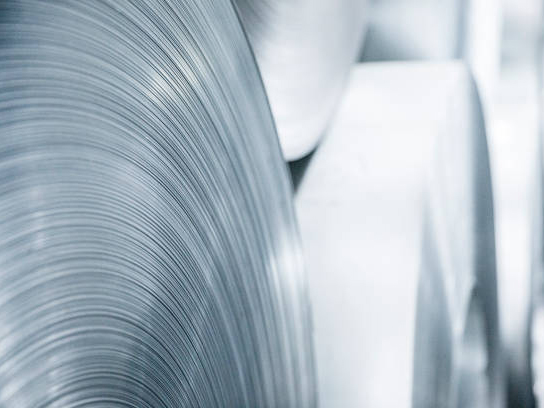
The comparison between Gr5 titanium foil (Ti-6Al-4V) and steel is not just a data contest between two metals. It also reflects the shift from traditional design to lightweight solutions. This alpha-beta titanium alloy has tensile strength above 895 MPa and a density of 4.43 g/cm³. It delivers high strength while cutting weight to 60% of steel. In aerospace, new energy batteries and precision manufacturing, Gr5 titanium foil breaks the old rule that high strength always means heavy weight. It creates feasible lightweight solutions for high-end equipment.
1 Engineering Significance of Specific Strength: Balance Light Weight and Strength
1.1 Definition and Calculation of Specific Strength
Specific strength means the ratio of tensile strength to density. Common units are N·m/kg or kN·m/kg. This value shows the weight advantage of a material under the same load. Gr5 titanium foil has a specific strength of around 202 kN·m/kg, calculated from 895 MPa divided by 4.43 g/cm³. Ordinary Q235 structural steel only reaches 48 kN·m, calculated from 370 MPa divided by 7.85 g/cm³. Even high-strength steel cannot get rid of the disadvantage of high density for lightweight applications.
1.2 Extreme Weight Reduction Needs in Aerospace
Industry data shows every 1 kilogram of weight cut on a commercial aircraft saves about 3000 US dollars in fuel over its whole service life. Public information states titanium alloys account for 14% of the Airbus A350 fuselage. Manufacturers mainly use them for landing gear, fast and nacelle parts under high stress. Gr5 titanium foil for honeycomb core structures cuts weight by 15% against aluminum alloy. It also raises the maximum working temperature to 300 ℃ to meet heat insulation needs for engine nacelles.
1.3 Lightweight Challenges for New Energy Battery Packs
Battery packs take up 20% to 30% of the total weight of electric vehicles. Lighter heat dissipation structures directly extend driving range. Traditional stainless steel has a density of 8.0 g/cm³. A 0.1 mm thick Gr5 titanium foil reduces the weight of heat dissipation parts by 45%. It also has excellent corrosion resistance to handle risks like electrolyte leakage.
2 Core Performance Comparison between Gr5 Titanium Foil and Steel
2.1 Mechanical Performance Data
| Performance Index | Gr5 Titanium Foil (Ti-6Al-4V) | Q235 Structural Steel | 304 Stainless Steel | High-strength Steel (Q690) |
|---|---|---|---|---|
| Density (g/cm³) | 4.43 | 7.85 | 8.00 | 7.85 |
| Tensile Strength (MPa) | ≥ 895 (Typical: 930-1100) | 370 ~ 500 | 520 ~ 750 | ≥ 690 (Max: 880) |
| Yield Strength (MPa) | ≥ 825 | 235 | 205 | ≥ 620 |
| Elongation (%) | ≥ 10 | 20 ~ 26 | 40 ~ 50 | 14 ~ 17 |
| Specific Strength (kN·m/kg) | 202 ~ 248 | 48 ~ 64 | 65 ~ 94 | 88 ~ 112 |
2.2 Differences in Corrosion Resistance
Gr5 titanium foil forms dense TiO₂ passive film naturally on its surface. It works steadily in seawater, acid and chloride-rich environments. Steel still develops pitting corrosion after long service, even with galvanization or coating. Titanium alloy parts extend maintenance cycles to 2.5 to 3 times longer than steel for marine equipment. They bring obvious advantages in total life cycle cost.
2.3 High-temperature Stability and Fatigue Performance
| Temperature Range | Performance of Gr5 Titanium Foil | Performance of Steel |
|---|---|---|
| Room Temperature (25 ℃) | Strength: 930 ~ 1100 MPa, good ductility | Strength: 370 ~ 750, excellent ductility |
| Long-term service at 300 ℃ | Strength retention ≥ 80%, stable creep resistance | Sharp strength drop, needs alloy modification |
| Short-term load at 400 ℃ | Stable microstructure, withstand peak load | Ordinary steel loses ductility, high-temperature steel costs more |
Fatigue test results show Gr5 titanium foil has a fatigue limit of 500 ~ 600 MPa after 10⁷ load cycles. Q235 steel only reaches 180 ~ 200 MPa. This makes Gr5 titanium foil irreplaceable for aero-engine blades and helicopter rotors with frequent vibration.
3 Forming and Machining Challenges
3.1 Limitations of Cold Forming
Gr5 titanium foil has an alpha-beta dual-phase structure for high strength. Its room-temperature ductility is much lower than steel. Its elongation stays above 10% to meet basic forming needs. Operators must control strain rate strictly for deep drawing and complex bending. 304 stainless steel has elongation up to 40%. It creates fewer problems with springback after cold stamping.
3.2 Hot Forming and Superplastic Forming
Gr5 titanium foil turns into superplastic state at 700 ℃ to 900 ℃. Its elongation reaches 200% to 400%. Manufacturers use hot gas bulging for complex aircraft skin parts. They apply argon shielding to avoid oxidation. This process needs precision temperature control and custom molds. Its production cost is 3 to 5 times higher than steel cold stamping. But one-piece forming cuts welding joints and lowers stress concentration risks.
3.3 Welding Requirements
| Welding Method | Suitability for Gr5 Titanium Foil | Suitability for Steel |
|---|---|---|
| TIG Welding | Full argon shielding on front and back sides to avoid oxygen contamination | Standard shielding gas, wide process window |
| Laser Welding | Small heat affected zone, suits thin foil, needs precise energy control | Wide application range, thick plates easy to deform |
| Resistance Spot Welding | Custom electrodes to prevent alloy contamination | Mature process, widely used in automobile industry |
Oxygen, nitrogen and hydrogen absorption during welding causes brittleness in titanium welds. Production lines need glove boxes or local argon protection. Operators require professional training. All these factors raise the technical threshold for Gr5 titanium foil compared with steel.
4 Total Life Cycle Cost Analysis: Balance Initial Investment and Long-term Returns
4.1 Raw Material Cost Comparison
Gr5 titanium foil sells for 50 ~ 80 US dollars per kilogram. Q235 steel costs only 0.8 ~ 1.2 US dollars per kilogram. 304 stainless steel ranges from 3 ~ 5 US dollars per kilogram, and high-strength steel sits at 2 ~ 4 US dollars. Titanium brings high initial procurement costs.
4.2 Hidden Increase in Machining Cost
Titanium requires cemented carbide or ceramic tools. Its cutting speed is only 30% to 50% of steel. Tool wear rate is 2 to 3 times higher. Precision slitting for 0.1 mm thick Gr5 titanium foil needs tension control and burr-free cutting equipment. A single production line costs over 5 million US dollars. Machining cost of titanium foil is 3 to 8 times that of steel.
4.3 Evaluation of Maintenance and Replacement Cycles
| Application Scenario | Service Life of Gr5 Titanium Foil | Service Life of Steel | Full Life Cycle Cost Comparison |
|---|---|---|---|
| Offshore Engineering Platform Components | 20 ~ 30 years, maintenance-free | 8 ~ 12 years, requires regular anti-corrosion treatment | Titanium foil reduces overall cost by 40% |
| Chemical Equipment Linings | 15 ~ 25 years, resistant to acid and alkali corrosion | 5 ~ 8 years, frequent replacement required | Titanium foil cuts maintenance cost by 60% |
| Aerospace Fasteners | Same service life as the airframe (30+ years) | Requires regular flaw detection and replacement | Titanium foil has significant reliability advantages |
Gr5 titanium foil cuts total cost of ownership by 30% to 50% in high-corrosion and high-fatigue environments. A petrochemical plant reported the saved shutdown and maintenance costs for titanium heat exchangers exceeded twice the initial investment within ten years.
5 Application Selection Guide: Choose Titanium or Steel
5.1 Aerospace Industry
Landing gears, engine hangers and other aircraft parts bear temperature cycles from -55 ℃ to 300 ℃, plus salt spray and vibration fatigue. Honeycomb structures made of Gr5 titanium foil cut weight by over 40% while meeting strength requirements. Titanium alloys take up 15% of Boeing 787 fuselage. They rank the second most widely used lightweight material after carbon fiber composites.

5.2 New Energy Industry
Lithium battery thermal runaway temperature can reach 800 ℃. Heat dissipation parts need good thermal conductivity and high-temperature resistance. 0.05 mm thick Gr5 titanium foil makes micro-channel heat sinks. Its thermal conductivity is lower than aluminum alloy, but it has better high-temperature stability and corrosion resistance. Gr5 titanium foil also works well for bipolar plates in hydrogen fuel cells. It resists hydrogen embrittlement better than stainless steel.
5.3 Medical Implants and Precision Instruments
Gr5 titanium alloy gets FDA approval for medical implants. It has good chemical inertness and compatibility with human bone. Steel releases nickel and interferes with MRI scans, so it cannot work for long-term implants such as artificial joints and spinal fusion devices. Precision non-magnetic brackets for optical instruments also rely on titanium foil’s zero magnetic property.

5.4 General Structural Parts
Steel dominates building frames, automobile bodies and home appliance shells. These products have low requirements for weight reduction. Titanium only applies to a small number of high-end auto parts such as exhaust systems and suspension springs. It will not replace steel on a large scale.
Conclusion
Gr5 titanium foil has a specific strength of 202 ~ 248 kN·m/kg. It is irreplaceable for aerospace, new energy and medical industries. It has higher initial cost and harder machining than steel. But it brings benefits like lighter weight, fewer repairs and higher reliability over the whole service life. Material selection is a practical trade-off. Pick Gr5 titanium foil when lightweight and high performance become core demands.
FAQ
1. Can Gr5 titanium foil fully replace high-strength steel?
2. How to judge if a project is suitable for Gr5 titanium foil?
3. What are the main machining difficulties for 0.03 ~ 0.8 mm ultra-thin Gr5 titanium foil?
Cooperate with Titanium Valley to Explore Lightweight Solutions
Baoji Titanium Valley Titanium Nickel Zirconium Material Processing Co., Ltd. is a professional Gr5 titanium foil manufacturer. Our annual output reaches 3000 tons. We steadily supply products in sizes 0.03 ~ 0.8 mm × 350 ~ 670 mm. 20-high rolling mills and vacuum annealing equipment keep thickness tolerance within ±0.001 mm. Our products meet aerospace and medical standards. Contact us for customized solutions: sales@titaniumvalleys.com
References
- Wang Guisheng, Cao Chunxiao, Zhu Zhoushou, et al. Titanium Alloy Handbook [M]. Beijing: Chemical Industry Press, 2012.
- Zhao Yongqing, Hong Quan, Ge Peng. Titanium Alloys and Their Processing Technology [M]. Beijing: Science Press, 2010.
- Liu Jing’an, Xie Yongsheng. Handbook of Aluminum, Aluminum Alloys, Titanium and Titanium Alloys [M]. Beijing: Chemical Industry Press, 2012.
- Northwest Institute for Nonferrous Metal Research. Application of Titanium Alloys in Aerospace Industry [J]. Rare Metal Materials and Engineering, 2005, 34(1): 1-5.