
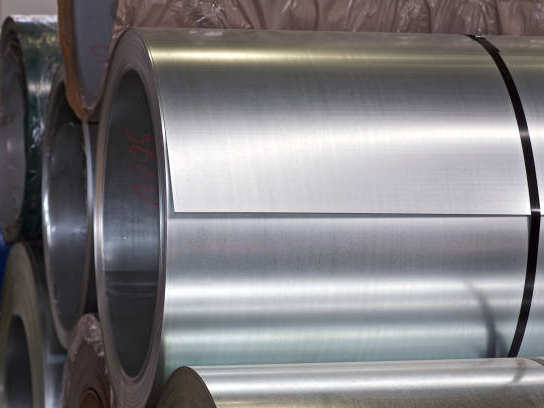
Simply put, Gr5 titanium foil (Ti-6Al-4V) is an alpha-beta dual-phase titanium alloy. Its tensile strength reaches 895 MPa or higher. It is 60% to 120% stronger than Gr1, Gr2 and Gr4 pure titanium. It also keeps a low density of 4.43 g/cm³. Pure titanium has better ductility, but it falls short in load capacity and high-temperature stability. Gr5 titanium foil adds 6% aluminum and 4% vanadium. It breaks the strength limit of pure titanium. It works stably at 300 ℃ for long periods and has excellent fatigue resistance. It suits extreme working conditions such as aerospace honeycomb structures, heat dissipation parts for new energy batteries and high-end medical implants.
1 Chemical Composition: How Alloying Elements Redefine Material Performance
1.1 Core Alloy System of Gr5
Gr5 titanium foil adopts the Ti-6Al-4V formula. Aluminum content ranges from 5.5% to 6.75%. Aluminum acts as an alpha phase stabilizer. It improves high-temperature creep resistance and elastic modulus. Vanadium content is between 3.5% and 4.5%. Vanadium acts as a beta phase stabilizer. It boosts room-temperature strength and optimizes hot workability. This dual-phase structure retains the natural corrosion resistance of titanium. Its specific strength is 1.8 to 2.2 times that of pure titanium.
1.2 Composition Features of Pure Titanium
Gr1, Gr2 and Gr4 are commercially pure titanium. Their titanium content is above 99%. Manufacturers adjust performance by controlling oxygen and iron levels. Gr1 has oxygen content below 0.18%. Its elongation exceeds 24% and fits deep drawing work. Gr4 has oxygen content from 0.30% to 0.40%. Its tensile strength rises to 550 MPa, still much lower than Gr5. Pure titanium cannot gain strength through heat treatment, so its performance has limited room for improvement.
1.3 Impact of Impurity Control
Gr5 titanium foil has strict limits on hydrogen and nitrogen. Hydrogen content stays below 0.015% and nitrogen content below 0.05%. Excess interstitial elements cause hydrogen embrittlement and room-temperature brittleness. Some domestic manufacturers use vacuum annealing and ultrasonic cleaning. They control surface contaminants at the ppm level and ensure stable quality across batches. Medical-grade Gr5 needs to meet ISO 5832-3. This standard limits surface carbon and oil residues below 10 ppm. Manufacturers achieve this with combined ultrasonic and alkaline cleaning on continuous production lines. Pure titanium allows higher impurity content, which also means it cannot reach higher strength.
2 Mechanical Performance: Trade-off between Load Capacity and Formability
2.1 Quantitative Comparison of Strength Indicators
| Grade | Tensile Strength (MPa) | Yield Strength (MPa) | Elongation (%) | Hardness (HB) |
|---|---|---|---|---|
| Gr1 | 240 ~ 370 | 170 ~ 310 | ≥ 24 | 120 ~ 150 |
| Gr2 | 340 ~ 510 | 280 ~ 410 | ≥ 20 | 150 ~ 20 |
| Gr4 | 550 ~ 750 | 480 ~ 620 | ≥ 15 | 200 ~ 250 |
| Gr5 | 930 ~ 1100 | ≥ 825 | ≥ 10 | 270 ~ 330 |
Gr5 titanium foil has 33% to 72% higher yield strength than Gr4. With the same cross section, Gr5 resists plastic deformation better under cyclic load. This is critical for key parts such as aero-engine heat shields and lightweight racing car chassis.
2.2 Fatigue Life and Creep Resistance
Gr5 titanium foil delivers fatigue strength around 550 MPa after 10⁷ cycles at room temperature (stress ratio R = -1). Gr2 only reaches 200 to 250 MPa. At 300 ℃, Gr5 has creep rates 1 to 2 orders of magnitude lower than pure titanium. It works well for long-term high-temperature service. Its alpha-beta dual-phase structure creates this advantage. The alpha phase maintains thermal stability. The beta phase blocks grain sliding via dislocation strengthening.
2.3 Forming Challenges
Gr5 has elongation above 10%, far lower than Gr1’s 24%. It tends to crack during cold forming. Some domestic manufacturers use 20-high multi-pass rolling. They keep thickness tolerance within ±0.001 mm and adopt tension control systems. These methods solve stability problems for high-strength foil during rolling. Use warm forming at 400 ℃ to 600 ℃ or superplastic forming for complex curved parts.
3 Process Adaptability: Full Production Challenges
3.1 Technical Barriers in Cold Rolling
| Process Link | Key Difficulties for Gr5 | Features of Pure Titanium (Gr1/Gr2) |
|---|---|---|
| Cold Rolling Reduction | High strength pushes rolling force up over 3 times | Good ductility, single pass reduction up to 50% |
| Strip Shape Control | Wide foil (670 mm) easily develops edge cracks | Relatively easy to control strip shape |
| Thickness Uniformity | Alloy segregation affects rolling stability | Single composition, small thickness fluctuation |
A 750 mm 20-high rolling mill works with high-precision thickness monitors. It tracks thickness of 0.03 mm to 0.8 mm ultra-thin foil in real time. Hydraulic servo systems keep tolerance within ±0.005 mm. This Gr5 foil fits high-end products such as semiconductor liners and precision electromagnetic shields.
3.2 Microstructure Control during Annealing
Gr5 titanium foil needs annealing at 700 ℃ to 850 ℃ under vacuum or inert gas. This prevents oxide layer formation. Cooling speed changes the ratio of alpha and beta phases. Fast cooling retains more beta phases for higher strength but lower ductility. Slow cooling promotes alpha phase precipitation and improves toughness. Pure titanium uses lower annealing temperature at 550 ℃ to 700 ℃. It has wider process windows and cannot achieve major performance changes through microstructure adjustment.
3.3 Surface Treatment and Cleanliness Control
Gr5 titanium foil has three common surface types. Pickled surface: Ra 0.8 ~ 1.6 μm with oxide removed. Bright surface: Ra ≤ 0.4 μm after mechanical polishing. Matte surface: Ra 1.0 ~ 2.5 μm after sandblasting. Continuous production lines combine ultrasonic and alkaline cleaning. They keep surface carbon and oil residues below 10 ppm and meet ISO 5832-3 requirements for medical-grade products.
4 In-depth Analysis of Application Scenarios
4.1 Aerospace Industry
Gr5 titanium foil dominates aerospace applications. Boeing 787 uses 0.05 mm to 0.1 mm Gr5 foil for honeycomb sandwich structures. It cuts weight by 15% compared with aluminum alloy and has better ablation resistance. Aero-engine heat shields need to withstand instant high temperature up to 600 ℃. Gr5 has a melting point of 1668 ℃ and provides large safety margins. Pure titanium deforms easily here due to insufficient strength.

4.2 New Energy Batteries
Heat dissipation foils for power batteries need good thermal conductivity, corrosion resistance and light weight. Gr5 has thermal conductivity of 7.2 W/m·K, lower than aluminum. But it far outperforms aluminum alloy in electrolyte corrosion resistance. Its specific strength is 3 times higher. 670 mm wide Gr5 foil can cover battery modules as one piece and reduce welding seams. Verify practical feasibility according to actual structural designs.

4.3 Medical Implants
Orthopedic screws and dental implants commonly use Gr5. Its elastic modulus stands at 110 GPa, much higher than human bone (10 ~ 30 GPa). Design porous structures or surface coatings to reduce stress shielding. Anodizing forms nano TiO₂ films on the surface and boosts osteoblast adhesion. Gr2 has good biocompatibility but lacks strength for heavy-load joint parts.

4.4 Chemical and Marine Engineering
| Application Scenario | Advantages of Gr5 | Limitations of Pure Titanium |
|---|---|---|
| Seawater Desalination Equipment | Resist stress corrosion cracking, 40% longer service life | Insufficient strength, need thicker wall |
| Electrolyzer Electrode | Stable at 80 ~ 100 ℃ high-temperature electrolyte | High creep rate, easy dimensional change |
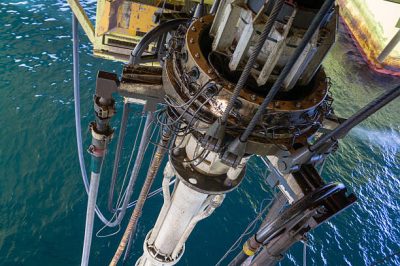
| Offshore Platform Fasteners | Excellent fatigue resistance, less maintenance | Low strength, insufficient preload |
One domestic supplier provided 0.3 mm × 670 mm Gr5 foil for a European seawater desalination project. After 5000 hours of salt spray testing, its corrosion rate stayed below 0.005 mm/year, exceeding ASTM B265 standards.
5 Cost and Supply Chain Analysis
5.1 Initial Purchase Cost
Gr5 titanium foil costs 2.5 to 3 times more than Gr2. Higher alloying cost and complex processes lead to the price gap. From the full lifecycle perspective, Gr5’s high specific strength cuts material usage by 30% to 50% and lowers overall cost. One automaker switched battery shell material from Gr2 to Gr5. Single vehicle weight dropped by 12 kg and driving range increased by 8%. The economic benefits are obvious.
5.2 Machining Difficulty and Yield Rate
Gr5 is harder to machine. Tool wear is 3 to 5 times faster than Gr2. Use cemented carbide or ceramic tools. One manufacturer equips precision slitting lines with PCD blades. It controls burrs below 5 μm for 0.03 mm ultra-thin Gr5 foil. The product yield stays above 98% and solves secondary processing troubles for clients.
5.3 Supply Chain and Customization Capacity
Major production bases for Gr5 titanium foil locate in China, the United States and Japan. Only a few manufacturers stably supply wide foil from 0.03 mm to 0.8 mm and 350 mm to 670 mm. One domestic factory runs automatic production lines with annual output of 3000 tons. The matched 20-high rolling mills and continuous annealing furnaces realize full-process traceability from titanium ingot to finished foil. Delivery cycle is 4 to 6 weeks. It supports JIT delivery for aerospace and medical industries. All data comes from public corporate documents. Actual output and delivery time follow the latest supplier information.
Conclusion
Alloying technology makes Gr5 titanium foil superior to pure titanium in strength, temperature resistance and fatigue life. It becomes the top choice for high-end equipment manufacturing. Gr5 has limited formability and higher machining cost. Domestic manufacturers master precision rolling, vacuum annealing and surface cleaning technologies. They achieve stable mass production for ultra-thin wide foil ranging from 0.03 mm to 0.8 mm. Choose Gr5 for projects that require high structural safety, long service life and light weight. Compare strength, elongation and elastic modulus to complete scientific material selection.
FAQ
Gr5 has elongation above 10%. It is not suitable for complex deep drawing. Choose warm forming at 400 ℃ to 600 ℃ or switch to Gr1/Gr2 pure titanium. Pick Gr5 ELI (Gr23) if you need both high strength and good formability.
Genuine products must come with material certificates, spectral analysis reports for chemical composition and mechanical performance reports. The documents need to comply with ASTM B265. All products from Titanium Valley have full batch traceability and third-party SGS test reports.
It works for fuel cell bipolar plates (with surface coating to reduce contact resistance), liners for high-pressure hydrogen storage tanks and corrosion-resistant parts for water electrolysis equipment. It resists hydrogen embrittlement better than pure titanium and runs steadily up to 300 ℃.
Contact Titanium Valley for Custom Gr5 Titanium Foil Solutions
As a leading titanium foil manufacturer in China, we supply high-precision products that meet ASTM B265 and AMS 4911 standards. We also provide one-stop OEM services. Email: sales@titaniumvalleys.com
References
- Wang Jinyou, Wu Wei, Ding Hongsheng. Titanium Alloy Handbook [M]. Beijing: Chemical Industry Press, 2010.
- Zhang Xiyan, Zhao Yongqing, Bai Chenguang. Titanium Alloys and Their Applications [M]. Beijing: Chemical Industry Press, 2005.
- Li Chenggong, Fu Hengzhi, Yu Qiao. Aerospace Materials [M]. Beijing: National Defense Industry Press, 2002.
- Chen Zhenhua, Yang Yafei, Zhang Fucheng. Precision Forming Technology of Titanium Alloys [M]. Beijing: China Machine Press, 2015.
- Liu Zhendong, Zhang Zhiwei. Research Progress on Surface Modification of Medical Titanium Alloys [J]. Materials Reports, 2018, 32(3): 451-457.
- Zhao Yongqing, Hong Quan, Ge Peng. Research on Superplastic Forming Process of Titanium Alloys [J]. Rare Metal Materials and Engineering, 2012, 41(6): 1023-1027.
- Li Qiang, Wang Yu, Liu Zhendong. Research Progress on Elastic Modulus Matching Design of Titanium Alloys [J]. Acta Metallurgica Sinica, 2019, 55(10): 1291-1302.
- Chen Wei, Zhang Tao, Li Ming. Research on Corrosion Behavior of Titanium Alloys in Seawater Desalination Equipment [J]. Corrosion Science and Protection Technology, 2017, 29(4): 385-390.