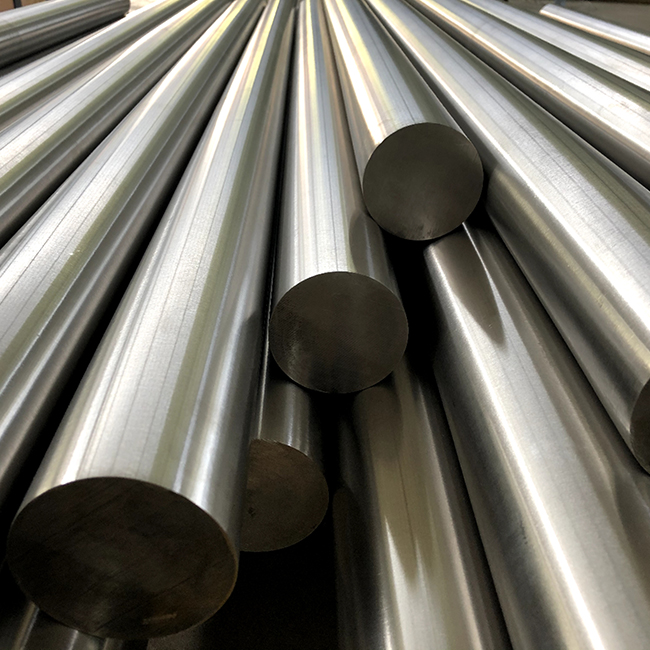
What Are the Engineering Advantages of Grade 4 Titanium Rod in Strength, Fatigue Resistance, and Lightweight Performance?
Gr4 Titanium Rod
Grade 4 titanium bars deliver superior mechanical performance attributed to their distinctive microstructure and optimized fabrication processes. As a commercially pure titanium material compliant with ASTM B348, Grade 4 represents the highest-strength variant among the four annealed commercially pure titanium grades (Grades 1 through 4). It exhibits ultimate tensile strengths ranging from 485 to 550 MPa while retaining excellent ductility and toughness. Its high strength primarily stems from solid-solution strengthening induced by interstitial elements oxygen and iron. The material’s single-phase alpha microstructure guarantees uniform and stable mechanical properties. In practical service environments, Grade 4 titanium bars withstand elevated cyclic loads, substantially improving equipment reliability and service life. For engineered components requiring structural integrity in corrosive media, Grade 4 titanium bars strike an optimal balance between mechanical strength and corrosion resistance, making them a preferred material for select high-end manufacturing sectors.
I. Strength Characteristics and Structural Advantages of Grade 4 Titanium Bars
1. Metallurgical Basis for High Tensile Strength
Per ASTM B348 specifications, annealed Grade 4 titanium bars achieve tensile strengths of 485–550 MPa, a performance metric enabled by precisely controlled oxygen (≤0.40 wt.%) and iron (≤0.50 wt.%) contents. Interstitial atoms such as oxygen and nitrogen serve as primary strengthening agents for commercially pure titanium, effectively elevating material tensile strength. Iron forms solid solutions during smelting yet contributes minimally to grain refinement; grain refinement in commercially pure titanium predominantly relies on melting technologies (Vacuum Arc Remelting / VAR, Electron Beam Cold Hearth Melting / EBCHM), forging reduction ratios, and controlled annealing cycles. Modern high-quality large-diameter titanium bars are commonly manufactured via VAR or EBCHM melting, paired with multi-pass forging and subsequent heat treatment to produce homogeneous fine-grained microstructures.
2. Stability Analysis of Alpha-Phase Microstructure
The single alpha phase, a hexagonal close-packed (HCP) crystal structure, delivers consistent performance for Grade 4 titanium and remains stable from room temperature to moderate elevated temperatures without property fluctuations driven by phase transformations. Stress-relief annealing (low-temperature cycle) or full recrystallization annealing releases residual stresses and homogenizes grain structures, laying a foundation for long-term stable mechanical performance. Selection of specific annealing cycles depends on cold working reduction and end-use performance requirements.
3. Engineering Value of Work-Hardening Behavior
Grade 4 titanium bars exhibit pronounced work hardening during cold forming processes including cold drawing and cold rolling. Starting from the annealed condition, cold deformation reductions between 15% and 30% yield an optimal tradeoff between strength and ductility, with exact values adjusted for forming method and target mechanical properties. Cold deformation exceeding 30% produces further strength gains accompanied by significant ductility degradation, necessitating intermediate annealing. Hot forging conducted within a controlled temperature window below the beta transus (700–800 °C) refines grain size and modulates crystallographic orientation to achieve superior strength-toughness synergy.
Table 1: Comparison of Room-Temperature Typical Mechanical Properties – Annealed Grade 4 Titanium Bar vs. Conventional Structural Materials
Specific strength = Ultimate tensile strength (MPa) / Density (g/cm³), unit: MPa·cm³/g. Calculation reference midpoint tensile strength of 520 MPa for Grade 4 titanium with density 4.51 g/cm³; midpoint value 552 MPa ÷ 7.98 ≈ 69 for 316L stainless steel; midpoint value 475 MPa ÷ 7.85 ≈ 61 for Grade 45 carbon steel; 310 MPa ÷ 2.70 ≈ 115 for 6061-T6 aluminum alloy. Higher values correspond to greater load-bearing capacity per unit mass.
Fatigue strength ratio = Fatigue limit / Ultimate tensile strength. Test parameters: rotating bending fatigue testing, 10⁷ cycle count, stress ratio R=-1, polished specimen surface (Ra ≤ 0.4 μm), room-temperature air atmosphere. This ratio quantifies cyclic load fatigue resistance.
All listed materials are supplied in annealed condition, except 6061-T6 aluminum alloy which is solution treated and artificially aged. Grade 45 medium carbon steel data reflects typical annealed mechanical properties.
316L stainless steel tensile strength range sourced from ASTM A240 annealed specifications (485–620 MPa); actual values vary with plate thickness and production batch.
Aluminum alloys generally exhibit low fatigue strength ratios (0.30–0.35) highly sensitive to surface finishing treatments; data omitted from table for reference only.
II. Fatigue Resistance and Long-Term Service Reliability
1. High-Cycle Fatigue Performance
Grade 4 titanium bars achieve fatigue strength ratios of 0.55–0.60 under 10⁷-cycle rotating bending fatigue testing at room temperature in air, outperforming standard carbon and stainless steels. Titanium features an elastic modulus of approximately 110 GPa, generating larger elastic deformation under equivalent applied stress to mitigate localized peak stress concentrations (geometric part design and surface finish remain dominant factors governing stress concentration severity). Superior ductility and toughness enable efficient strain energy absorption under cyclic loading, improving resistance to impact fatigue failure.
2. Crack Growth Resistance Mechanism
Fine-grained single alpha-phase microstructures hinder dislocation motion via grain boundary strengthening, delaying fatigue crack initiation and propagation. Room-temperature plane-strain fracture toughness (KIC) for Grade 4 titanium typically ranges from 60 to 80 MPa√m, coupled with low fatigue crack growth rates. Compared to ferrous alloys, Grade 4 titanium demonstrates elevated fatigue crack growth threshold values, extending residual service life for components containing inherent defects.
3. Stress Corrosion Cracking Resistance
In typical marine environments, chlor-alkali production media, and most acidic solutions, Grade 4 titanium bars deliver markedly superior resistance to chloride-induced stress corrosion cracking relative to stainless steel. Critical design caveat: under extreme coupled service conditions combining temperatures above 80 °C, high chloride ion concentrations, and sustained high tensile stress, risks of corrosion fatigue and stress corrosion cracking persist. Engineering designs must incorporate adequate safety margins without excessive overdesign.
III. Temperature Compatibility and Dimensional Stability
1. Mechanical Property Retention at Cryogenic and Moderate Temperatures
Grade 4 titanium bars maintain consistent mechanical performance across a broad temperature spectrum. In cryogenic applications at liquid nitrogen temperature (-196 °C), tensile strength increases by 10–20% relative to room temperature, while elongation remains unchanged or marginally improved (data referenced to standardized cryogenic tensile test protocols). At moderate elevated temperatures (200–300 °C), tensile strength degrades gradually, with long-duration exposure introducing oxidation and creep risks. The recommended continuous operating temperature ceiling is 300 °C.
Table 2: Typical Tensile Strength Retention Ratios of Annealed Grade 4 Titanium Bar at Variable Temperatures
1-hour thermal soak, air atmosphere, crosshead speed 0.5 mm/min
300 °C
70–75%
Significant Reduction
High-temperature piping, aerospace fasteners
1-hour thermal soak, air atmosphere, crosshead speed 0.5 mm/min
Notes:
Test procedures aligned with ASTM E21 Standard Test Methods for Elevated Temperature Tension Tests of Metallic Materials. Strength retention ratios vary significantly with thermal hold duration, loading rate, and test atmosphere (vacuum vs. ambient air); tabulated values represent typical empirical data requiring validation under specific service operating conditions.
References: ASTM E21-20 Standard Test Methods for Elevated Temperature Tension Tests of Metallic Materials; Handbook of Mechanical Properties for Titanium and Titanium Alloys, China Nonferrous Metals Industry Association, 2018.
2. Coefficient of Linear Thermal Expansion and Precision Tolerance Control
Grade 4 titanium exhibits a linear coefficient of thermal expansion of approximately 8.6×10⁻⁶ /°C (20–300 °C), substantially lower than 316L stainless steel (16–18×10⁻⁶ /°C) and marginally higher than select engineering ceramics such as alumina (7–8×10⁻⁶ /°C). For precision instrumentation and semiconductor processing equipment, low thermal expansion minimizes thermal compensation requirements and enhances dimensional stability. Design considerations are required for assemblies mating dissimilar materials including steel and copper; thermal expansion mismatch generates residual thermal stress, mitigated via assembly clearance allowances or flexible joint designs.
3. Heat Treatment Response and Performance Optimization
Controlled heat treatment cycles regulate grain size and eliminate residual stress to optimize comprehensive mechanical properties:
Stress-relief annealing: 550–650 °C, 1–2 hour hold, air cool
Full recrystallization annealing: 650–750 °C, 1–2 hour hold, air cool or furnace cool
Cycle selection is determined by cold working reduction and finished product cross-section dimensions to avoid excessive grain coarsening from overheating.
IV. Machinability and Forming Process Compatibility
1. Machining Characteristic Analysis
Grade 4 titanium bars feature low thermal conductivity (15–20 W/(m·K)) and high chemical reactivity at elevated cutting temperatures. Machining operations require sharp cemented carbide tooling, moderate cutting speeds (rough turning: 40–80 m/min; finish turning: 60–100 m/min), and abundant water-soluble cutting fluid for heat dissipation. Relative to alpha-beta titanium alloys such as Ti-6Al-4V, commercially pure Grade 4 titanium generates lower cutting forces and extends tool service life; exact cutting parameters are calibrated for machine rigidity and workpiece geometry.
2. Weld Compatibility and Joint Mechanical Strength
Grade 4 titanium bars are weldable via GTAW (TIG welding) and plasma arc welding under high-purity argon shielding (minimum purity 99.99%). Welded joints retain a minimum of 90% of base metal tensile strength. Weld heat-affected zones maintain single alpha-phase microstructures free from embrittlement risks; full backside and topside inert gas shielding is mandatory to prevent surface oxidation and hydrogen pickup.
3. Cold and Hot Forming Process Window
Moderate cold forming operations including bending and roll forming can be performed at ambient temperature. Intermediate annealing at approximately 650 °C is recommended for cold deformation reductions exceeding 30% to restore ductility. Forming temperature ranges:
Warm forming: 300–500 °C
Hot forging: 700–800 °C
High-temperature forming must be executed under inert shielding atmosphere or with high-temperature anti-oxidation coating applied to stock surfaces.
V. Balanced Comprehensive Performance and Cost-Effectiveness Analysis
1. Engineering Significance of Superior Specific Strength
Grade 4 titanium delivers specific strength values of 108–122 MPa·cm³/g, approximately 60–80% higher than 316L stainless steel and 5–15% higher than 6061-T6 aluminum alloy. Equivalent structural strength requirements can be satisfied with drastically reduced component mass, delivering distinct performance advantages for aerospace structures and high-performance sporting equipment. Mass reduction lowers operational energy consumption and improves dynamic structural response; quantitative cost-benefit analysis is required on a design-specific basis.
2. Full Lifecycle Economic Evaluation
Grade 4 titanium carries a higher upfront material cost, yet eliminates coating and corrosion maintenance requirements for marine and chemical processing service environments, with verified field service lifespans of 20–30 years. When accounting for production downtime and recurring maintenance expenditures, Grade 4 titanium often delivers superior long-term total cost of ownership compared to stainless steel. Galvanized carbon steel remains a more economical selection for short-duration, low-corrosion, low-load structural applications.
Table 3: Qualitative Relative Full Lifecycle Material Cost Comparison (Baseline: Galvanized Carbon Steel = 1.0)
Material
Upfront Cost Coefficient
Annual Maintenance Expense
Service Life (Years)
Normalized Total Lifecycle Cost Coefficient (Estimated)
Grade 4 Titanium Bar
8–10
Extremely Low
20–30
1.0 (Baseline Reference)
316L Stainless Steel
3–4
Moderate
10–15
1.2–1.5
Galvanized Carbon Steel
1
High
5–8
1.5–2.0
3. Universal Performance Coverage and Inventory Streamlining
As the highest-strength commercially pure titanium grade, Grade 4 satisfies most medium-load structural and corrosion-resistant design requirements, reducing material grade proliferation and simplifying raw material inventory management. Material selection caveat: Grade 1 or Grade 2 commercially pure titanium offers superior corrosion resistance and deep-draw formability for applications prioritizing maximum corrosion performance or complex deep-forming operations, requiring multi-factor performance tradeoff evaluation during material specification.
Conclusion
Through controlled interstitial solid-solution strengthening, precision grain refinement, and optimized thermal processing cycles, Grade 4 titanium bars integrate high tensile strength, robust fatigue resistance, broad-temperature operating compatibility, and reliable formability. Its exceptional specific strength enables lightweight structural design paired with extended service life and minimal maintenance demands in corrosive operating media. Material limitations must be accounted for during specification: elevated initial material cost, lower elastic modulus relative to ferrous alloys, reduced high-temperature strength above 300 °C, incompatibility with severe abrasive wear service conditions, and marginally inferior corrosion resistance relative to ultra-high-purity Grade 1 and Grade 2 titanium. Optimized material selection and structural design unlock the full performance potential of Grade 4 titanium bar stock.
FAQ:
Q1: What tensile strength improvement does Grade 4 titanium offer compared to Grade 2 titanium?
In the fully annealed condition, Grade 4 titanium exhibits tensile strengths of 485–550 MPa versus Grade 2’s 345–450 MPa, representing a 30–40% tensile strength increase driven by elevated interstitial oxygen and iron concentrations. Strength gains correspond to minor reductions in ductility (percent elongation) and general corrosion resistance, requiring balanced performance evaluation during material selection.
Q2: Is Grade 4 titanium bar suitable for cyclic fatigue loading environments?
Yes. Under 10⁷-cycle rotating bending fatigue testing, Grade 4 titanium achieves fatigue strength ratios of 0.55–0.60, exceeding performance metrics for stainless steel alloys. Fatigue strength deteriorates under combined cyclic load and corrosive media conditions; engineering designs must incorporate conservative safety factors validated against application-specific fatigue test data.
Q3: How can machining efficiency for Grade 4 titanium bars be optimized?
Utilize sharp K20/K30 grade cemented carbide cutting tools with the following recommended parameters: rough turning cutting speed 40–80 m/min, finish turning cutting speed 60–100 m/min, feed rate 0.1–0.3 mm per revolution, and continuous high-volume water-soluble cutting fluid cooling. Minimize dwell time at shallow cutting depths to mitigate surface work hardening.
Contact Us:
Baoji Titanium Valley Titanium Nickel Zirconium Material Processing Co., Ltd. (operating brand: Titanium Valley) is a professional Grade 4 titanium bar manufacturer equipped with Italian Danieli production lines with an annual output capacity of 20,000 metric tons, supplying high-precision, premium-grade titanium products to global industrial clients. For technical engineering consultation or custom material fabrication inquiries, contact: sales@titaniumvalleys.com
References
Zhang Xuhu. Titanium and Titanium Alloys [M]. Beijing: Metallurgical Industry Press, 2020.
Xin Shewei, Hong Quan, Guo Zheng, et al. Handbook of Titanium Alloys [M]. Beijing: Chemical Industry Press, 2015.
Wang Jinyou, Ma Jimin, Zhu Zhishou. Aerospace Titanium Alloys [M]. Shanghai: Shanghai Science and Technology Press, 2017.
Liu Zhenglin. Titanium and Titanium Alloy Materials [M]. Beijing: China Machine Press, 2019.
ASTM B348-21 Standard Specification for Titanium and Titanium Alloy Bars and Billets.
ASTM E21-20 Standard Test Methods for Elevated Temperature Tension Tests of Metallic Materials.